
Australian Beer Awards guide: A Guide to Finding Your Next Fav
Jun 11, 2026
You're in the bottle shop, or staring at an online beer range, and everything starts to blur together and you are curious about where the Australian Beer Awards fit in. Hazy IPA. West Coast IPA. XPA. Red IPA. Mid-strength lager. Sour with fruit you didn't know belonged in a fermenter. Every can promises character. Not every can delivers it.
That's where beer awards become useful.
For drinkers, a medal isn't just brewery chest-beating. It's a shortcut. It helps you narrow the field, avoid the dud, and back a beer that has already cleared a serious quality check. For brewers, awards are something else entirely. They're pressure. They test consistency, technical control, and whether the beer in the glass matches what the label says it is.
If you've ever wondered whether Australian beer awards really matter, they do. They matter to breweries trying to prove their standards, and they matter to drinkers trying to find a beer they'll enjoy.
Your Guide to Australian Beer Awards
More choice isn't what's needed. Better filters are.
That's the value of Australian beer awards. When you see a medal on a can, tap decal, carton, or shelf talker, you're looking at a signal that the beer has stood up under formal judging. That doesn't guarantee it will become your personal favourite, because taste is still personal, but it does make it far more likely that the beer is well made, style-accurate, and worth your attention.

What an Australian Beer Awards Medal actually helps you do
Awards help in a few practical ways:
- Cut through crowded shelves so you can make a confident choice faster.
- Reduce the risk of wasting money on a beer that sounds exciting but doesn't deliver.
- Spot breweries with repeatable quality instead of one-off novelty.
- Try new styles with less hesitation because someone qualified has already put that beer through a proper assessment.
Practical rule: If you want to explore more styles without getting burnt, start with medal winners in categories you already enjoy, then branch out one step at a time.
Why drinkers care more than they think
Most craft beer drinkers aren't chasing theory. They want freshness, flavour, and the satisfaction of picking well. They want to bring something good to a barbecue, order confidently at the taproom, or load a mixed pack without second-guessing every can.
That's why Australian beer awards work so well as a buying cue. They give you a cleaner read on quality than hype alone. Fancy branding can attract attention. A medal tells you the liquid had to back it up.
For breweries, the stakes are different. We know a medal means the beer had to present properly, sit in the right class, and perform under scrutiny. That's why the strongest award stories usually come from breweries entering the same beers they sell every day, not special one-off show ponies brewed only for judges.
What Are the Big Beer Awards in Australia
Not all awards carry the same weight. Some are broad industry benchmarks. Others matter most within a state or region. If you want to understand Australian beer awards properly, it helps to separate the national and international heavyweights from the state-based competitions that build local credibility.
The Australian Beer Awards
The biggest name in the space is the Australian Beer Awards, run by Melbourne Royal. Melbourne Royal describes the AIBA as the largest annual beer competition in the world, covering both draught and packaged beer. In 2025, the competition drew 2,300 entries from 22 countries, and American craft brewers alone won 99 awards, including 14 gold medals, which shows the field is large, competitive, and internationally respected (Melbourne Royal Australian International Beer Awards).
That scale matters.
If a brewery performs well at AIBA, it isn't being measured inside a cosy local bubble. It's being judged in a competition that attracts breweries from well beyond Australia. For drinkers, that gives the medal more meaning. For brewers, it raises the standard because the comparison set is broader and tougher.
Why AIBA carries long-term authority
The AIBA didn't become important overnight. Its history explains why brewers treat it seriously.
In 1995, it became an international competition with 201 competitors, which marked a major shift from a local judging event into a global beer awards platform. By 2008, honours such as Grand Champion, Champion Large Brewery, and Champion Australian Beer had already become meaningful prestige markers for Australian producers including Matilda Bay Brewing Company and 4 Pines Brewing Company (Australian International Beer Awards history).
That historical depth matters because awards only become useful when the industry respects them. Brewers enter because the judging matters. Retailers pay attention because the medals mean something. Drinkers learn to trust them because top breweries keep showing up.
State awards still matter
National and international awards get the headlines, but state-based competitions are often where a brewery proves itself to its local market.
For Queensland breweries, the Royal Queensland Beer Awards carry real weight because they put local production under a formal spotlight. They're especially important for younger breweries. A strong result can tell the market, very quickly, that this isn't just a new label with cool branding. It's a brewery that can brew cleanly, hit style, and perform across multiple entries.
Here's the simple difference:
| Award type | What it tends to signal |
|---|---|
| International benchmark | How a brewery stacks up in a broad, highly competitive field |
| State recognition | How a brewery is performing in its home market and local trade scene |
| Repeat medals over time | Consistency, process control, and dependable beer quality |
A smart drinker uses both signals. A smart brewery respects both.
How Beers Are Judged and Medals Awarded
A lot of people assume beer awards work like a race. First place gets gold, second gets silver, third gets bronze. That isn't how serious beer judging works.
At the AIBA, beers are entered into a base style and the brewery must declare ABV, colour, and bitterness so the beer can be assessed against the relevant style guidelines. Medals are then awarded by score thresholds, not simple finishing position, and the Gary Sheppard Trophy uses a points system of 7 for gold, 5 for silver, and 3 for bronze across eligible beers (how AIBA entries and points work).

What judges are looking for
The key thing is style accuracy.
If you enter a red IPA, judges aren't asking whether they personally prefer lagers. They're asking whether that beer is an excellent example of a red IPA. Is the bitterness where it should be? Does the malt support the hops? Is the finish clean? Does the aroma fit the style? Is there any technical fault getting in the way?
That changes how you should read a medal.
- Gold means the beer is an exceptional example of its style.
- Silver means it's a strong beer with only minor gaps.
- Bronze still means it met a meaningful quality bar.
A bronze medal in a well-entered style is not a participation ribbon. It's proof the beer stood up in a formal environment.
What works for breweries and what doesn't
Breweries that treat Australian Beer Awards strategically usually do a few things well:
- They enter beers in the correct class. Misclassify the beer and you make life harder before judging begins.
- They submit beers that are style-compliant. A clever idea won't save a beer that misses the brief.
- They think across the range. Because trophies can reward points across multiple entries, one great flagship alone often isn't enough.
- They send beer in top condition. Even a brilliant recipe can lose shine if the packaged product isn't presenting properly.
Entering a beer award is part brewing, part logistics, and part honesty about what the beer actually is.
What doesn't work is ego. Brewers sometimes fall in love with a beer because it's bold, unusual, or a cellar-door favourite. If it doesn't line up with the style class, judges won't reward the story. They'll judge the glass.
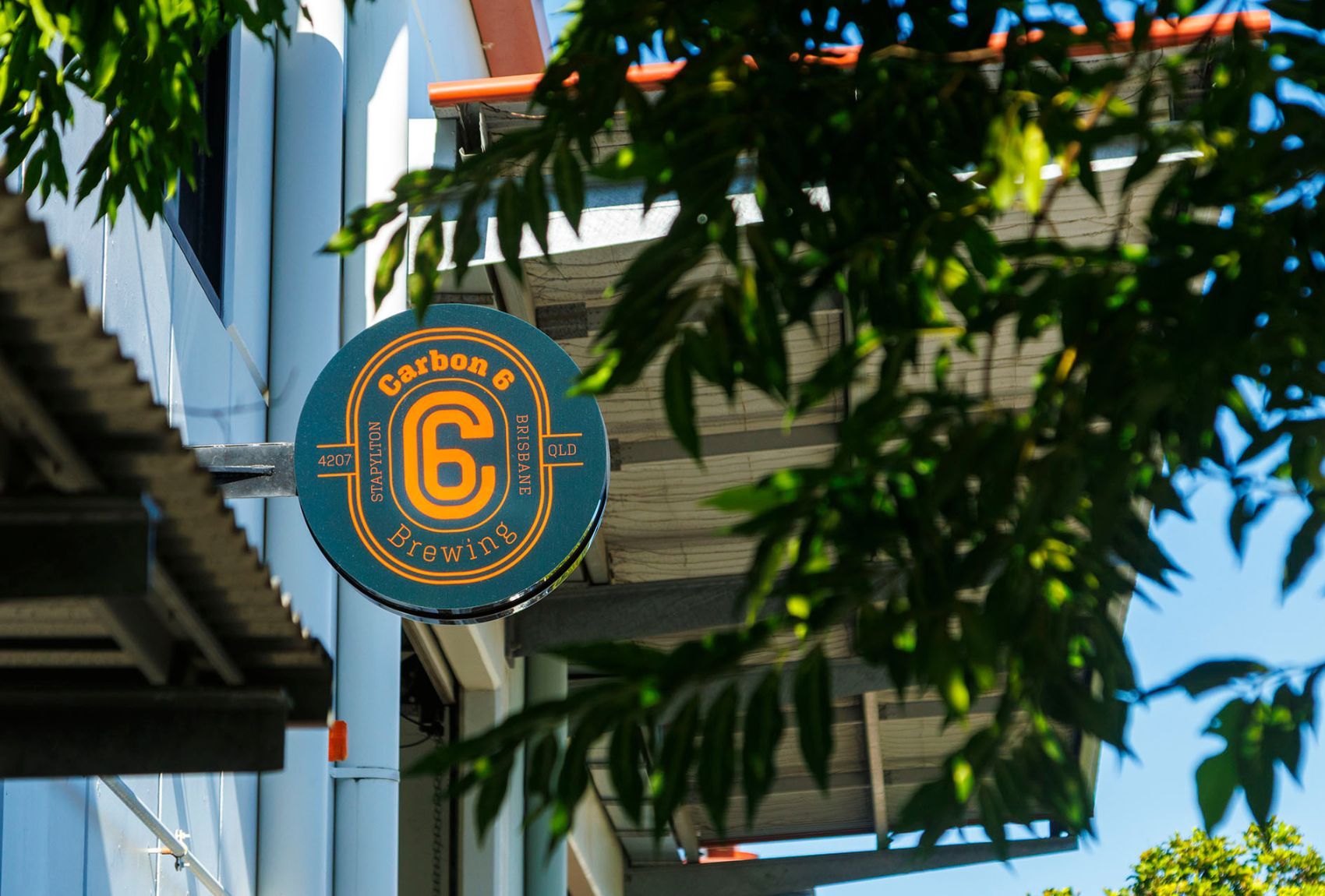
A Champion's Playbook How Carbon 6 Wins Awards
The strongest award results usually come from breweries that focus on production standards first and medals second. That's the part outsiders often miss.
Carbon 6's results are a good example because the recognition didn't come from brewing a few special trophy hunters and hiding the rest of the range behind them. The brewery's approach has been to submit its regular production beers to judging. That's the right way to read a medal haul as a drinker. The beer winning on the day is the same beer you can buy.
The breakthrough result
The headline moment was winning Best New Brewery 2025 at the Royal Queensland Beer Awards. That matters because a title like that says more than “good first impression”. It tells the market the brewery launched at a serious standard, across multiple beers, under proper judging conditions.
A fuller rundown of those results appears in Carbon 6's Royal Queensland Awards recap.
The beers that have earned medals
At the Royal Queensland Beer Awards 2025, the range performed across draught and packaged formats.
Gold
- Cardinal Red IPA won gold in draught and packaged.
Silver
- Exploration Pale Ale in draught
- Hyper Glow DDH IPA in draught
- Elani Single Hop Pale Ale in packaged
- Nebula Hazy IPA in packaged
- Twilight Trails Amber Ale in draught and packaged
- The Pioneer Strong Porter in draught
- Carbon Mid-Lager in draught
Bronze
- Exploration Pale Ale in packaged
- Hyper Glow DDH IPA in packaged
- Elani Single Hop Pale Ale in draught
- Nebula Hazy IPA in draught
- The Pioneer Strong Porter in packaged
- Last Crusade TDH American IPA in packaged
- Carbon Dry in draught and packaged
- Hefeweizen in packaged
- Triple Fruited Sour - Mango, Pineapple, and Citrus in draught and packaged
At the Royal Queensland Beer Awards 2026, the range kept evolving.
Gold
- Carbon Dry in packaged
- pHantasy in draught
Silver
- Exploration Pale Ale in draught and packaged
- Cardinal Red in packaged
- Occasional Beer in packaged
Bronze
- Carbon Haze in packaged
- Peachquency in draught and packaged
- Nova Dust in draught
- Carbon Dry in draught
- Occasional Beer in draught
- Zingularity in draught and packaged
There was also international validation when Exploration Pale Ale received a bronze medal at the 2026 Korean International Beer Awards.

What that says about the brewery
A medal list like that reveals a few things that matter to drinkers.
First, the brewery isn't one-dimensional. It's not leaning on one hero beer and hoping nobody looks too closely at the rest of the range. IPAs show up, but so do amber ale, porter, lager, wheat beer, sour, mid-strength, and packaged-versus-draught distinctions.
Second, it shows a willingness to keep moving. New beers continue to appear, and recipes can be adjusted in response to judging feedback. That's what healthy brewing looks like. You don't chase novelty for its own sake, but you also don't stand still.
The best award strategy is boring in the right places. Tight process, strong quality control, clean packaging, and a willingness to refine the recipe when judges spot a weakness.
Third, the results align with a brewery that invests in technology and quality control rather than leaving quality to instinct. Judges' feedback only helps if the brewery has the systems to respond. Better analytical capability, sharper process control, and disciplined production are what turn comments on a scoresheet into better beer in the glass.
Why Award Medals Matter to You the Drinker
A medal matters because you're not buying a scoresheet. You're buying confidence.
Most drinkers want to explore, but they don't want to gamble every time they pick up an unfamiliar can. That's especially true when you're buying a mixed pack for the weekend, grabbing a carton for a gathering, or choosing something new at a venue where you only get one first pour.
Medals reduce the guesswork
A good medal acts as third-party validation. It tells you the beer wasn't only liked by the brewery that made it. It was assessed independently and found to have real merit.
That helps in a few very practical buying moments:
- When the shelf is crowded, a medal helps you narrow quickly.
- When the style is new to you, a medal lowers the risk of trying it.
- When the brewery is unfamiliar, a medal gives you a reason to trust the first purchase.
- When the price is higher than mainstream beer, a medal helps justify paying for quality.
Medals aren't magic, but they are useful
An Australian Beer Awards medal won't override your own palate. If you hate smoky malt, a decorated porter probably still won't win you over. If you love crisp lager, a trophy hazy IPA won't suddenly become your house beer.
But medals do something more valuable than promise universal appeal. They tell you the beer is likely well made for what it is.
That's a better buying signal than marketing language alone.
A medal doesn't tell you what to like. It tells you the brewery gave you a serious beer to judge for yourself.
For drinkers who care about discovering better local beer, that matters. It turns exploration into an informed choice rather than a random punt.
How Winners Turn Medals into Market Success
A medal only creates commercial value if the brewery knows how to use it well.
The first job is simple. Make the win visible where buying decisions happen. That means packaging, tap decals, web product pages, trade sell sheets, venue conversations, and retail touchpoints. If a brewery wins and then buries the result in one social post, the market moves on.
Where medals do the heavy lifting
Medals are especially useful in three places.
- On the shelf. A sticker or neck tag can push a hesitant buyer into trying something new.
- In wholesale conversations. Buyers for bars, bottle shops, and venues want confidence that a beer will represent well.
- Online. Direct-to-consumer sales depend on trust signals, especially when the customer can't taste before purchase.
That's why food and beverage brands often put serious thought into product-page structure, range presentation, and credibility markers. If you work in that space, this guide to eCommerce marketing for food businesses is a useful read because it connects product quality with how customers buy online.
Why the low and no-alcohol categories matter
One of the more interesting shifts in awards coverage is the attention now given to lower-alcohol and alcohol-free styles. The 2026 AIBA results prominently featured Best Reduced / Low Alcohol Beer and Best Non-Alcohol Beer, which shows awards are evolving alongside changes in what drinkers are looking for (Crafty Pint coverage of the 2026 AIBA results).
For breweries, that creates a useful opening. In categories where consumers may still be unsure what “good” looks like, an award can become an even stronger trust signal than it is in established full-strength styles.
For drinkers, it means the medal isn't just a badge. It's reassurance.
If you want to see how a brewery presents those trust cues across a consumer-facing range, Carbon 6's best-selling indie beer recommendations offer a practical example of how award recognition can support beer selection without overcomplicating the decision.
Where to Buy Award-Winning Queensland Beer
Once you know how to read Australian Beer Awards, the next step is easy. Buy from breweries that are transparent about what won, where it won, and whether the medal-winning beer is part of the normal range.
That last point matters. You want the beer in your hand to match the reputation that got your attention in the first place.

Buy with a plan
If you're hunting award-winning Queensland beer, use a simple approach:
- Start with the medal-winning style you already like. If you drink pale ales, begin there.
- Add one stretch option. Pick a second beer from a style you don't usually order.
- Check whether the brewery is showing current winners or old history. Recent results are more useful when you're buying now.
- Look for mixed-pack options if you want to compare a few beers without committing to a full carton of one SKU.
That approach keeps the fun in discovery while lowering the risk.
Taproom or online
If you're near the northern Gold Coast, visiting the brewery taproom gives you the freshest version of the beers and a better feel for the broader range. You can line up a few styles side by side and work out whether your palate leans toward crisp, hop-forward, malt-driven, or more expressive seasonal releases.
If you're buying from further away, online ordering is the practical option. The key benefit isn't only convenience. It's range access. You can usually browse medal winners, compare styles, and build a more deliberate order than you would if you were grabbing whatever happened to be cold in a shop fridge.
For readers who want to go straight to beers recognised in competition, Carbon 6's award-winning beer collection is the clearest place to start.
A good award doesn't replace your own taste. It sharpens it. Once you understand what the medal is telling you, buying better beer gets much easier.
If you want to explore award-recognised independent beer from Queensland, Carbon 6 Brewing Pty Ltd is a straightforward place to start. Browse the range online, compare styles that have earned judging recognition, or visit the taproom in Stapylton to try the beers fresh and work out which ones belong in your next mixed pack or carton.