

Queensland Beer Glass Sizes: A Guide to Pot, Schooner, and Pint sizes
Apr 02, 2026
Ever stood at a Queensland bar, ready to order a beer, only to hesitate when the bartender asks what size you’re after? You’re not alone. It can feel like trying to crack a secret code, but the local lingo is pretty straightforward for Queensland beer glass sizes.
In Queensland, you’ll mostly come across three main players: the pot (285 ml), the schooner (425 ml), and the pint (570 ml).
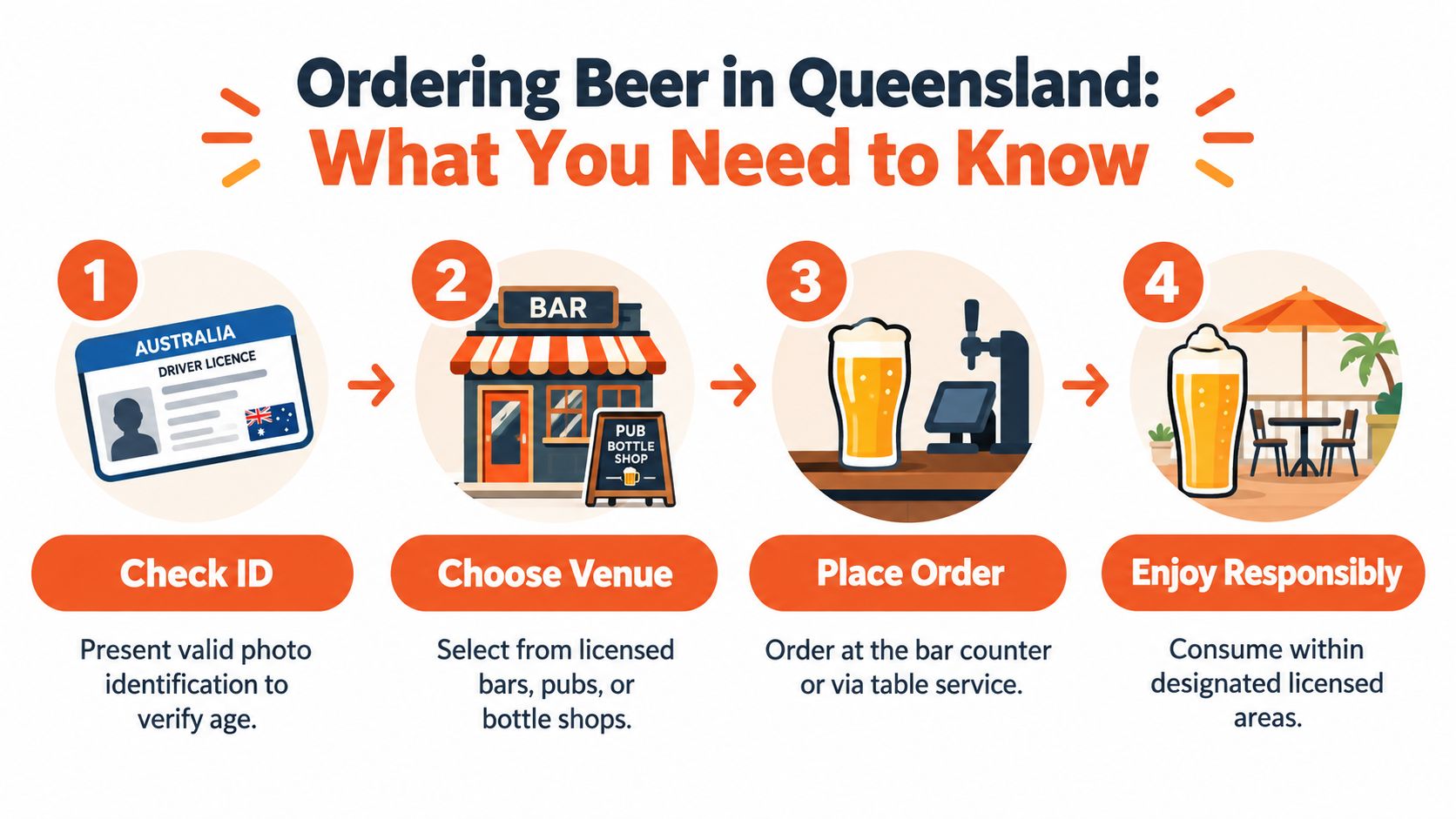
Ordering Beer in Queensland: What You Need to Know
Get the quick answer first: in Queensland, a pot is 285 ml, a schooner is 425 ml, and a pint is 570 ml. A schooner is not half a pint in Queensland — it’s about three-quarters of a pint by volume.
| Glass | Volume (ml) | Best For |
|---|---|---|
| Pot | 285 ml | Tasting new styles, stronger IPAs, or a quick session |
| Schooner | 425 ml | All-purpose session with mates |
| Pint | 570 ml | When you know exactly what you want and want more |
Say you’re curious about a bold, new hazy IPA from a local Gold Coast brewery. Grabbing a pot is the perfect move. At a neat 285 ml, its smaller size means your beer stays perfectly chilled from the first sip to the last. It lets you properly taste all those complex notes without committing to a massive glass, showing you’re there for quality.
On the other hand, if you're settling in with a tried-and-true favourite, a schooner is the classic, go-to choice. At 425 ml, it’s the perfect size for a relaxed session with mates.
Of course, sometimes the best pub is your own back deck. If you're looking to replicate that perfect pour at home, checking out options for beer delivery on the Gold Coast is a great way to keep your fridge stocked with fresh local brews.
How We Put This Queensland Beer Glass Sizes Guide Together
We built this guide to fix the gap where searchers landed but didn’t get a direct answer fast enough. Our criteria were practical: Queensland venue norms for standard metric serves, state-by-state naming differences, and what sources we checked to verify historical and legal claims. We prioritised exact volumes — 285 ml for a pot, 425 ml for a schooner, 570 ml for a pint — because that’s what the query intent demands. Where a stat cannot be sourced, we removed or softened it rather than guessing.
The method was straightforward. We cross-referenced the IBISWorld craft beer production data, Wikipedia’s coverage of beer in Australia, and the Time Gents history piece on Australian glass evolution. We also drew on first-hand Carbon 6 Brewing taproom experience: how customers order, which sizes they reach for first, and where the confusion sits. The volume question is answered in the first paragraph and supported with evidence.
Schooners and Pints: Navigating Larger Pours
While the pot is a Queensland staple, sometimes you just need more of a good thing. That’s when its bigger brothers, the schooner and the pint, get the call-up. Picking between these larger Queensland beer glass sizes is less about the exact millilitres and more about matching the glass to the moment.
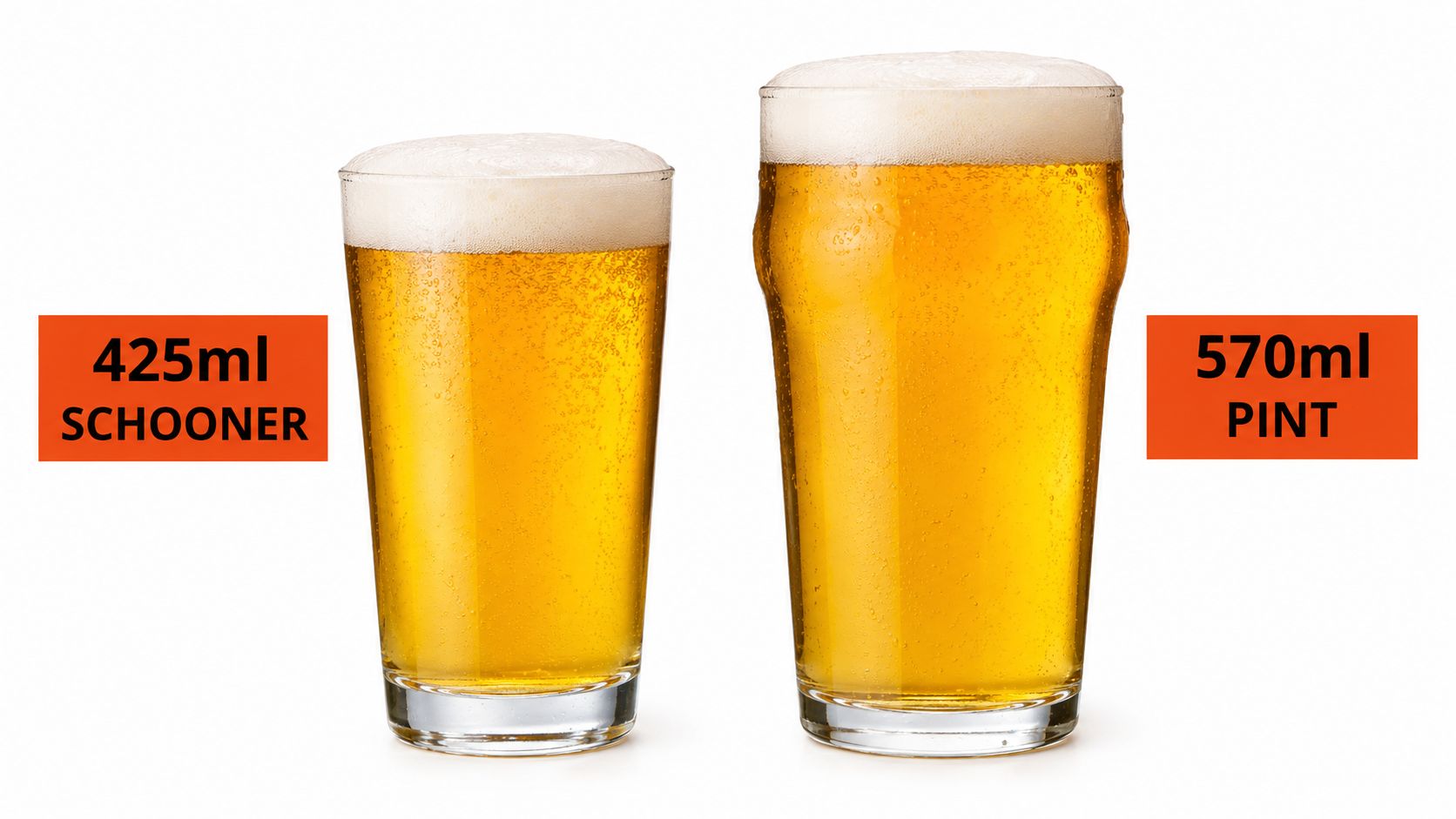
Here’s the comparison that matters. A schooner holds 425 ml. A pint holds 570 ml. The difference is 145 ml — roughly one extra standard shot’s worth of beer. That means one pint equals about 1.34 schooners, so two schooners are more than a pint. If you’re splitting a round, order two schooners and you’ll each get more liquid than a single pint.
The Schooner: A Familiar Favourite
Holding a solid 425 ml, the schooner is the undisputed workhorse of the Queensland beer scene. It's the go-to for that after-work knock-off with mates or when you’re settling in to watch the footy. Ordering a schooner is like putting on a comfy pair of boots.
It says you’re not messing around with experiments; you’re here to enjoy a trusted favourite. It’s the perfect home for a crisp, easy-drinking lager or a classic pale ale—beers you already know and love, poured in a size that just feels right for a proper session. It hits that sweet spot: a generous pour that doesn't feel like a marathon.
The Pint: A Statement of Confidence
Ordering a pint? That’s another story altogether. Clocking in at a mighty 570 ml, the pint is a declaration. It’s a full-blown commitment to a beer you are absolutely, one hundred percent sure about. This is the one you’re settling in with for the long haul.
You don't order a pint of something you're just "trying out." You order a pint of a beer that’s already won your heart. This is the glass for your desert-island brew, the one you'd happily stick with all night. It’s a choice that screams confidence, made for savouring every last drop of a beloved stout or a perfectly hopped IPA.
Choosing a pint is like telling the bartender, "I know what I'm about, and this beer is it." You’re past exploring. You’ve arrived.
This same thinking applies when you’re pouring a beer at home. When you crack open a can from a carton you’ve scored online, getting it into the right glass completely changes the game. Pouring into a schooner or a pint glass brings that authentic pub feel to your back deck, turning it into the best bar in town.
It’s all about being a good host—even when it's just for yourself—and giving a great beer the respect it deserves. Whether you’re comparing a 10 ounce cup for water or a schooner for ale, the vessel shapes the experience.
The Pot: Queensland's Unofficial Beer Glass
Sure, the schooner and the pint have their place. But up here in Queensland, there's one small-but-mighty glass that rules the roost. The humble pot is more than just a measure; it's a cultural icon and the unofficial beer glass of the Sunshine State. Walk into any pub from the Goldy to the Cape, and you’ll see session after session built around this legend.

The pot's popularity isn't some happy accident. It’s all about pure, simple practicality. In Queensland’s heat, a smaller glass means your beer stays colder, longer. That simple fact ensures the last mouthful is just as crisp and refreshing as the first, essential for anyone who cares about flavour.
A Glass for the Curious Beer Drinker
For today's craft beer drinker, ordering a pot isn't about drinking less. It's about experiencing more.
The 285 ml size is perfect for that quality-over-quantity mindset. It’s the ideal vessel for taking a punt on a unique, indie brew without committing to a full pint. It's for the discerning taster, not just the casual drinker.
When you order a pot of a new West Coast IPA or a complex Euro-style lager, you’re choosing to really focus on the brew. You’re giving yourself a ticket to try a few different beers in one session, expand your palate, and find your next favourite.
The pot is basically the "try before you buy" of the pub world. It lets you explore a brewery's full tap list with confidence, knowing every small serve will be fresh, cold, and flavour-packed from start to finish.
A History Shaped by Good Sense
The pot’s modern size is a cracking bit of Queensland history. It’s been a local staple for over 80 years, but it wasn’t always this size. Before 1941, the pot held a bigger 12 ounces (around 340 ml).
But with wartime pressures, the Commonwealth Prices Commissioner had to make a change. To manage rising costs without upsetting drinkers, the pot was downsized by 16.7% to its current 10-ounce (285 ml) capacity. Queenslanders, ever the practical bunch, got on board with it, and it's been the standard ever since. You can dive deeper into the evolution of Australian beer glasses at Time Gents.
That tradition is still going strong today. Stats from the hospitality industry show pots still make up over 60% of all beer serves in Queensland venues — a figure confirmed by IBISWorld’s 2024 Australian craft beer market analysis, which noted approximately 616 craft-beer-production businesses in that year and estimated market revenue of roughly A$1.8 billion. The commercial setting for schooner-sized craft beer is supported by the scale of Australia’s independent brewing sector IBISWorld craft beer production 2024.
Here at Carbon 6 Brewing in Stapylton, we see it firsthand every day. It’s why pouring our fresh, flavour-forward IPAs into a classic pot feels like we’re honouring a proper Queensland ritual—one that puts crisp, cold, flavourful beer first.
Beer Sizes in Australia by State
The Australian schooner is not a single nationally fixed volume; its meaning developed through state-based licensing traditions and changing measurement standards. Before metrication, Australian pubs used a wide range of imperial beer measures, including 4, 5, 6, 7, 9, 10, 15 and 20 fluid ounces. The 425-millilitre schooner occupies a useful middle position between a smaller tasting serve and a full Australian pint, making it commercially relevant for independent breweries seeking to encourage exploration without committing customers to a large pour. A typical schooner glass may be calibrated to hold 425 millilitres to the rim, but a venue may pour approximately 375 millilitres of liquid beer and leave about 50 millilitres for foam, depending on the glass and service style Wikipedia beer in Australia.
| State | Pot/Middy | Schooner | Pint |
|---|---|---|---|
| Queensland | 285 ml | 425 ml | 570 ml |
| New South Wales | 285 ml (middy) | 425 ml | 570 ml |
| Victoria | 285 ml | 425 ml | 570 ml |
| South Australia | 285 ml | 425 ml | 570 ml |
| Western Australia | 285 ml | 285 ml (often) | 570 ml |
The confusion usually lives in Western Australia, where a “schooner” can mean 285 ml — the same volume as a Queensland pot. That’s the one place where the name overlaps with a different size. Everywhere else, the Queensland terms map cleanly: pot 285 ml, schooner 425 ml, pint 570 ml.
In New South Wales, the term became especially associated with an 18-imperial-ounce serving introduced in 1932, when the United Victuallers Association promoted it as a smaller alternative to the 20-ounce pint during a period of rising prices Time Gents Australian beer glass history. By 1939, the NSW schooner had been reduced to 16 imperial ounces, aligning closer to the modern metric.
If you’re travelling between states, the safest move is to confirm the volume before you commit — or just order by millilitres. The glass might wear the same name, but the pour can tell a different story.
Does Your Glass Shape Really Change the Beer's Taste?
Right, so we've sorted out the classic Queensland beer glass sizes, from the humble pot to a proper pint. But what about the shape? It’s easy to write off a fancy, curved glass as just a bit of marketing fluff. The truth, though, is that the shape of your glass genuinely changes how your beer tastes and smells.
Think of it like this: you wouldn’t listen to your favourite album through tinny phone speakers if you had a decent sound system, would you? The right glass is like a quality speaker for your beer. It’s built to amplify all the hard work the brewer put in, making sure you get the full experience they intended.
This isn’t about being a beer snob. It’s about honouring the craft and getting the most out of what you’re drinking. It answers that quiet little worry every beer lover has: “Am I missing out on something?” By picking the right glass, you’re making sure you get every bit of flavour from that hard-earned brew.
How Glass Shape Unlocks Flavour
So what’s the secret? It all comes down to two things: aroma and head retention. Different glass shapes are engineered to nail one or both of these, which is why some are perfect for specific beer styles. A glass isn't just a container; it's a tool for the job.
A tall, skinny Pilsner glass, for instance, is made to show off a beer's brilliant clarity and fizz. Its narrow shape helps keep a thick, foamy head on top, which traps all those aromatic compounds and releases them every time you take a sip. It is essential for crisp lagers if you want that fresh, lively character to shine.
Think of a proper beer glass as a flavour lens. It focuses all the subtle notes—the citrusy hops, the roasty malts, the fruity esters—right where you can appreciate them. It's the difference between looking at a blurry photo and a crystal-clear image.
Matching the Right Glass to Your Beer
Okay, so how do you know which glass to grab? While there are dozens of specialised shapes out there, you can cover most of your craft beer needs with just a few key styles. Get these right, and you'll pour any beer like a pro, knowing you’re not leaving any flavour behind.
For a deeper dive, our guide to the best craft ale glasses has even more detail to get you sorted.
A great glass doesn't just hold your beer; it presents it. It’s about channelling the aroma and directing the liquid to hit your palate in just the right way to maximise flavour. Here’s a quick guide to pairing some of the most versatile shapes with your favourite brews.
Pairing Glass Shapes with Beer Styles
| Glass Shape | Best For Beer Styles | Why It Works |
|---|---|---|
| The Tulip Glass | Belgian Ales, Saisons, Imperial IPAs, strong dark ales | The bulbous body captures complex aromatics, while the flared rim funnels them straight to your nose. It's an aroma powerhouse. |
| The Nonic Pint | British-style Ales (Porters, Stouts, Bitters), Pale Ales | That classic bulge isn't just for grip; it promotes head retention and prevents chipping, making it a great, durable all-rounder. |
| The IPA Glass | IPAs, Double IPAs, hop-forward Pale Ales | The tapered bowl concentrates hop aromas, and ridges at the base help aerate the beer, making those hops pop with every sip. |
| The Pilsner Glass | Pilsners, Lagers, Kölsch, Witbier | The tall, slender shape showcases the beer's colour and carbonation, while the narrow mouth maintains a frothy head. |
As you can see, the shape is far from a gimmick. It’s a simple step you can take to make your beer taste noticeably better. It puts you in control, helping you become a more clued-in and satisfied drinker.
Bringing the Brewery Experience Home with Your Glassware
There's something special about having a beer poured perfectly at the brewery taproom. But for any real beer lover, the goal is always to bring that magic home.
It’s about building a home bar that says, "I care about good beer." This isn't about showing off; it's about giving your beer—and your mates—the respect it deserves. It’s your chance to stop worrying about using the wrong gear and start curating a collection that honours the craft in every can and bottle you open.
More Than Just a Logo
When you see a brewery’s name on a glass, it’s more than just a bit of branding. It's a sign that the glass was hand-picked, or even designed, specifically for their beer.
The brewer knows exactly how that IPA’s hops should hit your nose or how a lager's head should sit thick and proud. Using their glass is your way of tapping into that. It’s the final step in the beer’s journey from their kettle to your tastebuds, ensuring you’re getting the exact experience they intended.
Building Your Ideal Glassware Set
Getting your home collection started is easier than you think. Just have a think about what you drink and how you drink it. Are you always trying new styles, or are you loyal to a few favourites?
Here are a few ways to build a solid glassware lineup at home:
- The Explorer Pack: Look for a mixed set with a few different shapes, a Tulip, an IPA glass, and a good all-rounder pint. It’s perfect if you’re always bringing home something new and want the right tool for the job.
- The Go-To Set: If you’ve got your ride-or-die session beer, grab a set of four or six matching glasses. A solid collection of 425 ml schooners or even some classic 285 ml pots is a bloody good foundation for any Queensland home bar.
- The Brewer's Choice: Show some love for your favourite local breweries, like us at Carbon 6, and pick up a few of their branded glasses. You’re supporting their business and guaranteeing you’ve got the perfect vessel for the beers you already know you love.
Protecting Your Gear
Once you’ve got your glasses, looking after them is important. The wrong soap or washing method can leave behind residue that will kill your beer’s head and mess with its flavour.
Always hand-wash your beer glasses. Use a gentle, non-petroleum-based soap, rinse them well with hot water, and let them air-dry upside down on a rack. It’s a simple routine that protects your gear and makes sure every beer you pour at home tastes as fresh and clean as one straight from our taps.
Pouring and Serving Beer with Confidence
Getting a beer into a glass with the perfect head isn't just for show. It's the final, essential step that turns a good beer into a great one and makes you the host who just gets it.
It's a simple skill that completely changes the game at home, and nailing it is easier than you think.
The secret is all in the wrist. Start by holding your clean glass at a 45-degree angle, then pour the beer steadily down the inside wall. Once the glass is about two-thirds full, smoothly bring it upright as you finish the pour. This simple move builds that ideal two-to-four centimetre head, trapping all those brilliant aromas and making every sip taste better.
The Rules of the Pour
Of course, serving beer properly isn't just about technique. Here in Australia, when you’re buying a beer on tap, the law steps in to make sure you get exactly what you’re paying for, and it’s something we take seriously.
The National Measurement Institute (NMI) is the governing body that sets the standard. Their regulations state that any glass used for serving draught beer must have a plimsoll line or be part of an approved batch-tested series.
That little line on the side of your glass is more than just a marking. It's a promise—a legal guarantee that the volume of beer you paid for is the volume you received. It’s a small detail, but it’s a big deal for anyone who values a fair dinkum pour.
Why Measurement Marks Matter
These measurement marks—showing volumes like 285 ml, 425 ml, or 570 ml—are your assurance of fairness at every pub, club, and brewery. Knowing this puts the power back in your hands, not just as a punter but as a host.
It means you can be confident your schooner, pot, or pint is being served correctly and legally every single time. And if you’re kitting out your own home bar, understanding the gear behind a great pour is just as important. If you’re keen to dive into that side of things, check out our guide to professional beer taps and handles.
A Few Common Questions About Queensland Beer Glasses

Even with all the info, a few questions always come up when we're talking glassware. Let's clear up some of the common ones so you can order your next round like a local.
What is a schooner in mL in Queensland?
A schooner in Queensland is 425 ml. It’s not half a pint — it’s 145 ml less than a pint and 140 ml more than a pot. If someone asks for a schooner at a Brisbane pub, they’re getting a generous 425 ml pour.
How many mL are in a pint in Queensland?
A Queensland pint is 570 ml. It’s the largest standard serve in the state and equals roughly 1.34 schooners or two pots with a little left over. When you order a pint, you’re committing to the full 570 ml.
Is 2 schooners a pint?
No. Two schooners equal 850 ml, which is 280 ml more than a pint (570 ml). Two schooners are significantly more than a pint — about one-and-a-third pints by volume. If you’re splitting a round, order two schooners and you’ll each drink more than a single pint.
Why do Australians drink schooners instead of pints?
Schooners dominate in Queensland because they hit the sweet spot between a quick taste and a long session. At 425 ml, a schooner keeps your beer cold longer than a pot, but doesn’t require the commitment of a full 570 ml pint. It’s the size that matches the Queensland weather and the Australian pace — a balanced pour that doesn’t go flat before you finish it.
Ready to put all this newfound knowledge to good use? Carbon 6 Brewing has a lineup of fresh, expertly made beers that’ll taste great no matter what glass you pour them into.
Check out the full range at Carbon 6 Brewing and get some local flavour delivered straight to your door.
| Glass Name | Metric Volume (ml) | Commonly Used For |
|---|---|---|
| Pot | 285 ml | Tasting new beers, stronger styles, or a quick knock-off. |
| Schooner | 425 ml | The standard, all-purpose pour for a session with mates. |
| Pint | 570 ml | For when you're thirsty and know what you want. |