
World Class Beer Collection How to Build One in Australia
Sep 20, 2026
You've probably got the same problem most serious beer buyers end up with. The fridge starts with good intentions, then turns into a jumble of fresh local cans, a few imports you were saving, a limited release you don't want to open too early, and a couple of forgotten six-packs sitting too warm in the garage.
That isn't a world class beer collection. It's just beer ownership.
In Australia, and especially in Queensland heat, a proper collection has to work in real life. It has to suit hot afternoons, dinners, gifts, barbecues, low-key midweek drinking, and the nights when you want to crack something special. If it doesn't drink well, store well, and rotate cleanly, it doesn't matter how rare it is.
What Makes a World Class Beer Collection in Australia Today
A world class beer collection in Australia isn't defined by how many dusty trophy bottles you've got. It's defined by judgement. You know what deserves cold space, what should be drunk fresh, what can sit a bit longer, and what fits the way Australians drink now.
Australia has a long-established collecting culture. The Australian Beer Can Collectors Association was founded in Sydney in September 1979, grew to more than 400 members within two years, and had over 700 collectors by 1983, which shows beer collecting was already organised nationally by the early 1980s. Beer also remains a major category in the country, with 31% of pure alcohol available for consumption in 2022–23 coming from beer, and 78 litres of beer per capita made available, including 72% full-strength and 25% mid-strength according to the same reference at the Australian Beer Can Collectors Association history page.
Balance matters more than bragging rights
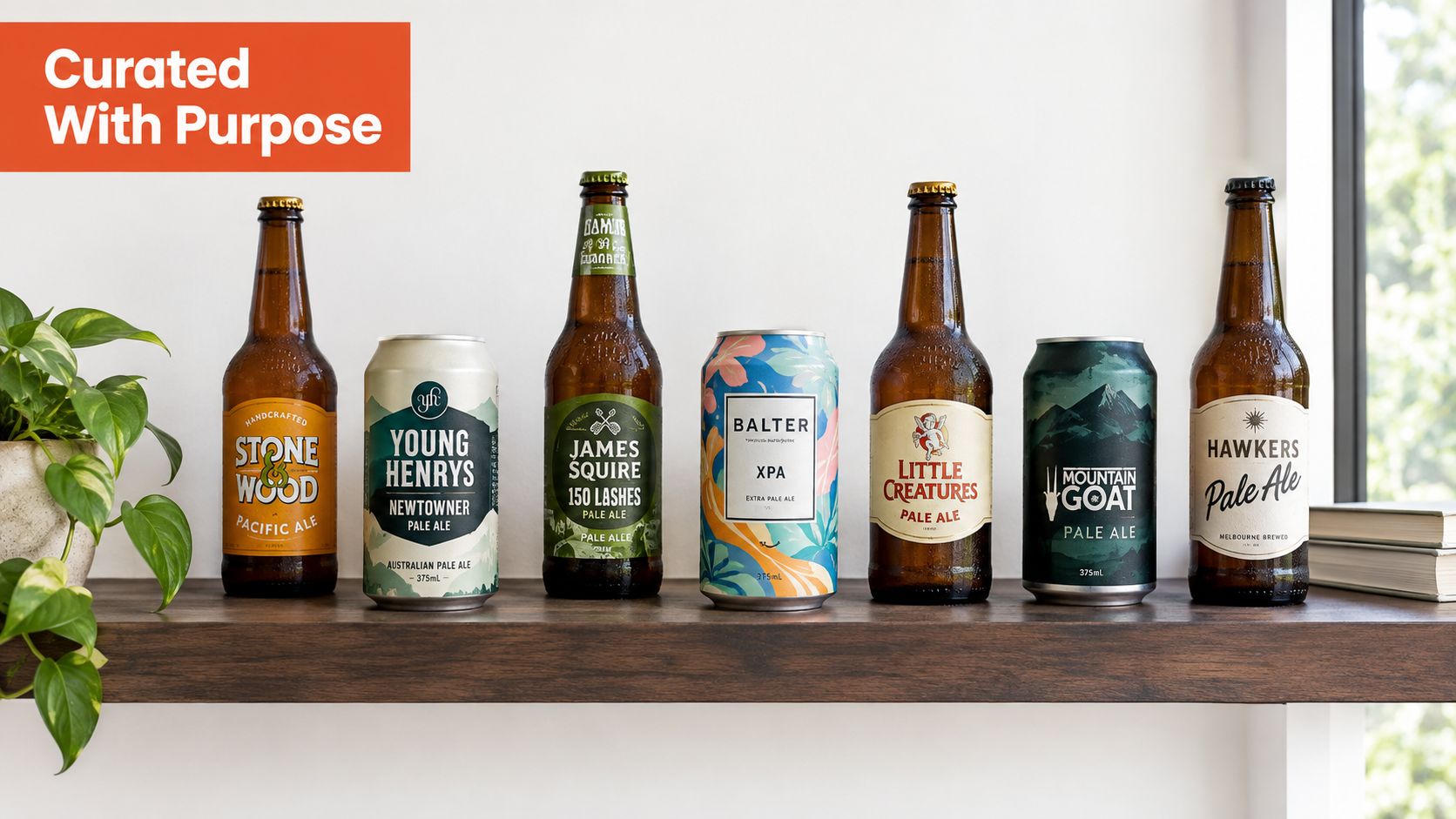
I rate collections by balance first. If you've got ten hype tins but nothing crisp, sessionable, or easy to hand to a mate who drops around, the collection isn't complete. It's narrow.
One of the strongest public benchmarks in Australia is the Great Aussie Beer Shed and Heritage Farm Museum in Echuca, which reports more than 24,000 beer cans from Australia and around the world, plus taps, trays, barrels, bottles, signs, and brewery equipment at the Great Aussie Beer Shed and Heritage Farm Museum listing. That same reference notes Carlton & United Breweries first released canned beer in 1958, and more than 2 million cans were sold in the first month. That history matters, but most home collectors don't need museum scale. They need a cellar that's drinkable.
Practical rule: If every beer in your collection requires the “right moment”, you've built a display, not a working collection.
Collect by occasion, not just by style
The old idea was to chase rarity. The smarter approach now is to curate by use case.
A strong collection usually has room for:
- Sessionable beers for hot weather, gatherings, and long afternoons
- Mid-strength options when you want flavour with a lighter drinking mode
- Low-carb or lighter-profile beers for specific preferences and occasions
- Alcohol-free beers for moderation, hosting, or mixed-order flexibility
- Trophy beers that bring novelty, age-worthiness, or a story
That mix reflects how people buy and drink. It also stops you from filling shelves with beers that look impressive but don't move.
Provenance and freshness beat sheer range
Australian buyers tend to care about local relevance. On the Gold Coast, I'd rather see a tight collection of well-kept Queensland and Australian independents, backed by a handful of carefully chosen internationals, than a warm cupboard full of random labels.
A world class beer collection should feel intentional. Every carton earns its place. Every beer has a job. And the whole lot should be ready to drink, gift, or share without apology.
How to Choose Beers Worth Keeping and Drinking
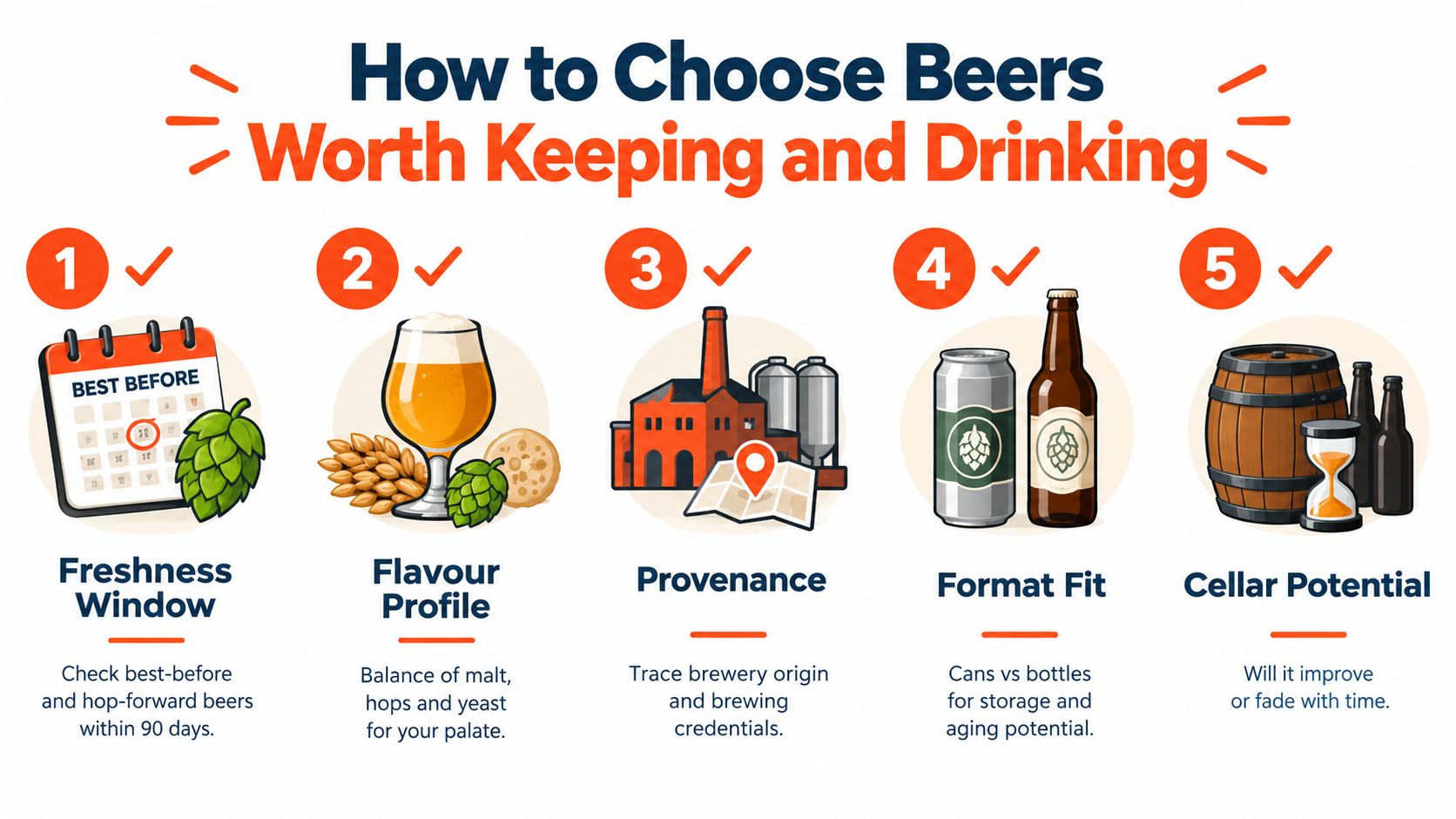
Buying well is harder than buying a lot. Most mistakes happen when someone confuses novelty with quality, or quantity with coverage. The cleanest fix is to use a short filter every time you're about to add beer to the collection.
Use a five-part selection filter
I keep it simple.
-
Freshness window
Hop-forward beers need urgency. Richer, malt-driven or stronger styles can often sit a bit longer. If you can't tell when it was packed, be cautious. -
Flavour role
Don't buy five beers that all do the same job. One bright pale, one crisp lager, one easy mid-strength, one darker option, one conversation beer. That's a better spread than a wall of similar hazies. -
Provenance
Know who brewed it and where it came from. Local provenance matters because shorter travel and faster turnover usually help freshness. -
Format fit
Cans are practical for storage and transport. Bottle-conditioned or specialty bottled beers can still have a place, but only when the beer style suits it. -
Occasion fit
Ask where this beer belongs. Beach esky. Dinner table. Gift pack. Post-ride fridge. Quiet Sunday. If you can't answer that, it may not deserve space.
Build the core first
The collection gets stronger when the base is boring in the best way. You want reliability before you want fireworks.
A sensible core might look like this:
- A fridge staple: something clean and versatile
- A social beer: lower intensity, easy to share
- A food beer: enough structure for a meal
- A seasonal slot: rotate this with the weather
- A specialty slot: limited releases, barrel influence, or cellar candidates
The best collectors aren't the ones who chase every can drop. They're the ones who can open the right beer for the right person without rummaging around.
Trial before you commit to cartons
Mixed packs are useful because they let you test your own palate before you overbuy. That matters more than people think. Plenty of beers are exciting for one can and tiring by the end of a carton.
If you like discovering breweries in person before buying deeper, these expert tips for brewery tours are handy for planning a day where you can taste with context, talk to staff, and work out what's worth bringing home.
A good example of occasion-based buying is Event Crusher Pale Limited Edition 375ml. Based on the product details, it's a 3.9% pale in a 375mL can, light in colour, crisp on the palate, with citrus, fresh lime, white wine and gooseberry character, plus a dry finish and subtle bitterness. That tells you exactly where it fits in a collection. Not as a trophy bottle, but as a purposeful slot for hot days and easy-drinking refreshment.
A quick decision table
| Question | Keep it | Leave it |
|---|---|---|
| Do you know when you'd drink it? | Yes | No |
| Does it add something different? | Yes | It overlaps heavily |
| Can you store it properly? | Yes | Not really |
| Would you buy more after one can? | Probably | Unlikely |
A lot of collectors save themselves money. If the beer doesn't pass three out of four, it probably doesn't need to come home.
Where to Source Local and International Beers Without Compromising Freshness
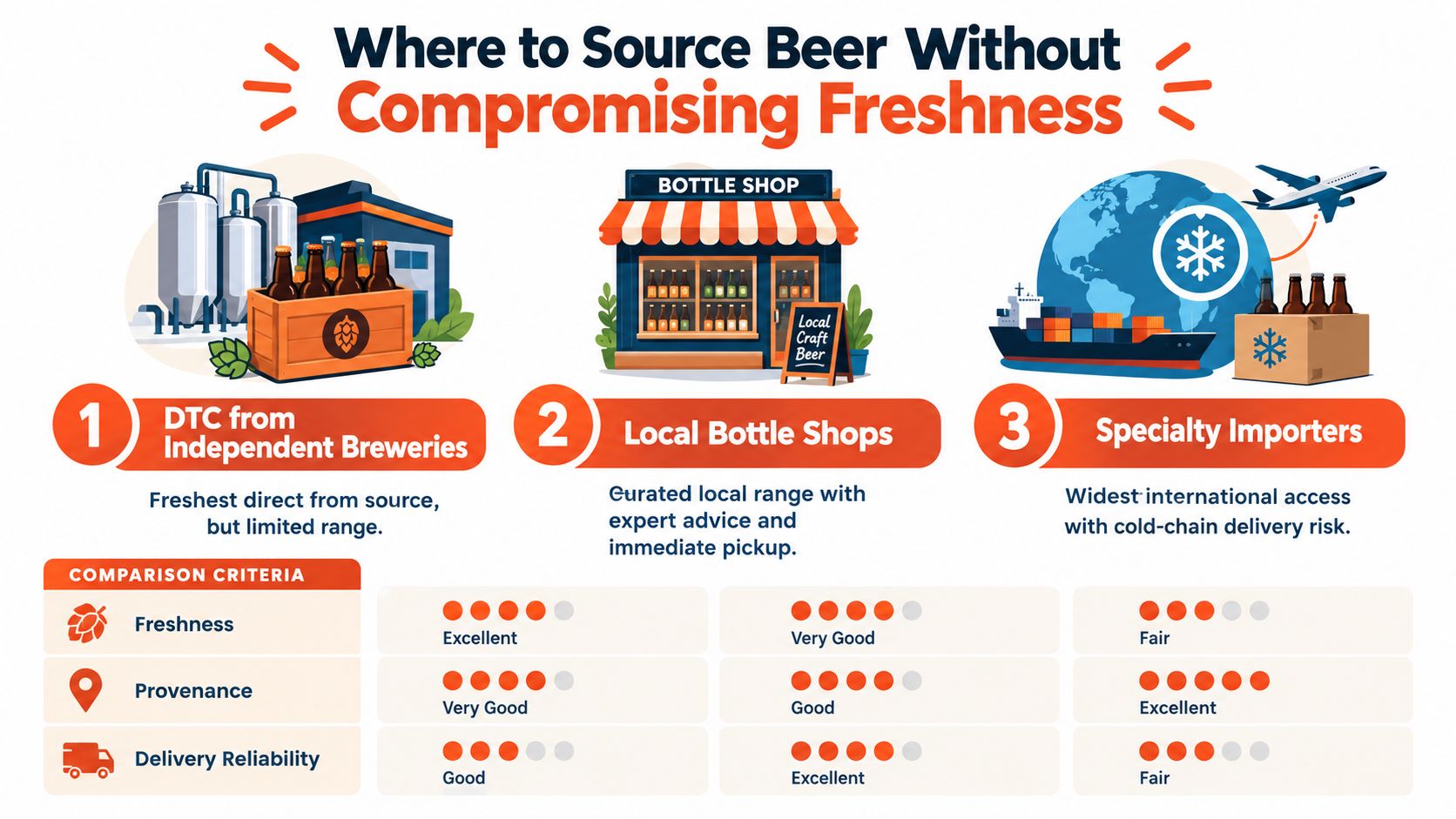
Where you buy from changes what lands in your fridge. Two beers with the same label can arrive in very different condition depending on who handled them, how long they sat warm, and whether anyone cared about storage between brewery and doorstep.
Compare the three main channels
Here's the short version.
| Channel | Best for | Trade-off |
|---|---|---|
| Direct from independent breweries | Fresh local releases and clear provenance | Narrower range |
| Local bottle shops | Curated variety and same-day pickup | Storage quality varies shop to shop |
| Specialty importers | Access to overseas styles and hard-to-find releases | Longer cold-chain risk |
For Queensland buyers, direct-from-brewery often wins on freshness. You're cutting out extra dwell time and usually getting beer closer to release. Bottle shops can still be excellent if the staff rotate stock properly and keep cold-sensitive beers chilled. Importers are useful, but they need more scrutiny.
Ask better questions before you order
You don't need to interrogate anyone. Just check the things that matter.
- Packaging date visibility: If it's a fresh style, can you confirm when it was packed?
- Cold storage practice: Was it kept refrigerated, especially after arrival?
- Delivery timing: Will the beer sit in a depot or van for long periods?
- Release cadence: Is the seller moving stock regularly, or are releases lingering?
That's particularly important when ordering cartons online. If you're building mixed drops for a barbecue menu, food pairings can help you choose styles that will get opened. For example, ideas around backyard grilling with Smokey Rebel can help you think in terms of drink-and-food occasions rather than random shelf fillers.
Buy local for freshness, international for contrast
The strongest collections I see aren't internationally broad for the sake of it. They use local beer as the backbone and international beer as punctuation.
That means:
- local pale ales, lagers, and seasonal cans for regular rotation
- a few interstate or overseas benchmark styles for comparison
- a measured approach to anything that's highly freshness-sensitive
Australian retail range has expanded sharply, with beer range in major retail reportedly growing 165% over the last decade to 2,312 products, while broader market commentary also points to a strong preference for local sourcing and easy-drinking flavour profiles in the market coverage from Man of Many. That's exactly why a world class beer collection in Queensland should be selective, not bloated.
If you're ordering direct online and want a sense of how local delivery works in practice, Carbon 6 has a useful guide to beer delivery on the Gold Coast. It's relevant because the delivery method is part of the beer quality equation, not just the purchase itself.
Storing and Rotating Your Collection for Peak Flavour
Most collections either become serious or fall apart. Storage isn't an accessory to collecting. It is the collection.
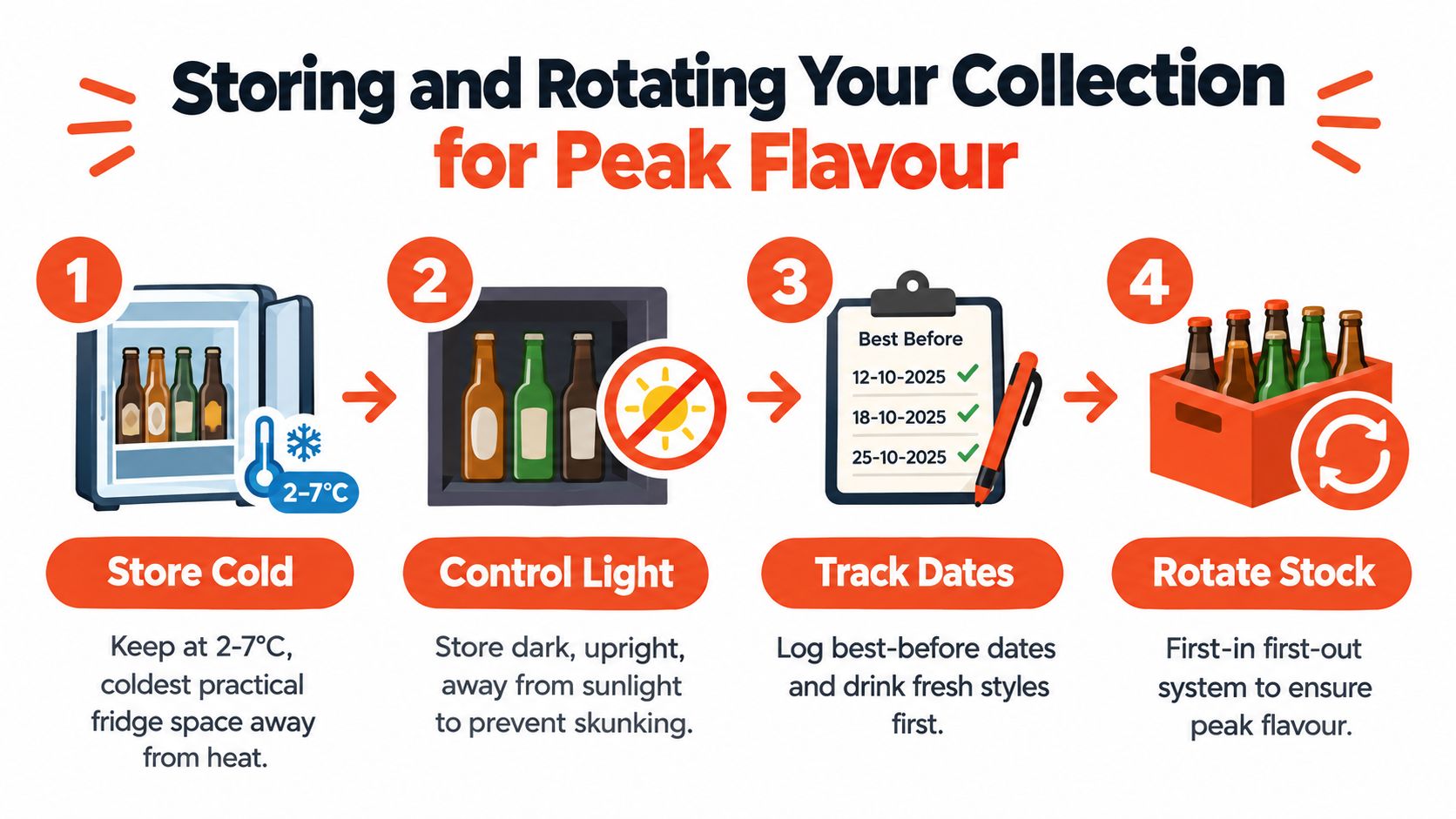
A peer-reviewed study on beer transport and storage found that raising temperature accelerates flavour deterioration, increasing aldehydes, colour and haze while reducing iso-α-acids, and concluded that the coldest practical storage temperature is the key preventive measure. In practice, storage at 0 to 4°C can avoid measurable oxidation signs for several months according to the Journal of the Institute of Brewing study.
Keep tighter temperature bands than most people think
“Cool” isn't precise enough. For quality-managed beer storage, Australian guidance presented in a draught-beer quality summit lists storage at 0 to 10°C with a 7 day storage frequency expectation, and some draught programs dispense at about -0.5 to 3°C. The same guidance reports beer stored at 4°C had a shelf life of 112 days versus 28 days at 20°C, a 4x improvement when cold storage is maintained, as noted in the Monash-linked quality guidance PDF.
For a home collector, that means:
- Ready-to-drink stock belongs in the coldest practical fridge space
- Specialty stock can have its own zone if the temperature is steady
- Warm corners, garages, and laundry shelves are poor long-term options in Queensland
Cellar habit: Move fresh arrivals into refrigeration straight away. The biggest damage often happens in the hours or days before someone “gets around to it”.
Run your collection like stock, not like clutter
A first-in, first-out system works because it removes emotion from the decision. The older fresh stock gets opened first. New arrivals go to the back. Seasonal beers move when the weather suits them, not six months later.
I like a simple weekly check:
- Look for beers nearing their best window
- Pull hop-forward cans into the front row
- Separate long-keepers from quick-drinkers
- Note anything that arrived warmer than it should have
Light also matters. Store beer upright, out of sunlight, and away from repeated disturbance. Upright storage helps keep seals tidy and sediment settled where relevant. It keeps the fridge manageable.
Split the collection into drink-now and hold zones
This is the easiest storage upgrade you can make.
Drink-now zone
Use this for pale ales, lagers, session beers, fresh seasonal cans, and anything you'd happily hand to a guest tonight.
Hold zone
Use this for specialty releases, stronger beers, and bottles or cans you're intentionally saving for a near-future occasion.
Doubt zone
This is for beers you suspect are past their prime but still worth checking. Open them soon. Don't let uncertain stock hang around and crowd out better beer.
If you want a deeper rundown on practical serving and storage ranges, Carbon 6 also has a guide on beer temperature and storage that fits well with a home-cellar setup.
What doesn't work
A few storage mistakes come up over and over:
- Temperature cycling: in and out of the fridge, or frequent door exposure
- Bulk buying without a plan: cartons of delicate beer that won't be finished in time
- Mixed old and new stock: fresh arrivals disappear behind older labels
- Saving everything “for later”: some beers don't improve. They just fade
Beer rarely rewards neglect. If you bought it for bright hop aroma or crisp finish, drink it while those things are still there.
Curating Responsibly and Staying Compliant When You Share Your Collection
A world class beer collection should be impressive without being irresponsible. That matters whether you're gifting a mixed pack, posting a shelf photo, writing tasting notes, or running a brewery account.
In Australia, the core standard is the ABAC Responsible Alcohol Marketing Code, which applies to marketing communications within a marketer's reasonable control, including brand advertising, digital and social media, packaging, point-of-sale material, retailer advertising and other collateral. It also covers both content and placement, not just what the ad says but where and how it's shown, as set out in the ABAC Code overview.
What responsible presentation looks like
If you share your collection online, the tone matters.
Business Queensland states that ABAC requires alcohol marketing and packaging not to show or encourage excessive or rapid consumption, misuse, abuse, or consumption inconsistent with the NHMRC alcohol guidelines, and not to depict people under 25 years old. It also prohibits material with strong or evident appeal to minors, content suggesting alcohol causes success or a significant mood change, and content showing drinking before tasks needing high alertness such as driving or operating machinery in the Queensland liquor advertising guidance.
That has practical consequences for collectors:
- Shelf photos should focus on the collection, not reckless consumption cues
- Gift messaging should centre flavour, occasion, and craftsmanship
- Social posts shouldn't glamorise speed, excess, or risky settings
- Event invites should avoid any suggestion that drinking is tied to performance, status, or pressure
Home delivery and age checks are part of the process
For online alcohol sales and delivery in Australia, the national retail drinks code applies across all states and territories, and public-policy guidance says sellers must hold a liquor licence, prevent children under 18 from making online purchases, and require photo ID at delivery or collection according to the national Retail Drinks code document.
If you sell, send, or organise deliveries, compliance isn't admin fluff. It's part of quality control. The same goes for understanding licensing obligations in your state. For Queensland operators or anyone thinking about the commercial side of collecting and selling, this overview on how to obtain a Queensland liquor licence is a useful starting point.
A collection looks smarter when it's shared with restraint. Good taste includes how you present the beer, not only which beer you bought.
Moderation belongs inside the collection itself
One of the biggest shifts in Australian beer buying is that moderation now sits inside premium drinking, not outside it. Recent Australian liquor data shows non-alcoholic beer is in its 11th straight year of growth, mid-strength has overtaken full-strength as the biggest-selling style by volume, 48.5% of non-alcoholic beer baskets also included an alcoholic item, and ecommerce liquor sales through bottle shop websites grew 16.2% in the last year, according to the Drinks Digest report on changing beer habits. A mature collection reflects that by making room for different drinking modes, not just stronger or rarer stock.
Keeping Your Collection World Class Over Time
The best collections don't stay good by accident. They stay good because someone pays attention. A quick seasonal reset does more than another impulse order ever will.
Run a seasonal audit
Every few months, pull the whole lot into view and be honest.
Ask:
- What got opened first
- What lingered too long
- What style was missing when mates came around
- What looked exciting to buy but didn't suit your habits
That last one matters. Plenty of beers are fun to acquire and awkward to finish. If a style keeps stalling in your fridge, reduce it to a cameo slot rather than making it part of the core.
Keep notes that are actually useful
You don't need a spreadsheet worthy of a warehouse. A simple note in your phone is enough if it tracks the right things:
- Brewery and beer name
- When you bought it
- Where it came from
- Whether you'd reorder
- Best occasion for opening it
A collection becomes personal. Not sentimental, just sharper. You stop re-buying the wrong beers and start recognising your own patterns.
Let special releases stay special
Limited editions are highlights, not foundations. Keep a short wishlist for local releases, seasonal drops, or beers with a genuine story behind them. Then buy with intent rather than panic.
That approach suits modern Australian drinking far better than old-school hoarding. Your collection stays balanced, fresher, easier to rotate, and more useful when you're ordering online in cartons or mixed packs.
A short maintenance checklist
| Check | What to do |
|---|---|
| Fridge space | Protect cold room for beers that need it most |
| Style balance | Keep sessionable, moderate, and special-occasion beers in play |
| Old stock | Open or retire beers that have missed their moment |
| Buying plan | Replace gaps, don't duplicate clutter |
| Wishlist | Add local releases carefully and keep trophy buying selective |
A world class beer collection isn't the biggest shelf. It's the one that's ready for a hot Friday, a gift run, a proper meal, and a quiet night when only one good beer will do.
Carbon 6 Brewing Pty Ltd brews independent craft beer on the northern Gold Coast and sells direct to customers who care about freshness, flavour, and buying with purpose. If you're building a world class beer collection that works in Queensland conditions, visit Carbon 6 Brewing Pty Ltd and have a look at what fits your rotation.