American Pale Ales for a Queensland Palate
Oct 24, 2026
The esky lid is warm under your hand, the Gold Coast sun is still high, and three cold cans are sweating on the table. One is the lager everyone already knows. One looks like juice. The third smells like grapefruit peel and finishes clean.
That third can is the decision this guide is for. American pale ales are the hop-led, moderate-strength pour that can beat a soft hazy or a mid-strength lager on a Queensland arvo, if the can is still young.
Why American Pale Ales Belong in the Esky
You're halfway through a warm afternoon and the choice is practical, not academic. The mainstream lager is easy and cold, and it asks almost nothing of your palate. The hazy pale is soft, juicy and a bit thick once the heat has been on your shoulders for an hour. The hop-led pale sits between them. Citrus or a light resin hits first, pale malt keeps it from tasting empty, and the bitterness is there without turning the second can into a chore.
That is the job most Australian drinkers already give this beer, even when the label just says pale ale. Local pale ales usually sit closer to the American template than to the older English one. English pales tend to keep the hops quieter and let biscuit malt do more of the talking. The American read is louder in the glass and still built to be drunk, not sipped like a trophy.
What the style is actually for
Think of four things you can check with your nose and the first mouthful.
- Moderate strength: enough body to taste like beer, not a tall, boozy IPA.
- Pale malt: a light, bready base that stays out of the fruit and resin.
- Citrus or resin aroma: grapefruit pith, orange zest, or a piney edge, not a heavy caramel sweetness.
- Bitterness you notice: a clean snap on the finish that you can keep drinking in the heat.
A good American pale ale should still taste bright at the bottom of the can, not sticky, harsh or tired.
Two calls sit under every later detail. Which beer fits a subtropical day, when a lager, a session IPA or a hazy might be the easier grab? And how do you tell a fresh can from a dull one when you're ordering a carton online, where an award sticker can't stand in for cold storage? Curiosity about flavour, and a bit of local provenance, is reason enough to sort those out before you commit to a pack.
How American Pale Ales Took Shape
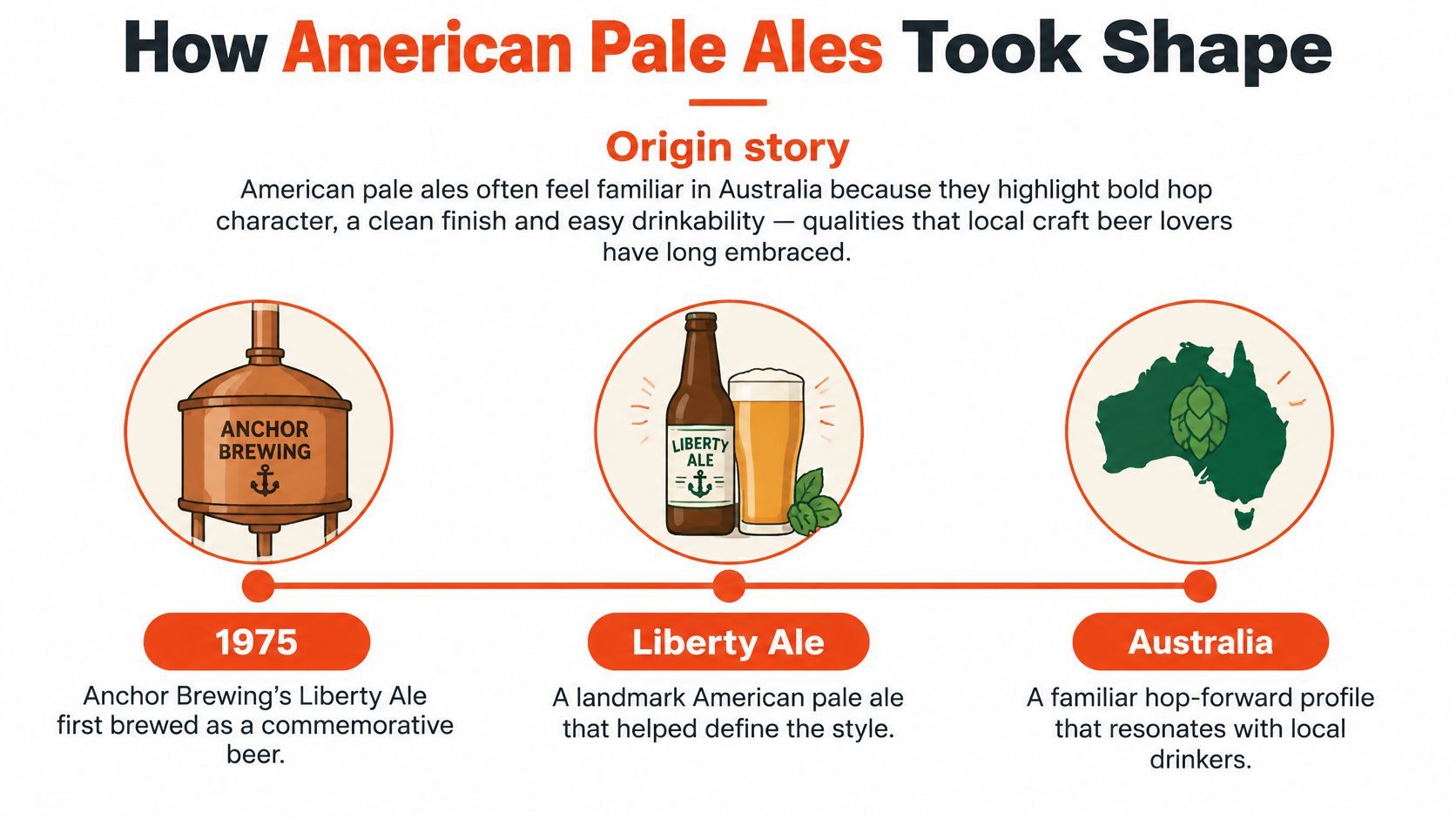
The can in your hand has a short, specific family tree. Anchor Brewing's Liberty Ale, first brewed in 1975 as a commemorative beer, is widely treated as an early modern American ale. It showed drinkers a pale beer that led with hops instead of hiding them behind malt. Sierra Nevada then brewed its first experimental batch of Pale Ale in November 1980 and sent the finished beer out in March 1981. That beer became the benchmark people still taste against.
Those beers set a hop-led mark that readers usually place around 5% alcohol by volume. American hops did the aromatic work, and Cascade is the variety most often named for that citrus and light floral edge. The malt stayed pale. The bitterness was obvious. Nothing about the template demanded the extra alcohol and hop load of an India pale ale.
Why it feels familiar here
Australian beer writers describe the majority of locally produced pale ales as fitting that American tradition, rather than the lower-hop English model, according to the pale ale history most brewers still point back to. Local breweries didn't copy a Californian recipe card line for line. They kept the centre of the style, moderate strength, pale malt, citrus or resin, and a bitterness you can taste, then bent it with Australian ingredients and drinking habits.
That pathway mattered for independent brewing. A recognisable pale ale was a step away from mainstream lager without asking every customer to sign up for IPA intensity. You can taste the bridge in a modern Queensland can. Bright hops, a clean finish, and a strength that still makes sense after a swim.
Colour, original gravity, bitterness and how dry the beer finishes are the measures that turn that story into a glass you can judge.
What an American Pale Ale Should Taste Like
Numbers only help if you can taste them. The practical Australian benchmark comes from the Australian Amateur Brewing Championship style guidelines. An American pale ale there sits at 3.8–5.0% ABV, original gravity 1.038–1.053, final gravity 1.006–1.012, 20–45 IBU, and 2–5 SRM colour.
Put that in the mouth. Original gravity is how much sugar is in the wort before yeast starts. Final gravity is what's left when fermentation slows. A wort at 1.050 that finishes at 1.010 attenuates about 80%. Most of the sugar becomes alcohol and carbon dioxide, so the beer stays crisp, while enough malt structure remains to hold American hop character up. Too little malt and the hops taste sharp. Too much leftover sugar and the glass turns soft and slow.
Where a warm-climate beer goes wrong
Pushing bitterness toward 40–45 IBU without that fermentability is the Queensland trap. On a 4–5% beer, the bitterness can taste harsh or thin because there isn't enough malt sweetness, or enough body, to cushion it. Swing the other way and a higher final gravity softens the bitterness, then dulls drinkability. You notice it on the second can, when the finish feels sticky in the heat.
A useful modern target, still close to that competition window, is about 1.046–1.050 original gravity, 1.008–1.010 final gravity, 4.7–5.2% ABV, and 30–40 IBU. Sensory trials should set the last step. Local drinkers don't all want the same hop volume, and a warm afternoon punishes a beer that looks right on a spec sheet and drinks heavy.
| Measure | AABC guideline | Expressive target |
|---|---|---|
| Alcohol | 3.8–5.0% ABV | 4.7–5.2% ABV |
| Original gravity | 1.038–1.053 | 1.046–1.050 |
| Final gravity | 1.006–1.012 | 1.008–1.010 |
| Bitterness | 20–45 IBU | 30–40 IBU |
| Colour | 2–5 SRM | Stay inside 2–5 SRM |
What you should smell and taste
The sensory picture is simple. Citrus or resin on the nose. Pale malt, not toffee. Bitterness you notice on the swallow. A finish dry enough that a second can still sounds like a good idea. If the colour is deep amber or the malt tastes like dessert, you're in a different pale ale. If the alcohol warms your chest, you've crossed toward IPA.
Practical rule: chase a dry finish before you chase a bigger IBU number. Bitterness without fermentability tastes harsh in the heat.
Hops Malt and the Brewing Choices That Matter
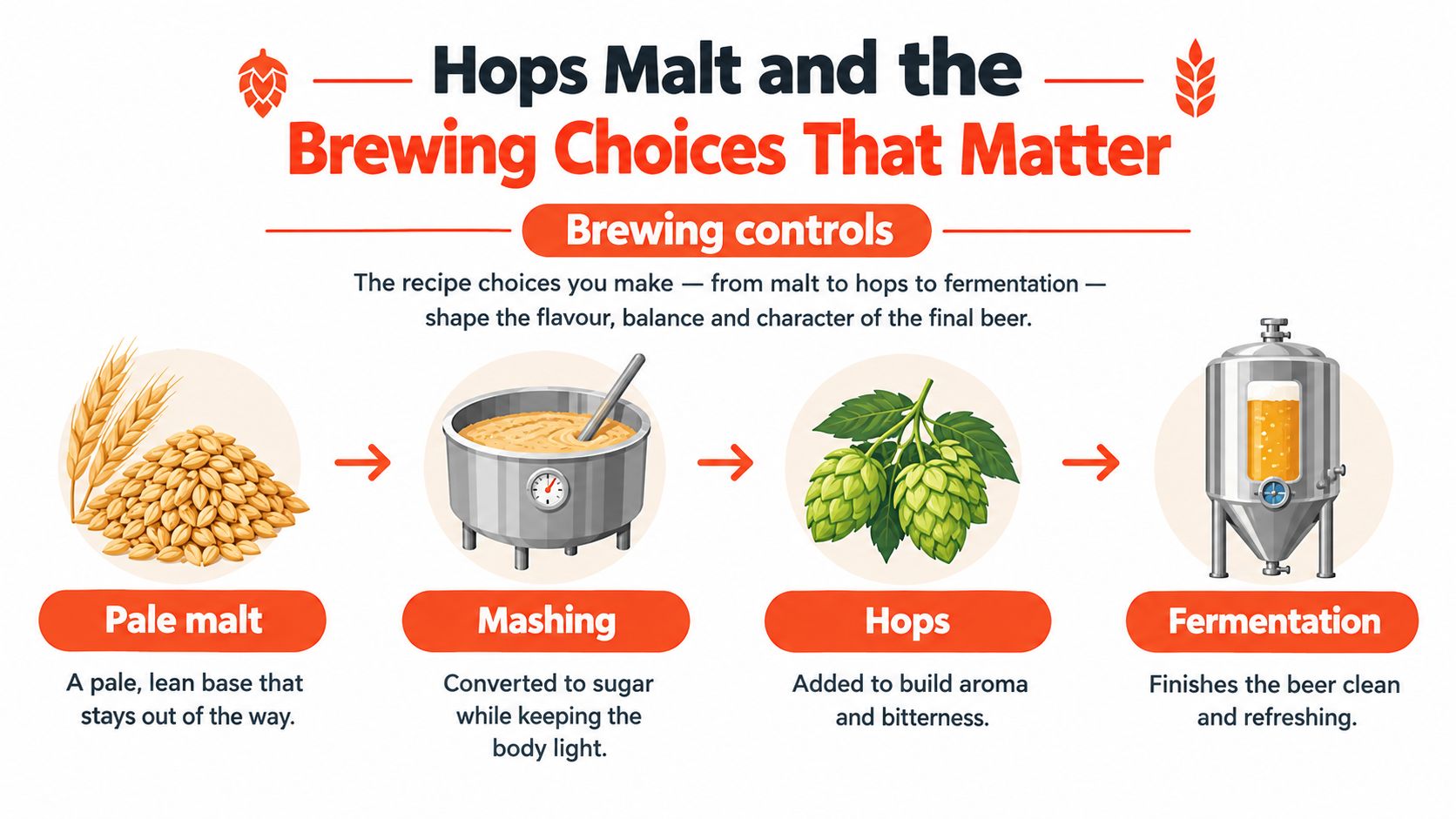
The spec sheet doesn't pour itself. A pale, lean malt base is the first choice. It should taste like clean grain, not biscuit shop or caramel slice, and the mash should turn that grain into sugar the yeast can finish. Leave the body heavy and the hops have to shout. Dry the beer out and the same hop charge tastes brighter.
Cascade is the historical reference for the aroma, grapefruit and a light floral edge rather than earthy English hedge. Australian versions keep that citrus or resin centre and often swap in locally favoured varieties around it. The point isn't a museum pour of one American hop. It's the same shape of flavour.
Bitterness hops and aroma hops are different jobs
Early kettle hops isomerise and build the IBU number. Late additions and dry hops are there for smell and flavour, and they are fragile. That's why a dull can can still be bitter. The alpha acids did their work. The essential oils didn't survive heat, oxygen or time. If you want the grapefruit you smelled at the brewery, the late hops have to reach the glass intact. A plain walk-through of what hops do in beer makes that split easier to follow.
Australian hop-quality guidance is blunt about storage. Packaged hops belong at 1–5°C, away from oxygen, heat and light. Unopened foil packs can stay usable for up to three years in the cold. Opened packs should be used within days, or alpha acids and oils drop away, as set out in Australian hop quality guidance.
- Seal the pack: vacuum-seal or nitrogen-purge once it's open.
- Write the lot age down: old hops make the recipe lie.
- Keep them out of hot sheds: a warm warehouse undoes a careful dry hop.
Finished hop-forward pale ale wants the same care. Cold and dark, with 3–5°C a suitable storage and serving range, drunk bright and young. For cartons posted around Queensland, insulated packaging, fast dispatch and a clear note to refrigerate are quality controls. They aren't slogans. A warm truck can flatten the late-hop work before you ever open the can.
Choosing an American Pale Ale for a Queensland Day
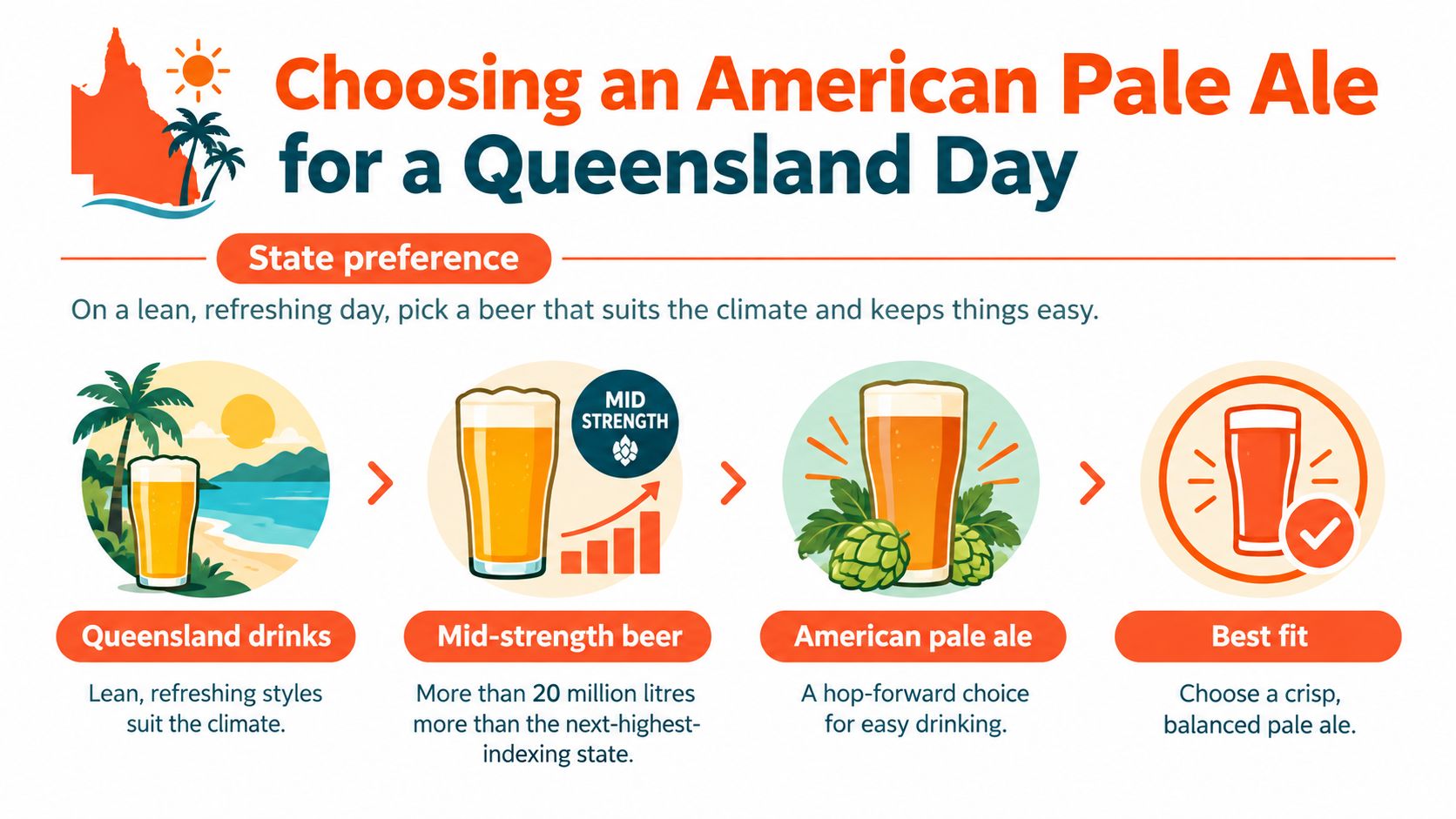
Queensland drinking leans refreshing. The state consumes more than 20 million litres more mid-strength beer than the next-highest-indexing state, and warmer weather also lifts interest in ginger and flavoured beers. Taste, not a style lecture, is what drives both trial and repeat purchase, which is the pattern in Endeavour Group's look at changing Australian beer tastes.
Four neighbours, one job each
An English pale is the maltier cousin. You'll get more biscuit and less hop perfume. Pick it when you want toast and a gentler bite, not grapefruit.
A full IPA asks for more alcohol and more bitterness than a long arvo usually needs. It earns its place with spicy food or when you want one stronger glass, not a session in the sun. A hot-weather comparison of which beers stay refreshing when the temperature climbs is worth reading before you default to the hoppiest can on the shelf.
A hazy pale trades clarity and a dry finish for softness and juice. Lovely when you want a ripe, pillowy mouthfeel. Tiring when the humidity is already doing that job.
A mid-strength lager wins on sheer ease when hops aren't the point. It's the cold, simple option, and Queensland already drinks a lot of it for that reason.
An American pale ale fits when you want citrus or resin, moderate strength, and a clean finish that doesn't fatigue the palate. Not heavier than the day. Not as plain as the lager.
Two local expressions of that choice
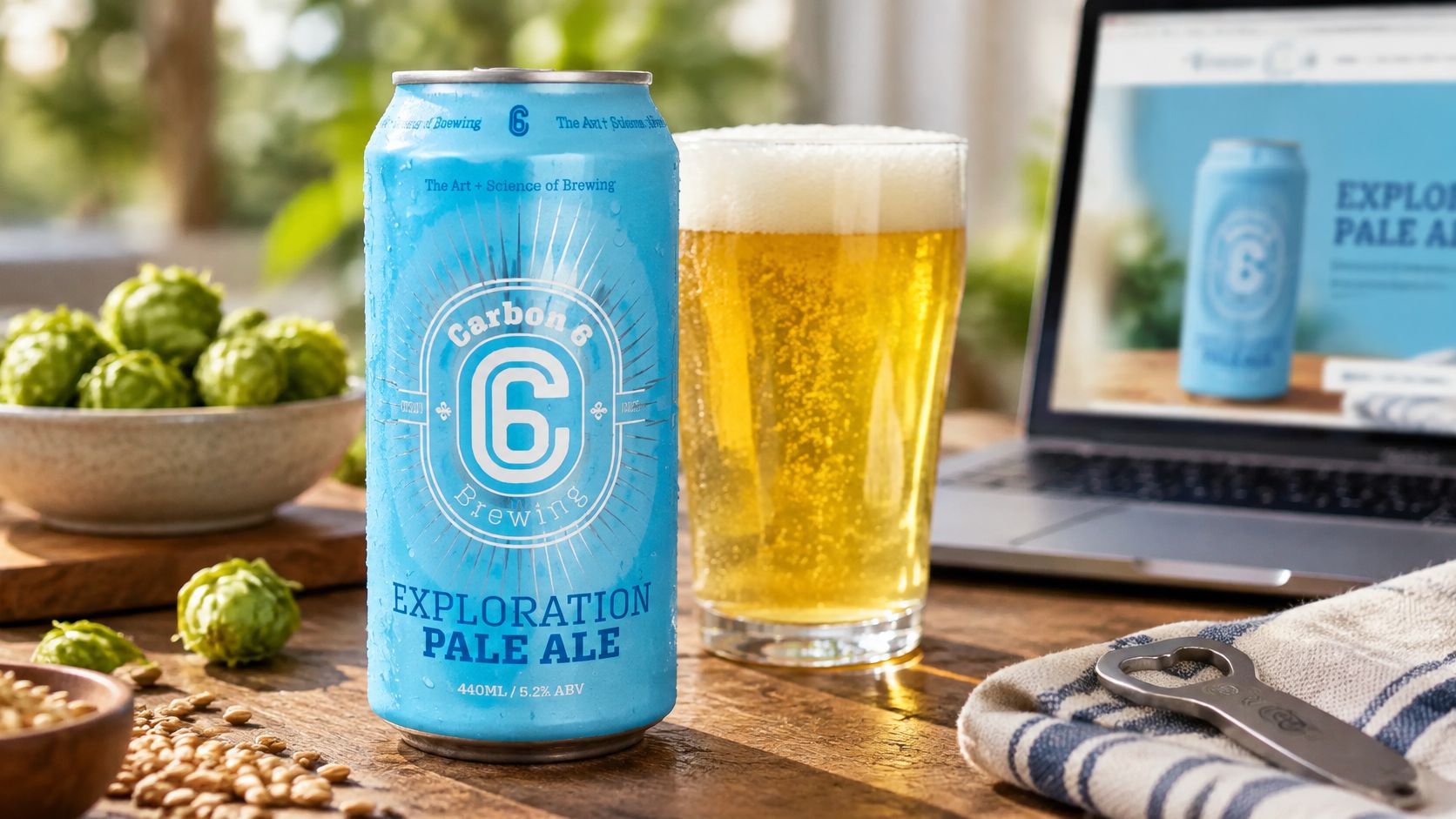
Exploration Pale Ale - 5.2% ABV is the fuller pale ale pour from Carbon 6 Brewing in Stapylton. It's sold online in 16-packs and 4-packs, with single 440 mL cans onsite. That's the can when you want standard-strength pale ale character and a crisp, adventurous flavour.
Event Crusher Pale is the lighter counterweight, a limited 3.9% edition in 375 mL cans. Motueka brings citrus and lime. Nelson Sauvin Amplifire adds a white-wine and gooseberry lift. Online and onsite 4-packs are the usual buy, and single cans are onsite only. It suits a post-activity pour when you still want hop aroma without the 5% frame.
Grilled prawns, salty chips, a sausage in bread, or a picnic table of outdoor food all sit happily next to either. Match the can to the hours ahead. Don't treat a bigger pack as a reason to drink faster.
Judging Freshness Before You Buy Online
Hop aroma is the part that fades first. A little flavour integration is normal. The sharp citrus can round off, and resin can sit closer to the malt. Heat and light are different. They make citrus and resin taste dull, papery or stewed, even when the beer is still bitter.
Australian buyers aren't only chasing the cheapest slab. Independent breweries lifted craft's share from 17% in 2019–20 to 21% in 2024–25. Bottle shops are still the main channel, used by 90% of consumers, and 52% also buy through large distributors, based on research into Australia's independent breweries. Direct-to-consumer cartons and mixed packs need the same plain test, because a premium price doesn't keep oils alive in a hot van.
A drink-now or hold-briefly check
Look for a packaging date or a canned-on date before you look at medals. A young hop-led pale beats an older can with a trophy on the neck. Ask how it was stored if the shop or the brewery will tell you. More on how craft beer holds up after packaging helps separate ordinary ageing from damage.
- Drink citrus-forward pales soon: once the carton arrives, the bright oils are on the clock.
- A short, cold hold is fine: if the can was fresh and you keep it dark in the fridge, a brief wait won't wreck it.
- Don't treat a mixed pack as safer: the hoppiest can in the mix fades first, while a carton of one pale ale is easier to finish at its best.
Ordinary settling smells like the fruit getting quieter and the malt getting a fraction rounder. Heat damage smells flat, cardboard-like or cooked. If the can was warm in transit, drink the hoppiest beer first or don't expect the aroma the brewer built. Freshness still matters more than a slogan on the label.
Your Next Pour from a Local Brewery
A Gold Coast American pale ale worth opening is hop-led without being heavy, cold, young, and matched to the day in front of you. Reach for Exploration Pale Ale when you want the 5.2% pale ale character in 440 mL cans. Reach for Event Crusher Pale when a 3.9% limited can, with Motueka and Nelson Sauvin Amplifire, fits a lighter finish.
Check current packs on the Carbon 6 site, and call past the Stapylton brewery if you want an onsite single. Order a pack size you'll drink while the hops are still bright. A 4-pack you finish this week beats a bigger carton that sits warm in the garage. Keep it refrigerated. Put it in the esky as one choice among the afternoon, next to water and whatever else people are pouring, not as a prompt to get through more beer.
Independent breweries are a small slice of a concentrated market. In 2024 the two major suppliers still represented about 83% of Australian beer sales, while all other independent breweries together held about 5.75%, in figures the Independent Brewers Association put to Treasury. That context is why a clear hop aroma, a Queensland postcode and a can date you can read are worth more than a loud claim. You already know which can to look for. Freshness still outranks the sticker.
Carbon 6 Brewing Pty Ltd brews pale ales in Stapylton for Queensland drinkers who want hop aroma, a clean finish and a can that still tastes young. If you're choosing between a fuller pale ale and a lighter limited pour, see the current packs and brewery details at Carbon 6 Brewing Pty Ltd. Pick the size you'll drink while the hops are bright, and keep it cold.