
Peanut Butter Beer: What It Is and How to Enjoy It
Oct 23, 2026
Peanut butter beer is a beer, most often a dark style like a stout or porter, brewed with real peanuts, peanut butter, powdered peanut or peanut flavouring so it drinks like a liquid peanut dessert. That flavour already has a long local life: peanut butter was on sale in Australia from 1898, and one familiar brand family later held about 65 per cent of the market.
You're standing in the bottle-o fridge, thumb on a can that looks like dessert and beer had a quiet argument. The label promises peanut. Your mate reckons it's a gimmick. You still want to know what you'd be drinking, whether the foam will survive, and whether the can is honest about allergens before it goes in the trolley.
What Is Peanut Butter Beer
Nobody sensible is unscrewing a jar over a schooner at the bar. Peanut butter beer is brewed so the nutty, roasted, slightly sweet character is part of the recipe, not a last-second stunt.
What you taste depends on how hard the brewer leans in. A restrained version gives you warm roasted peanut sitting under malt, a bit like the smell of a fresh jar when you first twist the lid. A louder one goes full dessert: chocolate-adjacent richness, a soft sweet edge, and sometimes a pinch of salt that makes the finish feel like a peanut butter cup in a glass. It isn't a mainstream lager. It sits with the dessert beers and the novelty end of craft, the pour you buy because you're curious, not because you want ten of them.
What the name is actually promising
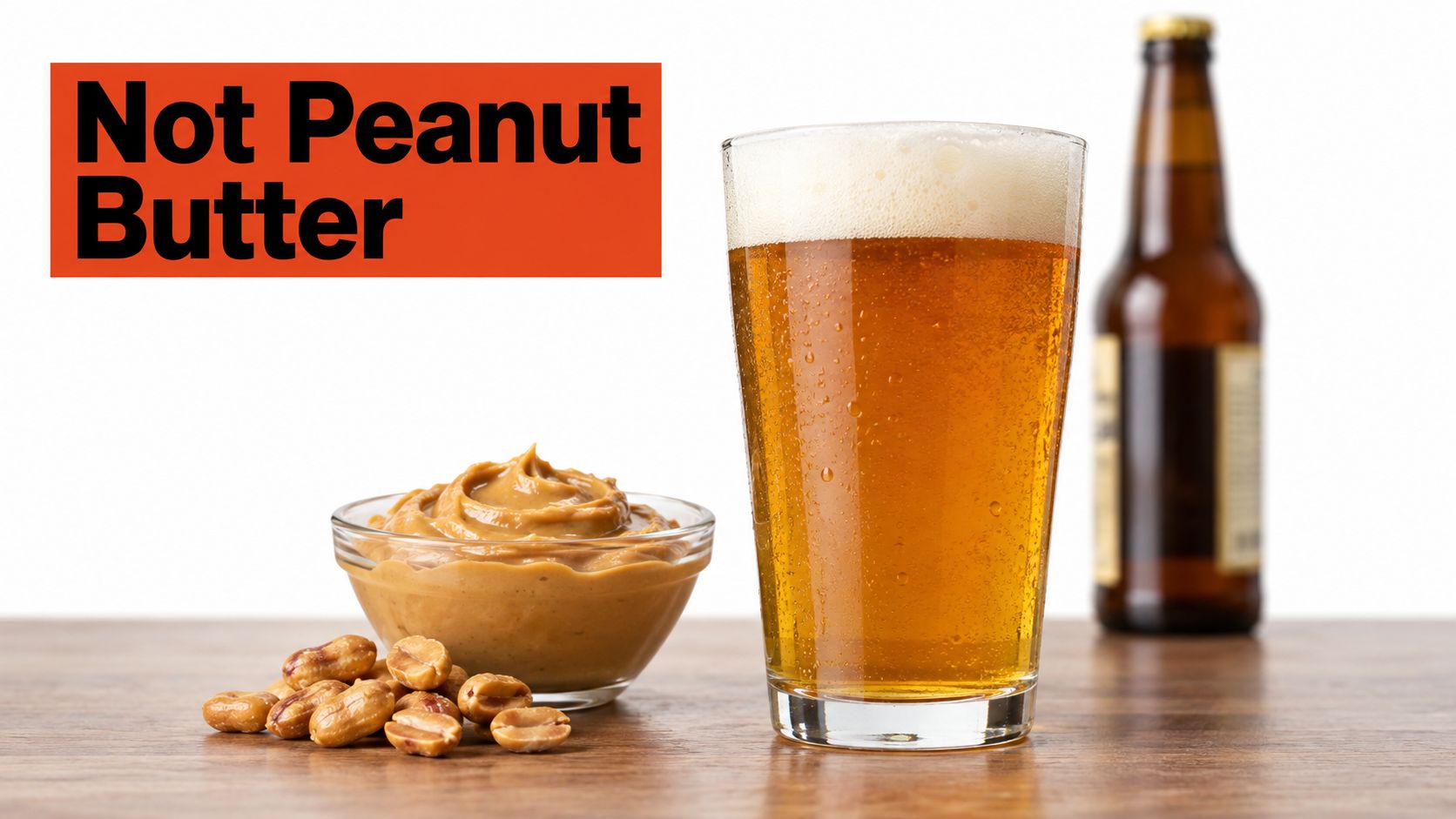
The name sets a flavour target, not a brewing method. Some cans use real peanuts or peanut butter. Others use powdered peanut or a measured flavouring. All of them are trying to land in the same neighbourhood: nutty, roasted, a touch sweet, and recognisable before you've read the back label.
Expect a range, not one house style.
- Subtle nuttiness: a brown edge or a quiet roast, closer to a nutty ale than a pudding.
- Middle ground: clear peanut aroma, some chocolate or caramel from the malt, still obviously beer.
- Full dessert: thick, sweet-savoury, the glass that makes someone say it tastes like confectionery.
If the first sniff is all fake banana and boiled sugar, the peanut never had a fair fight with the base beer.
You'll know what you're ordering once you clock the style on the can. A stout or porter is the usual home. A lighter ale can carry a gentler nut note. Either way, you're buying a flavoured specialty beer, not a spoon of spread dropped into lager.
How Peanut Butter Beer Became an Aussie Favourite
The flavour feels familiar because peanut butter was a pantry staple here long before dessert stouts were a thing. Sanitarium launched peanut butter commercially in Australia in 1898, several years before it was first sold in the United States. That's more than 125 years of commercial presence, not a trendy import that turned up with the first hazy IPA.
The buying habit stuck. Kraft-branded peanut butter reportedly held approximately 65 per cent of the Australian peanut-butter market in 2017, with annual sales of about A$60 million, according to that same Good Food account. Nobody needs a lecture to recognise the flavour. A brewery can treat peanut butter beer as adventurous in format and ordinary in taste memory.
When beer drinking changed shape
Australian beer didn't stay one thing either. Early beers were mostly top-fermented ales from small breweries serving local pubs. Lager wasn't brewed here until 1885, and the trade later centralised as mass production and transport improved. Apparent consumption then climbed hard and eased off. Australian Bureau of Statistics figures put the peak around the mid-1970s and early 1980s at approximately 1,900 million litres a year. Per person aged 15 and over, that was roughly 190 litres in the mid-1970s, falling to 107 litres by 2008–09.
When people drink less beer, a plain bitter doesn't automatically win the fridge. A flavour you already love from childhood toast can.
There's no authoritative national dataset that splits out peanut butter beer sales on their own. Read this style as one more turn in specialty brewing, not as an old Australian category with its own heritage plaque. The peanut is local and long-lived. The beer built around it is new.
How Brewers Build the Peanut Flavour
A brewer can build peanut character from whole roasted nuts, peanut butter, defatted peanut powder, or flavourings. Each choice trades freshness and texture against control: nuts can taste bold, while powder and extracts are easier to measure from batch to batch.
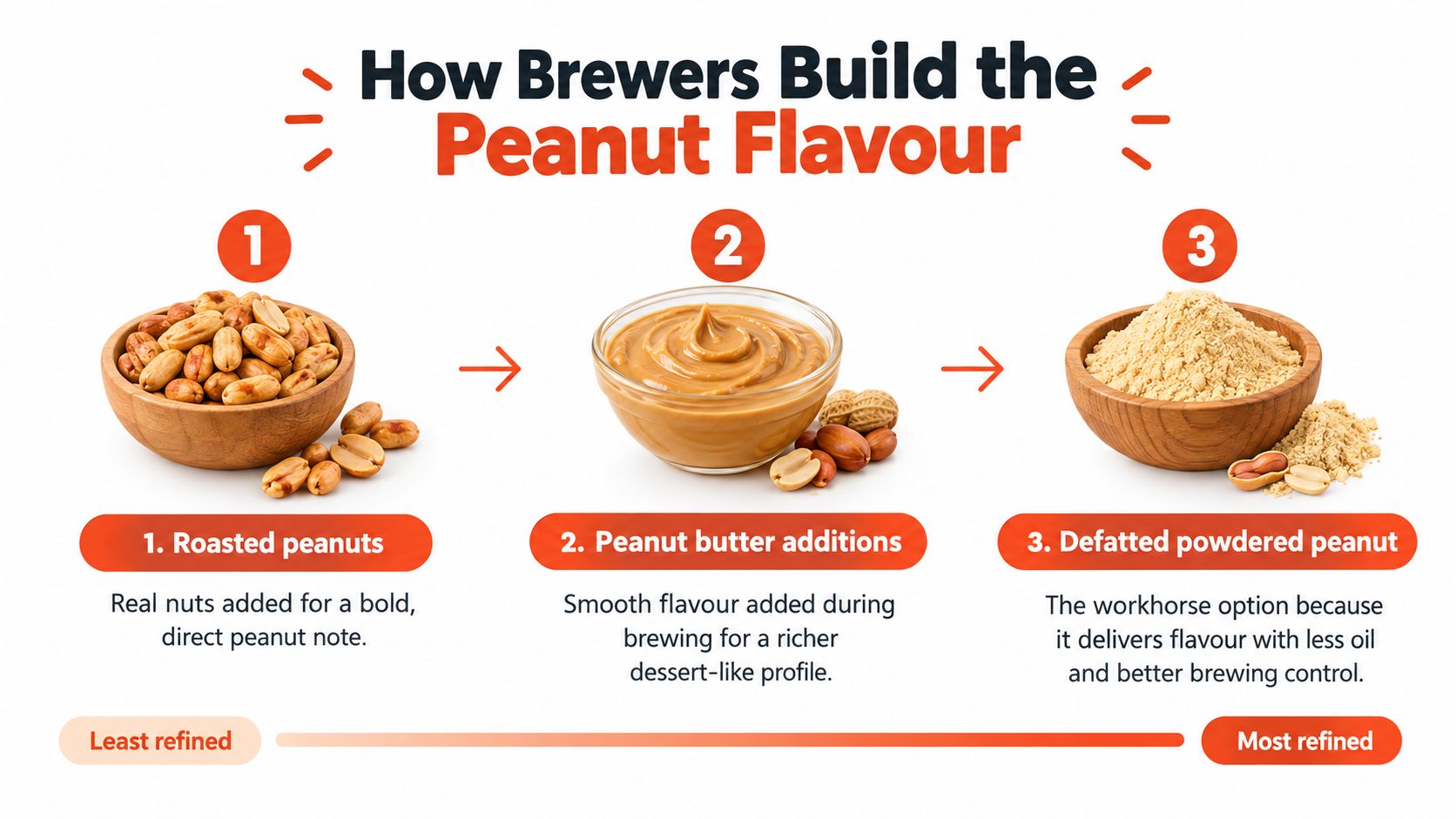
Whole or crushed roasted peanuts give a direct, fresh-roast flavour. They also add oil and solid pieces, which can cloud the beer, settle in the package and make filtration harder.
Peanut butter can deliver a dessert-like note, but a jar contains more than peanuts. One formulation in the FSANZ branded-food database lists roasted peanuts (86 per cent), vegetable oil, sugar and salt. Adding it to beer can bring fat, sweetness and sodium alongside the aroma. It's a bit like seasoning a stew with a whole jar of sauce: the main flavour arrives with a few passengers.
Defatted powdered peanut keeps much of the peanut character while bringing less oil. It is also straightforward to weigh, giving brewers tighter control over the dose without adding as much greasy material to the beer.
Extracts and natural flavourings offer the most consistent way to repeat a flavour across batches. They can suit a seasonal release, but peanut-derived ingredients still matter for allergen information. A flavouring's small size doesn't make its source irrelevant.
Why the oil ruins a good head
Peanut oil repels water. In beer, it can interfere at the surface where proteins and hop compounds help hold foam together, leaving the head weak. Solid particles add haze and can settle into a layer at the bottom of the glass, especially if the beer has not been carefully separated or filtered.
A small pilot batch helps a brewer see what each ingredient does before committing to a full brew. Measure additions rather than guessing, then record original and final gravity, pH, alcohol and turbidity to track changes. Check the pour too: sediment and foam retention show whether the oil is affecting the finished beer.
Then test how the flavour holds up in packaged beer. Keep samples refrigerated and at room temperature, and check for stale, paint-like or rancid notes that can develop if oil oxidises. Low-oxygen transfers and less air in the can help slow that deterioration.
Ingredient specifications deserve the same attention as the recipe. Peanut butter varies between brands and may include soy or milk ingredients, so the label on the tub is not a substitute for checking its specification. Mixed cartons and online listings also need clear allergen information. A playful flavour description should never make the peanut harder to spot.
Beer Styles That Suit Peanut Butter
Style is your best preview before you spend the money. Peanut doesn't taste the same in every glass, because the malt, the sweetness and the roast either back it up or argue with it.
| Beer Style | Typical Character | How the Peanut Shows Up |
|---|---|---|
| Stout or porter | Dark, roasted, often chocolate or coffee | The classic home. Peanut reads rich, sometimes like a peanut butter cup |
| Brown ale | Malt-forward, lighter body, gentle toast | A nutty edge without the full dessert weight |
| Milkshake IPA or pastry sour | Sweet, soft, often fruit or vanilla | Peanut plays against fruit, cream or vanilla rather than roast |
| Experimental lager | Cleaner, drier, less malt aroma | A faint nut note if the brewer is being cheeky. Easy to taste thin or odd |
Stouts and porters win most often because roasted malt already lives next door to chocolate. Add peanut and the brain does the confectionery maths for you. Brown ale is the quieter cousin: toast, a little nut, still a beer you could have with dinner. Milkshake IPAs and pastry sours are the playful end, where peanut shares the stage with fruit or vanilla. A lager can work as an experiment. It rarely feels inevitable.
If you want the roast and the cream without assuming every dark can is a peanut beer, it helps to know how dark beer styles differ. A milk stout, for instance, gets its softness from lactose and roasted malt, which is the same neighbourhood peanut likes to live in.
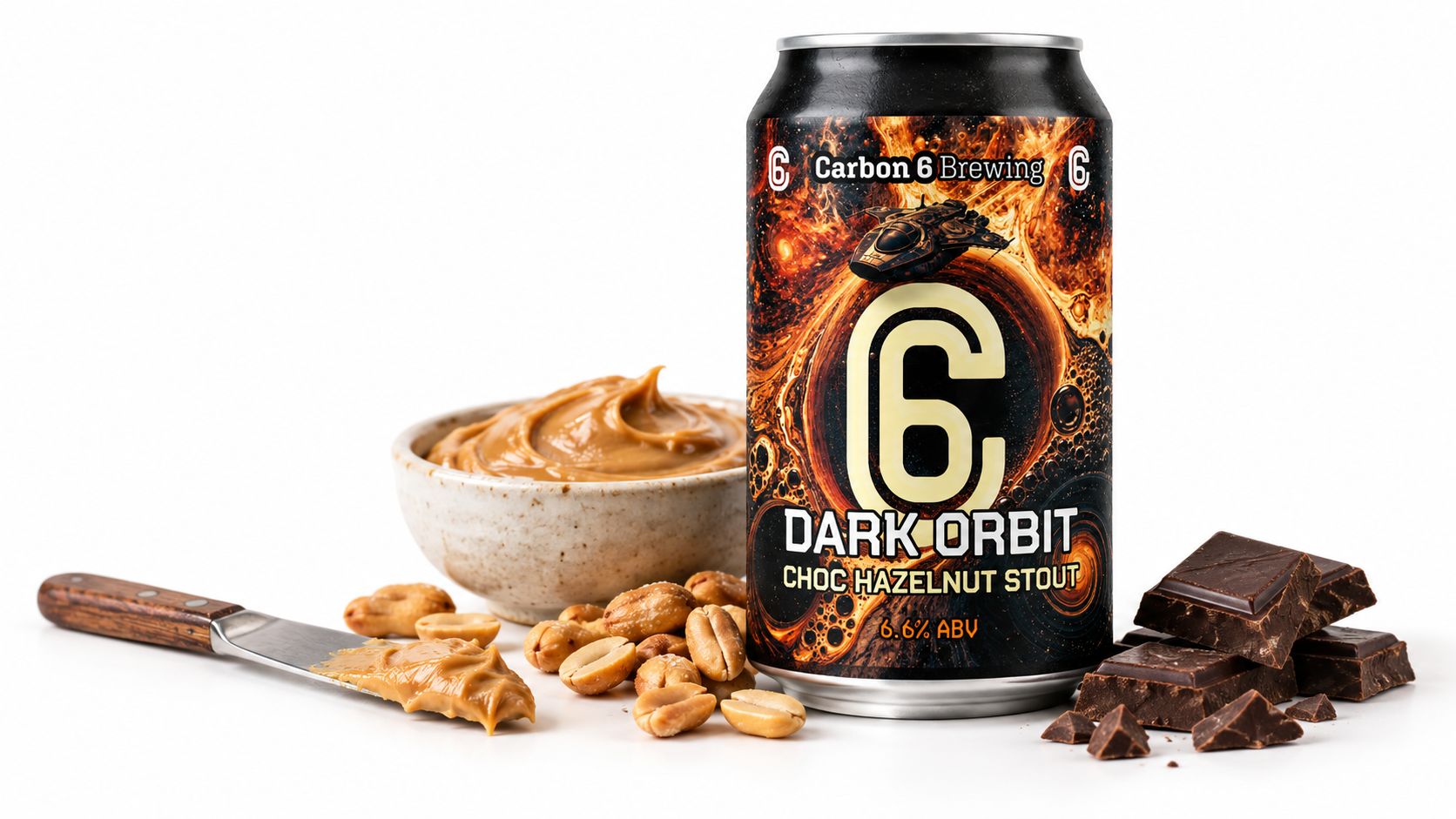
Dark Orbit Stout BAR is one local example of that base: a milk stout at 4.4% ABV, with roasted malt, cocoa and coffee notes, lactose softness, and a creamy finish. It comes in 4-packs online and onsite, with single 440 mL cans onsite only. It isn't a peanut beer. It's the kind of dark, velvety pour that shows why this flavour family keeps turning up in stouts.
Match the intensity to your mood. Dessert stout if you want the full peanut butter cup. Brown ale if you only want the nut.
Peanut Allergies and What the Label Must Tell You
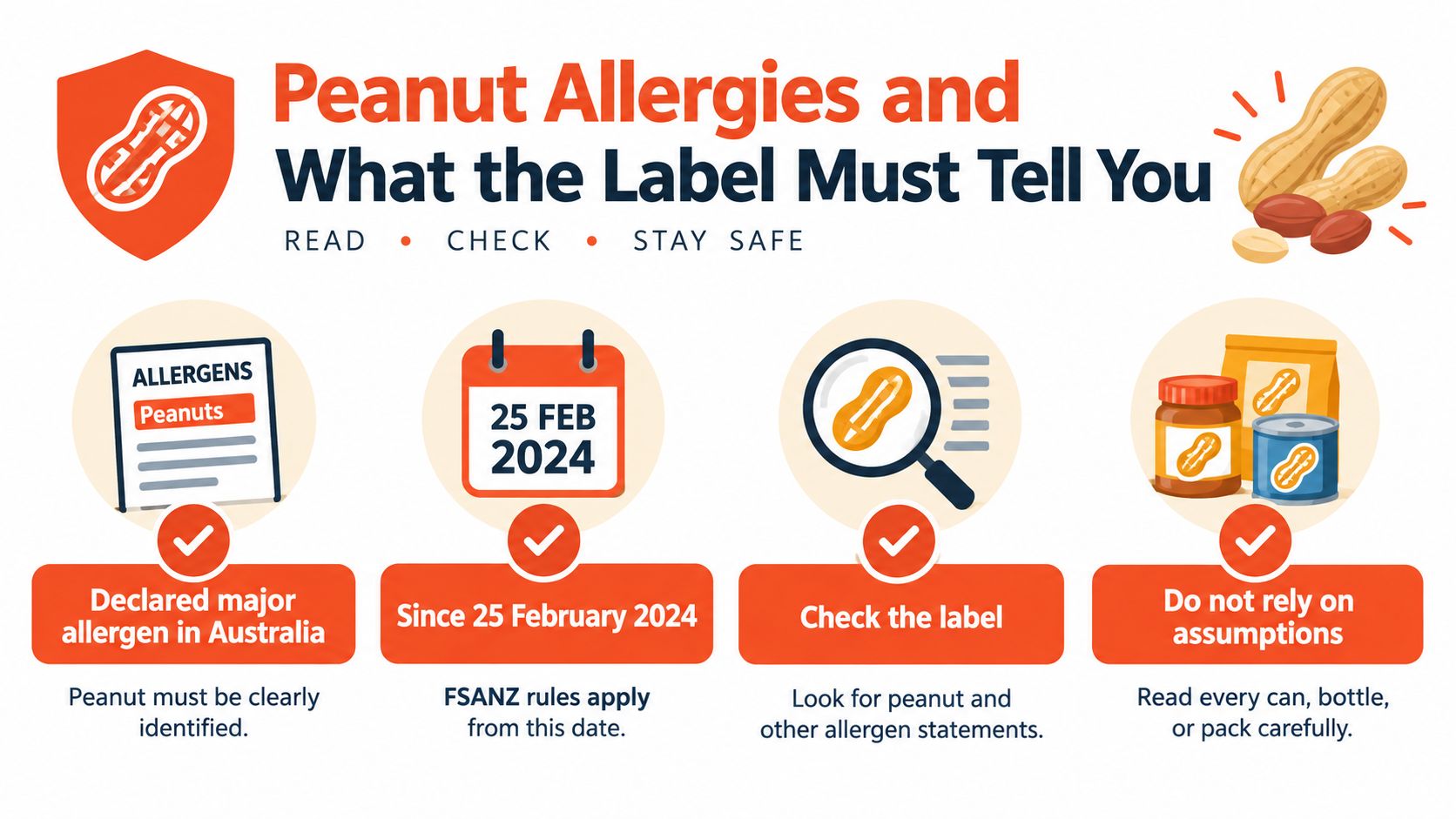
A peanut flavour can be a treat for one drinker and a serious allergy risk for another. In Australia, peanut is a major allergen that must be declared, even if only a small amount is used or it comes from an extract, flavouring or processing aid.
Under FSANZ rules, labels have required the prescribed allergen name peanut in bold in the ingredients list since 25 February 2024. A nearby bold summary must also begin with “Contains”. So a beer made with peanut butter, peanut extract or a peanut flavour concentrate should state Contains peanut.
Read the can like a safety label, not a tasting note. Start with the bold “Contains” statement, then check the ingredients for peanut, peanut butter, peanut flour, extract or flavouring. A playful name or picture on the front tells you about the beer's theme, not what is safe for you.
“May be present” needs care, too. Precautionary statements are voluntary, and warn of possible cross-contact. They do not confirm that a beer is free from peanut or replace good handling and cleaning practices.
For online orders, check the product page before paying as well as the can when it arrives. If shared equipment could affect your decision, ask the brewery directly whether it is used. A specific answer about the product and process is more helpful than a vague “contains nuts” note.
Breweries can use the Australian-developed VITAL framework to assess whether possible cross-contact from leftover allergen presents a significant reaction risk. Preventing that contact takes practical work: cleaning between peanut and non-peanut batches, keeping lots traceable and controlling dust during weighing. Those are brewery responsibilities. If you have an allergy, don't try to infer the answer from a flavour description.
The same patient reading helps with a beginner's guide to wine labels: look for the regulated information, rather than relying on marketing language, and check each product rather than assuming it matches one you bought before. Alcoholic drinks can contain peanut, and unclear information is a good reason to leave the can on the shelf.
Serving and Pairing Peanut Butter Beer
Take a stout-based peanut butter beer straight from a frosty fridge and the aroma can go quiet. Let it warm to about 10 to 13 degrees Celsius instead, and the roasted malt and nut come through. Much warmer, and the sweetness may start to feel heavy. A tulip glass or small snifter gathers aroma in its bowl; a standard pot glass is fine too. Sip it rather than knocking it back.
At the table, balance is the trick. Salty snacks bring the peanut forward, while sharp or savoury flavours stop a rich beer from drinking like dessert. Try pretzels or salted chips, a smoky burger, or sharp aged cheddar. The cheddar shifts the experience from pudding-like to more like a meal.
Chocolate is an easy match because cocoa often appears alongside roasted malt in stout. A square of brownie or dark chocolate can echo those flavours without competing. For a playful pairing idea, Japanese Kit Kat and seasonal chocolates show how familiar chocolate can move into nutty, roasted or confectionery territory. Keep the portions modest: stacking sweet beer with very sweet chocolate can flatten the flavours.
The same principle applies across the plate. A fuller beer usually suits richer food, while a sharp or salty bite gives the palate a reset between sips. This guide to pairing beer and food offers more matches to try.
Peanut butter beer is best treated as a sipping pint. It can feel richer than a standard lager, so slow down and pay attention to the flavour rather than turning the novelty into a race. ABAC's guidance aligns with Australian guidelines in treating more than 10 standard drinks in a week, or more than 4 standard drinks on any one day, as an inappropriate message to make light of. Enjoy a glass thoughtfully, and don't drink before driving, swimming or doing anything that calls for clear judgement.
Where to Find Peanut Butter Beer in Australia
You won't usually find this as a permanent tap next to the house lager. Peanut butter beers turn up as limited or seasonal releases from independent breweries. That's the hunt: local taprooms, independent bottle shops, brewery web stores and the occasional festival list. If it's popular, the run can be gone before the second weekend.
Judge the can before you judge the joke on the front.
- The style has to suit the flavour. Stout, porter or a sweet brown ale is a safer bet than a thin lager wearing peanut perfume.
- The allergen line has to be obvious. Contains peanut, in bold, on the pack and on the online page.
- The balance has to taste like beer. Nut and malt in proportion. If all you get is artificial sweetness, it's a flavouring exercise, not a brew.
Gold Coast and wider Queensland drinkers are close to a lot of small brewhouses that release odd things in short runs. Carbon 6 Brewing in Stapylton is one of those independent operations, selling direct as well as through local trade, which is how a lot of specialty cans reach a lounge room. A mailing list or a release post beats refreshing a generic supermarket page.
An online bottle shop in Australia is often the practical path once the local fridge has sold through. Check the allergen panel on the listing, buy a single four-pack before you commit to a mixed carton, and drink it while it's fresh. Oil-heavy beers don't improve by hiding at the back of the pantry.
The version worth your money is the one where the peanut is recognisable, the base beer still tastes like beer, and the label tells you the truth before you open it.
Carbon 6 Brewing Pty Ltd brews independent craft beer from Stapylton on the northern Gold Coast, including dark styles that sit in the same flavour family as a good peanut butter beer. If you want to see what's on the current list, or keep an eye out for the next limited release, visit Carbon 6 Brewing Pty Ltd. Have a look, check the labels, and pick a pack that suits a slow glass rather than a big session.