
Beer in a Barrel: A Guide to Barrel-Aged Brews
Oct 14, 2026
Beer in a barrel can mean three different things: keg-served draught beer, wine or spirit barrels used for ageing, or limited-release barrel-aged brews. The clearest way to judge the difference is to ask whether the barrel is serving the beer, shaping its flavour, or helping create a special maturation release.
So why can two beers described as “barrel” pours taste completely unrelated? Picture a Gold Coast tap list on a warm afternoon. One listing might point to a familiar beer poured from a keg, while another might describe a stout that spent time in oak, carrying traces of vanilla, tannin, acidity or residual spirit. The label sounds similar, but the experience starts with a different process.
Australia's beer story helps explain why this distinction matters. Beer availability reached about 190 litres per person in 1974–75, then declined to 82 litres per person by 2019–20, less than half that earlier peak, as wine and spirits gained ground and drinking habits changed. The Australian Institute of Health and Welfare alcohol consumption data suggests a mature market where variety, freshness and the occasion matter alongside volume.
For a Queensland drinker, barrel-aged beer can answer a few different motivations. You might want a flavour you can't get from a standard pale ale, a release with a local story, or a beer worth slowing down over with mates. You might also want confidence that the price, strength, storage needs and taste will suit you before ordering a mixed pack online.
What Beer in a Barrel Means
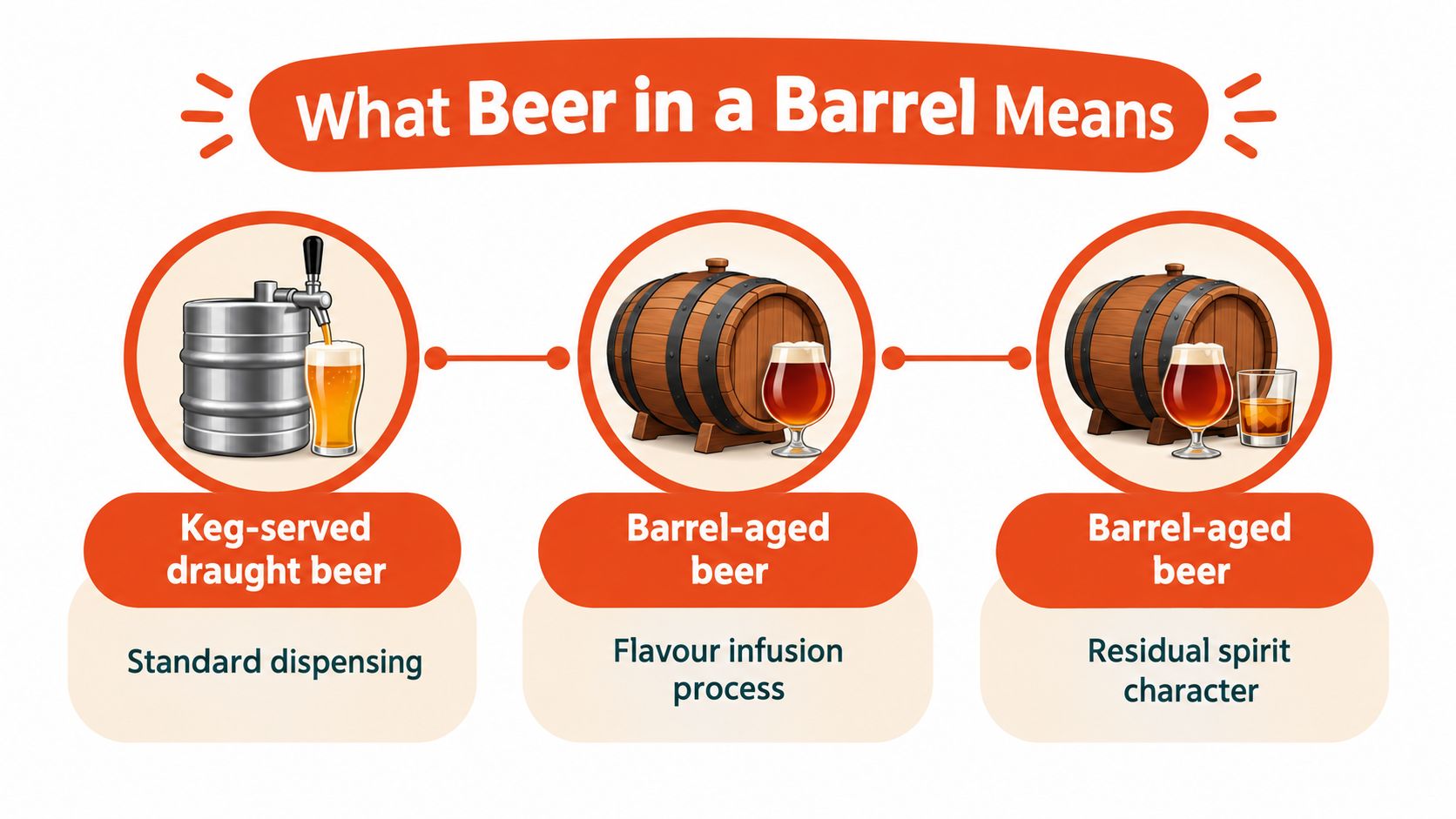
What does “beer in a barrel” mean when you read it on a Gold Coast tap list? The phrase can describe an ordinary serving format, a traditional conditioning method, or beer that matured in wood. Those options can produce very different drinks.
Keg-served draught beer sits in a metal keg and travels through a tap, usually pushed by gas. A keg supports efficient, consistent service, but it does not mean the beer matured in timber. It is the familiar pub pour you might choose for a warm Queensland afternoon.
Cask-conditioned ale is conditioned and served from a cask, often with softer carbonation and a gentler texture. It is a traditional presentation, separate from beer that spent months ageing inside an oak barrel.
Barrel-aged beer is placed in a wooden barrel after brewing, either as finished beer or while fermentation and maturation continue. Time, oak and the barrel's previous contents can reshape the drink. A barrel may previously have held wine, whisky, bourbon, rum, sherry or another beer. The result could be rich and spirituous, tart and funky, dry and tannic, or subtle enough for only a quiet hint of wood.
The word “barrel” needs context
A barrel-aged stout and a keg-served lager describe different parts of the drinking experience: the keg explains how the beer reaches your glass, while the barrel explains where it matured and what influenced its flavour.
That makes the ordering question straightforward. Ask whether “barrel” means the serving vessel, the ageing vessel, or the release category. For example, if a menu lists a “barrel stout,” ask whether it was bourbon-barrel aged, whether the brewer blended different barrels, and whether the pour may contain sediment.
Practical rule: Don't assume a barrel-aged beer will taste stronger, older or better. Ask what the wood contributed and whether that contribution suits the base beer.
The independent sector gives this style room to evolve. The Independent Brewers Association reports more than 600 breweries and about 7.3% of the Australian beer market in its industry roadmap, so drinkers face a broad field of local experimentation. A good choice starts with understanding the format, rather than treating “barrel” as a guarantee of quality.
Keg Versus Barrel Versus Barrel-Aged
The simplest comparison is practical. Keg beer prioritises dependable service, cask beer highlights a softer traditional presentation, and barrel-aged beer accepts more variation because time, wood and previous contents become part of the process.
| Format | Serving method | Typical ABV | Flavour profile | Best for |
|---|---|---|---|---|
| Keg-served draught | Dispensed from a pressurised keg through a tap | Varies by beer | Fresh, consistent and shaped mainly by malt, hops and yeast | A reliable pub pour, a barbecue or a casual session |
| Cask-conditioned ale | Served from a cask with softer carbonation | Varies by beer | Rounded, gentle and traditionally malt-led | A slower pub visit and drinkers who enjoy low-carbonation texture |
| Barrel-aged beer | Packaged or served after maturation in a wine, spirit or beer barrel | Varies by beer | Oak, acidity, tannin, oxidation, fruit, vanilla or residual spirit may appear | Tasting, sharing, cellaring selectively or exploring unusual releases |
The table uses qualitative ranges because there's no single ABV profile for barrel-aged beer. A barrel can hold a light sour, a strong stout, a barleywine or another base beer entirely. The previous fill often matters as much as the wood itself.
A well-used wine barrel usually contributes less aggressive oak and tannin than a younger or more assertive spirit barrel. That can suit sour and wild ales, where too much wood could bury acidity and fermentation character. A powerful stout, by contrast, can stand up to a high-ABV spirit barrel, where residual spirit notes complement the beer's roasted intensity.
Keg format doesn't mean ordinary or low quality. It's often the best choice when you want bright, immediate flavour and a consistent pour. Barrel ageing doesn't mean every sip will be complex in a pleasant way. It means the brewer has introduced another variable, and that variable can produce both character and risk.
For the drinker, the useful question is simple: do you want familiarity, tradition or discovery today? A cold keg pour can be exactly right after a hot Gold Coast afternoon. A barrel-aged beer may fit better when you're ready to compare aromas, share a bottle and let the glass warm.
The Barrel-Aging Process Explained
Barrel ageing starts with a matching exercise, not a race to add oak. Brewers consider the base beer, the barrel's history and the flavour they want to develop.
A delicate sour can work well in a previously used wine barrel because the wood has already given up much of its strongest flavour. A bold imperial stout can suit a spirit barrel with more obvious oak and residual spirit character. The brewer needs to record the prior fill, toast, age and microbiological history of each barrel, because two barrels that look alike can behave very differently.
From barrel selection to maturation
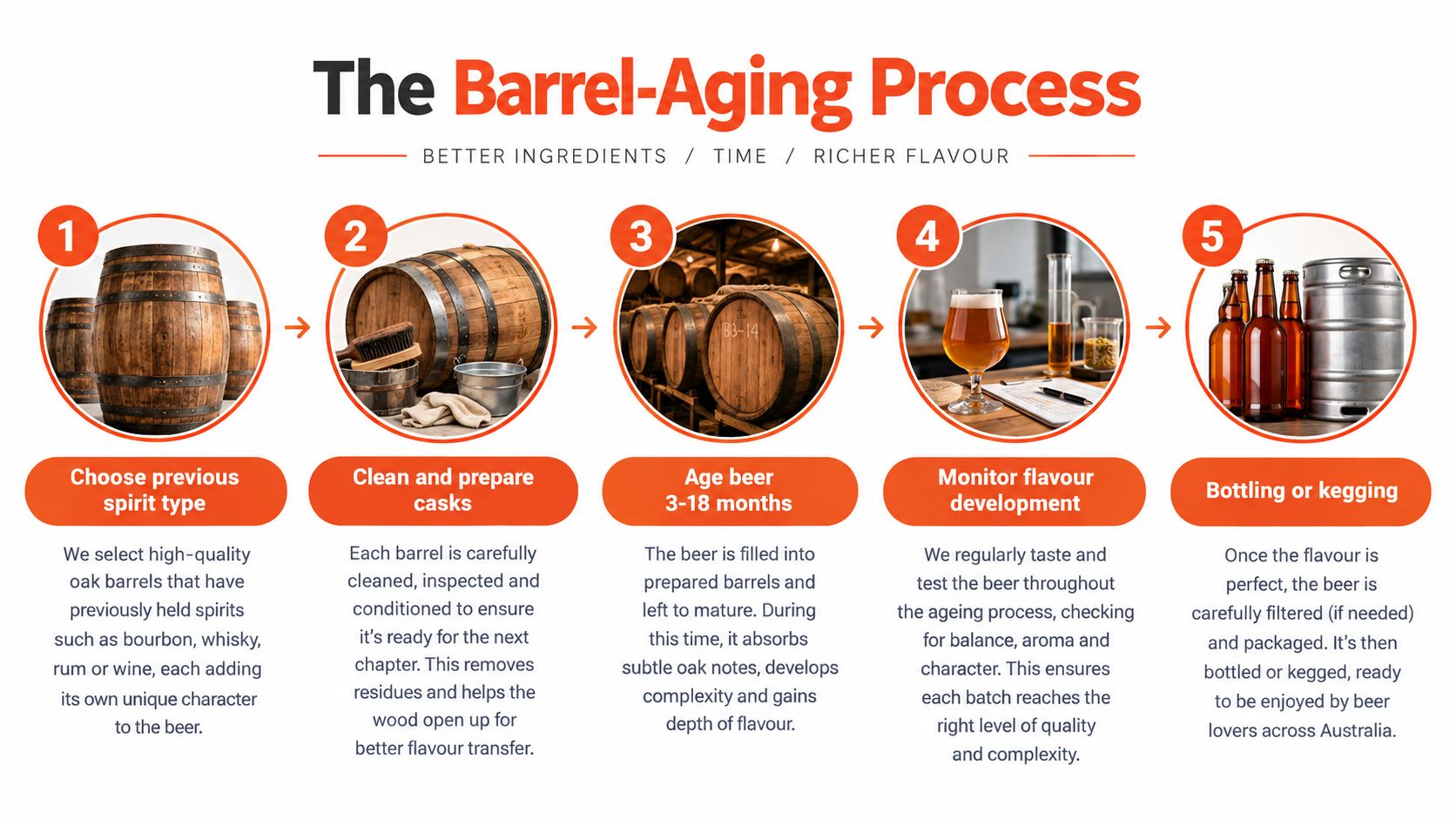
The process usually follows a sequence:
- Select the barrel. The brewer matches the previous contents and oak intensity to the beer. Wine, whisky, bourbon, rum and sherry can all steer the result in different directions.
- Prepare the vessel. The barrel is checked, cleaned and managed for sanitation. Brewers also need to understand whether living microorganisms remain from a previous beer.
- Fill and mature. Beer enters the barrel, where it absorbs compounds from the oak and interacts with any residual spirit or culture.
- Sample regularly. Brewers taste for oak, vanilla, spice, tannic dryness, acidity, oxidation, attenuation and packaging stability.
- Blend or package. If barrels differ, the brewer can combine younger and older beer to find better balance before bottling or kegging.
Queensland adds a practical complication. Temperature cycling makes barrels expand and contract, which repeatedly moves beer into and out of the oak. That can increase oak extraction and oxidative exchange, so a warm storage environment demands closer monitoring than a cool, stable cellar.
Smaller casks intensify the process. An approximately 50-litre cask has nearly three times the surface-area-to-volume ratio of a conventional 200–250-litre cask, according to the Australian barrel and storage discussion from Glass and Note. More contact area means extraction can move faster, not that the beer will automatically improve faster.
Why the base beer matters
A sour aged in a well-used wine barrel may show bright acidity, gentle fruit and restrained oak. An imperial stout aged in a high-ABV spirit barrel can carry roast, chocolate, vanilla and spirit warmth. The barrel doesn't replace the base beer. It amplifies, redirects and sometimes overwhelms it.
Not every dark beer is barrel-aged, either. Dark Orbit Stout BAR is a 4.4% ABV Milk Stout with roasted malt, subtle chocolate notes, a creamy finish and silky lactose. It's available in 4-packs and as single 440 mL cans onsite, which makes it a useful reminder that a dark, full-bodied pour doesn't automatically mean oak maturation.
The Australian industry guidance on barrel programmes also highlights the value of blending. Barrel-to-barrel differences can affect tannin, acidity, contamination and oak intensity, so brewers may combine lots rather than forcing every barrel into a standalone release. The best barrel-aged beer often reflects careful selection and restraint, not merely the longest wait.
Carbon 6 Barrel Releases and Festival Stories
A local barrel release makes the most sense when the technical process becomes part of a shared occasion. At a brewery or festival, drinkers aren't only tasting oak or residual spirit. They're comparing impressions, asking what changed during maturation and deciding whether the release feels worth revisiting.
That discovery matters to people who don't want the cheapest beer on the list. Some customers want a conversation starter. Others want to support a Queensland independent brewery, take home something limited, or find a flavour they can't get from a standard tap pour. Those motivations are valid when the beer suits the person's taste, budget and occasion.
At a festival such as Crafted on the Gold Coast, a limited release can turn into a tasting conversation. One person might notice red wine character, another might pick up dryness or roast, and someone else might decide the beer is too sour for their palate. That disagreement isn't a failure. It's part of the value of a beer that gives people something specific to discuss.
The event itself still needs sensible planning. If you're heading out for a tasting session, the festival safety risks explained resource offers practical context around crowd conditions, transport and personal safety. Drink slowly, eat, organise a safe way home and remember that limited availability isn't a reason to rush.
Carbon 6's Crafted Festival Gold Coast feature gives local drinkers another way to connect the brewery experience with the wider festival scene. The emotional payoff is less about owning a trophy bottle and more about having a story attached to the pour, whether that's a tasting with mates or a release discovered on a warm afternoon.
For a contrasting festival-style option, Event Crusher Pale Limited Edition 375ml is a 3.9% ABV pale ale in a 375 mL can, with Motueka citrus and lime, Nelson Sauvin character, a dry finish and restrained bitterness. It isn't barrel-aged, and that's the point. A thoughtful beer choice depends on the occasion, not on chasing the most elaborate production method.
Serving and Storing Your Barrel-Aged Beer
Barrel-aged beer deserves better treatment than being left in a hot car while you finish errands. Queensland heat can push maturation and oxidation in the wrong direction, especially when a packaged beer is exposed to repeated temperature swings.
Start by checking the brewer's advice. If the beer is intended for immediate drinking, chill it and serve it when the flavour is ready. If it's a live, bottle-conditioned release, the brewer may expect sediment, continued change or a different pouring method. Don't assume every bottle improves with age.
A practical serving routine
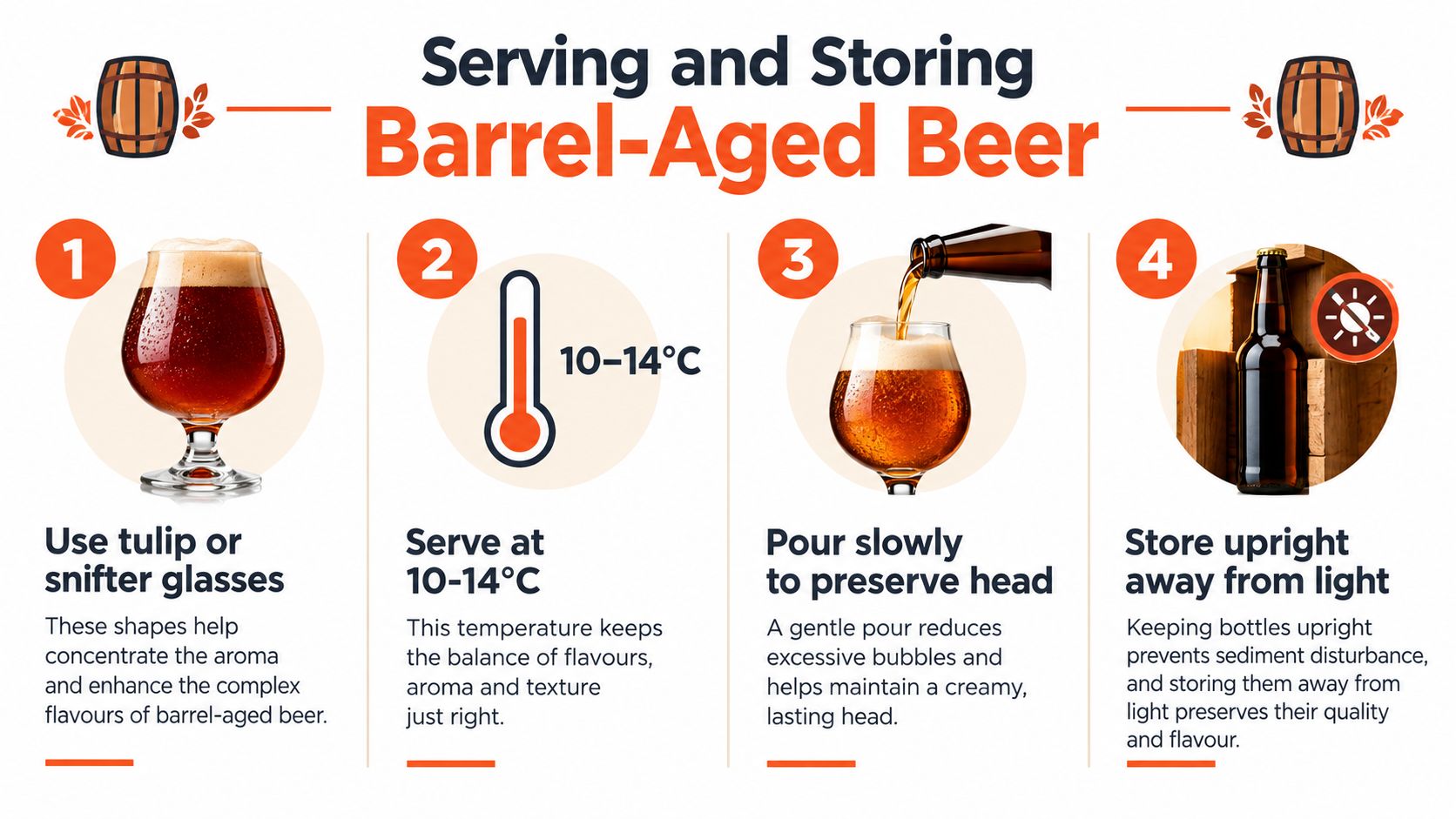
- Choose the glass. A tulip or snifter concentrates aroma and gives richer beers room to open. For a sour, a smaller stemmed glass can help you assess fruit, acidity and funk without flattening the experience.
- Control the temperature. The supplied serving guide recommends 10–14°C for barrel-aged beer. A very cold pour can mute spirit, oak and fruit character, while an overly warm glass can exaggerate alcohol or oxidation.
- Pour with care. Pour slowly to protect the head, then decide whether to leave sediment behind. If the beer is bottle-conditioned and you enjoy yeast character, a second gentle pour may bring more of it into the glass.
- Taste as it warms. Take a first sip, wait, then reassess aroma and finish. Barrel character can become clearer after the beer loses its initial chill.
Storage in a Queensland home
Keep unopened beer upright, dark and away from heat unless the packaging or brewer specifically says otherwise. Upright storage keeps sediment settled at the base and limits beer contact with the closure. Avoid a shed, sunny shelf, glovebox or garage that heats up during the day.
For an online order, move the beer inside promptly and let it settle before opening. A delivery service can reduce the time a beer spends in transit, but it can't protect a carton that then sits in direct sun. If you're buying mixed packs, separate beers meant for drinking now from bottles you may hold, and label the intended occasion.
A practical storage accessory can help with condensation and handling around the fridge or esky. Simply Merchandise stubby holders is one example of a local merchandise option, but no holder can compensate for prolonged heat or light exposure.
For a deeper Australian-focused look at the subject, Carbon 6's guide to barrel-aged beer can sit alongside the brewer's own package instructions. If a bottle smells sharply vinegary, shows unexpected pressure or appears damaged, don't treat uncertainty as part of the tasting adventure. Set it aside and contact the seller or brewer.
Beyond the Hype - Realistic Expectations
Does longer ageing automatically make better beer? No. Oak extraction, tannin and oxidation keep changing the beer, and a layered character can eventually become overpowering.
The clearest warning sign is imbalance. Excess wood may leave a drying, astringent finish that masks malt and fermentation character. Too much oxidation can flatten fresh fruit, create stale flavours or push a strong beer towards harshness. A spirit note may suit a stout while distracting from a delicate pale sour.
Better question: Does the maturation support the base beer, or do you taste the barrel before you taste the beer?
Brewers manage this risk by sampling at set intervals and blending different lots. A younger component can restore freshness and body, while an older one contributes depth, oak or acidity. Blending is therefore a tool for balance, not evidence that a beer lacks character.
Value depends on what you want to drink. Rarity, imported status or a higher price does not automatically make a release the right choice. If you prefer crisp, dry, bright beer on a hot day, a fresh keg-style pale may suit you more than a heavy barrel-aged beer. Choose barrel-aged beer for the flavours and experience it offers, not just for the label.
Look for useful information before buying:
- Barrel history: Wine, spirit and previous beer fills suggest different flavour directions.
- Age disclosure: Time in wood provides context, but it is not a quality score. A brewer might state that a beer was aged in bourbon barrels for several months, giving you a clearer idea of the process.
- Blending details: A blend can indicate deliberate balancing rather than inconsistency.
- Storage guidance: Clear instructions show that the brewer has considered the product's life after packaging.
Curiosity is a better buying mindset than reverence. Taste critically, share impressions and accept that a clean keg pour may be more enjoyable for a particular occasion. In Queensland's warm climate, that choice also makes practical sense when you want a straightforward beer to drink fresh rather than manage a specialised release.
Finding Your Next Barrel-Aged Adventure
The useful meaning of beer in a barrel comes down to the experience you want. A keg gives you fresh draught service. A cask offers a traditional, softer presentation. A barrel-aged release adds time, wood and previous contents, then asks you to notice how those elements changed the beer.
For Gold Coast and Queensland drinkers, storage is part of the purchase decision. Keep releases dark and stable, follow the brewer's serving advice, and choose “drink now” over “hold” unless the packaging and producer give you a reason to wait. A mixed pack can be a good way to compare styles, but only if the beers suit your taste and you can store them properly.
The strongest motivation behind a barrel-aged purchase is often discovery. You're not just buying liquid. You're buying the chance to taste a local interpretation of oak, wine, spirit, acidity or time, then share that experience with someone who notices something different.
Carbon 6's Australian guide to barrel-aged beer in 2026 is a useful next read if you want to keep building your vocabulary before choosing a release. Take notes on aroma, texture, sweetness, acidity and finish. Those observations will help you buy for your palate rather than for the label.
Carbon 6 Brewing Pty Ltd offers independently made beers through direct-to-consumer ordering and local wholesale distribution from Stapylton on the northern Gold Coast. Visit Carbon 6 Brewing Pty Ltd to explore current releases and find a beer that fits your next tasting, barbecue or coastal session.