
Old Style Beer in Australia: What It Really Means
Oct 12, 2026
You know the moment. You're standing at the fridge in a bottle shop, or in front of a chalkboard at the bar, and a beer gets pitched as old style. The label leans on heritage, the language sounds reassuring, and you still can't tell whether you're about to get something layered and malt-driven, or just a bit of nostalgic window dressing. That's the problem with the phrase: it can mean more than one thing, and most drinkers get left guessing.
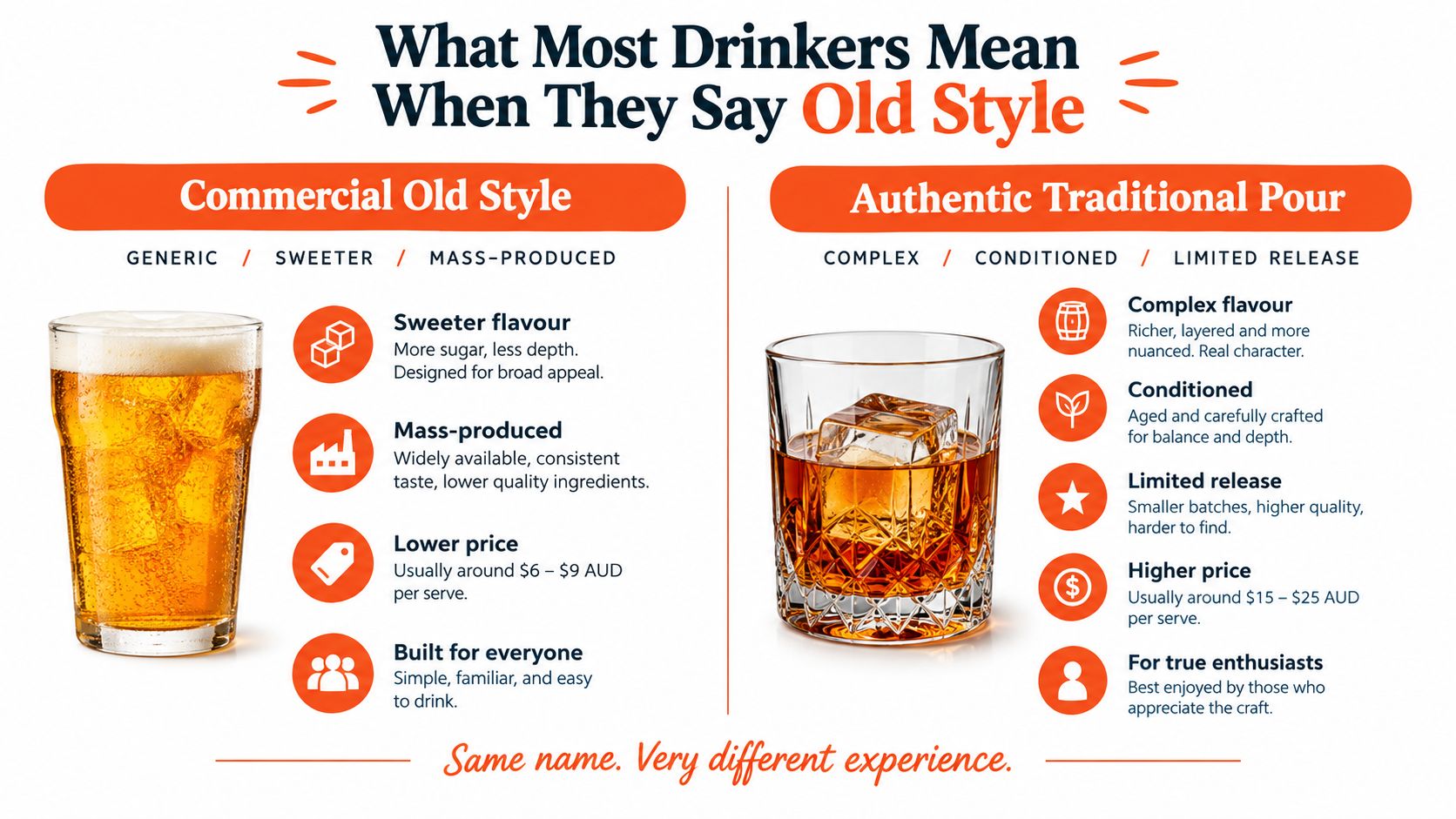
What Most Drinkers Mean When They Say Old Style
A mate can hand you a can called old style beer and it still won't tell you much. In one venue, the phrase might point to a historical ale tradition, something malt-forward, yeast-driven and conditioned with patience. In another, it's just a brand story, a bit of nostalgic design language wrapped around a beer that may drink nothing like the old world at all.
Two meanings, one confusing label
That ambiguity is why people talk past each other. Drinkers who grew up around fuller-flavoured ales often hear old style and think of depth, warmth and a firmer malt backbone. Others hear it and expect a brewery to mean “traditional” in a vague, decorative sense, without any technical promise attached.
The practical fix is simple. Read the label for clues that point to process, not just mood. Words about yeast, conditioning, fermentation and malt are worth far more than sepia-tone artwork and barn-door graphics.
Practical rule: if the pack can't tell you how the beer was made, the phrase is probably doing marketing work, not brewing work.
| Angle | Historical ale tradition | Brand-name usage |
|---|---|---|
| What it points to | Top-fermented, conditioned ale with malt and yeast character | A nostalgic label, often loose and unstandardised |
| What you taste | Chewy malt, fruitier yeast, rounded finish | Whatever the brewer chose, which might be crisp, sweet or generic |
| What matters most | Fermentation, maturation and flavour balance | Packaging, positioning and memory |
| What to ask | How long was it conditioned? What yeast was used? | What does “old style” actually mean here? |
If you want the history behind the label rather than the label itself, the next step is to look at where Australian beer came from, because that story explains why ale character sits at the centre of the phrase.
How Old Style Beer Actually Started in Australia
A pint that feels “old style” in Australia starts with the colony's first brewing habits, not with a modern nostalgia label. In South Australia, brewing was one of the earliest industries, after Governor John Hindmarsh authorised John Warren to establish a brewery near the River Torrens in 1838. By the mid-1860s, the colony had more than 30 breweries spread across Adelaide and settled regional areas, which shows how quickly beer moved into everyday colonial life. Johnstons' brewery at Oakbank, established in 1843, was among the earliest country breweries, so brewing was never only an urban trade. South Australian History Hub
Top fermentation came first
The beer on those tables was mostly top-fermented. Drinkers were buying English-style ales and stouts, plus locally brewed colonial ale, long before lager took hold.
That matters because it shapes what old style beer should mean in an Australian setting. The historical reference point is not a cold, sharply bitter lager. It is a beer culture built on top fermentation, malt flavour, and shorter, more practical maturation.
In plain terms: if you want a beer that feels historically Australian, start with ale character, not lager mimicry.
Lager reached the West End Brewery only in 1902, and the German-style beer initially drew limited demand. Even after that, ale and stout kept being made by South Australian brewers, which says a lot about what drinkers were choosing. The sector later consolidated, with the number of South Australian breweries falling from 25 in 1900 to only a small number by the mid-1950s, while Coopers did not begin brewing lager until 1968. South Australian History Hub
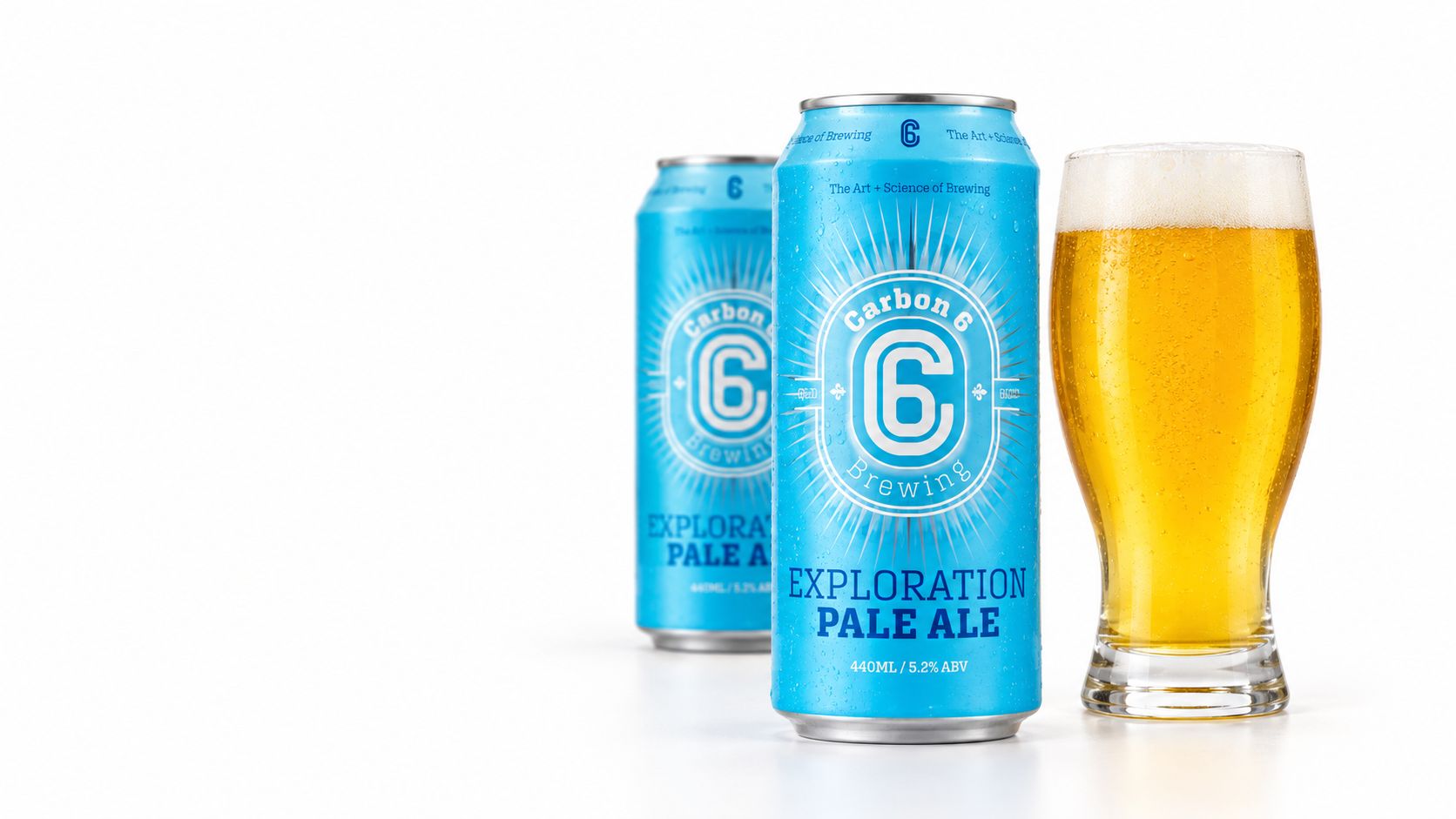
For a modern brewer, that history gives a clear brief. An Australian old-style beer should carry the bones of English ale tradition, not costume. Exploration Pale Ale - 5.2% ABV works in that top-fermented, malt-led register rather than lager mimicry, which is exactly the historical cue that still helps a drinker read the style today.
The Sensory Markers of a Genuinely Traditional Pour
A genuine traditional pour shows its hand before the first sip. The style guide for Old Ale places it in a malt-led, aged family of beers, with stronger examples commonly landing around 6 to 8% ABV or more BJCP Old Ale. It also points to a deep colour range and a firm but not aggressive bitterness, the kind of shape that tells you this beer was built for flavour, not for a quick hit.
What it should feel like in the mouth
Body comes first. You want medium-to-full, with a rounded, slightly chewy texture rather than a thin, crisp snap. Carbonation should sit in the low-to-moderate zone, because too much fizz strips away the malt and makes the beer feel edgy. If you are checking colour and aroma properly, pour it into a glass that shows the beer clearly and gives the nose some room, and our guide to beer tasting glasses covers the shapes that help.
The aroma and flavour should read like a layered malt beer. English ale yeast can bring moderate to high fruity esters, while conditioning adds dried fruit, caramel, molasses, toffee and nutty notes. As the beer settles, the finish can dry a little, so it feels composed instead of sticky.
Oxidation is useful until it isn't
Controlled oxidation belongs here, but only in the right measure. In a well-kept old-style beer, it can give sherry-like, port-like or Madeira-like depth. Push it too far and the beer starts tasting papery, stale or solvent-like, which is a storage fault, not character. That line matters because maturity and tiredness are not the same thing.
| Sensory marker | Traditional expectation | What goes wrong |
|---|---|---|
| Body | Medium to full, chewy | Watery, hollow |
| Carbonation | Low to moderate | Sharp, fizzy, distracting |
| Flavour development | Dried fruit, toffee, nutty malt | Cardboard, solvent, tired hops |
| Finish | Rounded, slightly drying | Harsh, papery, overly sweet |
A beer that tastes buried under carbonation, with the malt hidden and the finish brittle, is missing the mark. A traditional pour should feel settled and sure of itself, like a well-worn pub chair that still holds its shape.
Reading Strength and Style Without Getting Burned
Strength can distract people from what makes an old-style beer feel true to itself. A beer does not need to be a heavy hitter to feel authentic, and it does not have to wear alcohol warmth as a badge of honour. Australian beer habits have also shifted towards moderation, with mid-strength, low-strength and zero-alcohol beer together making up almost 30% of total beer sales volume Brewers Association Economic Contribution Report 2022.
Full-strength isn't the only honest option
That leaves room for yeast character, malt shape and conditioning time to do the heavy lifting. A more traditional version may sit at the stronger end, but a mid-strength beer can still carry old-world character if the malt is balanced and the fermentation is handled properly. The key question is whether the beer feels composed and deliberate, not whether the label is shouting about strength.
Australian drinking habits have shifted over time too. Beer contributed about 5.31 litres of pure alcohol per person in 1996–97, then 3.59 litres by 2019–20, an approximate 32% reduction Brewers Association Economic Contribution Report 2022. That does not tell you what belongs in your glass tonight, but it does explain why many drinkers now read strength with more caution than their grandparents did.
Best habit: choose the beer by the job it needs to do. A long session, a food match, a winter night, or one glass after work all point to different strengths.
If you want the full picture on strength labelling, our guide to full-strength beer percentages breaks down what the numbers on the can mean.
| Style | Typical ABV | Body | Bitterness | Food flexibility |
|---|---|---|---|---|
| Traditional full-strength | Usually higher, often the most expressive | Chewy, rounded | Moderate to firm | Strong with roasts and rich dishes |
| Mid-strength interpretation | Moderate | Medium, still malt-led | Gentle to moderate | Easy with lunch, snacks and weeknight meals |
| Modern craft amber | Varies | From light to medium-full | Often more hop-led | Broad, depending on recipe |
| Mainstream lager | Usually lighter and crisper | Clean, lean | Lower to moderate | Flexible, but less flavour-driven |
If you are comparing styles at home, glass choice matters more than many people expect, especially when the beer relies on aroma and texture. A beer can be full of character without being high in alcohol, and a lower-strength pour can still taste complete if the malt, yeast and conditioning all line up.
How to Spot an Authentic Old Style Pour in the Wild
The strongest clue is usually the brewery's language. If a beer claims old-style character but never mentions yeast, conditioning, malt bill or maturation time, it's probably asking you to trust the artwork instead of the brewing. A real traditional pour usually sounds specific, even if the wording is plain.
What to look for on the can or tap list
Look for English ale strain language, references to extended conditioning, and malt descriptions that sound intentional rather than decorative. Crystal, malt and brown malt point you towards a beer that's trying to build depth from grain, not from sweeteners or gimmicks. A stated maturation window is another strong sign, because it tells you the brewer expects flavour to develop over time.
There's a useful contrast in how independent brewers talk when they're being clear. Carbon 6's The Occasional Beer West Coast Pilsner is named with style and drinkability in mind, which is a cleaner signal than vague heritage styling. That kind of naming discipline helps drinkers separate process from posture.
Red flags that should slow you down
- Vague heritage imagery: Old barrels, old fonts and sepia tones don't prove anything on their own.
- ABV as the main selling point: A beer isn't traditional just because it's strong.
- No conditioning detail: If the brewer won't say how the beer gained its character, the character may not be there.
- Costume over craft: If the copy sounds like a museum gift shop, keep asking questions.
At the taproom, ask three things, how long was it conditioned, what yeast was used, and what does the brewer want the beer to taste like after a few weeks in package? If they answer clearly, you're dealing with brewing intent. If they pivot back to nostalgia, you're probably looking at a story, not a style.
Where Old Style Beer Earns Its Place at the Table
Traditional ale makes the most sense when food is part of the deal. A chewy, malt-led beer can stand up to roast chicken, lamb, aged cheddar, blue cheese and rich winter stews without flattening the plate. It brings enough structure to cut through fat, while the malt sweetness and dried-fruit notes support savoury dishes rather than fighting them.
Match the beer to the meal, not the label
A lower-ABV traditional interpretation can work with grilled fish, soft cheeses and charred vegetables, especially when the bitterness is restrained and the finish stays clean. The point is balance, not brute force. If the beer is all malt and no lift, it can weigh a meal down. If it's too dry and too sharp, it can steamroll the food.
Serving temperature matters too. Cooler isn't always better, especially with a beer built on aroma and texture. A slightly less chilled pour gives the malt and yeast character room to show itself, while the right glass shape helps hold the foam and focus the aroma.
Serve it like you mean it. A beer with this much malt character deserves a glass that shows the colour and keeps the nose together.
In Queensland, that doesn't mean old-style beer only belongs in winter. It does mean the cooler months and shoulder seasons are a natural fit, while warmer weather often suits a lighter traditional profile built for an easy pour. That's where the glass, the food and the setting do half the work.
If you want a practical brewing-and-eating reference point, the pairing notes at Carbon 6 Brewing Pty Ltd's beer and food guide sit in the same territory, matching flavour with the plate rather than treating beer as a solo act.
Drinking the Old Way Without Drinking the Old Amounts
Traditional beer culture has always had a pacing problem only when people forget what the beer is for. The old-value version is often about conversation, food and a drink that unfolds as you sip, not about speed. That fits neatly with Australian responsible-drinking expectations, which ask alcohol marketing and communication not to encourage rapid or excessive consumption, and not to imply that heavy drinking is desirable ABAC guidance notes.
Small serves make more sense than bravado
A smaller glass of a more characterful beer often gives you more flavour than a bigger pour of something thin. That's especially true with older ale styles, because the point is to notice malt detail, yeast expression and conditioning changes as the beer opens up. If you share a bottle, the beer tends to work better with food, and the conversation around it becomes part of the experience.
Historical Australian ales were also often quicker-maturing than people assume, which undercuts the idea that traditional beer automatically means a heavy, slow-burn pour. The style lineage is about fermentation method and flavour development, not a requirement to drink more than feels sensible.
Good rule at the table: if the beer is doing its job, you shouldn't need to rush it.
That's the right mindset for a taproom too. Ask about conditioning, ask whether the beer changes over time in package, and treat the answer as part of the flavour story. Old style beer earns respect when it invites you to slow down, not when it asks you to prove anything.
The Myths Worth Leaving Behind About Old Style Beer
The first myth is that old style automatically means strong. It doesn't. Strength can support flavour, but it does not define the style. If the beer has no fermentation character, no malt depth and no real conditioning story, the ABV number will not save it.
The second myth is that old style equals outdated. That misses the point. Historical ale traditions still give modern brewers a clear flavour vocabulary, and that vocabulary can work with today's food habits and moderation mindset just as well as it did before.
The third myth is that heritage and responsible drinking sit on opposite sides of the fence. A beer with more flavour often rewards smaller serves and slower drinking, which suits the way many adults want to drink now. The old way was never just about quantity.
The fourth myth is that any can with old-time artwork deserves trust. Trust comes from process detail, clear flavour intent and a brewer who can explain how the beer was made. If those pieces are missing, the heritage claim is probably costume, not character.
What should you take away from all this?
- Ask what the beer is made to taste like.
- Look for conditioning and yeast detail, not just nostalgia.
- Choose the strength that fits the occasion, not the marketing line.
Run those three checks on the next can labelled old style, and you will know within a minute whether you are holding brewing intent or packaging nostalgia.