

Craft Beer Carton Guide: Sizes, Packs and Delivery
Oct 31, 2026
You've found a craft beer carton you like, added it to the cart and reached the delivery screen. Now the questions start: is it cheaper than buying locally, will it fit in the fridge, and will the last can taste as good as the first?
The sensible purchase isn't necessarily the biggest box or the lowest advertised price per can. It's the pack that suits your taste, arrives in good condition and doesn't leave you with beer you no longer want. For Australian buyers, that means comparing format, delivered cost, freshness and disposal, not just the discount.
Carton Sizes and Single-Style Versus Mixed Packs
Craft beer carton sizes and pack types
| Pack type | What is inside | Can size | Best for |
|---|---|---|---|
| Single-style 4-pack | 4 cans of one beer | 440mL | Trying one style or a small gathering |
| Single-style 16-pack | 16 cans of one beer | 440mL | Events or stocking a favourite |
| Mixed 16-pack | 16 cans across lagers, hazy IPAs, sours and seasonal drops | 440mL | Exploring a range or sharing |
| Mystery beer box | 16 cans with styles chosen by the brewer | 440mL | Trying releases without choosing each beer |
| Collector's 6-pack | 6 cans, one per label design | Check the individual release listing | Collectors of limited releases |
| Standard wholesale carton | 24 cans in the format considered here | Check the wholesale product specification | Venues, bottle shops and bulk buyers |
Read the can count and container volume together. A retailer's case, a brewery's mixed box and a wholesale carton can refer to different purchases, even when their photos look similar.
Compare equivalent can volumes when assessing price, fridge space and serving quantities. Check the labelled alcohol content separately. A larger can changes the amount of beer and alcohol in each serve, so compare both before choosing a format.
Single-style packs offer certainty
A single-style pack suits buyers who already know the beer. The flavour stays consistent from can to can, reordering is straightforward, and there's less chance of buying styles nobody in the household enjoys.
For a barbecue, a familiar beer can work well alongside food. For an afternoon watching the Test, it means choosing a known flavour rather than opening a new style each time. Neither occasion calls for finishing the pack, and guests should have appealing non-alcoholic choices too.
The trade-off is repetition. A rich, sweet or intensely hopped beer might be enjoyable occasionally without being something you want a full carton of. Liking a tasting pour and wanting a full case are different decisions.
A single-style pack also doesn't guarantee that every can comes from the same batch or canning date. Check the product information, particularly if stock is assembled by a retailer rather than packed at the brewery.
Mixed packs exchange certainty for discovery
Mixed packs suit buyers who enjoy comparing flavours and gift recipients whose favourite style isn't obvious. They also reduce the commitment to an unfamiliar beer.
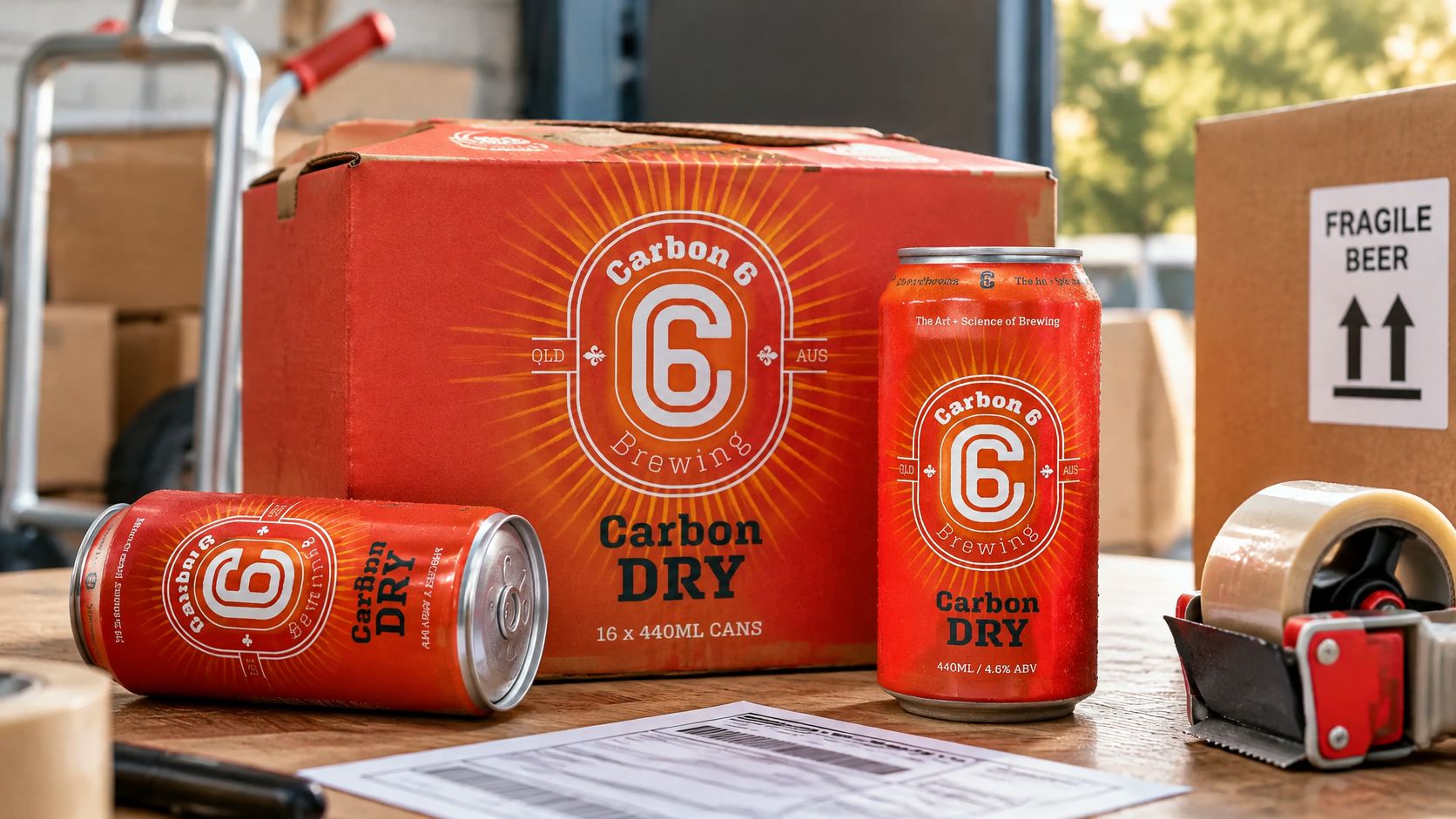
Carbon 6's Mixed 16-Pack includes crisp lagers, hazy IPAs, fruited sours and seasonal drops. For a single-style option, Peach & Mango Oat Cream IPA is listed as a product; check its listing for current pack details. The choice is between sampling several styles and buying a larger quantity of one beer.
Packaged sales give independent breweries another way to reach customers beyond hospitality venues. Deloitte's analysis of the Australian craft-beer market discusses the market's concentration. Buying packaged beer direct lets you choose a producer and its range rather than relying on the taps at a venue.
Mixed cartons need sorting by style after arrival. A mystery box gives up control over the selection, so it may not suit someone with firm dislikes or ingredient restrictions.
Ask these questions before choosing
- Who's sharing, and over how long? A mixed 16-pack could suit six adults sharing across a Gold Coast weekend, without expecting them to finish it.
- Do you already know the beer? Someone curious about a particular hazy IPA may prefer a smaller single-style pack, if one is available.
- Does the recipient enjoy experimenting? Choose a gift around their preferences, not the buyer's enthusiasm for unusual releases.
Practical rule: Start with a smaller mixed pack when that format is available. It limits the cost of discovering that a style isn't for you.
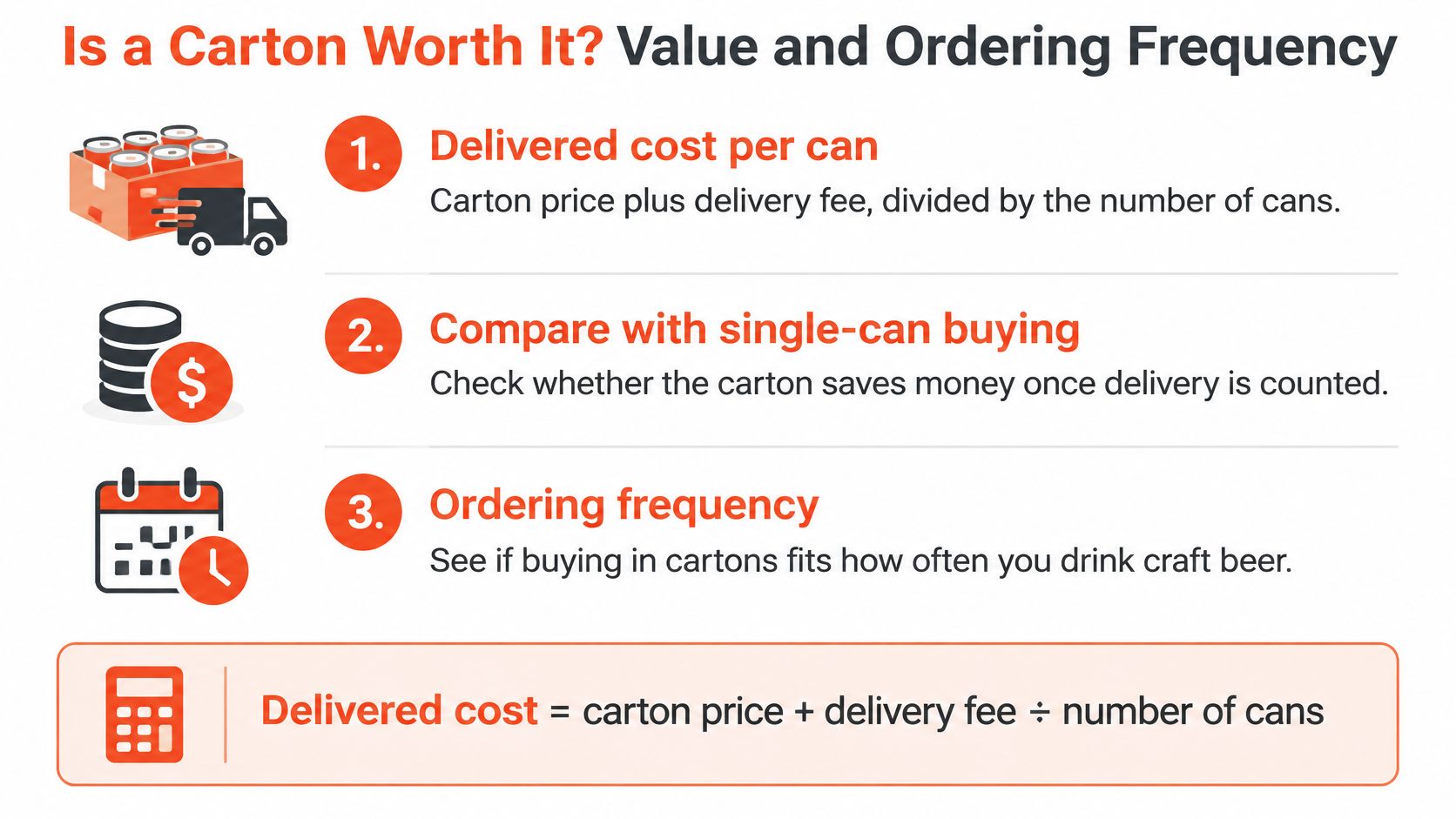
Is a Carton Worth It? Value and Ordering Frequency
A carton's per-can price can look attractive until delivery and leftover cans are counted. Calculate the delivered cost first:
Delivered cost per can = (carton price + delivery fee) ÷ number of cans
For a hypothetical purchase, a 16-can carton at $70 plus $12 delivery costs $82, or $5.13 per can after rounding. Compared with a hypothetical local single-can price of $6.50, that is lower, assuming the beers and can sizes are equivalent.
Count what you'll use
Suppose you discard three cans from that hypothetical order because they don't suit your taste or sit too long. The $82 has bought 13 usable cans, raising the effective cost to $6.31 each.
A smaller mixed pack can therefore offer better value when it reduces unwanted leftovers. The saving comes from avoiding an unsuitable purchase.
The Australia Post liquor e-commerce report reports an average online liquor basket of $120.44, down 2.9% year on year. Treat that as a market benchmark, not a spending target. Set your order size around your budget, storage and established preferences.
Before ordering, compare the pack's can count and volume with the price, and check whether its selection is fixed. Include delivery charges, postcode surcharges and any conditions attached to shipping offers in your calculation. Confirm that a displayed bundle discount has been applied to the cart total. Then allow for cans you may not enjoy, not only the space available in your fridge.
Let ordering follow demand
Order when your remaining stock, planned occasions and fridge space make sense for another carton. Occasional buyers may prefer smaller orders or longer gaps between them; a delivery threshold alone is a poor reason to buy more.
Sharing a household order can make the carton easier to use without leaving one person responsible for it. For a gift, match the selection to the recipient: a mixed pack suits someone who enjoys exploring different beers, while a mystery selection requires comfort with surprises. Arrange delivery to fit the occasion and the recipient's ability to receive and store the beer.
A lower delivery cost only helps when the carton's contents will be used.
Shipping and State Liquor Rules
Before paying, clear the checks that can turn an otherwise sensible order into a failed delivery.
- Licensed sale: Confirm the seller's liquor-licensing details and that it can lawfully supply your destination. For interstate orders, don't assume the origin state's rules settle everything.
- Serviceable postcode: Check the actual address, including remote-area exclusions and any restricted delivery locations.
- Adult recipient: Confirm the carrier's identification or adult-signature requirements. The recipient must be 18 or over and able to provide the identification required for delivery.
- Handover arrangements: Find out whether someone must be home and what happens after a missed delivery.
- Gift details: Confirm the recipient's age, address and availability before dispatch.
Our guide to ordering beer in Australia provides further purchasing context. The destination state's liquor regulator, the seller's licence conditions and the delivery terms remain the places to confirm detailed requirements.
Advertising compliance isn't a delivery approval
The Australian Alcohol Beverages Advertising Code scheme requires alcohol marketing to meet its content and placement standards alongside applicable national, state and territory legal requirements. An ABAC-compliant promotion doesn't, by itself, confirm that a particular delivery is permitted.
Product pages, emails, social adverts and delivery promotions should make accurate, supportable claims. Words such as fresh, local and award-winning need a factual basis, not just attractive artwork. The carton's wording and imagery matter too.
ABAC also prohibits portraying consumption before or during activities requiring high alertness or physical coordination, including driving, boating and swimming. A coastal brewery's location doesn't make those associations appropriate.
If a promotion appears inconsistent with the Code, you can use ABAC's consumer complaint pathway. For a dispute about the sale or delivery itself, start with the seller and consult the relevant regulator rather than treating an advertising complaint as a substitute.
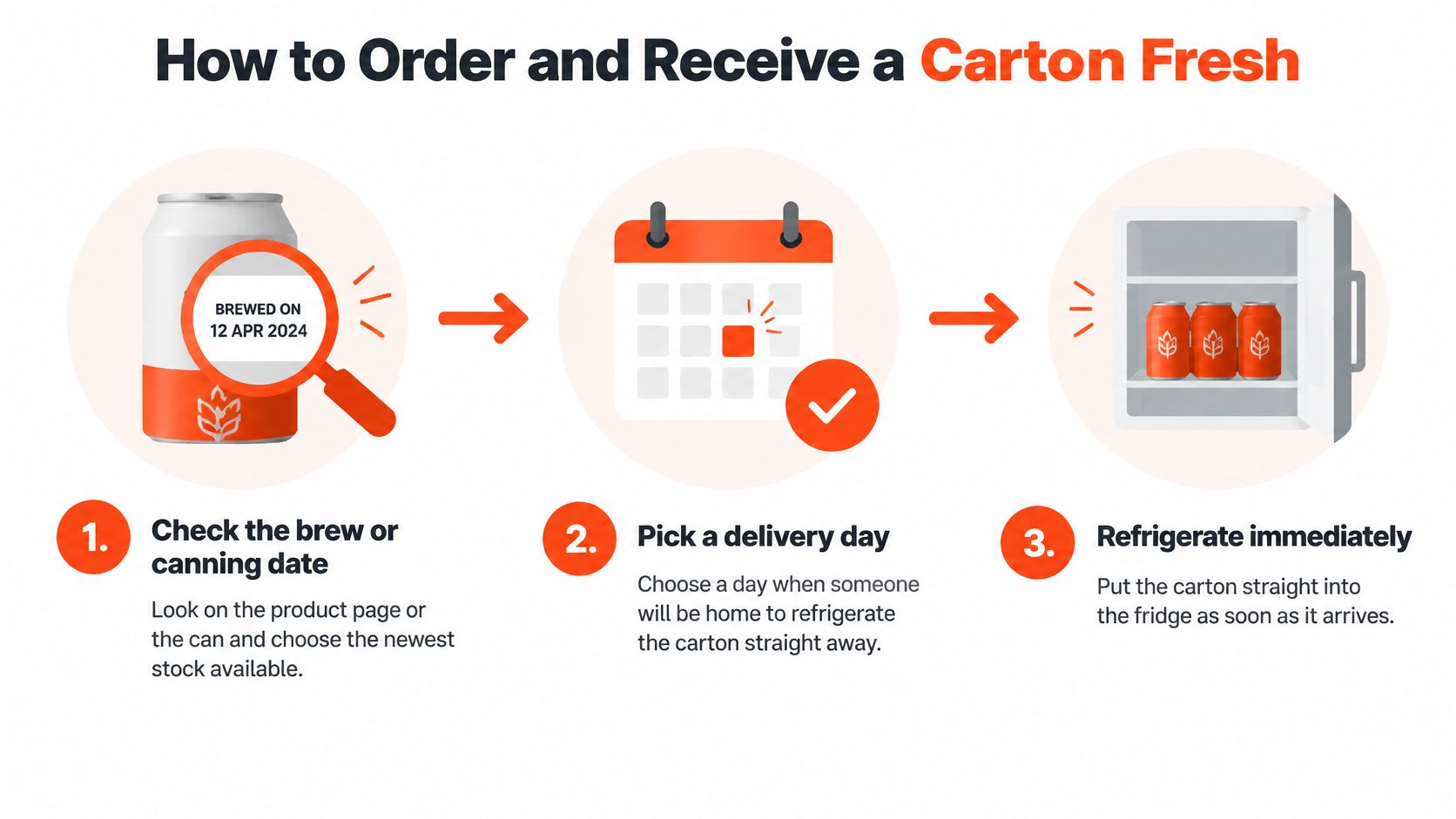
How to Order and Receive a Carton Fresh
Fresh delivery starts before checkout. A recent release date, fast dispatch and cold storage answer different questions, so don't treat any one of them as proof of the others.
Before dispatch
- Check the canning date. Look on the product page, or request the batch information if it isn't displayed. The canning date helps you assess packaged age; the brew date alone doesn't tell you how long the beer has been in the can.
- Choose a workable receiving arrangement. Where delivery options allow, select a day when someone can accept the carton and refrigerate it promptly. Don't assume a carrier will hold a preferred day unless that service is explicitly offered.
- Separate dispatch from transit. We pack and dispatch orders within 1–2 business days from our brewery in Stapylton, Queensland. That isn't a promise of arrival within the same period, so allow the carrier's quoted transit time and extra breathing room before an event.
- Understand the storage chain. Every beer we make is brewed in-house, canned fresh, cold-stored immediately and shipped fast. Cold storage at the brewery doesn't mean a parcel travels in refrigerated freight, so check the actual service rather than assuming an uninterrupted cold chain.
At the doorstep
- Inspect before unpacking. Check for wet patches, crushed corners, torn seams or a smell of leaked beer. Record visible damage before removing the containers so you preserve the condition in which the parcel arrived.
- Refrigerate and label the arrival. Move intact cans into the fridge promptly and write the arrival date on the box. Keep batch information accessible, especially if you've bought a mixed selection with several canning dates.
Make fridge space before the courier arrives. Leaving the carton beside the front door while you reorganise shelves defeats the receiving plan, particularly in a warm Queensland house.
At the first pour, judge the beer against its intended style. A hop-led beer should have an expressive aroma and a finish appropriate to the recipe; a stout shouldn't be assessed as though it were a pilsner. Papery or cardboard-like notes are reasons to investigate age or oxidation, but aroma alone can't establish exactly where a problem occurred.
Storage and Serving by Beer Style
A carton loses value when warm storage dulls the beer before you open it. Keep it chilled, follow the can's best-before date and adjust serving temperature by style.
Storage and serving guide by beer style
| Beer style | Storage | Serving |
|---|---|---|
| Hazy IPA | Refrigerate; keep cold and away from direct sun | Serve chilled to retain its hop aroma |
| Pilsner or lager | Refrigerate; follow the can's date | Serve cold for a crisp finish |
| Fruited sour | Refrigerate; follow the can's date | Serve chilled and assess the fruit character |
| Stout or porter | Refrigerate unless the label gives different instructions | Let a glass warm slightly if you want to bring out malt and roasted flavours |
| Any style after heat exposure | Chill promptly | Assess the beer before serving more from the carton |
The brewery's storage advice and the can's best-before date take precedence. A beer that has already spent time in storage does not gain a fresh window when it reaches your fridge.
Keep storage cold and steady
Set the fridge around 4°C as a practical default for canned craft beer. Keep the carton in the fridge, not in a garage, shed or parked car. Cans block light, but they do not keep beer cool in a warm room or on a sunlit windowsill.
Never freeze beer for storage. Expanding liquid can split or distort a can. For more detail, read our guide to beer temperature and storage.
Serve for the style, not just the weather
Pilsners and hazy IPAs are good starting points at about 4–6°C. Stouts and porters can show more of their roasted and malt flavours around 8–10°C. Pour into a clean glass, since detergent residue can affect the beer's aroma and taste.
If you have several cartons, rotate them first in, first out, while following each can's date and storage instructions. Cooling a heat-exposed beer may make it more pleasant to serve, but it cannot restore flavour already lost. Don't drink beer that tastes wrong, and don't open a leaking or visibly compromised can.
Breakage, Substitutions and Refunds
Carton problems, likely causes and fixes
| Symptom | Likely cause | What to do |
|---|---|---|
| Dented or split cans | Loose packing or rough handling in transit | Photograph damage and report it with your order number |
| Cans moving or rattling | Insufficient restraint or missing dividers | Report the movement and ask how the carton was packed |
| Unexpected beer in a mixed pack | An out-of-stock substitution or picking error | Check the selection terms and request a suitable resolution |
| Beer tastes off at the first sip | Possible age, heat exposure or another quality issue | Keep the can date and contact the seller under its policy |
| Leaking carton | Container damage, seal failure or damaged outer case | Keep upright, isolate the leak and contact the seller promptly |
A dent doesn't establish who caused it, and an off flavour doesn't prove heat exposure. Describe what you can observe rather than trying to diagnose the entire supply chain.
Record the condition before clearing up
Parcel networks expose cartons to sorting equipment, vibration and impacts. The Australia Post Parcel Freight Preparation Guide requires beer containers to fit tightly, with securely sealed, non-perforated outer packaging designed to prevent leakage or breakage.
A loose retail tray isn't a suitable substitute for a protective shipping carton. Report rattling containers, open seams or packaging that has allowed cans to strike each other.
Photograph the outer case before opening, then record damaged cans, leaks and sticky residue. Keep the packaging until the issue has been reported and the seller confirms whether it needs anything further. Avoid handling sharp edges or drinking from split containers.
Distinguish a substitution from a quality claim
If a beer in our Mixed 16-Pack is out of stock, we substitute another quality brew so the customer still receives 16 cans. If a particular style, ingredient or substitution would make the order unsuitable, raise that before dispatch rather than assuming every pictured beer is guaranteed.
Our Beer Swap Guarantee means that if your first sip tastes like disappointment, we'll swap the beer for a better one, with no questions and no forms. Confirm the practical arrangements and any applicable written terms when seeking the swap; don't assume that a taste guarantee also explains every damaged-delivery refund scenario.
Keep the order number, can date and clear photos together. Those details help distinguish a batch concern, packing problem, incorrect selection and transit claim without repeated messages.
Carton Packaging and Recycling
APCO reported that paper and paperboard made up 52.3% of packaging placed on the Australian market in 2021–22 and 64.0% of post-consumer packaging recovery. Those figures support fibre-based shipping cases as a practical option, while the full footprint still depends on the beer containers, inserts, coatings and delivery.
Judge the whole package
Check whether the corrugated case is sized to protect the cans and whether it uses unnecessary plastic. Keep enough protective material to prevent cans striking each other in transit; damage can waste both beer and packaging.
A recyclable material may still end up unrecovered. The South Australian EPA's container-deposit guidance describes a separate collection pathway for eligible beverage containers. Use that pathway for eligible cans and bottles, and follow local council instructions for the shipping box. Beer shipping boxes are not liquid-paperboard drink cartons.
For a broader material comparison, see this guide to sustainable beer packaging.
Dispose of each component properly
- Outer case: Remove the containers and follow local council instructions for clean cardboard. Separate loose plastic inserts and keep heavily contaminated material out of the paper stream.
- Cans and bottles: Check eligibility for your state's container-deposit scheme. In Queensland, use Containers for Change for eligible containers and follow its preparation instructions.
- Order quantity: Buy an amount you expect to enjoy. Beer left unused carries the cost of its ingredients, brewing, packaging and freight without delivering value to you.
Choose Your Carton and Order With Confidence
A carton is on its way as a gift, but the recipient may not be home when it arrives. Set the delivery instructions for the person receiving it, then choose a pack that matches their preferences and the occasion.
Carbon 6 Brewing Pty Ltd makes its beers on-site in Stapylton, Queensland, and sells craft beer online. Customers can build a bundle across any beers, with the discount applied automatically when the pack threshold is reached. Check that the expected adjustment appears in the cart before paying, rather than adding more cans to chase a saving.
Make the final decision practical
- Set recipient instructions: For a gift, confirm who can receive the order and provide any relevant delivery directions.
- Keep the order details: Save the confirmation and can-date information until the beer is finished. Share the storage guidance with the recipient.
- Plan for arrival: Make fridge space and keep the confirmation accessible so the order can be checked when it arrives.
For the cart total and delivery conditions, use the checks in the value and shipping sections above. A lower pack price only helps if the order suits the recipient and the beer will be enjoyed while fresh.
Visit Carbon 6 Brewing Pty Ltd to compare the current range and pack details before ordering.