

Hops for Sale in Australia: A Buyer's Guide
Oct 02, 2026
You've found the hop variety you want, but the product page gives you three pack sizes, two crop years and an alpha-acid figure that doesn't quite match your recipe. Then freight gets added at checkout, and you're left wondering whether a small pack is sensible or whether a larger order will go stale before brew day.
Buying hops in Australia takes more than choosing the cheapest listing. You need to match variety, crop year, pack size, analytical data, storage and freight to the beer you're making. This guide follows that decision from a 12 g homebrew pack through to a 1 kg commercial lot, with the local supply picture and responsible alcohol marketing rules included along the way.
Why Buying Hops in Australia Is Different
The usual hops-for-sale page assumes you already know what every number means. A homebrewer sees a 12 g pack beside a 50 g pack and a 1 kg bag, then has to work out whether the larger option represents value or just more product to store. A small brewery faces a different problem: the variety may be right, but the crop year, alpha-acid consistency and delivery timing can determine whether the next batch tastes like the last one.
The key buying question is simple: will these hops arrive fresh, correctly specified and in a quantity that suits the recipe? Price matters, but it's only one part of the decision. Cheap hops that have lost aroma, lack lot documentation or arrive too late for production can cost more in rebrewing, recipe adjustment and wasted freight.
Start with the beer, not the listing
Write down the recipe requirement before opening a retailer's catalogue. Note the variety, whether you need bittering or aroma character, the planned batch size, the form you want, and how soon you'll use the hops. That short list stops a flashy description from pushing you into a purchase that doesn't fit.
For a homebrewer, a 12 g pack may suit a small late-addition experiment. A 50 g pack can be more practical for a single batch with several additions. A 1 kg lot makes sense when the same variety moves through a repeatable commercial recipe, provided you can keep it properly sealed and cold.
Australian retailers commonly print the crop year and alpha-acid percentage on the pack, which gives brewers a starting point for scaling recipes. Listings from The Brew Store's Australian hop range show how pack size and specification can sit together on a retail product page.
Practical rule: buy the smallest amount that you'll use while it's still in good condition, unless a larger pack clearly reduces repeat freight and you have suitable storage.
The same logic applies to online ordering around Queensland and the Gold Coast. A mixed order can make freight more sensible, but only if the varieties belong to beers you'll brew soon. Don't fill the cart with interesting hops just because delivery is already happening. A tidy brew calendar beats an overcrowded fridge.
Understanding the Australian Hop Market Before You Buy
You can find Galaxy, Vic Secret and Eclipse on a retailer's site, then discover that the pack size, crop year or available volume does not suit your brew schedule. Australia's hop supply is small, specialised and geographically concentrated, so an online listing is only the starting point. The 2025 crop report recorded 566 hectares harvested and 1,468 tonnes produced across Victoria and Tasmania. The 2024 season recorded 670 hectares and 1,340 tonnes, while 2023 reached 847 hectares and 1,821 tonnes. The same report recorded 1,096 tonnes of Galaxy, 320 tonnes of Vic Secret and 161 tonnes of Eclipse in 2023. HPA's 2025 Australian crop report puts those supply changes behind the listings you see online.
The crop mix matters when you are buying for a repeat recipe. Australian growers have historically supplied plenty of high-alpha hops for export, while domestic buyers may have fewer options for broad aroma selection. An industry report recorded 289 hectares in Tasmania and 411 hectares in Victoria, yielding 704.3 tonnes and 940.4 tonnes respectively, with the 2019 crop reaching 1,644.7 tonnes. The Brewers Association economic contribution report also notes that roughly three-quarters of Australian hop output is high-alpha rather than aroma varieties.
Why crop year changes the buying decision
Crop year affects more than freshness. It can change the alpha-acid figure printed on the pack, the stock available in each size and the price of a domestic lot compared with an imported substitute. For bittering additions, a different alpha percentage changes the weight required. For late additions, the crop and storage history can affect whether the tropical, stone-fruit or floral character you want still shows up in the glass.
A familiar variety may be available in a 12 g pack but absent in a 1 kg lot, or the reverse. Check the origin, crop year, alpha-acid percentage and pack format before comparing prices. Freight can also alter the actual cost of an online bulk order, particularly when a small order carries the same delivery charge as a larger one.
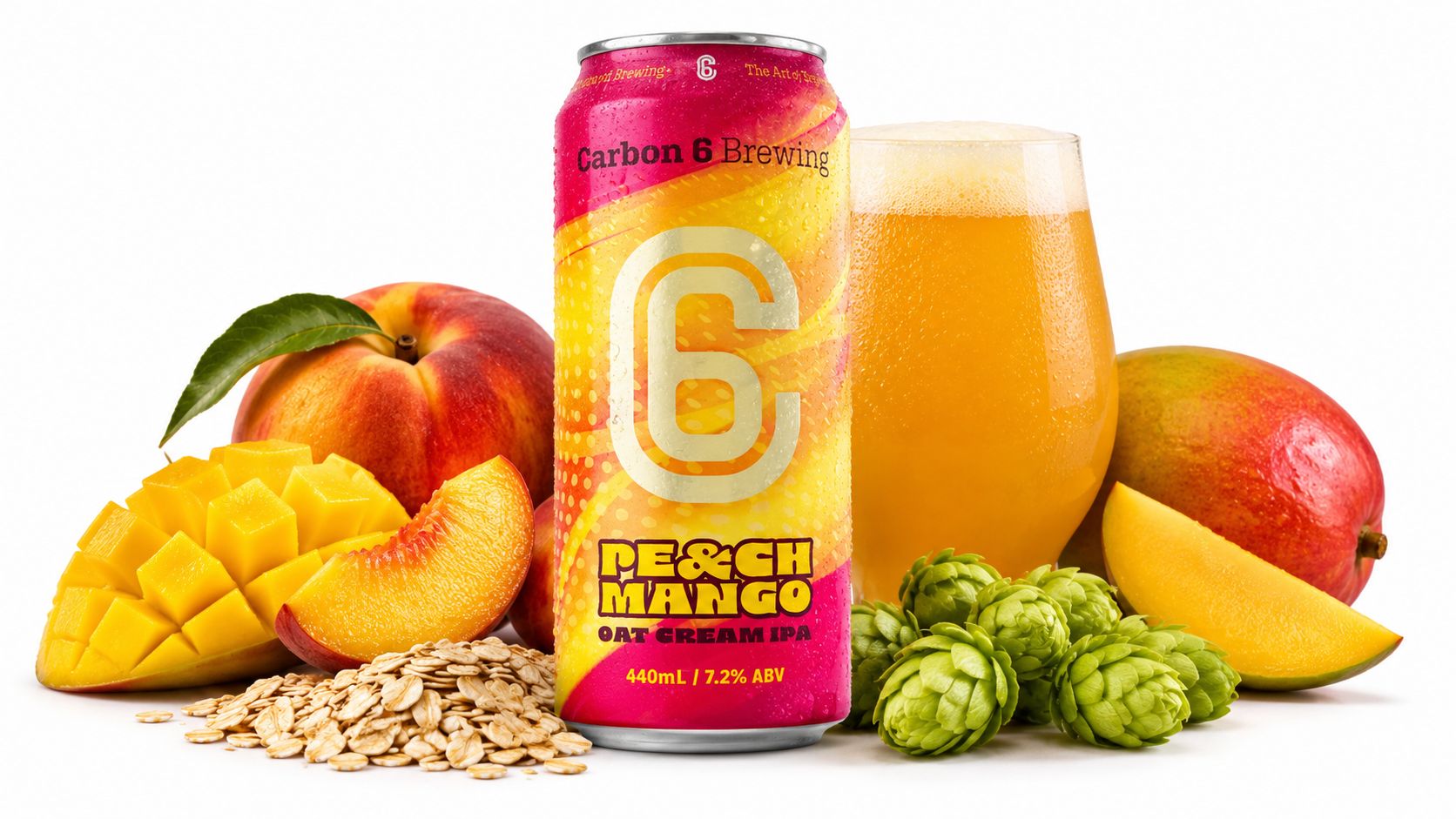
Peach & Mango Oat Cream IPA | Craft Beer lists HPA-033, Citra and Galaxy with peach, mango, lactose and rolled oats. That combination shows how variety selection follows the beer's flavour plan, rather than a catalogue's most appealing description.
The guide to hop products in Australia gives useful local context. Check traceability before paying, then choose domestic or imported stock based on the recipe, crop information, consistency and total delivered cost.
Choosing Between Pellets and Whole Cone Hops
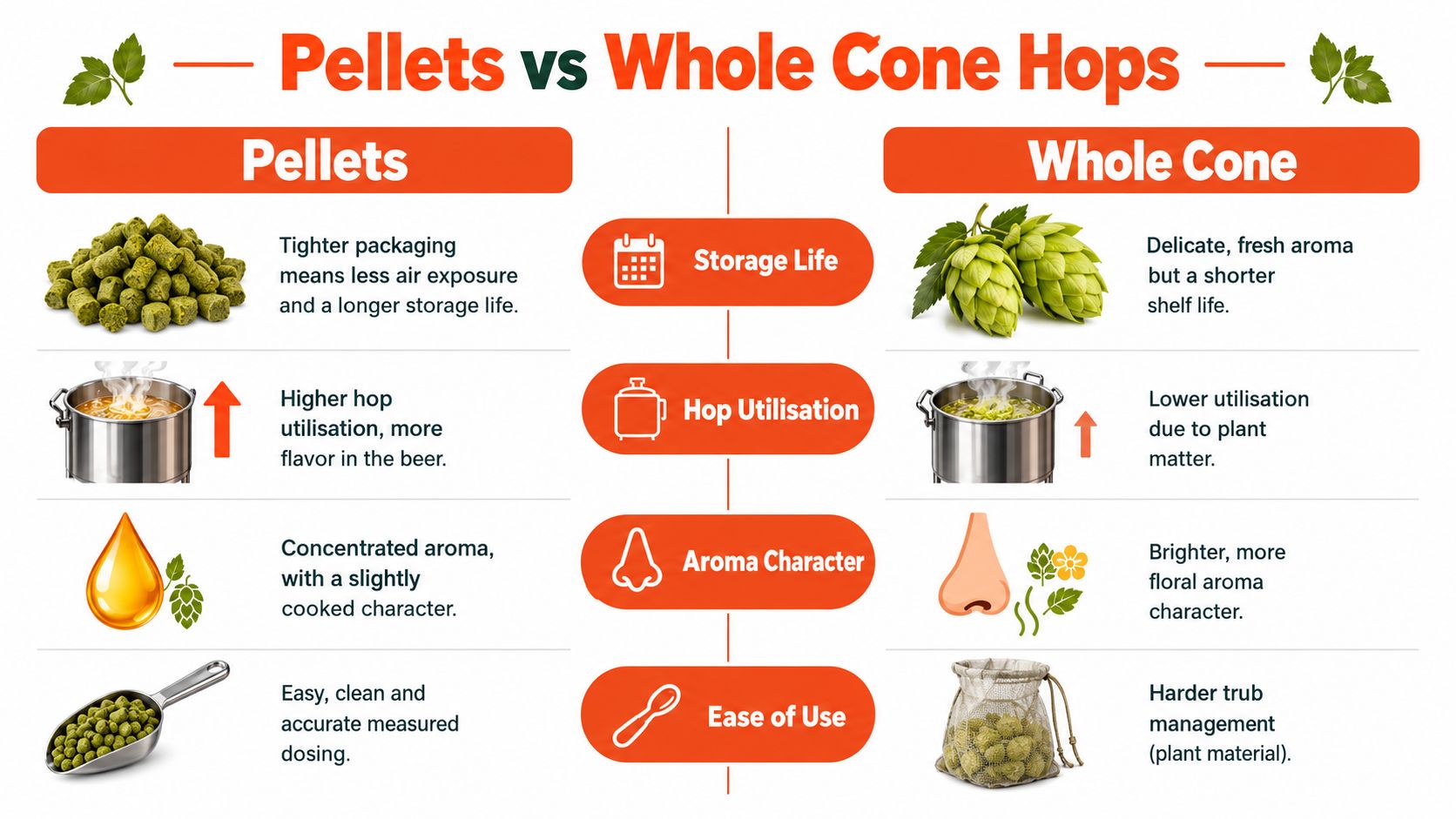
Pellets are the practical default for most brewers. The hop material is compressed into a dense format, making it easier to weigh, pack and store than whole cones. Pellets also suit repeat recipes because the brewer can measure additions accurately without dealing with bulky plant material.
Whole cone hops have a different appeal. They can suit brewers who want a particular fresh, floral impression, who are working with a hop-back or whole-cone setup, or who deliberately want to explore less processed material. They also take up more space and can create more work in the kettle and trub system.
Pellets versus whole cones in practice
| Attribute | Pellets | Whole Cone |
|---|---|---|
| Storage life | Compact and easier to seal against air | Bulky and more exposed once packaging is opened |
| Hop utilisation | Usually simpler to incorporate into a standard brew process | Plant material can make handling and separation more involved |
| Aroma character | Concentrated and consistent when fresh | Can present a delicate, bright floral character |
| Ease of use | Easy to weigh and dose | Requires more space and careful trub management |
Neither form rescues poor storage. Oxygen, heat and light will still work against freshness, so a vacuum-sealed, opaque pack stored cold matters more than the format alone. Pellets are often easier to protect because they occupy less space, but whole cones can be the right choice when the brewing system and intended beer justify the extra handling.
The decision should also follow the variety. Galaxy is widely associated with bold Australian hop character and is a major part of the local crop. Vic Secret and Eclipse are also prominent Australian proprietary varieties, but the right choice depends on the recipe, the lot analysis and the flavour target, not just on what's popular.
Imported varieties may broaden the available aroma palette, while domestic varieties can offer a clear connection to Australian growing conditions. If your recipe depends on a specific aroma, ask whether the supplier has a current crop and whether the listed alpha-acid figure applies to the exact lot.
The article what hops are in beer gives useful background for readers still separating bitterness, aroma and flavour roles. For a beer example outside the high-hop IPA category, Carbon Mid | Mid-Strength Lager is listed as a lager with 3.0% ABV, where hop selection needs to support a clean, balanced beer rather than overwhelm the malt and refreshment profile.
Working Out How Many Hops You Actually Need
Quantity planning starts with the recipe, not the supplier's minimum order. For each addition, record the batch volume, the hop variety, the addition stage and the weight. Keep bittering additions separate from dry-hop additions because they serve different jobs and depend on different recipe inputs.
For a 20 L homebrew batch, a 50 g pack might be entirely reasonable if the recipe uses one variety across a small number of additions. It becomes poor value when the beer is a repeat brew that uses the same hop every time. In that case, buying several small packs can mean more packaging, more opened leftovers and repeated freight.
A simple homebrew example
Suppose a single-hop pale ale uses one 50 g pack across the kettle and dry hop. The brewer should still check the alpha-acid figure printed on the pack, because the same variety can require a different weight when the lot's bitterness potential changes. The recipe should be recalculated rather than copied blindly from a previous crop.
A hazy IPA can consume substantially more aroma hops because the schedule may include whirlpool and dry-hop additions. If a 20 L batch uses 100 g across those stages, a 50 g pack won't cover the recipe, and a single brew may require more than one pack. The exact amount must come from the recipe's chosen rate, not a universal rule.
A reliable order is one that matches your next few brew days, not one that looks impressive in the fridge.
Scaling for a small brewery
A microbrewery should calculate usage across the planned production run. Multiply the hop weight per batch by the number of batches, then add only a sensible operational allowance for handling and recipe variation. Keep the calculation separated by variety and crop lot so substitutions don't unexpectedly change the beer.
For example, a brewery repeating a core pale ale can compare the total requirement for the next production cycle with the available pack size. If a 1 kg lot covers the planned brews and the supplier can provide lot documentation, it may be more practical than ordering many small packs. If the recipe is experimental or seasonal, a smaller purchase reduces the risk of holding unused stock.
New Zealand varieties can also change the calculation. Peachquency Hazy IPA beer is described with Peacherine, Motueka and Riwaka hops and an ABV of 5.8%, so a brewer trying to replicate that kind of fruit-forward profile would need to plan a multi-variety order rather than assume one substitute will deliver the same result.
Before checkout, write the required grams for every addition, add them together by variety, and compare that total with the pack options. If the order leaves a large opened remainder, confirm that you have cold, sealed storage and a realistic plan to use it.
How to Judge Hop Quality Before You Pay
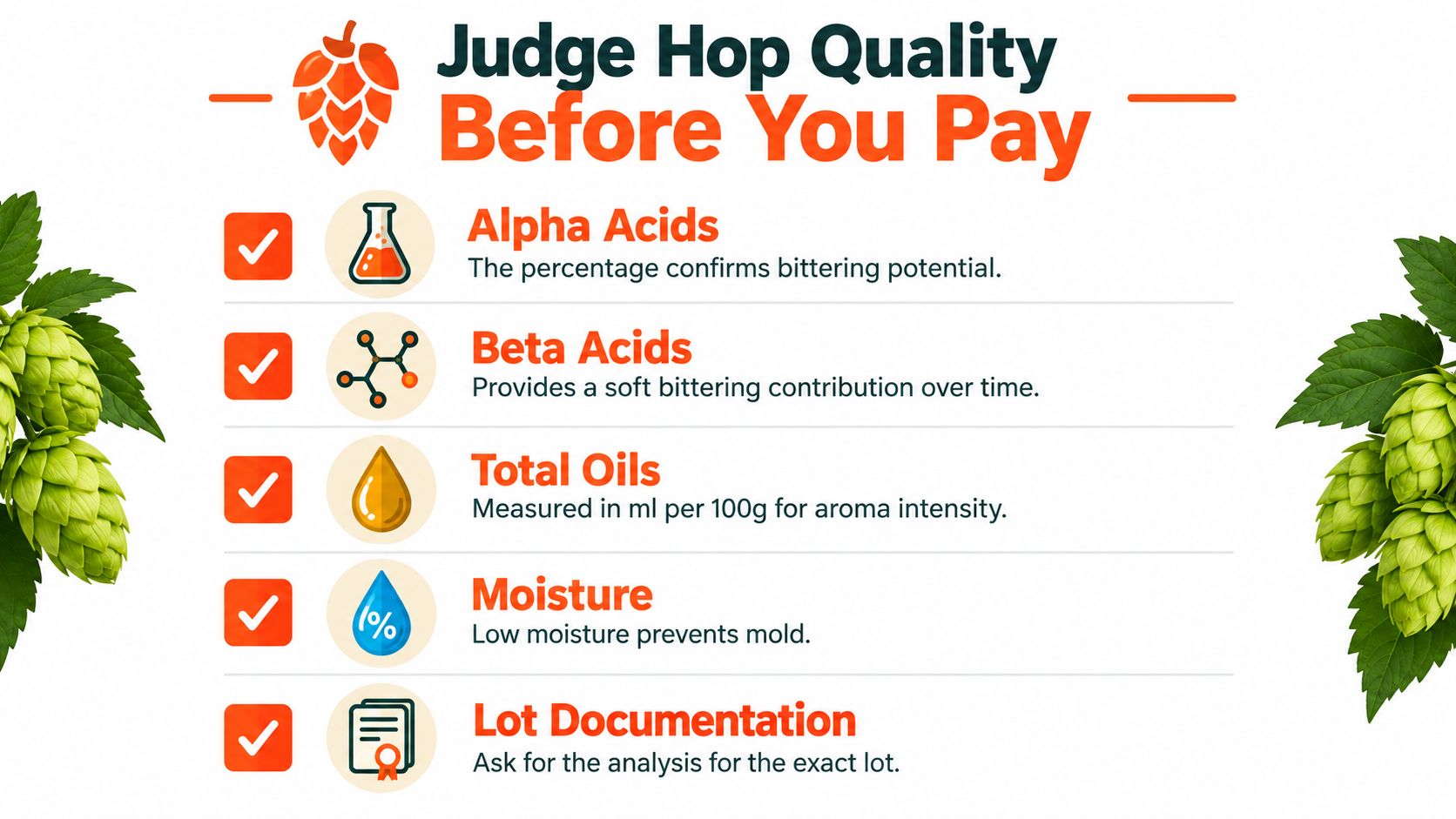
A good-looking hop bag isn't enough. Brewers use laboratory data to formulate bitterness and assess quality, because visual appearance can't tell you the exact alpha-acid level, oil content or moisture condition of a lot. The NSW Department of Primary Industries guidance identifies alpha acids, beta acids, total essential oils and hop oil profiles as measurements used in recipe design and quality assessment. The relevant technical discussion appears in the NSW Department of Primary Industries hop-quality reference.
Read the specification, not just the sales copy
Alpha acids are central to bitterness calculations. The percentage printed on the pack lets you adjust the recipe to the actual lot rather than relying on a generic variety average.
Beta acids contribute to the hop's overall profile and can matter as the beer ages. They're useful context, but they shouldn't replace the alpha-acid figure when you're calculating kettle bitterness.
Total oils and oil profiles help you understand aroma potential. A product description might use words such as citrus, tropical or resinous, but an analysis gives you more useful evidence about the lot in front of you.
Moisture matters because excess moisture increases storage risk. Ask for the moisture result and keep the product sealed after opening. If the supplier can't provide analysis for the exact lot, you're making a purchase with less information.
The Australian hop varieties brewing guide can help with variety-level context, but a variety guide isn't a substitute for a current certificate of analysis.
The buyer's pre-payment checklist
- Crop year: Confirm when the hops were harvested, particularly if aroma freshness is important.
- Exact alpha acids: Check that the printed percentage belongs to the lot you're buying.
- Beta acids and oils: Ask for the available laboratory results, not only a tasting description.
- Moisture: Look for a stated result and consider how quickly you'll use the pack.
- Packaging: Prefer sealed, light-protective packaging that limits oxygen exposure.
- Traceability: Keep the variety, crop year and lot reference with your brew records.
Paying more can be rational when the supplier provides fresher stock, stronger traceability and usable analysis. It isn't rational merely because the product page uses premium language. The value is in reducing uncertainty and helping you reproduce the beer.
Storing Your Hops and Getting Them Shipped Safely
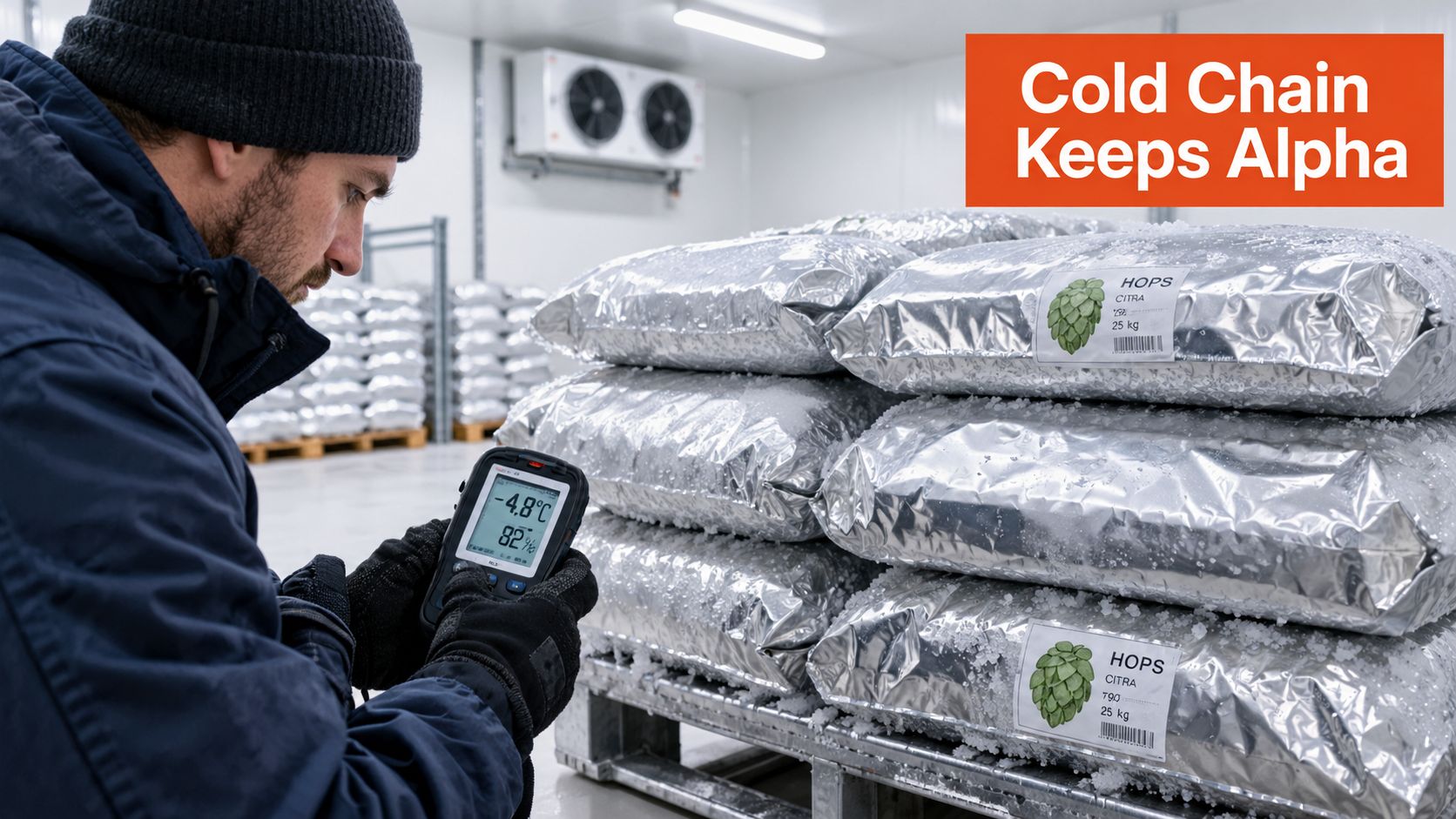
The purchase isn't finished when the parcel arrives. Hops are vulnerable to oxygen, heat and light, so the storage conditions between dispatch and brew day can affect the alpha acids and oils you paid for. Queensland heat makes delivery timing worth considering, especially when an order is travelling to the Gold Coast or sitting in a depot before collection.
Plan freight around the brew calendar
Order close enough to your brewing schedule that the hops spend less time in transit and storage, but don't leave procurement until the day before a production brew. Ask the supplier how the hops are stored before dispatch, how they're packaged for freight and whether the shipment is sent in a way that limits unnecessary heat exposure.
For online buyers, bulk or mixed orders can make freight more sensible. A Queensland brewer might combine varieties for several planned beers, but only when each pack has a defined use. A mixed order of fresh hops that gets used promptly is more useful than a large order assembled purely to spread delivery cost.
Packaging design also matters during transit. Suppliers sending temperature-sensitive or light-sensitive products can review practical guidance on a custom shipping box for UK e-commerce, particularly when they need a box that protects the contents and keeps the packing process organised. The principles are transferable, even though the freight route and climate will differ in Australia.
Store the opened pack properly
Once the parcel arrives, check the seal and record the crop year, alpha-acid figure and lot details. Keep unopened packs in the supplier's recommended cold conditions, and reseal opened packs as tightly as possible before returning them to cold storage.
Don't keep opening the same large bag every time you need a small addition. Split stock only when you can maintain a reliable seal and preserve the lot information on every smaller pack. If you're a homebrewer without enough cold storage, a smaller purchase may be the better financial choice even when the per-gram price is higher.
Availability can change during the season because domestic growing is concentrated and weather-sensitive. If a variety sells out, look for a substitute based on the beer's role, aroma direction and alpha-acid specification. Don't replace a hop solely because the product name sounds similar. Record the change and expect to adjust the recipe.
Your Hop Buying Checklist and Responsible Sourcing
A sound hops-for-sale purchase should pass five checks before you pay:
- Name the job: Decide whether the hop is for bitterness, late aroma, whirlpool character, dry hopping or a combination.
- Confirm the lot: Check the variety, crop year, origin and exact alpha-acid figure.
- Match the pack: Choose 12 g, 50 g, 1 kg or another format according to actual use and storage capacity.
- Check the evidence: Ask for beta acids, total oils, moisture and lot documentation when the listing doesn't show them.
- Plan the arrival: Buy from a supplier that stores stock appropriately, ships it carefully and can tell you how long delivery should take.
Domestic hops can support a strong local supply chain, while imported hops and sensible substitutes can keep a recipe moving when a specific Australian variety isn't available. The right choice depends on freshness, specification, freight and the beer in your fermenter, not on origin alone.
Anyone selling beer, brewing ingredients or related products in Australia also needs to take marketing seriously. The ABAC Responsible Alcohol Marketing Code applies to digital communications, social media, competitions, advertorials, product names, packaging, point-of-sale materials and retailer advertising. Its purpose includes responsible marketing and avoiding encouragement of minors to consume alcohol, while ABAC's digital marketing guidance confirms that platforms such as YouTube, Facebook, Instagram and Snapchat are within scope.
Queensland guidance also says alcohol marketing and packaging must not encourage excessive or rapid consumption, appeal strongly to minors, depict people under 25, or suggest alcohol creates success, mood change or other achievements. The Queensland alcohol advertising guidance should sit beside your content approval process.
Good marketing can still speak to real adult motivations, such as curiosity about flavour, confidence in freshness, support for independent brewing and the enjoyment of discovering a carefully made beer. It should help adults make an informed choice, not pressure them into drinking more or use emotional claims that breach the rules.
Carbon 6 Brewing Pty Ltd offers locally brewed beers from Stapylton, Queensland, including hop-led styles and a mid-strength lager for different occasions. Visit Carbon 6 Brewing Pty Ltd to explore the current range and choose fresh beer from an independent Queensland brewery.