
Session IPA Beer Explained: An Aussie Craft Guide
Sep 09, 2026
You're at Burleigh Heads, the esky's packed, the afternoon is warm, and someone hands you a can with “Session IPA” on the label. The question arrives quickly: what is a session IPA beer? It looks like an IPA, smells like an IPA, and brings plenty of hop character, but it's designed to keep the alcohol load lower and the drinking experience easier across a longer social occasion.
That balance is why the style has found such a comfortable place in Australian craft beer. A good example isn't a watered-down IPA. It's a carefully engineered beer that gives you citrus, tropical fruit, pine or floral hop notes without the heavier warmth and fullness of a standard IPA. For Queensland drinkers, that makes it especially useful for a long lunch, a barbecue, a beachside arvo or a mixed pack chosen for sharing.
What Session IPA Beer Is
At its simplest, a session IPA is a hop-forward ale brewed at session strength, generally within the 3.0% to 5.0% ABV range recognised in Australian amateur brewing style guidelines, including the Australian amateur brewing style compendium. “Session” describes the beer's intended drinking occasion: it offers enough flavour for a longer social gathering while carrying less alcohol than a full-strength IPA.
The idea has older roots than the modern can. British traditions included lighter, lower-strength styles such as milds and bitters, made for social drinking without the intensity of stronger ales. Modern brewers applied that approach to IPA, then had to solve a practical problem: how to retain hop aroma and character after reducing alcohol and malt weight.
A well-made session IPA pushes hop expression rather than alcohol intensity. Malt, yeast, water and hop timing work together to create a lighter body that still speaks clearly in the glass. Depending on the recipe, you may find mango, passionfruit, grapefruit, lime, pine or floral notes. The finish should feel lively and clean, not hollow.
The “session” idea in practical terms
The name describes style and strength, not unlimited drinking or a health benefit. Alcohol still affects judgement and coordination. Treat session IPA like any alcoholic drink, and account for your own limits, food, water and transport plans.
For buyers in Queensland, the label gives only part of the answer. A lower-strength beer can be thin if the malt, bitterness and hop freshness are poorly balanced. A good one has a clear hop aroma, enough body to support it and a finish that invites another sip without tasting harsh. It may sit near mid-strength beer for alcohol, yet drink more like a hop-led pale ale. That difference matters when choosing a mixed pack, a barbecue beer or a can for a warm Gold Coast afternoon.
The style also has commercial weight in Australian craft beer. Trade coverage reports an 8% dollar share of total beer, 14.4% value growth, and over AU$43 million in retail sales value from session and summer-style ales, with those formats contributing close to half of Australian craft dollar growth, as reported by Drinks Trade's Australian session ale coverage. For independent brewers, session IPA can attract drinkers who want distinctive hops in a format suited to longer occasions. Direct buying from a brewery can also shorten the path from packaging to glass, helping preserve the bright aroma that defines the style.
The brewer's challenge: hitting full hop aroma at 4.0% ABV with roughly half the malt of a standard IPA.
Less malt and alcohol leave little room to hide rough bitterness, thin texture or tired hops. The strongest examples feel deliberate from the first sip, with enough malt support for the hops to arrive cleanly and enough freshness to keep the beer energetic.
ABV, IBU and the Flavour Profile
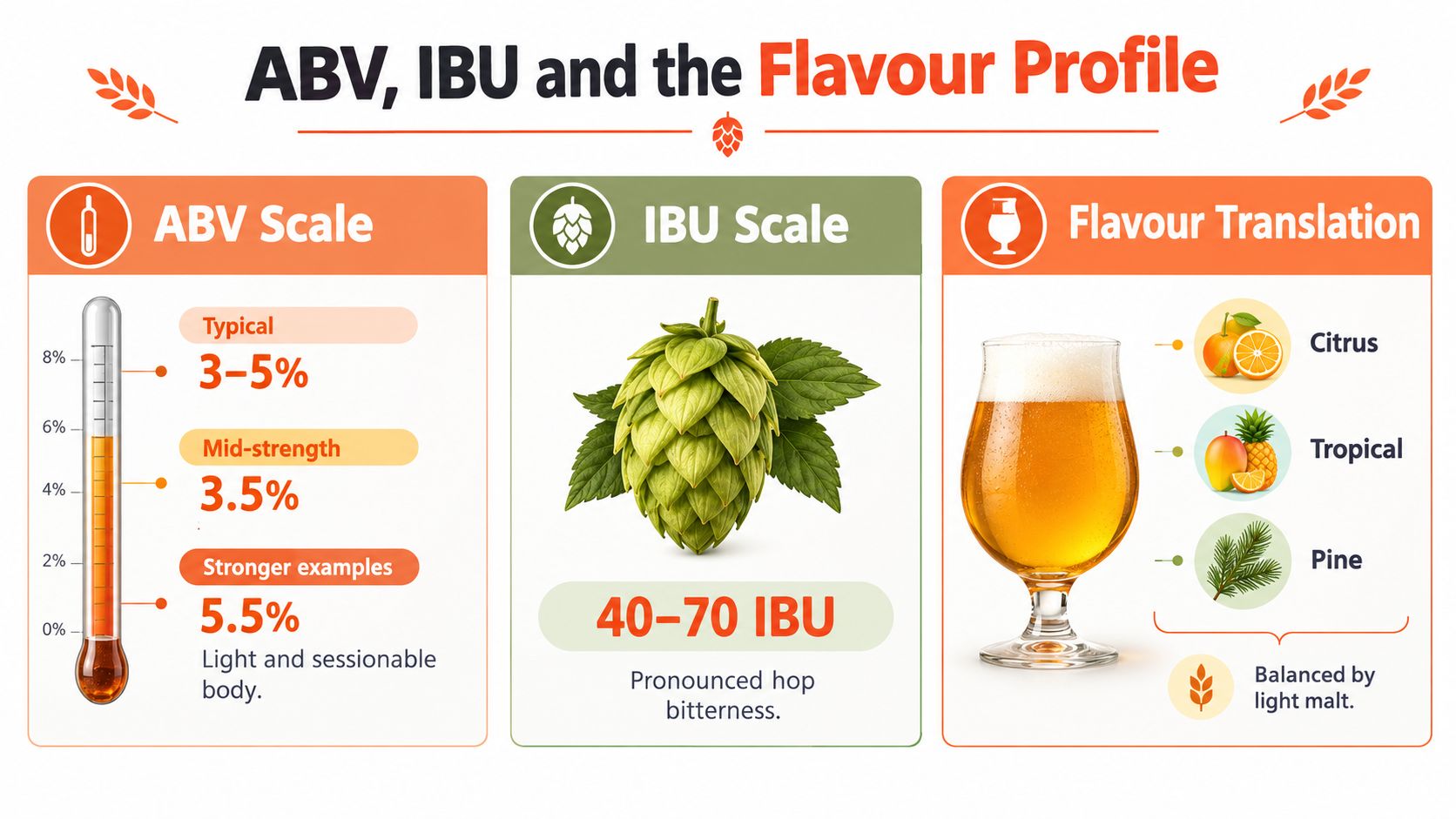
Start with the label, then translate what you see into the glass. Australian style references generally place session-strength beer between 3.0% and 5.0% ABV, while commonly cited session IPA benchmarks sit around 3.5% to 4.5% ABV. Australian guidance also commonly places the style around 25 to 40 IBU, with practical gravity benchmarks of approximately 1.038 to 1.052 OG and 1.008 to 1.014 FG, as outlined in Australian session IPA style guidance and Australian beer style notes on IPA structure.
ABV means alcohol by volume. IBU means International Bitterness Units. Neither number tells the whole story, but both help you understand why one beer feels crisp and another feels heavy. For a plain-language explanation of bitterness, see what IBU means in beer.
Turning the numbers into flavour
A session IPA around the lower end of the range can feel light, bright and quick on the finish. At the upper end, it may carry more malt structure and a fuller impression while staying below many standard IPAs. The colour can range from pale straw through gold to deep amber, depending on the malt bill.
Bitterness needs context. A beer with a moderate IBU level can taste sharper if it has a very dry finish and little malt sweetness. The same bitterness can feel rounder when the beer has more body or residual sweetness. Alcohol also contributes to the overall impression of bitterness and warmth, so lower alcohol can make the finish feel cleaner and less hot, even when the hops are clearly present.
Hop choice creates the personality:
- Galaxy can bring passionfruit and tropical fruit character.
- Mosaic often suggests berry, mango, citrus and herbal notes.
- Citra commonly leans towards citrus and tropical fruit.
- Ella can give floral, citrus and spicy impressions.
- Vic Secret is often associated with pineapple and other tropical cues.
Some brewers favour a clear, resinous West Coast direction, with pine, grapefruit and a firmer bitter edge. Others use the softer, hazier approach associated with East Coast IPA, creating a juicier texture and gentler bitterness. The beer may be hazy or bright, but appearance alone won't tell you whether it's balanced.
For a useful taproom tasting, work through four checks:
- Smell first. Look for fresh citrus, tropical fruit, pine, flowers or herbs rather than a dull or stale hop character.
- Take a small sip. Notice whether bitterness arrives cleanly or feels harsh and scratchy.
- Check the middle. A lighter beer still needs some malt or soft grain character to stop it tasting hollow.
- Watch the finish. Crisp and dry can be excellent, but watery, overly astringent or strangely sweet signals poor balance.
A stronger beer can also be useful as a comparison point. Cardinal Red IPA 6% ABV 440ml can combines citrus, pine and tropical fruit aromas with caramel notes, three red malts and subtle roast, giving you a more substantial malt-led contrast to a session IPA.
Session IPA vs Standard IPA and Pale Ale
Ordering becomes easier when you stop treating these beers as points on a simple strength ladder. A pale ale usually aims for balance and approachability. A session IPA puts more attention on hop aroma and flavour while keeping the body lighter. A standard IPA generally carries more alcohol, malt weight and intensity.
| Attribute | Session IPA | Standard IPA | Pale Ale |
|---|---|---|---|
| Alcohol | Lower, commonly within 3.0% to 5.0% ABV | Usually stronger and warmer | Often moderate, depending on the beer |
| Bitterness | Noticeable, usually kept in a moderate band | Can be firmer and more aggressive | Usually balanced against malt |
| Malt character | Light to moderate support | Fuller backbone | Bready, grainy or biscuity balance |
| Hop intensity | Aroma and flavour punch above the alcohol level | Resinous, citrusy, tropical or intensely bitter | Present but usually less dominant |
| Body | Light to medium-light | Medium to full | Light to medium |
| Colour | Pale straw to amber | Pale gold to deeper amber | Gold through amber |
| Drinking pattern | Built for a longer occasion | Better suited to a slower, focused pour | Flexible and easy to approach |
A mid-strength XPA can sit very close to session IPA in the glass. The distinction is often the label and the brewer's intended balance rather than a hard sensory wall. XPA usually signals a bright, approachable pale ale with extra hop lift, while session IPA tells you to expect a more obvious IPA-style hop presence at lower strength.
The useful question is what you want from the next pour. Pale ale is the sensible choice when you're eating lunch and want bready malt, gentle bitterness and a balanced companion to food. Session IPA suits a long Gold Coast afternoon when you want citrus, tropical fruit or pine without the density of a full IPA. Standard IPA is the slower sip when alcohol warmth, a fuller palate and a more forceful hop profile are part of the appeal.
A simple ordering guide
- Quick lunch: Choose pale ale for balance and easy food matching.
- Long arvo: Choose session IPA for stronger hop aroma with a lighter frame.
- Slow tasting pour: Choose standard IPA when you want more body, warmth and intensity.
A good tap list may include local independent beers alongside larger craft producers, and that variety is useful. Taste the styles side by side rather than relying only on the name. The beer in front of you matters more than the category shorthand.
How Brewers Build Flavour at Lower Alcohol
Session IPA begins with a design decision. Brewers do not remove malt from a standard IPA. They rebuild the recipe so hops stay expressive while the lower alcohol level still feels complete.
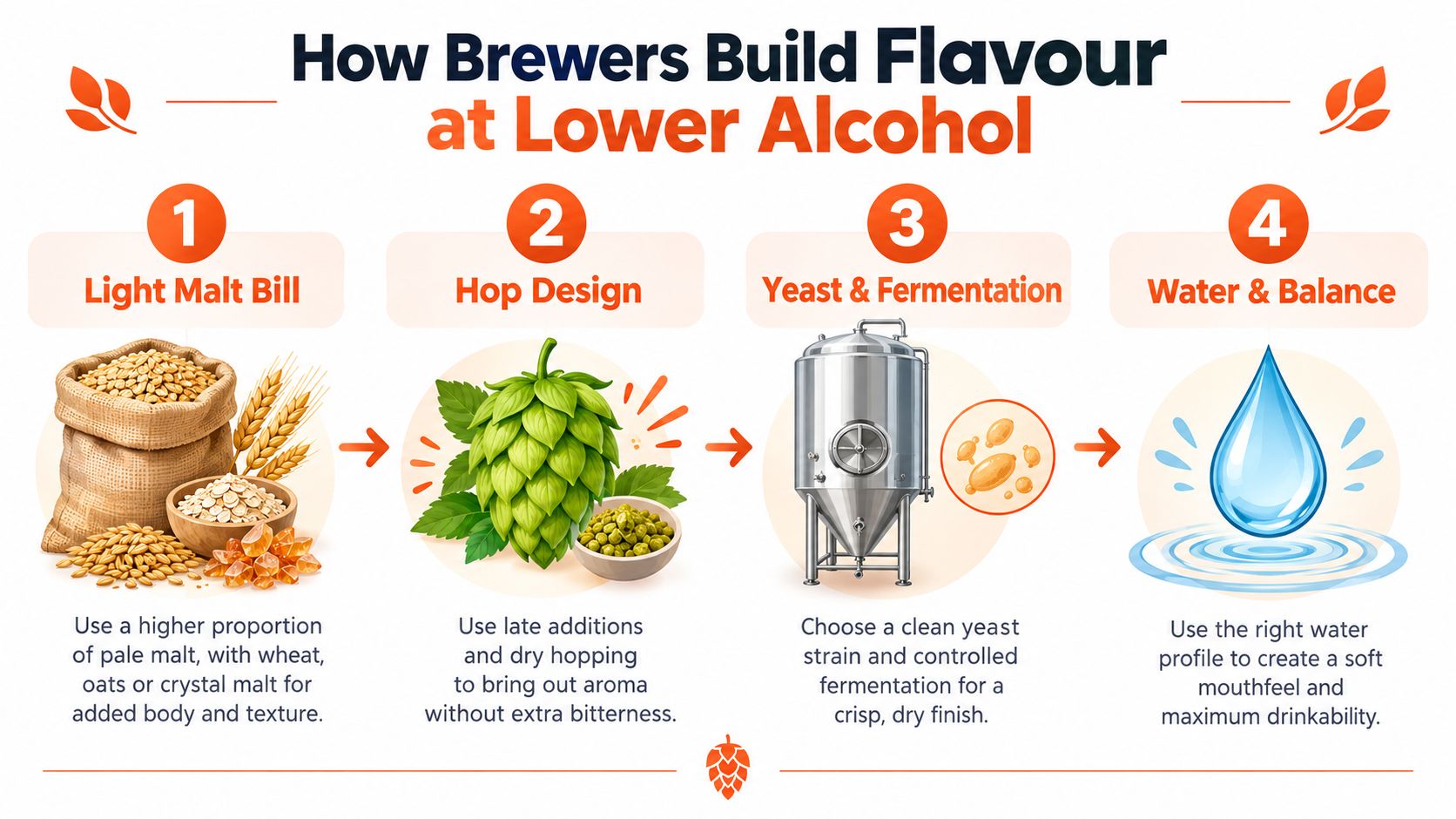
A moderately light malt bill provides the frame. Pale malt brings clean grain character, while smaller amounts of wheat, oats or crystal malt can support body, foam and gentle sweetness. The aim is enough structure to avoid a watery finish, without adding so much fermentable sugar that the beer moves into a stronger category. It is like building a lighter paddleboard: less weight, but still enough shape to stay stable.
Hop timing does the heavy lifting
An early hop addition can establish bitterness, while late kettle additions, whirlpool hops and dry hopping build aroma and flavour. Because these later additions contribute aroma without proportional bitterness, they help brewers keep the beer balanced at low alcohol.
Timing matters because a lighter beer has less malt sweetness and body to cushion bitterness. The brewer must decide whether the finished pour should suggest a tropical fruit bowl, citrus orchard, pine forest or something softer and hazier. A good session IPA should smell generous before the first sip, then finish cleanly rather than scraping across the palate.
Hop varieties need to suit that structure. A clean, aromatic selection can make the beer feel vivid even when the palate remains light. Oxygen and heat become serious enemies after brewing, since stale hop character can turn a bright beer flat, papery or muted.
Fermentation and balance
Yeast choice affects dryness and how strongly the hops lead. A clean, attenuative ale strain can create a crisp profile, while fermentation conditions may be adjusted to retain enough body. Water chemistry, carbonation and the relationship between bitterness and gravity also shape whether the beer feels sharp, soft, lively or thin.
A successful session IPA tastes designed around its alcohol level, not compromised by it.
Packaging freshness forms part of the recipe. A beer can leave the brewery with vivid hop aroma, then lose much of that lift if it sits warm, in bright light or in a poorly sealed package. For Queensland drinkers, a local can handled carefully from independent brewery to fridge may therefore offer a brighter experience than one that has travelled a long way. Freshness is not a technical footnote. It is part of what makes the lighter format work.
Why Session IPA Is a Value Driver in Australian Craft
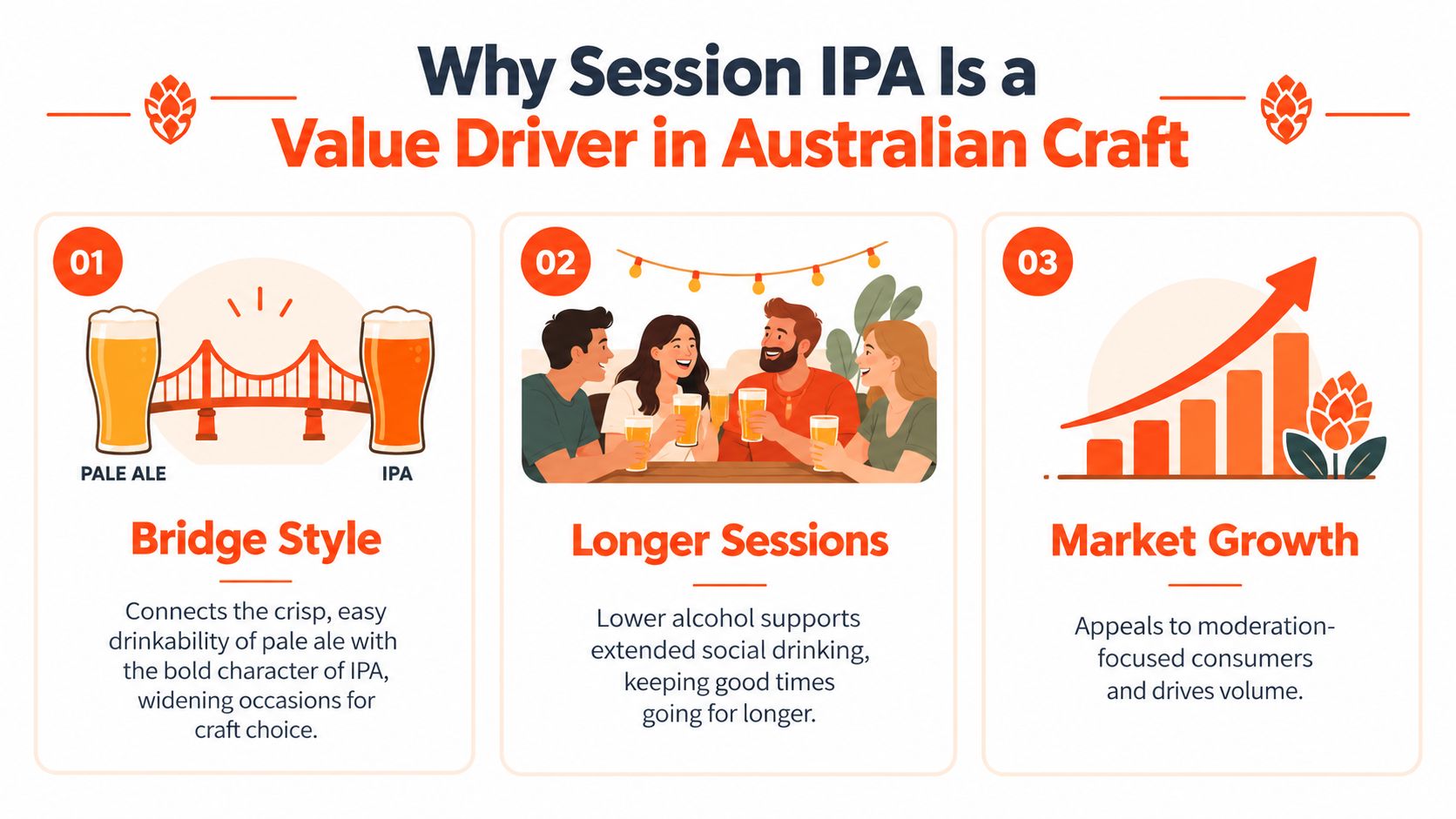
A Queensland barbecue, long lunch or afternoon gathering often needs a beer with character that will not dominate the whole occasion. Session IPA gives independent breweries that extra drinking occasion. It sits between pale ale and full-strength IPA, offering a recognisable hop profile in a lighter format.
Its commercial value comes from that flexibility. A brewery can place session IPA in the fridge beside pale ale, mid-strength options and stronger IPAs, giving shoppers a clear choice for different occasions. Independent bottle shops can also use it to broaden a local range without relying only on high-strength beers. As noted earlier, Australian craft beer has shown strong interest in lighter, hop-forward formats, which helps explain why brewers continue refining the style.
The category also gives breweries room to show personality. One release may focus on passionfruit and citrus, another on pine, stone fruit or a softer haze. The alcohol level sets the frame, while hops, yeast and presentation provide the detail. For a buyer, that means the word “session” describes the drinking format, not a guarantee that every beer will taste alike.
Competition interest supports the style's place in modern craft brewing. The Independent Brewers Association's 2021 competition recorded 105 total medal placements in the Session Beer category, against 1348 total entries across the competition overall, according to the Independent Brewers Association competition results. The figures show that session beer has a recognised place alongside larger hop-forward categories, rather than functioning as a watered-down afterthought.
Why drinkers keep coming back
The appeal is practical as well as sensory. A good session IPA can feel distinctive, fresh and social without turning a casual gathering into a formal tasting. It works like a bridge on a shared fridge: one person may want tropical hops, another pale ale, while someone else saves a stronger IPA for slow sipping.
Food makes that bridge even more useful. Citrus and tropical notes can brighten grilled prawns, fish tacos and fresh seafood. Bitterness can balance a rich burger, while a crisp finish refreshes the palate after chilli, fried chicken or spicy barbecue.
A lighter format may suit someone choosing moderation, but “session” is not a health claim. The amount you drink still matters. The value lies in giving drinkers more occasions to enjoy expressive craft beer at a strength that fits the setting.
Buying Session IPA in Queensland and the Gold Coast
For Gold Coast drinkers, freshness often starts with distance. A can from a nearby brewery that has been kept cold may show brighter hop aroma than a famous beer that has spent too long in warm transport or bright retail conditions.
Start with the package. Look for a packaged date or best-before information, then check whether the retailer stores hoppy beer away from sunlight and heat. Cans offer strong light protection and travel neatly to a barbecue or beach gathering, but they still need sensible handling and refrigeration.
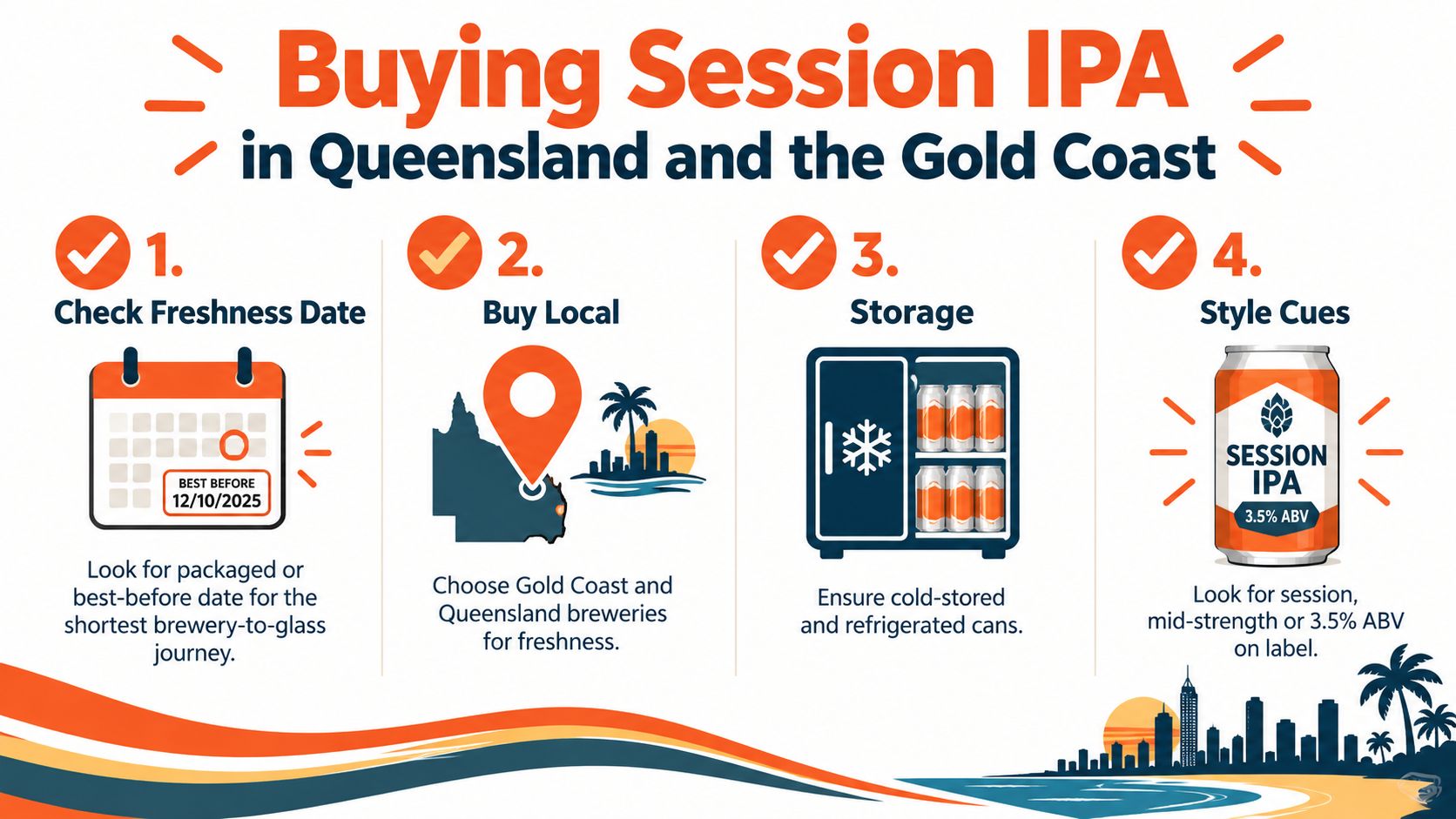
Your Queensland buying checklist
- Read the label: Look for session, mid-strength or a clearly stated ABV, then match it with the strength you want.
- Ask about storage: A cold-stored can is a safer bet for hop freshness than one that has sat in heat.
- Use the taproom: A fresh pour lets you assess aroma, clarity, carbonation and bitterness before committing to a pack.
- Compare local releases: Independent breweries may offer different hop combinations, release notes and mixed-pack options.
Direct buying from an independent brewer can add convenience and context. You may find current releases, mixed packs and clearer information about the beer's ingredients or intended profile. Online ordering also needs a little homework. Check delivery restrictions, age verification, shipping costs, refrigeration expectations and whether the beer may arrive warm. For Gold Coast delivery considerations, see this guide to beer delivery on the Gold Coast.
A local pub can become a useful tasting point too. If you run or help promote a venue, practical advice on how to make your pub a local hotspot can help connect rotating craft taps with the people who want to discover them responsibly.
Carbon 6 Brewing operates from Stapylton on the northern Gold Coast, so its range gives local drinkers one independent option to compare with beers from nearby breweries, bottle shops and bars. Focus on the details that affect your choice: hop aroma, bitterness, malt support, freshness and whether the format suits the gathering.
Serving, Storing and Enjoying It Properly
Keep unopened cans or bottles upright in a cool, dark and steady place. A pantry or home cellar can work, while sunlight, heat and repeated temperature changes can wear down fresh hop character. Check the best-before date when you buy, particularly if the beer is heavily dry hopped.
Chill the beer gradually rather than freezing it. A session IPA is often most expressive at roughly 6 to 10°C, where citrus, tropical and resinous notes can open up without the alcohol and bitterness becoming too prominent. Very cold beer may taste refreshing at first, but it can hide the aroma that makes the style interesting.
Pour for aroma, not just appearance
Use a clean glass rather than drinking straight from the can when you want to taste properly. A narrow IPA glass can concentrate hop aromas, while a tulip or standard pint glass also works. Pour steadily and leave a little foam. That head carries aroma and gives you a quick visual sign of carbonation and condition.
Rinsing reused glassware thoroughly is often better than leaving detergent residue behind. Soap can flatten foam and interfere with aroma, so a clean, well-rinsed glass gives the beer a fairer chance.
Once opened, keep leftovers refrigerated in a clean, sealed container and drink them within a short period. Oxygen and contamination can quickly dull the bright character, especially in a hop-forward beer.
Session IPA works naturally with a second course or another plate of food. Try it with grilled seafood, a burger, chilli-forward dishes or spicy barbecue. Its lighter body can refresh the palate, while its hop character keeps the pairing from disappearing beside bold flavours.
The word “session” doesn't remove the need for care. Choose a licensed retailer, keep alcohol away from minors, plan a safe way home and drink within your limits. In Australia, alcohol marketing also needs responsible treatment. The ABAC Responsible Alcohol Marketing Code applies to marketing communications controlled by alcohol marketers, including packaging, digital media, social posts, product names, competitions, point-of-sale material and retailer advertising.
Queensland guidance says alcohol advertising and packaging must not encourage rapid or excessive consumption, misuse, irresponsible behaviour or strong appeal to minors. It also restricts depictions of people under 25 years old, suggestions that alcohol creates success or mood change, and drinking before activities requiring high alertness, as set out in Queensland Government alcohol advertising guidance. ABAC guidance also identifies cartoon characters, confectionery-like designs, playful motifs and merchandise aimed primarily at minors as potential strong or evident appeal to minors, described in published ABAC adjudication guidance.
Carbon 6 Brewing Pty Ltd offers independently brewed beer from Stapylton on the northern Gold Coast, with direct-to-consumer ordering and local distribution options. Visit Carbon 6 Brewing Pty Ltd to explore the current range and choose a fresh beer that suits your next Queensland gathering.