
Beer Coaster Set Guide for Aussie Breweries
Sep 10, 2026
On a humid Saturday arvo on the Gold Coast, a schooner hits the table, the coaster skids sideways and a ring of condensation starts spreading across the bench. The customer notices the wet surface, the staff member reaches for a cloth, and your brewery has just been judged by a small piece of tableware before the first sip.
That's why a beer coaster set deserves more thought than “put the logo on something round”. You need to decide whether it's primarily protecting tables, carrying your brand into a customer's home, or supplying a busy venue without constant emergency reorders. The right material, format and bundle depend on that job, plus how often customers pocket the coasters and how your chosen stock handles Queensland moisture.
Why Your Beer Coaster Set Deserves Real Thought
A coaster does three jobs at once. It sits under the drink, creates a branded touchpoint during service and can become a small piece of brewery memorabilia after the bill is paid. Treating those jobs as interchangeable is how breweries end up with attractive coasters that curl, slippery coasters that don't absorb anything, or premium sets that never move beyond the taproom counter.
The first question is practical: what must the coaster do at the table? A high-rotation taproom needs condensation control, stable placement and a surface that looks presentable throughout service. A beer garden in coastal Queensland has a harsher brief than a dry indoor tasting room because glasses arrive wet, tables are wiped frequently and stock may be exposed to warm, damp air.
The second question is commercial: what message should it carry off the table? A DTC buyer may keep a well-designed set beside the home bar, use it during a barbecue or give it to another beer drinker. A venue buyer may care less about collectability and more about consistent branding, reliable supply and a coaster that doesn't create extra cleaning work.
The third question is uncomfortably simple: how often will it disappear into pockets? If customers like the artwork, that isn't a problem. It means the coaster has become a take-home reminder of the brewery. It does mean your stock forecast must treat part of the order as merchandise leakage, not assume every unit will return to the bar.
Operator's rule: Choose the coaster's primary job first. Branding, table protection and collectability can support one another, but one of them should lead the specification.
A useful brief might read: absorb condensation in a humid taproom, reinforce the can artwork, survive a busy service and remain affordable enough to replenish. That brief gives a printer something actionable and gives your team a way to reject options that look good only in a product photograph.
A Short Australian History of the Beer Mat
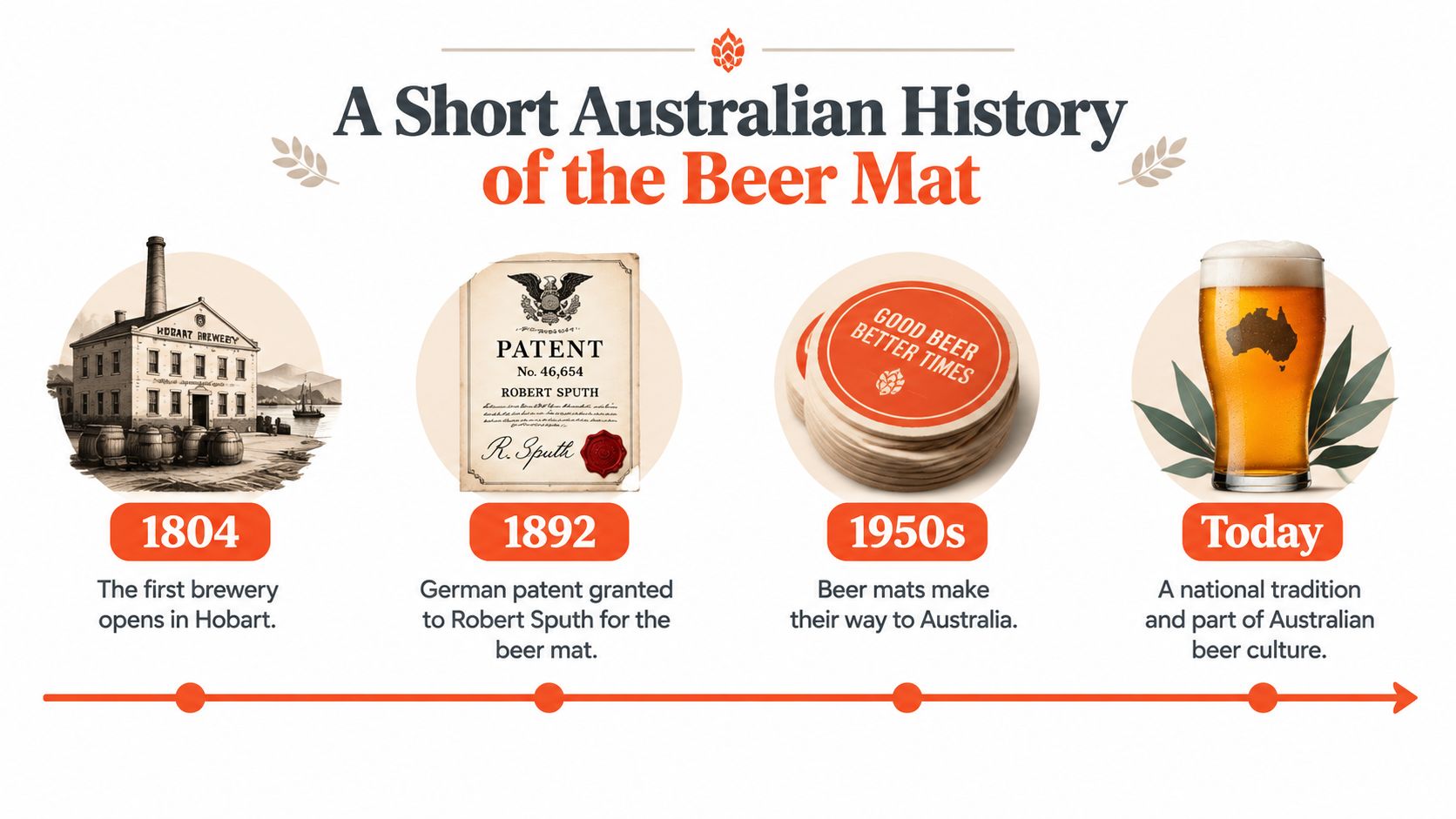
The beer mat format has older roots than many Australian breweries realise. In 1892, Robert Sputh of Dresden received a patent describing wood-felt boards or covers that could be cut into round or square shapes and placed beneath beer vessels as absorbent coasters. The documented history is summarised in this Australian beer coaster history guide, which connects the German format with the later Australian adoption of printed paper coasters.
Australia already had a strong beer culture for the format to enter. Australian beer history reaches back to colonial times, and a government-owned brewery was built in 1804, giving beer-related serving ware a place within a drinking culture that was established early. Printed paper coasters became common in Australia in the early 1900s as printing technology improved, turning a functional item into a practical branding surface.
Why the history still matters
The format survived because it fits beer service. It protects a table, gives a glass a defined landing spot and offers enough surface area for a brewery name, beer style, illustration or venue message. That same combination still works in a modern taproom, particularly when the artwork is designed for quick recognition rather than treated like a tiny poster.
Australian collector culture adds another layer. Tegestology, the collecting of beer coasters, has collector clubs in Australia, so a coaster set can function as memorabilia rather than disposable service stock. Deloitte Access Economics estimated that 7.6 million Australians, or 35% of adults, were collectors in 2025, according to Deloitte Access Economics' collector culture coverage. That doesn't mean every customer will collect your set, but it does show why a thoughtful series can hold relevance beyond the bar.
The broader beer market has also changed. The Oxford Companion to Beer records Australian beer consumption peaking at about 135 litres per person per year around 1979, before falling to just under 90 litres per person per year, as documented in the same Australian coaster culture source. That history helps explain the modern role of the coaster. It isn't only a functional object for a high-volume drinking culture. It can be a design-led reminder of a brewery, a local venue or a particular release.
For an Australian brewery, the lesson is straightforward. Use a material that handles real service, artwork bold enough to read through condensation, and a format that can travel home in a pocket or alongside a 4-pack. The Australian craft beer movement guide provides useful broader context for the independent brewing environment in which that branded ephemera now sits.
Materials That Survive a Busy Taproom
The most important material distinction is between a true uncoated beermat board and a generic coated promo card. Australian suppliers commonly specify beermat stock around 365 to 390gsm, with thickness around 0.7 to 0.82mm, and describe the uncoated structure as the feature that wicks condensation while retaining enough rigidity for table protection and handling. Those specifications and the absorbency trade-off are outlined by Australian beer coaster printer ANZ Printing.
Lamination changes the product's purpose. It improves water resistance and makes wiping easier, but it also reduces absorbency. In a humid Queensland venue, that can leave moisture sitting beneath the glass instead of being drawn into the coaster.
Beer Coaster Materials at a Glance
| Material | Absorbency | Feel & Weight | Durability in Humid QLD | Cost Band |
|---|---|---|---|---|
| Beermat board | High when uncoated | Light, firm, familiar pub feel | Strong for service, but can curl if stored damp | Lower |
| Wood-felt | Good initial moisture handling | Soft, textured and light | Needs dry storage, with mildew risk in persistent damp | Lower to mid |
| Cork | Moderate, with good grip | Warm, natural and slightly springy | Better for repeated use, but can retain moisture and mark | Mid |
| Slate | Minimal | Heavy, cool and premium | Durable, but needs felt backing to prevent table scrapes | Mid to high |
| Silicone | Minimal absorption | Flexible, grippy and modern | Easy to clean, but condensation can sit underneath | Mid |
For a high-rotation taproom, uncoated beermat board is usually the sensible starting point. It handles the core job, prints well and can be replenished without asking staff to wash and dry every unit. Store it flat in a dry cabinet, not beside an open cool room, and accept that it's consumable stock.
A tasting paddle bar can justify cork or slate if the venue wants a slower, more deliberate presentation. Cork offers grip and a tactile feel, while slate gives a heavier premium impression. Slate needs backing, otherwise repeated movement can scrape timber, stone or finished tables. Cork options such as on-brand drink coasters can suit a reusable branded setting, but they shouldn't be chosen solely because “reusable” sounds better. They still need a cleaning and drying routine.
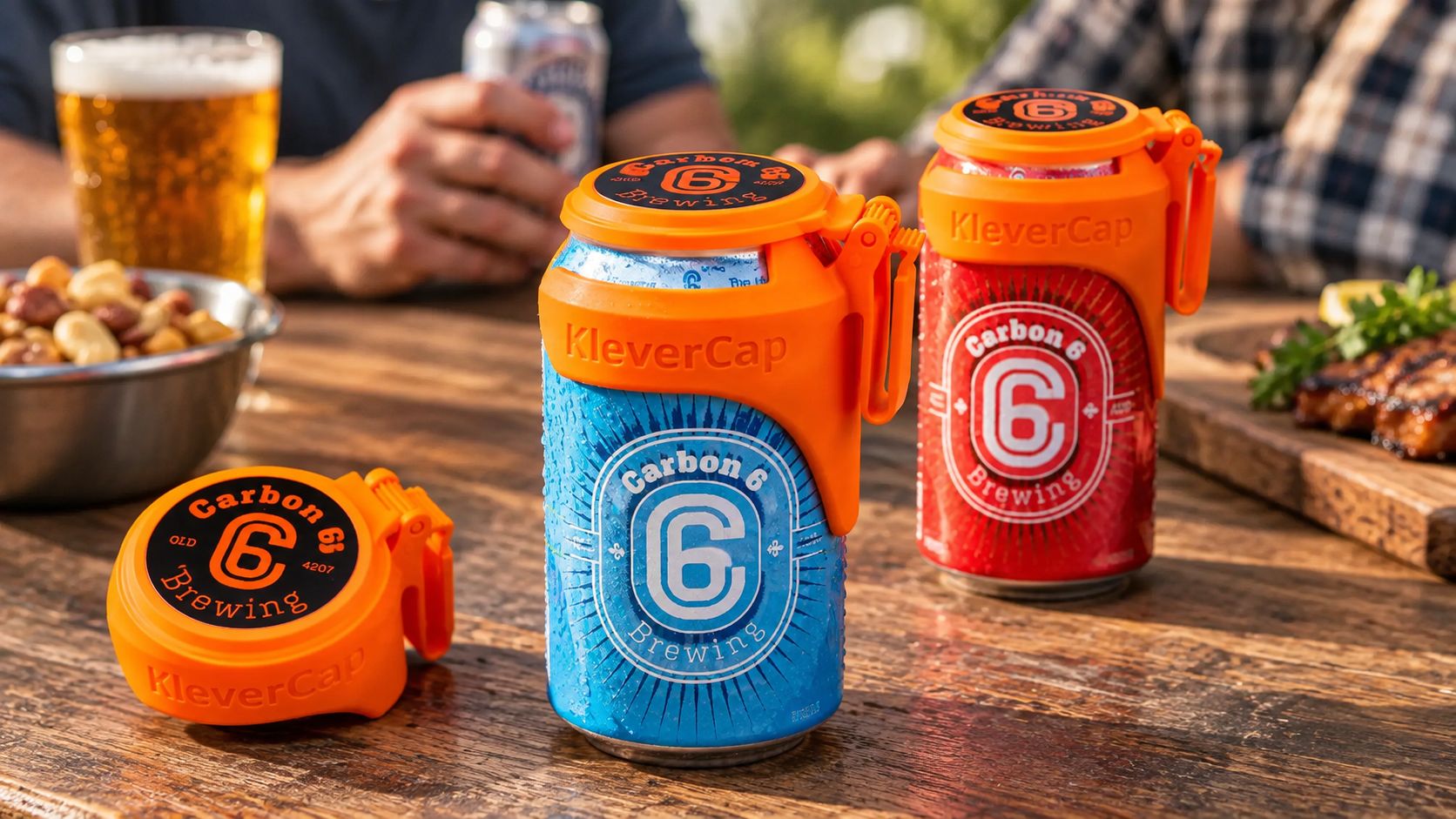
Silicone is useful where dishwasher cleaning matters more than absorption. It won't wick condensation like uncoated board, so it can leave a damp underside on a wet table. Wood-felt has charm and a soft feel, yet Queensland humidity makes storage discipline essential. Even a clever accessory such as the C6 Klever Cap beer can flip lid solves a different service problem. It covers a standard can to help keep flies, dust and debris out, rather than replacing a coaster's table-protection role.
Sizing, Shape and Printing Choices
Start with the glassware you use, not the shape you like on a printer's sample sheet. The familiar 93mm circular format sits comfortably under many beer glasses and stacks neatly behind the bar. Square coasters create stronger corners for artwork, while a custom die-cut shape can make a release memorable, although unusual edges may catch on one another and slow down service.
Thickness creates a similar trade-off. Slim stock stacks efficiently and keeps a DTC parcel compact. Thicker stock feels more substantial and can resist handling, but it takes more shelf space and may push a gift bundle towards a heavier shipping tier. The brief should specify whether the coaster is disposable service stock, a keepsake set or a reusable tabletop object.
Coaster spec options at a glance
| Spec | Common Options | Best For | Trade-off |
|---|---|---|---|
| Shape | 93mm circle, square, die-cut | Circle for service, die-cut for limited merch | Custom shapes can stack and feed less neatly |
| Board thickness | Around 1mm, or thicker stock around 2.5mm and above | Slim board for bar stock, thick board for keepsake sets | Thicker stock uses more storage and packaging volume |
| Surface | Uncoated, gloss laminate, matte laminate | Uncoated for condensation, laminate for wipe-clean use | Lamination reduces absorbency |
| Print process | Digital, offset, screen printing | Digital for short runs, offset for larger batches, screen for bold logos | Setup and unit economics vary by run size |
| Finish | CMYK, soft-touch, spot UV | CMYK for DTC, spot UV for premium packs | Soft-touch flattens texture and adds cost |
Use uncoated pulp-based beermat board when the glass is expected to sweat. A gloss or matte laminate makes sense in a venue that prioritises wiping and presentation over moisture uptake, but call it what it is: a water-resistant branded card, not the most absorbent beer mat.
Printing should follow the order size and artwork. Digital printing suits short taproom runs under 500 units, offset printing becomes more appropriate for 5,000 or more merchandise units, and screen printing works well for a bold single-colour mark. For breweries weighing up a limited run, this practical guide to why choose small batch screen printing is a useful reference for understanding the setup and artwork trade-offs.
A simple four-colour CMYK build keeps a DTC product straightforward. Soft-touch laminate adds a premium hand feel but flattens the board texture. Spot UV can highlight a logo or beer name on a gift pack, though it shifts the piece further away from the absorbent, tactile feel of a traditional mat. For sizing details, use this beer coaster size guide alongside your actual glassware measurements.
If you're designing a take-home beer bundle, the Flexi-Growler is a separate packaging format with a 1.89ml capacity, flexible construction, dark amber colour and a screw cap designed to reduce pressure if needed. It's intended for immediate consumption within 48 hours, not long-term storage, so it should be specified as a beer container rather than treated as coaster packaging.
Who You Are Actually Selling the Set To
A brewery can sell the same artwork to three very different buyers, but each buyer is paying for a different outcome. The personal-use gift buyer wants something easy to understand, easy to post and attractive enough to keep. The taproom buyer wants a dependable consumable that won't create extra work. The B2B merch account wants a product that fits a broader retail or corporate-gifting offer and can justify a more considered finish.
The craft pack data points towards a practical DTC starting point. An Australian craft-beer survey found that 75% of craft drinkers most often buy 4/6-packs, while 40% also buy singles and a similar share buy cases, according to the Australia Craft Beer Report. A coaster set attached to a mixed pack or four-pack therefore speaks to an existing purchase habit rather than asking customers to understand an unrelated souvenir.
The three buying motives
Personal DTC buyers are usually the cleanest first audience for a small Queensland brewery. A flat coaster set can sit in a mailer, pair with a can bundle and work as a gift without the breakage risk of glassware. They respond to clear bundle logic: a few different designs, a useful quantity and artwork that connects with the beer already in the box.
Taproom and hospitality buyers care about wet-strength, replenishment and consistent print. They may not need a premium box. They need stock arriving before the current stack runs out, with material that behaves predictably across a busy service.
B2B merch buyers include bottle shops, hotels and corporate gifting accounts. Their sales cycle is slower and their approval process can be more involved, but a higher-quality set, custom artwork or coordinated pack can make the volume worthwhile. Don't lead with this audience if your production and fulfilment capacity is tight.
The market is also increasingly can-led. NIQ Craft recorded cans taking 73.8% of container volume by 2024, as reported in the Australian craft-beer research supplied for this market context. That supports a coaster-plus-can gift SKU, particularly where a glassware add-on would add breakage risk and shipping complexity.
The strongest offer isn't “a coaster set”. It's a useful, flat, recognisable piece of brewery merchandise that arrives with the beer the customer already wanted.
Care, Replenishment and Cleaning Rhythms
A coaster programme needs an owner. Pin the following checklist behind the bar and make the duty manager responsible for checking stock before the busy shift, not after the last clean-up.
The bar manager's working checklist
- Count weekly: A high-turnover venue may order 1,000 units, while a busy Saturday can burn through 200 or more, as reflected in the supplied operational checklist guidance.
- Store dry and flat: Keep paper stock in a cool, dry cabinet away from open cool rooms and damp walls.
- Remove damaged units: Replace stained, curled, frayed or badly faded coasters before they reach a guest.
- Clean around the stock: Wipe the storage surface daily so old beer residue doesn't transfer to fresh packs.
- Set a reorder trigger: The supplied checklist uses stock below 20% as the point for placing a new order.
The right quantity depends on turnover, pocketing, events and the material. Australian custom-coaster guidance suggests orders from 500 to 1,000 for small cafés and 5,000 to 10,000 for breweries and launches, which frames coasters as consumable inventory as much as merchandise. Use your own count rather than copying a generic quantity. Record opening stock, deliveries, damaged units, event usage and closing stock.
Cleaning also changes by material. Beermat board is generally single-use, so replace it rather than trying to wash it. Wood-felt and cork need air-drying, with occasional light sanding where the surface permits. Slate should be wiped with a damp cloth and mild detergent, then dried properly. Silicone can go through a dishwasher if the manufacturer allows it.
Queensland storage deserves attention. Stacked paper coasters can curl or develop mildew when they sit near warm, damp air. A simple spreadsheet can prevent mid-service scrambling: columns for date, supplier, material, opening count, closing count, damaged count, event allocation and reorder status are enough. Set a calendar reminder for the duty manager to email the printer when the trigger is reached.
Packaging and DTC Bundle Ideas That Travel Well
The packaging should match the buyer and the fulfilment setup. A brewery with no established DTC store shouldn't begin with a complex gift box that adds handling, storage and freight decisions before the basic offer has proved itself. Start with the format your team can pick, pack and explain without slowing down dispatch.
Three DTC Bundle Formats Compared
| Bundle Format | Typical Margin | Avg Packaged Weight | Shipping Method | ABAC Alignment |
|---|---|---|---|---|
| Sleeved four-pack add-on | Protects margin through low added packaging | Light | Standard satchel or carton with the beer | Straightforward when artwork matches approved beer branding |
| Printed gift box with coasters and accessory | Higher perceived value, with more packaging cost | Heavier | Protective parcel packaging | Requires careful review of all copy and imagery |
| Venue starter pack with coaster sleeves | Built for repeat wholesale supply | Depends on quantity and shipper | Plain outer shipper or palletised wholesale freight | Clear if point-of-sale messages remain responsible |
A sleeve over a four-pack carton is the most practical first test for a brewery already shipping cans. It uses the customer's existing purchase moment, keeps the coasters visible and avoids introducing a separate product that needs its own fulfilment journey. The artwork can echo the can without making claims that would create a new compliance issue.
A printed gift box holding several coasters plus a tin opener or stubby holder feels more gift-ready. It also consumes more storage space and can make postage less forgiving. The box needs to protect the coasters from moisture and crushing, while the outer packaging should remain plain enough to avoid confusing a courier or recipient about the contents.
A venue starter pack is an operational product. Supply it in sleeves inside a plain shipper, with the venue's reorder details on the paperwork rather than cluttering the coaster face. This format suits taprooms, bottle shops and events that need predictable replenishment rather than a gift presentation.
Compostable sleeves can keep individual sets clean and visible, but don't assume a material label alone makes the bundle sustainable. Check how the sleeve, ink and coaster are handled in your local waste system.
ABAC applies to marketing communications generated by, or within the reasonable control of, a marketer with a direct link to Australia. That includes packaging, point-of-sale material, competitions, digital and social media, product names and retailer advertising, as set out in the ABAC Responsible Alcohol Marketing Code. A coaster face is small, but it still forms part of the communication.
Keep copy mature, balanced and responsible. Don't show or encourage rapid or excessive drinking, link alcohol with driving or other high-alertness activities, or suggest beer creates success, a better mood or a major life change. Queensland guidance covers the same practical restrictions in its liquor advertising and promotions guidance. Use the Australian beer merchandise guide when mapping the coaster into a wider DTC range.
Putting It Together for Your Brewery
The useful beer coaster set isn't the one with the most elaborate finish. It's the one that performs its table job, looks at home beside your cans and gives a customer a reason to keep it. For a Gold Coast brewery, that usually means starting with uncoated beermat board, checking the stock in real humidity and choosing a design that remains recognisable when the surface is wet.
A small brewery with limited capacity should make three decisions this week.
- Request a board sample. Put the sample under your actual schooner, tasting glass and can. Check whether it skids, curls or leaves moisture on the table. Test the printed face after a realistic service session rather than judging it dry.
- Price a first production run. Work out a 5,000-unit run with a local printer if the coaster will support taproom service, events and merchandise. Keep the artwork simple enough to reproduce consistently, and confirm the storage carton before approving the order.
- Sketch the four-pack add-on. Build the coaster artwork from the existing can design so the bundle feels intentional. Decide whether the buyer is receiving a service item, a collectible set or a gift, then write the product description around that honest use.
The customer motivations are distinct. A personal buyer wants giftability and a flat parcel. A venue buyer wants reliable supply and predictable handling. A craft drinker buying a four-pack may respond to a small piece of branded ephemera that feels connected to the beer, especially in a can-led market.
Coasters also need to sit comfortably beside the rest of your visual system. If you're adding branding to glassware or other hard surfaces, review the practical considerations in this guide to the most profitable sticker option for glass, then keep your coaster artwork consistent with those decisions.
Carbon 6 Brewing Pty Ltd operates from Stapylton on the northern Gold Coast and works across independent craft brewing, DTC e-commerce and local wholesale distribution. Its broader range includes beer, merchandise and practical drinking accessories, so a coaster set can be considered as part of a complete take-home or taproom offer rather than as an isolated printed extra.
A coaster is small, but it sits under every pint poured. Specify it properly and it becomes a low-cost, high-recall brand touchpoint. Specify it casually and it becomes another damp, curled item your staff have to clear from the table.
For brewery-ready beer, practical drinking accessories and merchandise ideas that suit Australian taproom and DTC customers, visit Carbon 6 Brewing Pty Ltd. Explore the range, then choose the coaster bundle and service format that fits how your customers buy and drink.