Sour Beer Guide: Styles, Pairings and What to Buy
Nov 04, 2026
Why can two beers labelled sour taste completely different, one like lemony soda water, the other like dry cider with a woody finish? Sour beer describes an acid-driven flavour, not a single recipe, so the style name alone won't tell you how sharp, sweet or fruity a beer will taste.
For Australian drinkers choosing unfamiliar cans online, that distinction matters. You don't need to memorise brewing jargon. You need to recognise a few flavour cues, understand what the label can tell you, and choose a beer that suits your palate rather than guessing from the fruit on the can.
Sour Beer Styles at a Glance
| Style | Origin | Typical ABV | What It Tastes Like |
|---|---|---|---|
| Berliner Weisse | Berlin, Germany | Low strength; check the label | Light, tart and wheaty |
| Gose | Leipzig, Germany | Check the labelled ABV | Lemony tang with a salty edge and coriander |
| Lambic | Brussels region, Belgium | Check the labelled ABV | Dry, funky and tart; sweetened fruit versions are sweeter |
| Flanders red and oud bruin | West and East Flanders, Belgium | Check the labelled ABV | Vinegary, cherry-like depth with oak character |
| American wild ale | United States | Recipe-specific; check the label | Dry and funky through to fruit-forward |
| Fruited sour | Any region | Set by the base beer and recipe | Tartness shaped by the fruit added |
Treat style as a starting point, not a sourness rating. These names describe traditions, ingredients or fermentation approaches. None guarantees a particular level of acidity, sweetness or alcohol.
Berliner Weisse is a pale wheat beer with a light body and a clean, lemon-like tang. Traditionally, drinkers can add raspberry or woodruff syrup, which softens its acidity. An unsweetened version is a different proposition from one served with syrup, even though both carry the same style name.
Gose adds another dimension: salt and coriander. Think lemony tartness with a faint savoury edge, not a mouthful of seawater. Fruit additions can change its direction considerably, so look for tasting notes that distinguish citrus zest, juicy fruit and sweetness.
From clean tartness to earthy depth
Lambic belongs to the Belgian spontaneous-fermentation tradition. Dry examples can suggest cider, hay and earthy fermentation character, often described as funk. Fruit lambics aren't automatically sweet, though: some ferment dry, while sweetened examples offer a softer, more overtly fruity balance.
Flanders red and oud bruin bring darker fruit, malt and aged character into the picture. Cherry-like acidity, oak and a restrained vinegar-like note can sit together. These beers can feel closer to a tangy fruit sauce than the lemony profile of a pale wheat sour.
American wild ale is a broad description rather than a precise flavour promise. One example might be dry and earthy; another might foreground peaches or berries. Look for information about the culture, fruit, barrels and finish rather than assuming that wild means intensely sour.
Where fruited sours fit
Fruited sour is the broadest shopping category of the lot. Raspberry can suggest fresh berries or jam, while citrus can bring peel-like bitterness as well as acidity. Our raspberry sour ale guide offers a closer look at that particular flavour direction.
A familiar fruit can make an unfamiliar beer easier to assess, but it's still worth checking whether the finish is sweet or dry. You might love raspberries and dislike a very dry raspberry beer.
Before choosing, ask:
- Light and lemony? Look towards pale wheat sours and clean, citrus-led descriptions.
- Dry and earthy? Consider lambic or wild ales with explicit fermentation notes.
- Fruity and vinegary? Explore aged red or brown sours, checking how prominently the brewery describes that vinegar-like character.
How Brewers Make Beer Sour
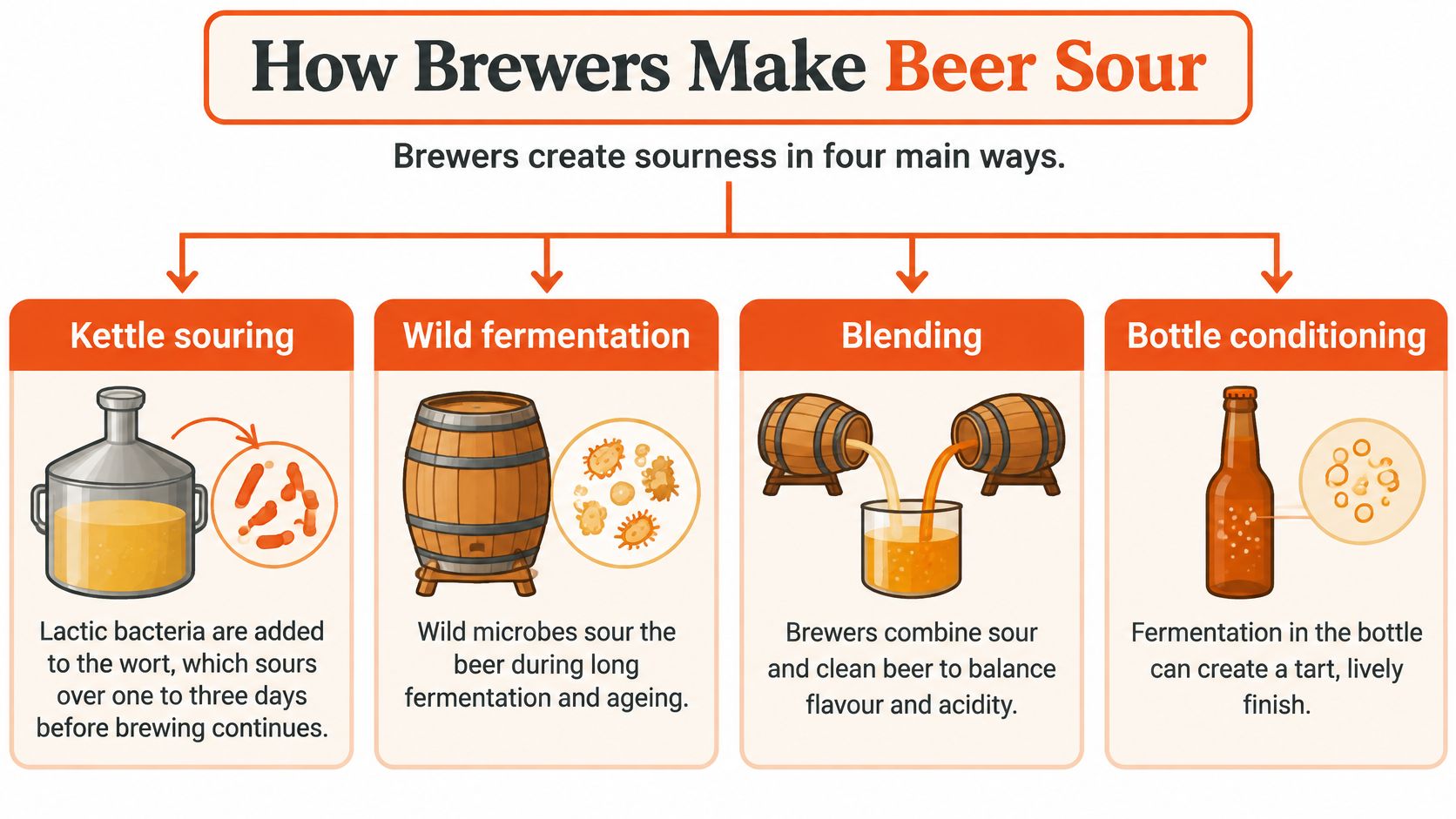
The timing of acid production shapes a sour beer's character. In kettle souring, brewers hold wort at a chosen acidity before boiling it, then ferment it with brewer's yeast. Mixed and spontaneous fermentation develop acidity alongside other fermentation flavours, while fruit can add its own aromas, acids and fermentable sugars.
| Method | Microbes Involved | Typical Time | Typical Result |
|---|---|---|---|
| Kettle souring | Lactobacillus added to the wort | Before the boil, until the acidity target is reached | Clean lactic tartness |
| Mixed fermentation | Brewer's yeast with Brettanomyces and bacteria | Extended fermentation and ageing, often in oak | Layered funk, fruit and depth |
| Spontaneous fermentation | Environmental microbes collected during cooling | Open cooling followed by extended fermentation | Dry, earthy and tart |
| Fruit addition | Fruit sugars feed an existing culture | At a recipe-specific stage | Fruit flavour and acidity layered onto the base beer |
Clean souring and mixed cultures
Wort is the sugary liquid brewers make from grain before fermentation. For kettle souring, they add lactic-acid bacteria and let the wort reach a chosen acidity before boiling. The boil stops that souring stage; brewer's yeast then carries out the main alcoholic fermentation. The result often has a direct, clean tartness with less earthy fermentation character.
Mixed fermentation combines brewer's yeast with other organisms, including bacteria and sometimes Brettanomyces. It works like tending a sourdough starter: different organisms contribute over time, and the brewer manages the conditions. Brettanomyces is a yeast that can contribute distinctive aromas; acid-producing bacteria are responsible for sourness.
Oak, fruit-like fermentation notes, dryness and funk can develop together. Longer fermentation can allow these characteristics to build, though the result depends on the organisms and the brewer's process.
Spontaneous fermentation and fruit
For spontaneous fermentation, brewers cool wort in an open vessel called a coolship, where environmental microbes enter. They then manage conditions, vessels, maturation and blending as the beer develops.
Fruit can be added to an active ferment, contributing aroma, natural acids and sugars. The culture may consume those sugars, so fruit addition can bring flavour without leaving the beer sweet.
Blending can balance beers with different levels of acidity and flavour. Bottle conditioning creates carbonation through further fermentation. Only suitable acid-producing cultures will also develop sourness, so bottle-conditioned beer can be carbonated without being sour.
Why sanitation still matters
An Australian study published in the Journal of the Institute of Brewing screened 80 bottled beers from 19 Victorian breweries, found culturable lactic-acid bacteria in almost 30%, and identified Lactobacillus brevis as the most frequent isolate. The study also found that normal beer pH, ethanol and hopping did not predict spoilage.
Those results apply to the beers sampled, not every Australian brewery. They show why acidity and alcohol alone cannot control unwanted organisms.
A useful brewery question: How do you prevent the souring culture from reaching beers or packages where it doesn't belong?
A meaningful answer should cover separation of souring vessels, hoses and fillers, validated cleaning, and checks such as microbiological testing or environmental monitoring. Intentional souring depends on controlling where the culture goes.
Reading Sourness on a Label and Palate
A beer's pH offers useful context, but it cannot predict exactly how sour the beer will taste. Food Standards Australia New Zealand's assessment of acid use in beer reports that commercial beer typically finishes at pH 3.8–4.6 and discusses lactic- or citric-acid adjustment for lower-strength and flavoured beers at an assessed combined addition level of approximately 3 g/L.
Use these numbers as production context, and judge sourness by the balance you taste. pH measures one aspect of acidity; titratable acidity measures the amount of acid neutralised during a test. Beers with similar pH can have different total acid concentrations and taste quite different.
Read the balance, not just the number
Lemon juice tastes different with sugar added: sweetness softens the tart impression without removing the lemon flavour. Beer has more moving parts, including malt, fruit, carbonation and fermentation aromas.
- Tartness is the sharp sour impression that may linger after swallowing.
- Residual sweetness can soften that impression and make the same acidity seem rounder.
- Fruit acids can read as bright and juicy, especially when their aroma matches a familiar fruit.
- Bitterness can make an already dry sour feel more severe.
- Carbonation adds a prickly sensation that can make acidity seem fizzier or sharper.
- Alcohol isn't a sourness signal, so don't use tartness to estimate strength.
Too much acidity can make a beer seem thin or drying, even when its pH falls within an ordinary beer range. A balanced beer has enough flavour and body to support its acid profile.
Savoury ingredients and spice also change how sourness comes across. For a kitchen comparison, notice the interplay of flavours when preparing store-bought hot and sour soup.
Fruit, vanilla and coconut descriptions can suggest different parts of a beer's flavour balance, but the ingredient list alone won't tell you how sweet it finishes.
Use a small-sip tasting routine
Start with a small cold taste and notice the immediate impression: lemony, berry-like, soft or mouth-puckering. Let the beer warm slightly, then smell it again before taking another small taste. Finally, notice the finish: does the tartness fade cleanly, linger pleasantly or overwhelm everything else?
A brief note such as “tart raspberry, soft middle, dry finish” gives you more useful guidance for your next purchase than writing only “sour.”
Distinguish character from a fault
Clean lactic tartness can feel even and rounded. A restrained vinegar-like note may suit an aged sour, while harsh vinegar, nail-polish solvent, cardboard, rope-like texture or mouldy character deserves caution rather than an automatic pass as funk.
Check the best-before date and storage history first. Heat damage, oxidation or unwanted microbial activity can affect flavour, and an unpleasant bottle isn't enough to diagnose the cause. If the problem persists in a fresh, correctly chilled package, stop drinking it and contact the brewery with the batch details.
Food Pairings and Serving Temperatures
| Style | Pair With | Serve At |
|---|---|---|
| Berliner Weisse | Seafood, fresh salads, soft goat's cheese | Cold, without freezing the flavour out |
| Gose | Oysters, ceviche, Thai and Vietnamese dishes | Cold |
| Lambic | Mussels, aged cheese, roast chicken | Cool, allowing its aromas to emerge |
| Flanders red and oud bruin | Roast pork, duck, aged cheddar, charcuterie | Lightly chilled |
| American wild ale | Grilled fish, fruit desserts, sharp cheese | Chilled, then adjust for complexity |
| Fruited sour | Salads, grilled chicken, light desserts | Cold, then allow a little warming |
Use these as starting points, not fixed rules. The brewery's serving advice takes priority, especially when a beer combines features from several styles. A sweet fruited sour and a dry barrel-aged fruit beer won't necessarily suit the same dessert.
Match acidity to the food
Berliner Weisse and Gose can work where you'd normally add a squeeze of lemon. Their tartness provides contrast to oil and rich textures, while Gose's saline edge can sit comfortably alongside seafood. Fresh herbs and crunchy vegetables help keep the whole match light.
Lambic's dry, earthy character suits shellfish and rich, salty cheese. Choose a cheese with enough flavour to stand beside the beer without making either taste harsh. Roast chicken offers a gentler starting point if you're still deciding whether you enjoy funk.
For Flanders red and oud bruin, think about dishes that already welcome tangy fruit or vinegar-based sauces. Roast pork, duck and aged cheddar provide enough richness for the beer's deeper profile. Our beer and food pairing guide explores that balance of matching flavours and contrasting textures.
Fruit-led American wild ales can work with grilled fish when the fruit character is restrained. With dessert, check sweetness carefully: a very dry sour beside a very sweet pudding may taste more severe than it did alone.
Let temperature and glassware help
Start light styles cold. Let more complex beers warm gradually so you can notice changes in fruit, oak and fermentation aroma. Cold can suppress flavour as well as aroma, so an icy beer that initially seems thin may become more expressive in the glass.
In an Australian summer, keep the unopened beer refrigerated rather than leaving it beside the barbie. Pour fruited sour beer into a clean glass so you can smell it, and avoid topping up a warm glass with fresh beer.
A modest bowl with room above the pour helps you assess aroma without needing specialist beer glassware. Everti's explanation of finding the right wine bowl size provides useful context for understanding that relationship between bowl shape, headspace and aroma.
For a straightforward backyard meal, try:
- Gose with prawns on the barbie, especially with lime and fresh herbs.
- Berliner Weisse with a fresh salad, using a dressing that isn't overwhelmingly acidic.
- Flanders red with roast pork, letting the beer's fruit-like depth complement the browned meat.
How Long Sour Beer Keeps and How to Store It
A beer's style offers clues about its likely drinking window, but the producer's guidance is the best starting point. Cellar potential also depends on the recipe, culture and packaging. The table gives general guidance; follow any specific instructions on the label.
| Style | Drink Fresh Within | Cellar Potential | Storage Note |
|---|---|---|---|
| Berliner Weisse | The brewery's recommended fresh-drinking window | Usually a drink-fresh choice | See storage guidance below |
| Gose | The labelled freshness window | Usually limited | See storage guidance below |
| Lambic, unblended | The producer's recommended window | Suitable examples can develop with age | See storage guidance below |
| Gueuze and blended lambic | Follow packaging and producer guidance | Often intended for maturation | See storage guidance below |
| Flanders red and oud bruin | The producer's recommended window | Recipe- and package-specific | See storage guidance below |
| Fruited sour | The labelled fresh-drinking window | Usually short for fresh-fruit character | See storage guidance below |
A beer may remain drinkable as its flavour changes. Bright fruit notes can fade, while other fermentation character becomes more noticeable. With Gose, the salt remains, but the balance between salt, coriander and other flavours may become less expressive over time.
Fruited sours are especially worth drinking within the producer's suggested window if you want their fresh berry or citrus character. The beer can still be drinkable after those aromas soften, but it may taste different from the one you bought.
Store for the flavour you bought
- Keep bottles and cans upright, cool and dark. Upright storage helps sediment settle, while cooler conditions slow flavour changes.
- Avoid heat during transport. Don't leave an order in a parked car or on a sunny balcony while you finish other jobs.
- Refrigerate opened beer and drink it promptly. Once opened, beer loses carbonation and is exposed to oxygen.
- Protect glass bottles from light. Cans block light, but still need protection from heat.
- Follow the package guidance. Check storage instructions when the order arrives.
Carbon 6 beers are brewed in-house, canned fresh, cold-stored and shipped fast. Once a delivery arrives, suitable storage helps preserve the beer's flavour.
Choose deliberately before cellaring
Unblended lambic, gueuze, blended lambic and some Flanders-style beers can be suitable for maturation. How they develop depends on the specific beer, and their flavour can shift as fruit recedes and earthy or dry notes become more noticeable.
Buy to drink unless the producer gives you a reason to cellar.
For a beer you plan to keep, seek guidance for that specific release rather than relying on its style category. The craft beer shelf-life guide explains the differences between freshness, storage and ageing. Choose light, fruity sours for near-term drinking, and cellar a wild or barrel-aged sour only when its producer recommends it and you have a suitable storage spot.
Choose Your First Sour Beer Online
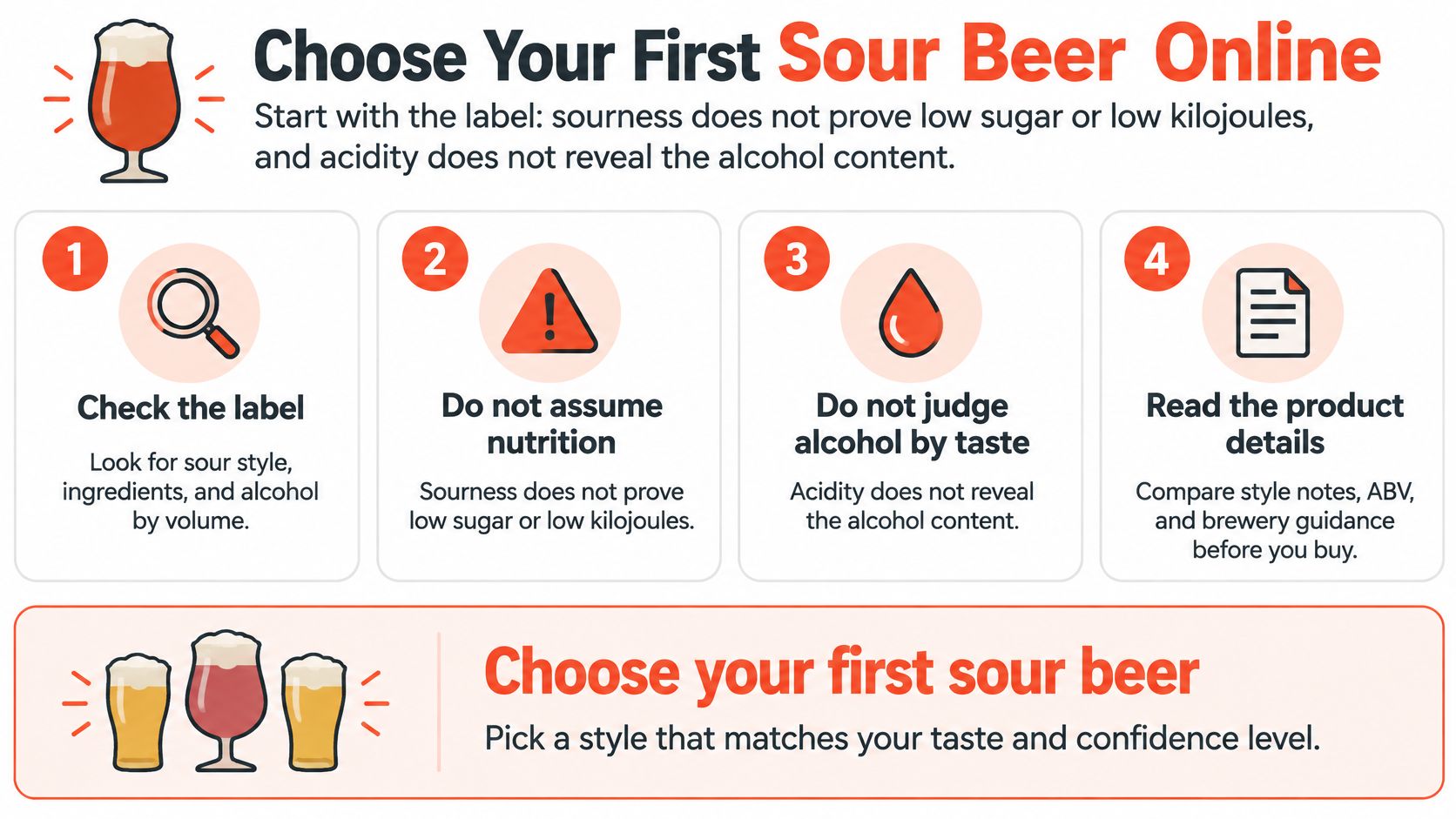
What should you check before ordering a sour? Start with the label: acidity, fruit and sweetness describe flavour, while ABV and sugar information help answer different questions. Fermentation can use up sugars, but fruit additions and remaining carbohydrates also affect the finished beer. A dry taste alone doesn't tell you its energy content.
Food Standards Australia New Zealand's consumer research on alcoholic-beverage claims offers context for reading sugar and carbohydrate information. From 13 August 2025, clarified rules allow sugar nutrition claims on alcoholic beverages. Read any such claim alongside the product's other details, not as a broader health benefit.
Check the listing before the carton
- ABV. Check the stated alcohol content. A gentle or sharp taste is not a reliable guide to strength.
- Pack contents and standard drinks. Confirm can size, quantity and standard-drink information, especially for mixed cartons.
- Style and tasting descriptors. Terms such as gently tart, dry, sweet, earthy and sharply acidic give more flavour clues than a style name alone.
- Sugar information. Read it where supplied. Sugar and total carbohydrate are different measures.
- Storage and best-before advice. Check refrigeration instructions and whether the beer is intended for fresh drinking.
Let your preferred flavours guide the choice. If you enjoy berries but find dry cider too austere, a fruit-led sour may suit you better than a funky lambic. The aim is to find a flavour profile you'll enjoy, not to pick the most challenging style.
Confirm delivery and your fallback
Check whether the seller delivers to your state, then read its returns or swap policy. The Queensland Government's guidance on online alcohol sales explains licensing requirements and conditions for online sales, including those that apply to artisan producers and interstate suppliers.
Carbon 6's Beer Swap Guarantee means that if your first sip tastes like disappointment, the beer will be swapped for a better one, with no questions and no forms.
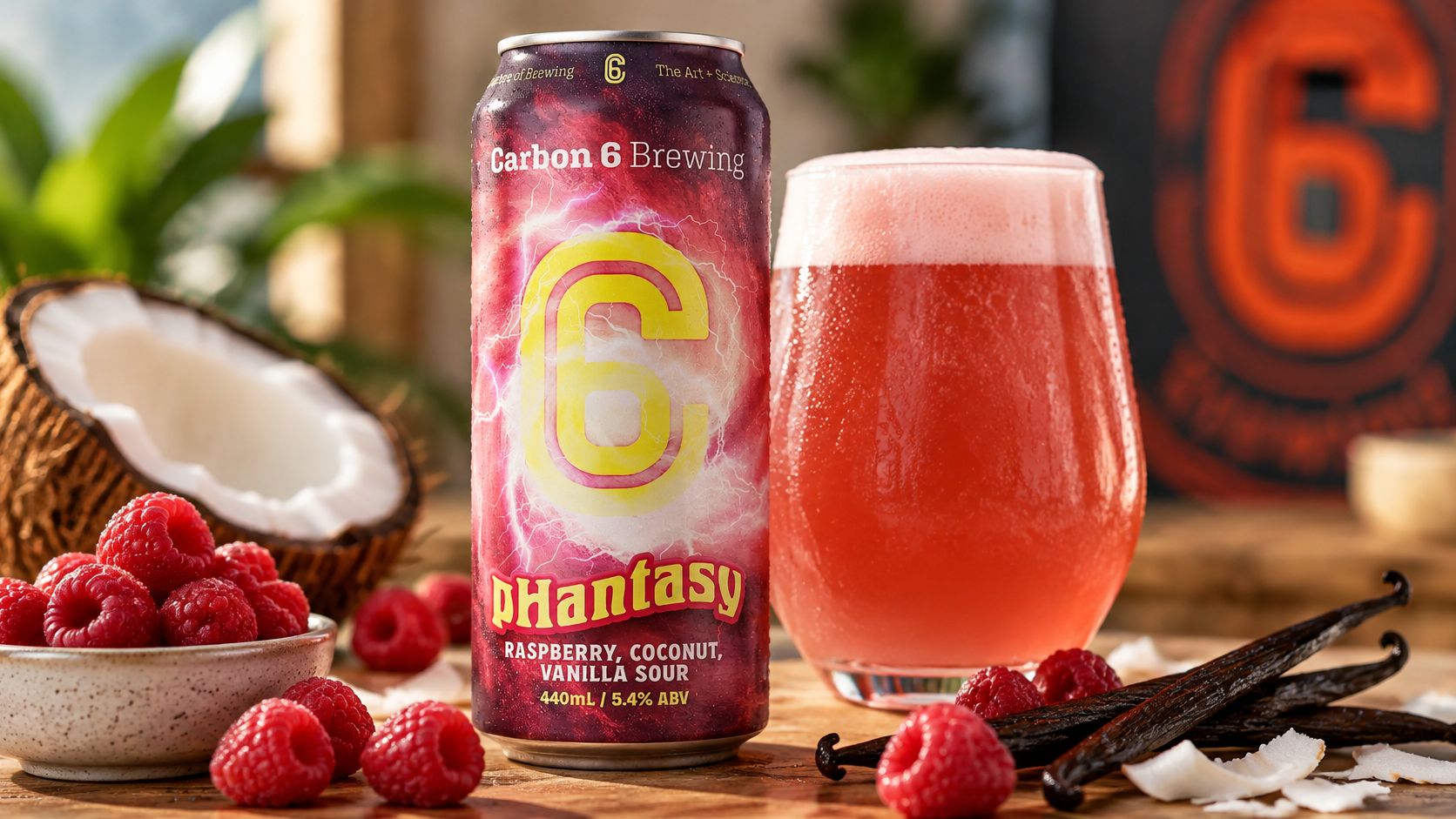
For a concrete flavour comparison, pHantasy: Raspberry, Vanilla & Coconut Sour combines raspberry, vanilla aroma and a hint of coconut in a tart, fruit-led profile. Zingularity Lime & Kiwi Gose is 4.1% ABV, with lime, kiwi, subtle salt and citrus-led flavours. Compare the listed tasting notes and strength with what you enjoy.
Enjoy responsibly, keep track of standard drinks and never drink and drive.
Carbon 6 Brewing Pty Ltd brews small batches in Stapylton on the northern Gold Coast, covering classic beers, lagers and pale ales, with occasional sour and seasonal releases. Visit Carbon 6 Brewing Pty Ltd to compare current tasting notes, labelled strength and pack details before choosing a sour to explore.