
Beer Subscription Australia: Fresh Craft Delivered
Sep 15, 2026
The barbecue is lit, the esky is packed, and someone has brought a carton that tastes familiar in the least exciting way. The beer is cold enough, but it's forgettable. You wanted something with flavour, brewed by an independent producer, and fresh enough to make the bottle shop run feel unnecessary.
That's the appeal of a beer subscription Australia buyers can use properly. Not another novelty box that sends random cans interstate, but a considered way to keep reliable, locally brewed beer at home while accounting for freight, Queensland liquor rules and the heat that can punish fresh craft beer. The right subscription is less about collecting unusual labels and more about matching pack size, delivery timing and flavour to the way you drink.
Why Aussie Drinkers Are Switching to Craft Beer Subscriptions
A quiet Tuesday night and a Saturday barbecue need different beers, but both occasions benefit from having the right stock already in the fridge. A one-off bottle shop trip often rewards convenience rather than curiosity. You grab the familiar lager, accept whatever is cold, and promise yourself you'll look for something better next time.
A subscription changes that habit. It turns replenishment into a planned purchase, giving adults who value flavour a dependable route to independent beer without making every shop a research project. The emotional driver is simple: you want your everyday beer to feel like a choice, not a compromise. You also want your money to support brewers who operate in your region rather than disappear into a multinational range designed for maximum familiarity.
Convenience without fridge fatigue
The strongest subscriptions solve fridge fatigue. They give you a regular supply of beer you're happy to drink, rather than forcing you to decide from scratch every time the last can disappears. That matters for households that want a core-range beer for guests, a seasonal style for exploration, or a mixed order that covers both.
Online buying already suits planned alcohol purchases in Australia. In 2021–22, online alcohol sales reached 13% of total retail liquor sales, while beer and cider accounted for 41% of delivered online sales, the largest share among beverage types, according to Retail Drinks' online alcohol sales research. The same research found that 65% of online alcohol sales weren't bought for same-day delivery, which fits a subscription model built around scheduled replenishment rather than urgent convenience.
That's the practical reason a local beer club can work. You're not paying for a can to arrive immediately. You're organising a sensible delivery window for a product you already know you'll want.
Publican's view: The best subscription doesn't make you drink more. It makes the beer you've chosen easier to plan, receive and enjoy responsibly.
Queensland's craft sector gives local buyers a strong reason to look beyond generic cartons. The Queensland Government's strategy recorded craft brewing revenue growth at an annual rate of 9.7% between 2013 and 2018, compared with 2.1% for beer manufacturing overall, and estimated craft brewing's annual contribution to the Queensland economy at about $62 million. The strategy also reported that Queensland's share of the national craft beer market rose by more than nine percentage points over that period. Those figures support a clear local argument: independent beer in Queensland isn't a passing curiosity. It has a durable base of brewers and drinkers.
How Direct to Consumer Beer Clubs Actually Work
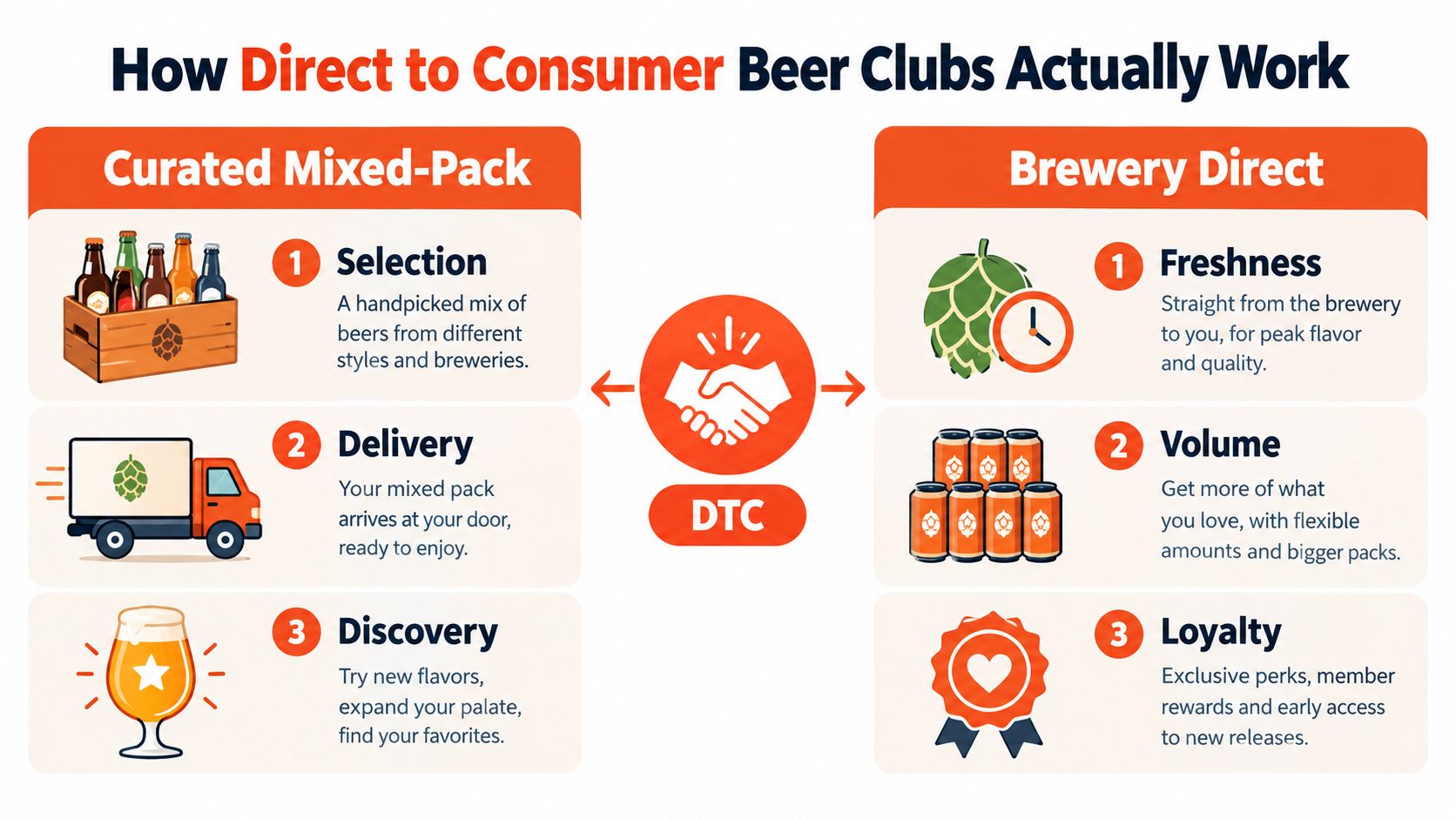
A beer subscription has two separate parts: the product model and the delivery model. Ignore either one and the offer can look attractive online while making little sense once the carton reaches your door.
Start with the pack
A curated mixed-pack prioritises discovery. The brewery or retailer selects different styles, often pairing tasting notes with seasonal or limited beers. It suits drinkers who enjoy comparison, variety and the occasional gamble.
A core-range carton does something less glamorous but often more useful. It gives you a repeatable beer for the fridge, usually in a larger pack, with fewer surprises and a better chance of fitting regular meals or gatherings. Serious buyers may combine both approaches, using a dependable carton as the base and adding a smaller exploratory pack when the selection appeals.
The ordering sequence should be straightforward:
- Choose the beer format. Select a curated box, a brewery-specific carton or a mixed order that reflects your preferred styles.
- Set the cadence. Monthly, bi-monthly or quarterly deliveries each suit different households. A slower schedule is sensible if you drink occasionally, while a more regular cycle may suit a busy home that hosts often.
- Confirm the destination. The checkout needs to calculate delivery by location, not pretend that freight works identically across Australia.
- Pass the age check. Alcohol delivery requires an adult handover process, so someone eligible needs to be available when the courier arrives.
- Store the beer properly. Get it out of heat and into a cool, dark place as soon as practical. Refrigerate hop-forward beers when you're ready to drink them.
Why brewery-direct changes the equation
With a brewery-direct order, beer can move from the canning line to a courier network without the same chain of wholesale handling. A local independent such as Carbon 6 Brewing can ship from its Stapylton brewery operation to customers, subject to the relevant licence, fulfilment and delivery controls.
Pack size matters because freight is attached to the order, not just the individual can. A small mixed pack may deliver more variety, but a larger order spreads the fixed work of picking, packing, verifying and transporting the shipment across more beer. If you're building a Shopify offer, the practical details of pack rules, recurring billing and product combinations deserve careful planning. RecurX's guide to box subscription setup tips for Shopify is useful for working through those mechanics.
For a brewery-led example of recurring discovery, see Carbon 6's beer of the month approach. The important question isn't whether a box looks exciting on launch day. It's whether the fulfilment system can send the right product, to the right destination, on the right schedule.
The Real Economics of Beer Delivery and Freight
Heavy liquids don't travel cheaply across Australia. A subscription that looks affordable before freight can lose its value when a small pack carries nearly the same handling burden as a larger one.
The useful calculation is landed cost, not the advertised beer price:
Landed cost = beer cost + freight + any delivery-related charges
Then compare that figure with the cost of buying an equivalent quantity locally. Don't assume free shipping means the delivery is free in economic terms. The freight has usually been absorbed somewhere in the product or pack price, so compare the total amount paid for the beer you'll receive.
The pack-size decision
A four-pack can be the right choice for trialling a new style, but it's rarely the strongest format for routine replenishment when freight is significant. A mixed 16-pack or full carton gives the delivery charge more beer to work across, which can make the total cost per can more sensible even when the upfront payment is higher.
The same logic applies to alcohol compliance. Australia's dominant online alcohol industry code requires age verification, bans same-day unattended delivery and requires driver training before alcohol deliveries. The code covers over 80% of online alcohol transactions in Australia, according to Sprintlaw's online alcohol compliance guide. For customers who appear under 25, identification must be checked before handover.
That means a delivery has fixed operational work even if the box is small. Someone must process the order, prepare the shipment, manage the courier handover and deal with failed verification or rescheduling. A larger carton can absorb those costs more effectively than a tiny novelty pack.
| Subscription Type | Typical Pack Size | Freight Impact | Best Use Case |
|---|---|---|---|
| Curated discovery box | Smaller mixed pack | Variety comes with less volume over which to spread freight | Trying styles and sharing tastings |
| Brewery-direct mixed order | Mixed pack with greater volume | Better balance between exploration and delivery efficiency | Households wanting choice without a purely random selection |
| Core-range carton | Larger carton or 16-pack | More beer absorbs fixed freight and handover work | Regular fridge replenishment and hosting |
| Quarterly bulk order | Larger planned shipment | Fewer delivery events, but storage and freshness need attention | Buyers who plan ahead and have suitable cool storage |
Compare regions honestly
For Brisbane, the Gold Coast and regional Queensland, the right comparison is not “subscription versus no subscription”. It's one larger, planned local order versus repeated small purchases, with the full delivery cost included. Australia Post's 2026 e-commerce report for liquor identifies an underserved question in the category: when does subscription purchasing beat one-off buying after freight, pack size and freshness are considered?
The report also records under 10% of category sales online, alongside year-on-year growth of 14.1% in shoppers and 16.2% in e-commerce liquor sales. Those figures point to a market still working out its delivery model. For a deeper look at pack formats and buying decisions, Carbon 6's guide to best craft beer boxes offers a useful comparison point.
Navigating Queensland Liquor Laws and Shipping Rules
Online alcohol is not ordinary e-commerce. A recurring beer order can repeat a mistake automatically, so the seller needs compliance controls that work every time, not just during the first checkout.
Queensland has no separate internet-only liquor licence. That doesn't mean anyone can sell packaged beer online. Only specified licensee classes can do so, while interstate suppliers may sell into Queensland only where storage, distribution and payment all occur outside the state. The Retail Drinks online code of conduct outlines the state-sensitive structure that subscription operators need to understand.
The controls buyers should expect
A legitimate service should be able to explain how it manages:
- Licence eligibility: The seller must operate under a permitted licence structure for the product and destination.
- State-aware routing: The platform should distinguish Queensland-origin stock, interstate fulfilment and destination rules rather than apply one national checkout assumption.
- Age verification: The recipient needs to meet the legal handover requirements.
- Unattended delivery: The courier can't leave alcohol at the front door under the relevant industry controls.
- Failed handovers: A missed adult recipient or unsuccessful identification check needs a clear rescheduling process.
The practical effect is that you or another responsible adult may need to be home. A delivery window isn't a minor inconvenience. It's part of the operating model that keeps the transaction lawful and protects the seller, courier and customer.
A subscription that promises effortless unattended delivery for alcohol is giving you a warning sign, not a premium experience.
Why state-aware systems matter
Queensland-origin stock must not be sold by an ineligible entity because a recurring billing system accepted the order. The safest architecture uses destination checks, licence-aware product rules and fulfilment logic that stops an invalid combination before payment or dispatch.
For customers, this is a reason to favour transparent brewery-direct sellers over grey-market resellers. A useful practical reference is Carbon 6's guide to ordering beer in Australia, particularly if you're comparing interstate clubs with Queensland-based operators.
The subscription should also make pausing and cancellation clear. Responsible purchasing includes the ability to stop a shipment when your circumstances change, rather than allowing an opaque recurring order to continue.
Choosing Freshness and Flavour Over Novelty Gimmicks
Rare releases make excellent marketing. They don't automatically make excellent subscriptions.
A novelty-heavy box can leave you with beers you admire more than you enjoy. That's poor value for a household fridge, especially when the box has travelled through warm conditions or sat in a depot before delivery. Freshness, taste and repeatability matter more than scarcity for regular drinking.
Heat is a quality issue
Australian transport conditions can be hard on beer, particularly aromatic, hop-forward styles. Heat exposure can dull the qualities you bought the beer to experience, while long transit times add uncertainty. A local brewery can't eliminate every courier variable, but shorter movement from brewery to customer reduces the amount of time beer spends in the broader transport chain.
Ask direct questions before subscribing:
- Where is the beer packed? A brewery-origin shipment gives you a clearer point of accountability.
- How fresh is the stock? Look for transparent packaging or batch information rather than vague freshness language.
- How is the box protected? Sensible packing matters for cans, temperature exposure and damage.
- Can I choose styles? A subscription should accommodate your palate instead of treating your preferences as an inconvenience.
- What happens if I don't like the selection? Discovery is useful, but repeat orders need beers you'll finish.
Independent Brewers Australia's FutureBrew 2031 research identifies taste as the number one driver for trial and repeat purchase, and describes taste as the primary driver for craft beer repurchase across light, medium and heavy consumer segments. That supports a straightforward recommendation: build the subscription around flavour satisfaction, not a parade of labels that look impressive on social media.
Build around real occasions
A good box can include exploration, but it needs a dependable centre. Look for crisp, clean options for warm-weather meals, a fuller beer for slow weekends and styles that work when friends arrive unexpectedly. You don't need every experimental sour or high-intensity release. You need a range that respects your palate and fridge space.
Freshness beats theatre: A beer you're eager to drink again is more valuable than a rare can you feel obliged to finish.
The Gold Coast Advantage of Supporting Local Independents
Gold Coast drinkers can make freshness a practical buying advantage. A Queensland independent puts fewer links between brewery and fridge, while local cartons keep freight decisions, handling and producer accountability visible. As covered earlier, Queensland's craft sector has shown durable growth. The stronger reason to buy locally is what happens to the beer before you open it.
Shorter routes can protect character
A Stapylton brewery supplying the Gold Coast and nearby South East Queensland has a clear freight advantage over an interstate mixed-pack. Every shipment still needs careful packing and sensible handling, yet a shorter route reduces exposure to extended courier transfers, depot delays and hot vehicle interiors. Those conditions matter most for beers built around fresh hop aroma, soft texture and bright fruit flavour.
A local route also makes the handover easier to assess. The AUSFF Gold Coast courier hub gives buyers a useful reference for how regional courier services connect local businesses with customers. It does not guarantee perfect storage or delivery, so check dispatch practices, packaging and whether the seller sends beer promptly after release.
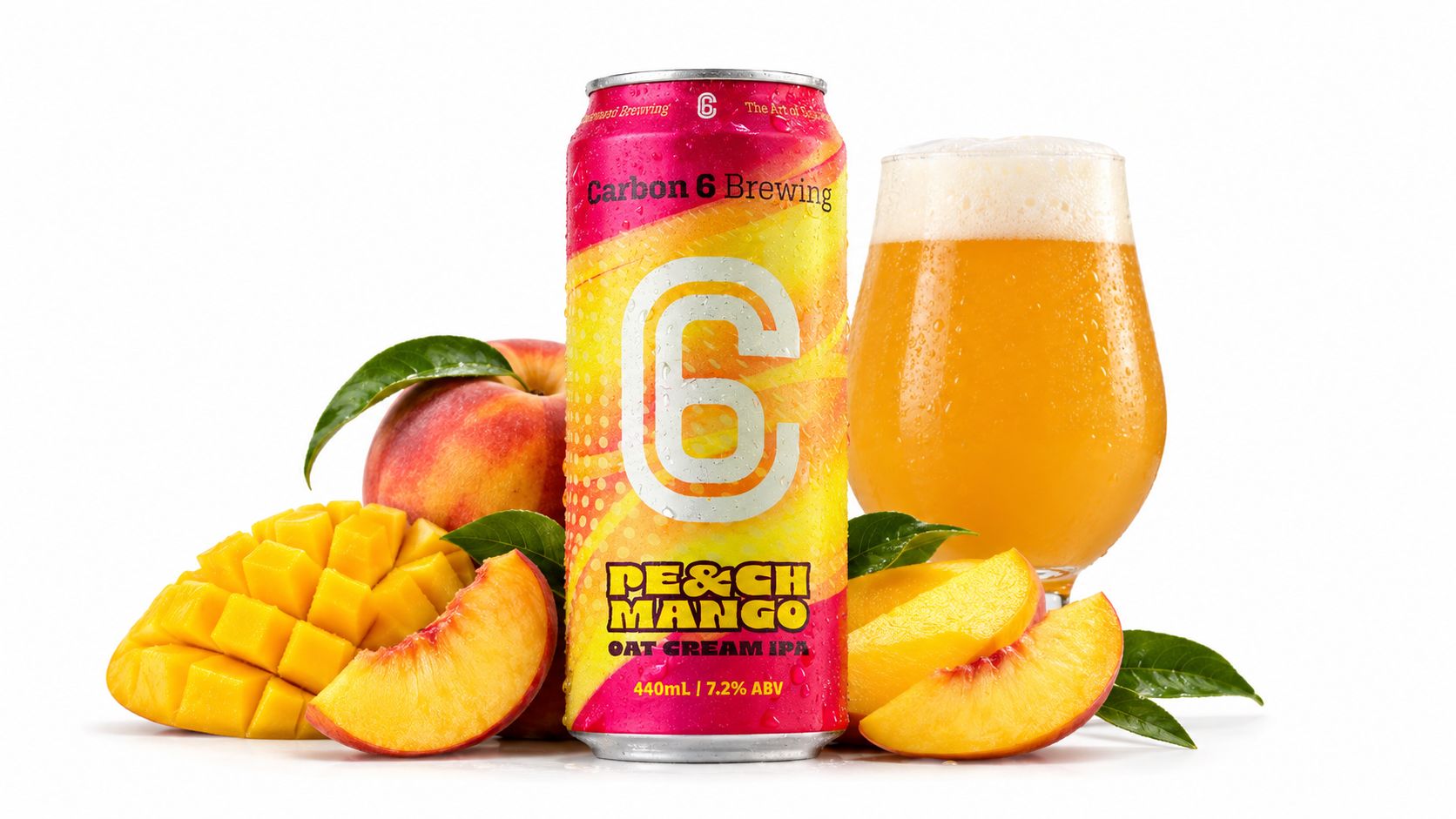
Freshness should guide the selection. A beer like Peach & Mango - Oat Cream IPA | Craft Beer depends on its hop and fruit aroma surviving the trip from Carbon 6 Brewing in Stapylton to your fridge. A short local route gives that tropical character and creamy texture a better chance than a long interstate journey through multiple freight environments. Choose it because the profile suits your palate and the route supports freshness, not because a novelty label happens to stand out.
Local buying also improves the conversation with the maker. You can ask about release timing, pack formats, storage and suitable styles instead of relying on a generic national catalogue. That information helps you choose a carton you will drink, while your spending stays closer to the brewers, venues and hospitality businesses shaping the Gold Coast beer scene.
For independent beer, origin and logistics belong in the same decision. Local cartons often offer better control over freshness and a clearer connection to the people who made them. That is a stronger proposition than an interstate box assembled mainly for variety.
How to Pick the Right Beer Subscription for Your Fridge
Choose the subscription by working backwards from your fridge, not forwards from the most colourful landing page.
1. Start with your drinking occasion
Decide whether the order is for routine replenishment, weekend hosting, gifting or exploration. A household that wants dependable stock needs a different pack from someone who wants a tasting experience. If the subscription can't describe who the box suits, it probably hasn't been designed around a clear use case.
2. Check the freight threshold
Write down the total landed cost, including delivery. Compare a smaller trial box with a larger carton or 16-pack, then assess whether you'll realistically drink the larger quantity while the beer is in good condition. Free or flat-rate freight only helps if the pack size and storage conditions suit you.
3. Test the flexibility
Before entering payment details, find the controls for:
- Pausing: You should be able to skip a delivery when the fridge is full or you're away.
- Cancelling: The cancellation path should be visible and straightforward.
- Style preferences: Look for options that let you avoid beers you know you won't enjoy.
- Delivery timing: Choose a schedule that gives an adult a fair chance of being present.
- Damaged or failed delivery support: The seller should explain what happens after a problem.
4. Inspect the responsible marketing
The ABAC Responsible Alcohol Marketing Code covers brand advertising, competitions, digital communications, social media, user-generated content, packaging, advertorials, point-of-sale material and retailer advertising, as set out by ABAC. Business Queensland's alcohol advertising guidance states that marketing must not encourage excessive or rapid drinking, appeal strongly to minors, depict people under 25, link alcohol with success or mood transformation, or show drinking around safety-critical activities.
The placement rules also require reliable evidence that at least 80% of an audience are adults, and the updated rule took effect on 1 August 2023, according to B&T's report on alcohol ad placement. A responsible subscription should make adult targeting, age gating and mailing-list hygiene part of its normal process.
Finally, choose a delivery rhythm you can manage. A good beer subscription should leave you with fresh, enjoyable options for the occasions you've planned, not pressure you into rapid or excessive consumption.
Carbon 6 Brewing Pty Ltd brews independent craft beer in Stapylton on Queensland's northern Gold Coast and supports direct-to-consumer ordering alongside local wholesale distribution. If you're comparing local freshness, sensible pack sizes and interstate novelty boxes, visit Carbon 6 Brewing Pty Ltd and choose the format that suits your fridge and delivery needs.