
Beer Subscription Offers in Australia: A Practical Guide
Sep 16, 2026
You're on the Gold Coast, staring at three beer subscription pages while the same dependable six-pack sits in the fridge. One offer promises surprise releases, another pushes brewery loyalty, and a third makes delivery look effortless until freight appears at checkout. The right choice isn't the loudest ad. It's the box that matches how you drink, how much you value freshness, and whether the landed price makes sense.
This guide compares Australian beer subscription offers through a Queensland lens. Discovery matters, but so do carton economics, delivery planning, freshness information and responsible alcohol marketing under the ABAC Code. Use the framework below before handing over your card details.
Why Beer Subscription Offers Are Suddenly Everywhere
A Mermaid Beach buyer might open Instagram after work, spot a mixed pack from an independent brewery, then compare it with the usual six-pack at the bottle shop. The attraction usually isn't “more beer”. It's the promise of finding something new without spending an evening reading every can, plus the feeling that a seasonal release might disappear before the next visit.
That behaviour sits inside a broader shift in Australian alcohol purchasing. Online alcohol retail sales grew from $539 million in 2012 to $2.0 billion in 2022, and the channel was forecast to grow at 10.6% annually through 2026–27, according to the Foundation for Alcohol Research and Education submission. The same source records that one in 10 Australians who bought takeaway alcohol purchased it online in 2020, three times the 2019 level, while an estimated one in six Australians who drink alcohol had bought through delivery.
That makes subscriptions less mysterious. They formalise habits many drinkers already have: browse online, buy a larger pack, accept delivery and reorder when the stock runs low. Beer and cider represented 41% of total delivered online sales, with same-day delivery concentrated around 6pm–7pm, as reported by Brews News. A subscription should therefore solve planned replenishment, not pretend every carton is an emergency order.
What actually triggers the decision
The emotional drivers are familiar:
- Discovery: curated styles break the boredom of a static bottle-shop shelf.
- FOMO: limited seasonal batches create pressure to act before a release disappears.
- Convenience: a planned box removes another shopping decision.
- Value: a larger order can make delivery feel more reasonable than repeated small purchases.
- Belonging: brewery-direct clubs can make buyers feel connected to an independent local producer.
The trap is subscribing for the fantasy of endless novelty when your household really wants dependable lagers, or joining a club because the first offer looks cheap without checking its ongoing terms. Treat the subscription as a purchasing system, not a personality test. If the beer, delivery rhythm and cancellation rules don't suit your real routine, the novelty wears off quickly.
The Three Main Types of Beer Subscription Offers in Australia
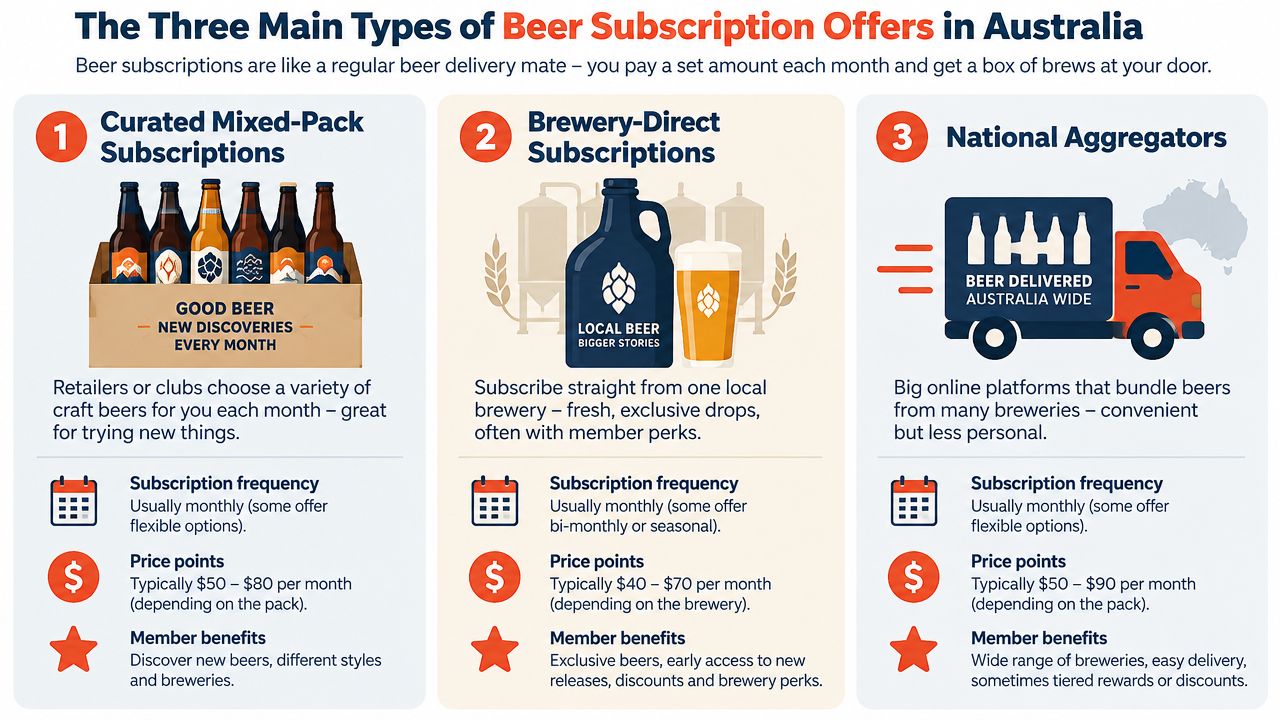
A beer subscription is a recurring order. You choose a cadence, pay for a pack and receive beer at home, with the exact selection depending on the model. Australian buyers will generally encounter three useful formats.
Curated mixed-pack subscriptions
A retailer or beer club chooses the contents. You might receive a mixed 12-pack, a larger mixed carton or a tasting box with notes explaining the styles. You're paying for range and convenience, not a direct relationship with one brewery.
This suits the curious drinker who wants variety without researching every release. The trade-off is control. You may receive styles you don't enjoy, and the selector's definition of “curated” may not match yours. Check whether you can exclude particular styles, whether substitutions are allowed and whether the pack changes each cycle.
A local example of the mixed-pack idea is the Mixed 16-Pack, which contains sixteen 440mL cans across a hand-picked selection. The catalogue notes that an unavailable beer may be substituted, so buyers should read the current contents rather than assume the illustrative image guarantees every can.
Brewery-direct subscriptions
This model comes straight from one producer. The box might contain a single-style carton, a mixed brewery pack or seasonal releases reserved for subscribers. Your money supports one brewing operation, and the purchase is loyalty, freshness and access.
It's a strong fit if you already know the brewery's range and want repeat deliveries without browsing a national catalogue. The downside is obvious: fewer producers and less protection if the next release isn't your style. Ask about brew dates, pack changes, delivery areas and whether the brewery pauses dispatch during hot weather.
Club-style memberships and national aggregators
A club-style membership combines rotating selections with benefits such as member news, release alerts or access to brewery events. National aggregators bundle beer from multiple producers and generally prioritise selection and fulfilment reach over a personal brewery relationship.
These offers suit buyers who want broad choice or a simple recurring box. They can also make freshness harder to judge because the beer may pass through a central warehouse before dispatch. Compare the stated source of stock, not just the number of breweries shown on the landing page.
Practical rule: Choose mixed packs for discovery, brewery-direct for loyalty, and aggregator clubs for range. If you can't explain what you're paying for, don't subscribe yet.
What to Compare Before You Subscribe
Don't compare the headline pack price alone. A serious comparison includes the beer, freight, freshness, producer mix and exit terms. Product information also matters because a subscription is a recurring consumer packaged goods purchase, and NanoPIM's consumer packaged goods explained resource provides useful context on how packaged products are presented and managed.
| Criterion | Why It Matters | What to Check |
|---|---|---|
| Price per pack | A low entry price can hide expensive freight or a higher renewal cost. | Total landed price, renewal price and cost per can. |
| Delivery zones and shipping | Queensland distances can change the value of a pack. | Your postcode, freight fee, dispatch days and delivery window. |
| Pack format | Single-style cartons suit repeat favourites, while mixed packs support discovery. | Can size, number of cans, mixed contents and substitution rules. |
| Freshness | Hoppy and seasonal beers lose appeal when stock sits around. | Canning date, best-before guidance and time from packing to dispatch. |
| Brewery options | Independent producers may be central to your buying decision. | Named breweries, producer location and whether selections rotate. |
| Pause and cancel | Your drinking pattern won't stay identical every month. | Dashboard controls, notice period, phone requirements and lock-in terms. |
| Trial or introductory terms | A first order may not reflect the ongoing arrangement. | Renewal date, future price, minimum term and any automatic conversion. |
Queensland details that change the answer
A Brisbane warehouse may consolidate orders efficiently, while a brewery dispatching directly can offer a shorter path from pack-out to delivery. Neither model is automatically better. Ask who holds the beer, when it was packed and whether freight is calculated per order or per carton.
The market evidence supports buying in planned quantities. Online delivery services were estimated at around 5% of all Australian alcohol sales, growing by at least 10% per year, while survey material reported that 82% of orders were monthly or less and only 11% used express delivery, according to Australian parliamentary material. That points towards stock-up economics, not paying extra for speed you don't need.
The offer must also meet ABAC requirements across its words, images, placement and audience controls. A discount, countdown or lifestyle image doesn't excuse poor responsible-marketing practice. Treat compliance as part of the buying decision, because a polished subscription page can still be careless about adult targeting.
Delivery, Shipping, and the Gold Coast Cost Equation
Gold Coast delivery looks simple until you separate the freight routes. A Stapylton or Brisbane dispatch can serve nearby south-east Queensland addresses through road networks, while regional and remote destinations face longer transit, different carrier coverage and greater heat exposure. Before subscribing, enter the exact postcode rather than relying on a broad “Queensland delivery” statement.
| Order Size | Gold Coast Metro | Brisbane Metro | Regional QLD | Remote / FIFO |
|---|---|---|---|---|
| Small mixed pack | Check standard freight and delivery days. | Often benefits from nearby dispatch. | Confirm carrier route and transit window. | Coverage may be restricted. |
| One carton | Compare freight per can with the pack total. | Direct or warehouse dispatch may differ. | Ask whether air freight applies. | Some operators may not deliver. |
| Two cartons or larger mixed order | Test whether the extra volume improves landed value. | Consolidation can make freight more efficient. | Confirm damage and heat handling. | Check service availability before payment. |
I won't invent a universal Gold Coast shipping threshold, surcharge or delivery time because those figures vary by brewery, carrier, pack weight and season. The useful test is straightforward: compare the delivered cost of one pack with a larger order, then decide whether the additional beer is something your household will use.
Beer delivery also raises packaging and carrier questions. A practical guide to mailing beer safely is useful background when you want to understand why packaging, carrier rules and destination restrictions affect the checkout price. For local context, the beer delivery guide for the Gold Coast can help you assess the questions a Queensland buyer should ask.
Heat and timing matter
Queensland summers punish lazy fulfilment plans. Ask whether the subscription pauses, changes carrier or adds protective packaging during hot conditions. Auto-renewal can process at the wrong time if the seller doesn't communicate seasonal dispatch rules.
A lower-strength option can also suit buyers who want a lighter style in the mix. Carbon Mid | Mid-Strength Lager is listed as a 3.0% ABV lager in 440mL cans, with four-packs and 16-packs shown in the catalogue. That doesn't make it a universal subscription choice, but it illustrates why pack composition matters.
Before checkout: Put your postcode, pack size, freight charge, dispatch timing and renewal terms in one note. If the landed price still feels fair, the subscription has passed its first test.
Matching Subscription Offers to Different Drinkers
The loudest subscription ad usually targets everyone. That's a mistake. Your best format depends on whether you're chasing variety, predictable stock or a direct connection with local producers.
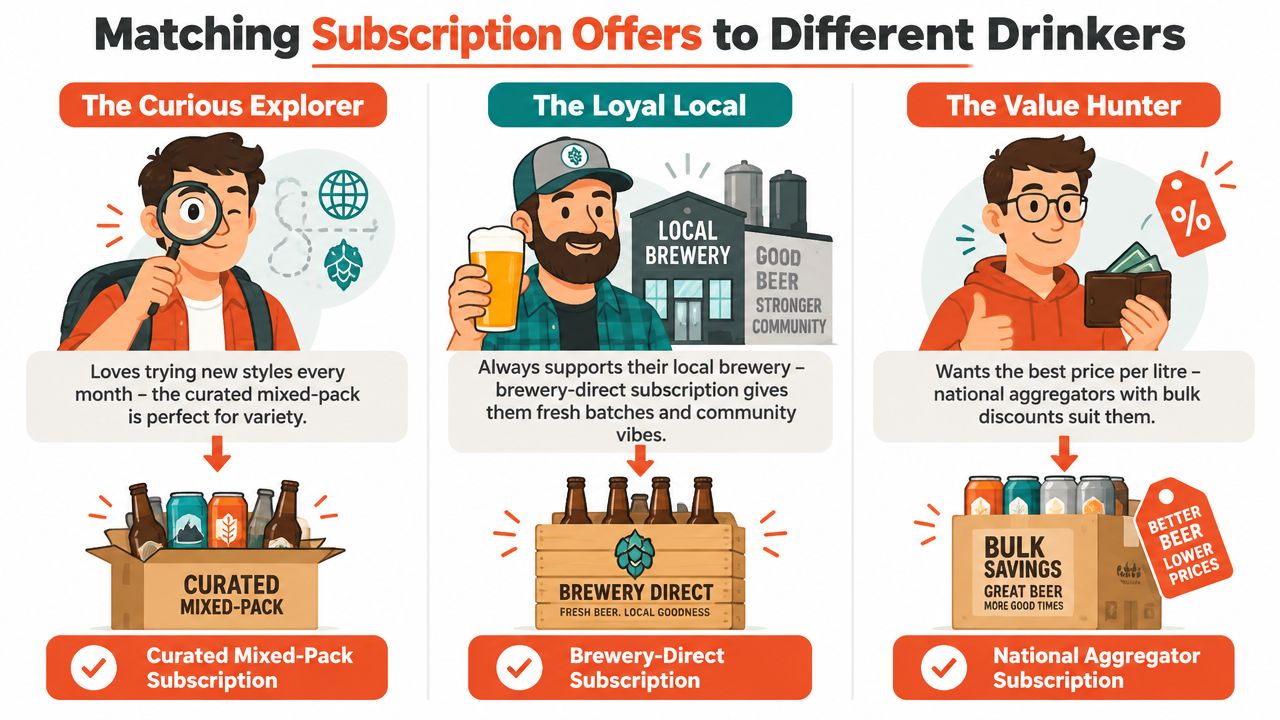
The curious explorer
You want new styles, tasting notes and the occasional release that isn't sitting at your usual shop. A curated mixed-pack subscription fits best, especially when it stays month to month and lets you pause without a phone call.
Look for transparent contents, sensible substitutions and a clear pack size. Avoid clubs that promise surprise but won't identify the breweries, styles or renewal price. Your first order should be the smallest pack that gives you enough range to judge the selector's taste.
The regular entertainer
You buy for planned gatherings, weekends or a household that works through beer steadily. A larger carton or mixed 24-pack can make more sense than repeated small orders, provided the delivery window lines up with your schedule and the extra volume won't sit unused.
Your priorities are predictable dispatch, reliable packaging and a clear per-pack price. Be wary of a club that sends novelty styles when you need dependable quantities. A brewery-direct subscription or a bulk-friendly aggregator is more suitable than a tiny tasting box.
The local supporter
You want named Gold Coast or south-east Queensland independents, traceable beer and a reason to stay connected. Choose a brewery-direct subscription with release information, flexible frequency and clearly stated member benefits.
The Australian industry summary reports that beer subscription buying is most popular among 24 to 44 year olds, with 40% having purchased, according to Independent Brewers Association consumer insights. That audience overlaps with adults who value quality and local provenance, but it doesn't remove the need to check the terms.
Segmentation is useful when it reflects real behaviour rather than stereotypes. The broader marketing concept is covered in this practical resource on boost sales with behavioral segmentation, but the buyer-side lesson is simple: identify your actual pattern before choosing the offer.
Quick self-check: choose curated variety if you explore, brewery-direct if you support a local producer, and bulk-oriented cartons if predictable stock matters most.
Why Buying Direct From a Local Brewery Changes the Math
Brewery-direct subscriptions can win on the things craft drinkers notice: freshness, traceability and connection. A local producer can tell you what was brewed, what has changed and why a substitute appeared. A national marketplace may offer broader choice, but it can be harder to understand the path from brewery to warehouse to your door.
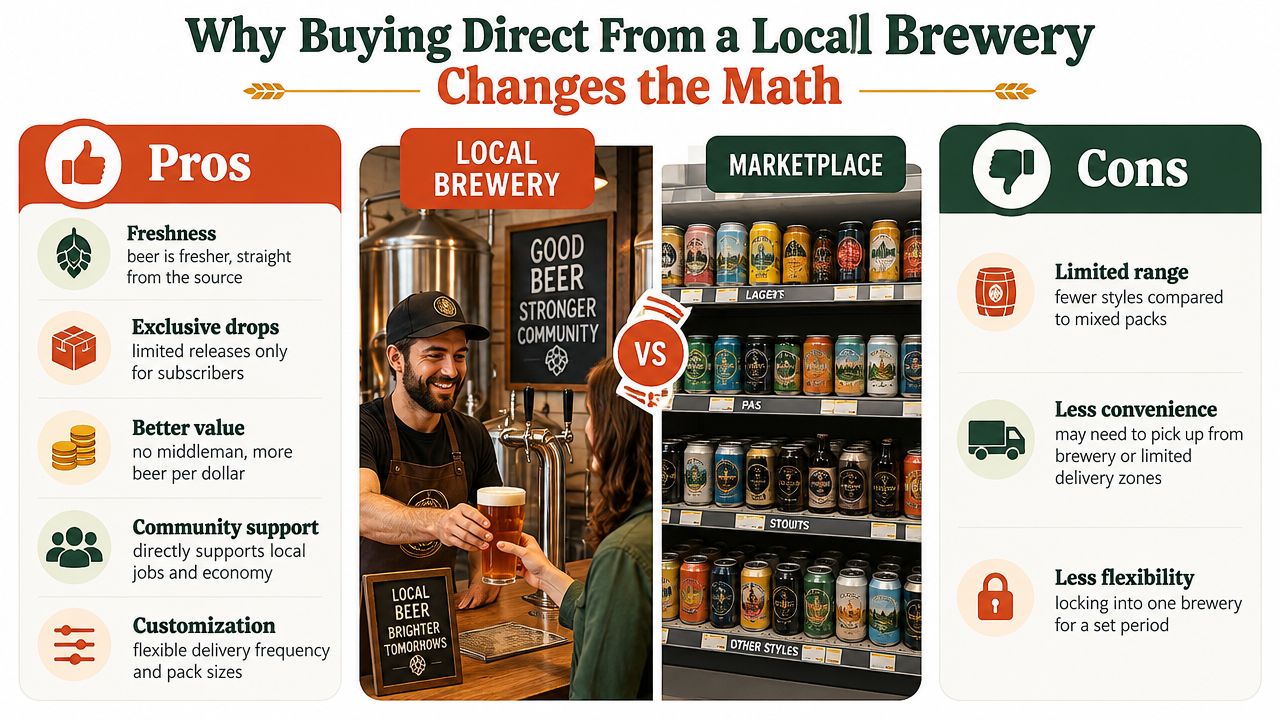
A direct roster also gives a brewery more control over the customer relationship. That can mean release updates, taproom information or access arrangements, depending on what the producer offers. Don't assume every club includes credit or events. Ask for the benefits in writing and value them only if you'll use them.
The price question deserves honesty. Direct buying doesn't magically remove production, packaging, labour or freight costs, and a brewery pack isn't automatically cheaper than every marketplace box. The fair comparison is the landed cost per can, adjusted for freshness, selection and the value of dealing with the producer.
A brewery's range can make the choice more personal. For example, Peachquency Hazy IPA beer is listed as a New Zealand-style Hazy IPA using Peacherine, Motueka and Riwaka hops, with peach, passionfruit and lime notes. The catalogue lists 5.8% ABV and pack formats including four-packs and 16-packs, with single 440mL cans available onsite after release.
You can assess the difference between direct and marketplace buying through a brewery's communication, not just its branding. Check whether product pages provide meaningful style information, whether staff answer freshness questions and whether delivery terms are visible before payment. The beer of the month information from Carbon 6 is the kind of release-focused detail a buyer can use when deciding whether a direct relationship suits them.
How to Vet Any Beer Subscription Offer Before You Commit
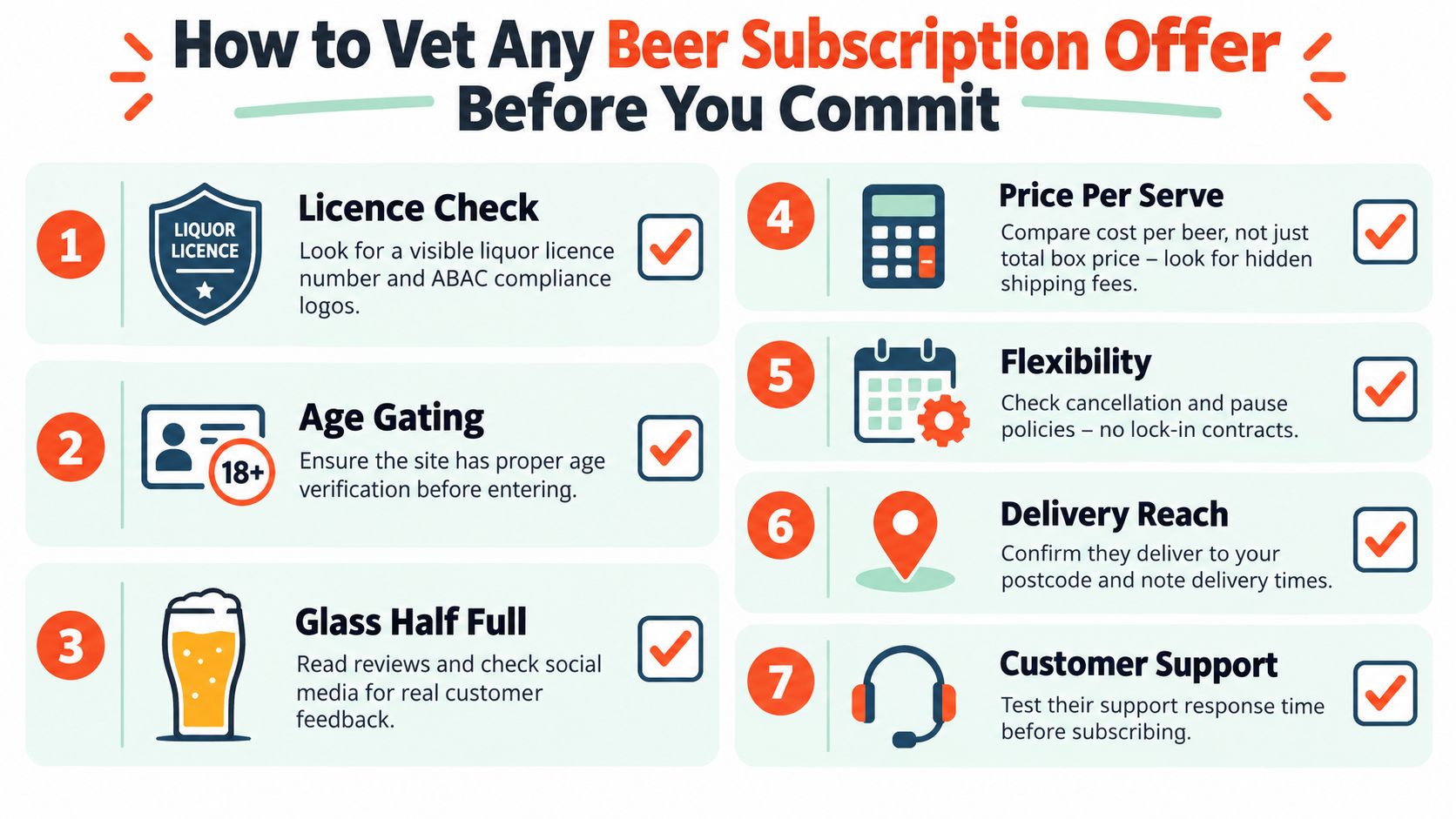
Treat the checkout page like a contract, because recurring billing is a contract in practice. A responsible Australian offer should use adult audience controls, avoid strong appeal to minors and present alcohol marketing in line with ABAC's placement and content requirements. The Queensland advertising compliance guidance specifically warns against portraying excessive or rapid drinking, under-25s, irresponsible behaviour, alcohol before driving or alcohol as the cause of success.
Run the compliance check
Look for age gating before alcohol content is accessible and responsible service information at the point of purchase. Social campaigns should use available age restrictions, target an audience that meets the adult threshold and avoid youth-oriented imagery, cartoons, toys or merchandise.
Don't mistake an ABAC logo for proof that every execution is compliant. The ABAC scheme overview explains that digital and social placement sits within the national standard, so the audience setup and the creative both matter.
Total the real cost
Write down the first payment, future renewal price, freight, bulky-carton charges, taxes if separately displayed and any minimum term. Check whether a trial automatically becomes a continuing subscription, and whether cancelling stops the next shipment or only future renewals.
Then test the exit route. A dashboard button is clearer than a phone-only cancellation process, but read the required notice period. Screenshot the terms before paying, especially if the offer uses urgency, rewards or a first-order incentive.
Use this five-step sequence:
- Confirm the licence: Find the seller's licence information and responsible-service details.
- Calculate landed cost: Add beer and every delivery charge before comparing packs.
- Save cancellation terms: Keep a screenshot of pause, cancellation and renewal conditions.
- Test support: Ask one specific question and note how clearly the team responds.
- Inspect real packaging: Check social channels and product photos for current dispatch evidence, not just polished campaign artwork.
For freshness advice beyond a subscription page, consult this craft beer shelf life guide. A seller that can't explain handling, dates or delivery conditions hasn't earned an automatic renewal.
Choosing the Right Beer Subscription for 2026
The best subscription for 2026 isn't one universal club. It's a match between drinking rhythm, freight tolerance and the reason you buy craft beer in the first place. The market has already established a meaningful online purchasing habit, while Australian delivery data indicates that beer buyers often prefer planned, larger baskets over express fulfilment, as outlined earlier in this guide.
| Persona | Best Subscription Model | Suggested First Order |
|---|---|---|
| Curious explorer | Flexible curated mixed pack | One mixed pack with stated contents, tasting notes and easy pause controls. |
| Regular entertainer | Brewery-direct carton or bulk-friendly aggregator | One carton or larger mixed order, after checking delivery timing and landed cost. |
| Local supporter | Brewery-direct subscription | A mixed brewery pack or named seasonal allocation with transparent freshness information. |
For Gold Coast drinkers, local fulfilment can carry practical advantages. Shorter routes from areas such as Burleigh, Yatala and Currumbin may help reduce time in transit and keep more spending within the local economy, but buyers should verify the actual dispatch location and carrier terms rather than assume proximity guarantees freshness.
The next phase of direct-to-consumer beer will reward clear information. Expect buyers to ask tougher questions about shipping calculators, pack substitutions, brew dates, audience targeting and cancellation. ABAC compliance will remain central, particularly as breweries use social media and recurring offers to reach adults directly.
The sensible first move
Start with a single order, not a long commitment. Choose the smallest format that can answer your main question, whether that's “Do I like this brewery?”, “Does the freight work to my postcode?” or “Will this selection suit the household?”
If you want discovery, pick a flexible mixed pack. If you want reliable volume, compare a carton from a local independent with the delivered cost of repeated bottle-shop trips. If local support and traceability matter most, go brewery-direct and ask about freshness before subscribing.
Carbon 6 Brewing Pty Ltd offers brewery-direct beer ordering from its Stapylton base, including mixed packs and named beer releases listed through its online catalogue. Visit Carbon 6 Brewing Pty Ltd to compare the current range, pack formats and delivery information before choosing your next Queensland beer subscription.