
Beer Variety Pack Near Me How to Find Fresh Local Picks
Sep 23, 2026
You've got mates coming over on the Gold Coast, the fridge is looking a bit ordinary, and you've just searched “beer variety pack near me”. Google Maps gives you bottle shops, but the closest shelf isn't automatically the freshest or best-value option. A mixed carton packed at a local brewery can make more sense than driving around for random singles, particularly when delivery brings a broader lineup straight to your door.
For Queensland craft beer drinkers, near me is really about transit time, freshness, freight and choice. Australia's craft beer sector has grown from a niche into a meaningful part of the beer market, with Deloitte reporting annual sales above $370 million, growth of around 10% per year, and craft beer representing about 5% of total Australian beer sales (Deloitte's craft beer analysis). Mixed packs fit that shift because they let you explore several styles without committing to a full carton of one beer.
A sensible search starts locally, checks how the pack is made up, then weighs pickup against delivery. You're not just hunting for the nearest can. You're choosing a pack that should arrive in good condition, suit the people drinking it and justify the trip or freight.
Finding a Beer Variety Pack Near You Without the Runaround
It's Friday afternoon, you're outside a bottle shop after work, and the mixed section looks picked over. One carton has styles you'd skip, another gives no clear freshness details, and the loose cans cost more than you expected. At that point, a brewery that packs mixed cartons directly can be the better buy.
Around the northern Gold Coast, “near me” is less about the closest pin on a map and more about what gets you fresh beer without wasting fuel or time. A brewery in Stapylton may be close enough for pickup, and a brewery-direct order may also cover your postcode without another shop run. The better option depends on how quickly the beer can get to you, not how nearby the premises looks online.
Why “near me” can be misleading
Maps are useful for finding taprooms, stockists and bottle shops, but they do not show every brewery-direct pack option. A retailer may list a mixed carton without saying much about canning date, substitution rules or delivery cutoffs. A brewery website may spell those details out clearly, even if the pack is harder to find in local search.
A brewery stockist locator can close that gap. It shows which venues and pickup points carry the pack before you drive, which saves you from chasing shelves that never had the carton in the first place. For a practical check, use Carbon 6 Brewing's stockist locator alongside the brewery page and local search results.
The Australian craft beer market has also been shifting toward more premium, discovery-led buying. One industry summary reports craft beer's share of overall beer market revenue rising from 16.7% in 2019–20 to 21.0% in 2024–25 (Deloitte's Australian craft beer overview). For a shopper, that makes mixed packs less of a novelty and more of a sensible way to try several styles and breweries without buying full cartons blind.
Practical rule: Treat “near me” as a freshness question first, and a distance question second.
The three routes worth comparing
Local pickup works when you want to collect quickly, avoid freight and speak directly with the brewery or retailer. It helps when the seller confirms stock before you leave and publishes clear pickup windows.
Direct delivery suits buyers who want a curated lineup, especially when a brewery can substitute unavailable cans with another fresh beer. Online craft beer shopping has become a meaningful channel in Australia. One industry report recorded average annual online alcohol sales growth of 14% before COVID-19, alongside a 50% spike in online craft beer purchasing during the restriction period (Australia craft beer report).
Bottle-shop browsing still makes sense when you need beer today or want to hand-pick individual cans. It gets less attractive when you spend several stops building a mixed carton, can't verify freshness, or pay more for a weaker mix.
Search first, check the pack details, then decide whether pickup or delivery gives you the better result. That order keeps the closest listing from becoming the wrong purchase.
How to Search Locally and Spot a Fresh Mixed Pack
A local search should start with freshness, not just proximity. In practice, that means checking who has stock near you, who can get it to your postcode, and who is turning cartons over quickly enough for the beer to arrive in good shape.
Run a tight local search
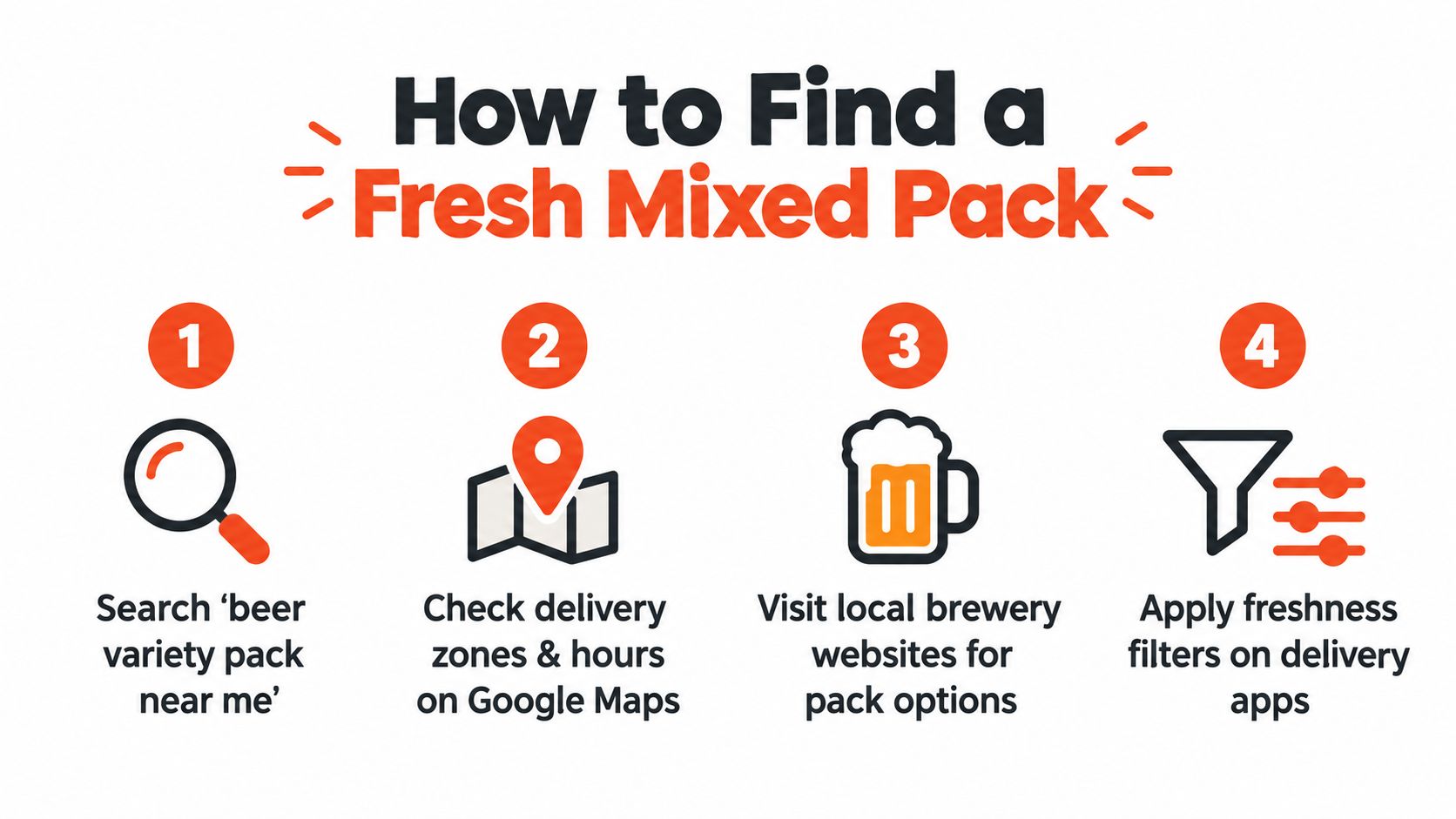
Start with “beer variety pack near me”, then add your suburb, postcode, or a delivery term such as “pickup” or “brewery delivery”. If you are on the Gold Coast, Stapylton, or anywhere close by, that extra detail helps narrow the results to businesses that can serve you.
Open the map listing and the brewery site, then compare them. A map pin tells you the business exists. The product page tells you whether the mixed pack is live, what styles are in it, and whether you are looking at current stock or old copy that has been sitting online too long.
Read the pack details with care. A useful listing names the can count, can size, beer styles, and what happens if one beer runs out. If the page only says “assorted beers”, you still do not know whether the carton suits a hop fan, a lager drinker, or a mixed household trying to keep everyone happy.
Freshness is the last filter, and the one that matters most. Look for a canning date, a best-before note, storage guidance, or a clear statement that orders are packed from current brewery stock. If none of that is there, ask before you pay.
Check the details before travelling
Pickup can save time and freight, but only if the order is ready when you arrive. Confirm whether collection is from the brewery, a taproom, or a separate stockist. Ask if you need to order online first, whether the carton will be held for you, and what happens if a listed can has sold out.
That same logic applies to delivery. Confirm the postcode range, the dispatch days, and the cutoff time before you assume a Friday order will land on Friday. Queensland buyers often find the smartest option is whichever route keeps the beer moving the least, because less time in transit usually means a better shot at fresh cans.
Recognise weak listings
A mixed pack is only useful if the listing gives you enough to judge it. Be wary when the lineup is hidden, substitutions are unclear, delivery terms are missing, or the seller says little about ID and age checks.
Clean delivery controls matter. A retailer should spell out how they handle identification, refusal, unattended addresses, and other basic service checks, because alcohol delivery is not parcel delivery.
For shoppers, the best signs are simple: clear stock details, a real delivery area, a sensible pickup window, and freshness information you can verify before you commit. If a listing cannot answer those points, the nearest result is not necessarily the right one.
How to Choose the Right Variety Pack for Your Taste
A mixed pack should feel curated, not like the leftovers from a busy fridge. Compare the lineup by style spread, alcohol strength, freshness and occasion before you compare the number of cans. A bigger carton can still be poor value if most of it doesn't suit your palate.
Read the style spread
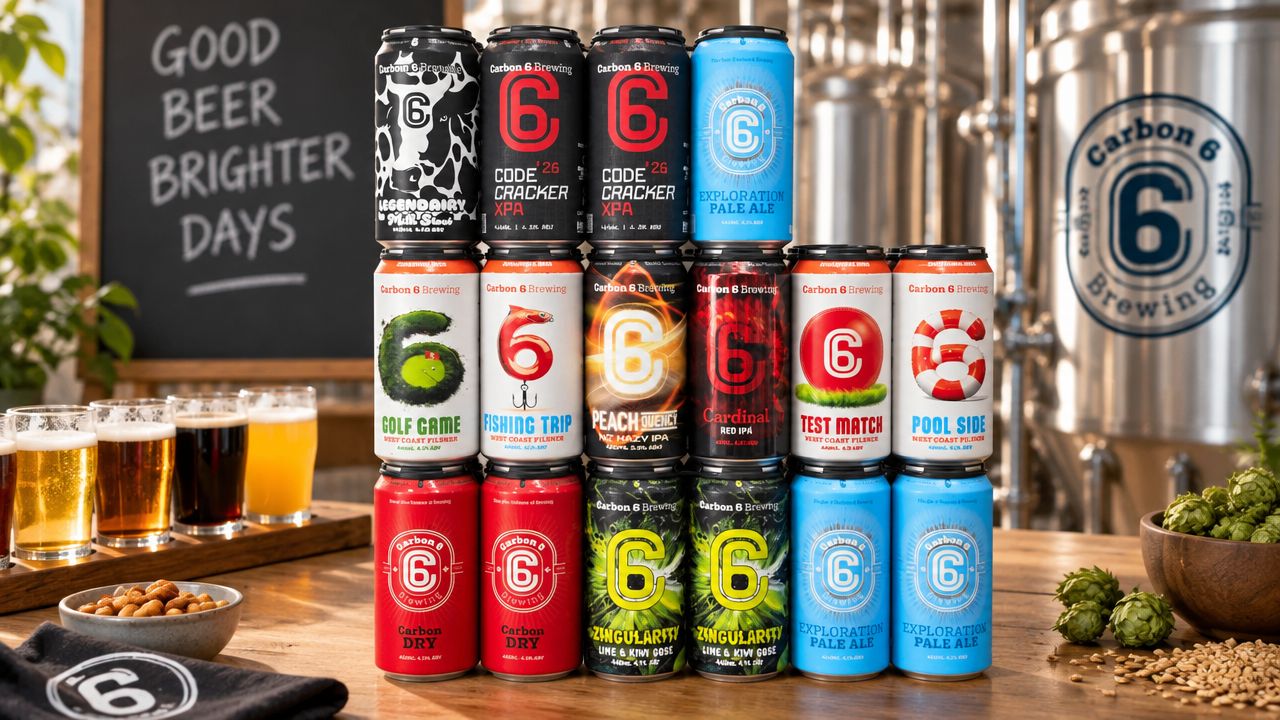
A balanced explorer pack might move from a crisp pilsner or lager into pale ale, IPA, sour or a darker malt-driven beer. That progression gives you contrast. You can start with something bright and clean, then move towards more aromatic, bitter or tart flavours when you're tasting with mates.
The best pack isn't necessarily the one with the widest possible range. If everyone prefers hop-forward beer, a pack dominated by light lagers may create waste. If you're buying for a mixed household, a gentler beer alongside more expressive styles gives people a genuine choice rather than forcing one person to settle.
Match strength to the occasion
Sessionable beer suits a long afternoon because it tends to be easier to pace. Bigger IPAs can make more sense for a deliberate tasting where everyone reads the labels and samples smaller pours. Check the ABV printed on each beer, not just the pack name, because strength affects how quickly a mixed carton is consumed.
Low- and no-alcohol options also broaden what variety means. Australian delivery-trend data reports that 75% of alcohol-delivery customers ordered low- or non-alcoholic drinks in the past six months, rising to 93% among Gen Z (DoorDash Australia delivery trends). That doesn't mean every pack needs those options, but it does make them worth considering for mixed households, gifting and occasions where some guests prefer not to drink alcohol.
| Pack Style | Best For | What to Check |
|---|---|---|
| Light lager and pilsner mix | Easy drinking and broad group appeal | Crispness, canning date and whether the pack includes enough familiar styles |
| Pale ale and IPA mix | Hop explorers and tasting sessions | Bitterness, aroma, ABV balance and whether the lineup has real variation |
| Mixed core range | Households with different preferences | The number of styles, label descriptions and substitution terms |
| Beer with low- or no-alcohol inclusions | Shared occasions and flexible pacing | Which cans are alcohol-free or low-strength, and whether they suit the recipients |
| Seasonal or experimental mix | Curious drinkers who enjoy novelty | Release timing, freshness window and whether the beers are clearly identified |
A Mixed 16-Pack from Carbon 6 is described as sixteen 440mL cans selected across its lineup, with a substitute used when a particular beer is unavailable. The product snapshot identifies Cardinal Red IPA as part of the selection and notes that the pack may change when specific cans can't be supplied, so check the current contents before ordering.
For more guidance on evaluating mixed cartons, this guide to mixed beer packs in Australia is a useful companion. The practical test is whether you can explain why each beer belongs in the carton. If you can't, you're probably buying quantity rather than discovery.
Ordering Your Mixed Pack for Delivery or Pickup Made Easy
A Friday afternoon barbecue on the Gold Coast can expose weak ordering details quickly. A carton placed that morning may still miss the event if the cutoff, dispatch day or receiving window does not line up. Check those details before choosing between local pickup and delivery.
Build the order around the receiving window
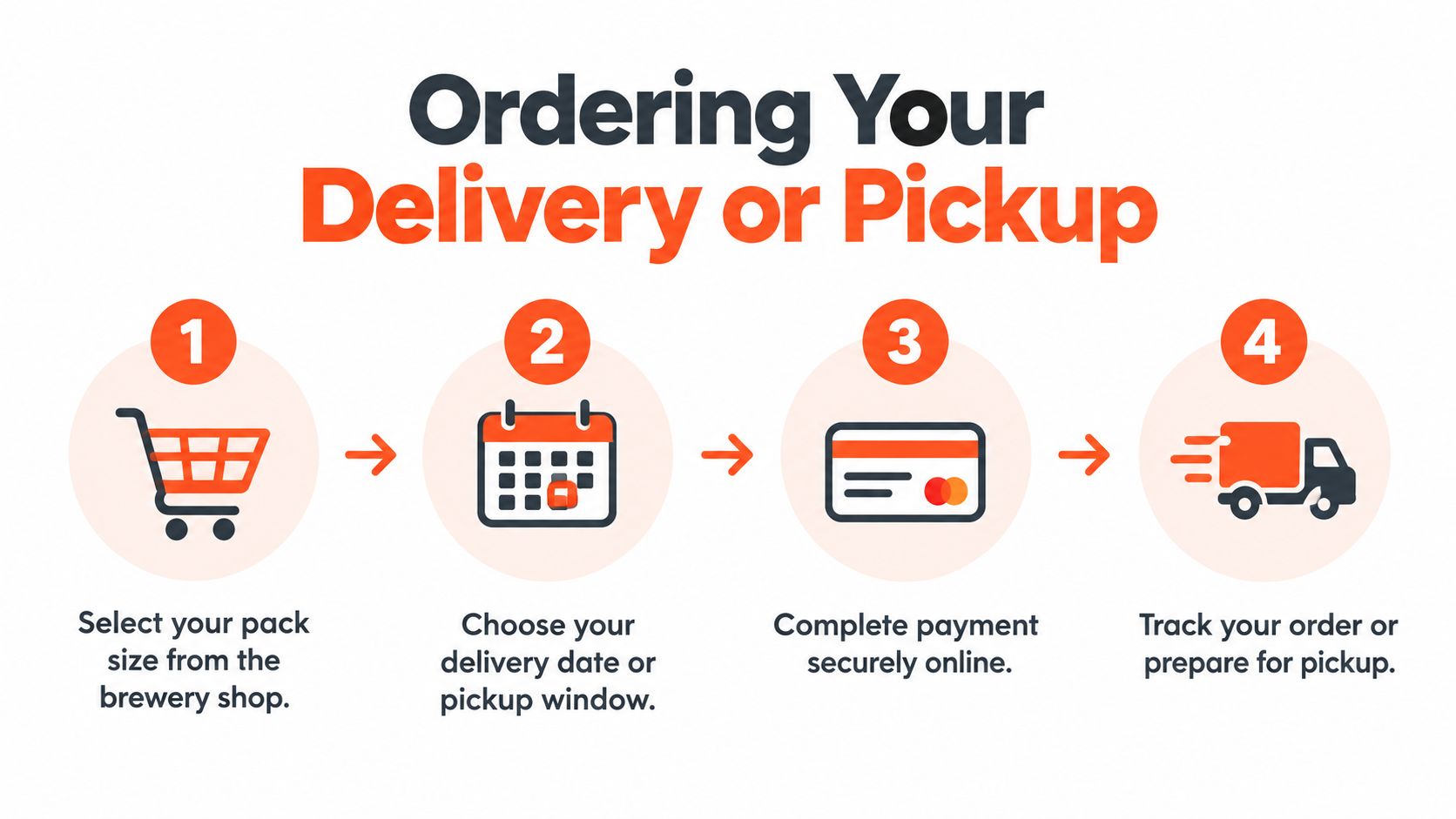
Choose the pack size, then select delivery or pickup where both are available. Enter the address carefully, including the unit, level and access instructions. For delivery, check dispatch cutoffs, delivery days and the seller's estimated timing. For pickup, confirm the collection window and whether the shop will hold the carton if plans change.
Use this sequence:
- Select the carton: Confirm the can count, volume and listed styles.
- Choose the handover: Set a delivery date or an available local pickup window.
- Review substitutions: Check that an alternative beer would still suit the pack's variety and freshness.
- Complete payment: Review the final total, address and contact details.
- Prepare to receive it: Ensure an eligible adult is available and can show identification if requested.
Local pickup can make sense when the brewery is nearby and you need the carton promptly. Delivery may be the better option when freight is reasonable for the carton size, especially if travelling to several bottle shops would take time and fuel. Compare the handover cost with the freshness information, dispatch timing and choice available from the brewery, rather than treating “near me” as distance alone.
Expect responsible delivery controls
Alcohol requires a proper handover, not an unattended parcel. Queensland compliance submissions recommend that retailers retain and regularly report sales and delivery data by geographic area, including failed deliveries and refusal reasons (FARE Queensland framework submission). The same submission reports that ID was not checked in 24% to 50% of alcohol deliveries, and that 75% of intoxicated delivery attempts were never or only sometimes refused.
Those findings help explain why a responsible retailer may request ID, refuse delivery to an unattended address or decline service when the recipient appears intoxicated. Keep the contact number active, have an eligible adult ready and do not ask the driver to leave the carton at the door.
If a can is substituted
Mixed packs can change when a beer sells through. A clear substitution policy should explain which beer may replace it and whether the replacement serves a similar style and freshness role. If the substitute does not suit an allergy, gift or tasting plan, contact the seller promptly and ask what options are available.
A varied carton works best when each replacement still gives the recipient a useful choice, rather than turning the order into a random assortment. Check the current lineup and substitution terms before payment, particularly when freshness or a planned tasting matters.
Getting the Best Value and Keeping Every Can Fresh
Freight changes the maths. A small order can carry a relatively large delivery cost per can, while a properly sized carton spreads that cost across more beer. That doesn't mean you should buy the biggest possible pack. It means you should compare the total delivered cost per can, then ask whether you'll enjoy the full selection.
A 440mL can also changes the calculation compared with smaller cans. Divide the delivered order total by the total number of cans first, then compare the volume and lineup. Two packs with the same can count may offer different drinking volume, while a lower price can still be poor value if several cans remain untouched.
Make the carton work harder
Digital craft beer buyers often order a larger basket to make freight worthwhile. The useful approach is to plan the order around actual consumption and sharing, not an arbitrary carton size.
- Split it with mates: A mixed pack becomes more affordable when two households choose styles together and divide the cans fairly.
- Use a tasting order: Put unfamiliar styles towards the start of the fridge rotation, while your reliable favourites can wait.
- Compare like with like: Include freight, can volume and the number of distinct beers in your calculation.
- Plan the next order: Reordering a sensible carton can avoid paying delivery for a handful of cans later.
Cold storage protects the flavour profile, especially for hop-forward beers. Keep cans refrigerated where possible, avoid hot sheds and direct sunlight, and don't leave a delivered carton sitting in a warm car. If you can't chill the whole order, store it in the coolest dark place available and move the beers into the fridge before serving.
Freshness first: A cheaper can isn't a saving if it sits untouched because the beer no longer tastes the way you expected.
Shelf life varies by style, packaging and storage conditions, so check the brewery's advice rather than applying one rule to every beer. Carbon 6's craft beer shelf-life guide can help you think about freshness as part of the purchase, not an afterthought.
A sensible reorder point is the moment you know what you enjoyed and what you wouldn't buy again. Keep notes in your phone, especially when a pack includes several unfamiliar styles. That turns the next order into a more accurate selection instead of another expensive punt.
Enjoying Responsibly and Supporting Local Independent Beer
A mixed pack should suit the occasion, not push the occasion further than planned. Decide how much beer fits the group, put food and water on the table, and leave the car keys alone if you are drinking. For gatherings, include appealing non-alcoholic options and respect anyone who chooses not to drink.
Queensland's drinking patterns have shifted over time. A Queensland health report records a 57% decline from the state's peak in 1974–75 to 4.0 litres of pure alcohol per person in 2013–14 (Queensland health alcohol report). For variety-pack shoppers, the practical lesson is simple: use the carton to explore flavour and buy an amount that suits the people drinking it. A full carton is not a target.
Keep marketing responsible
The ABAC Responsible Alcohol Marketing Code sets expectations for responsible alcohol promotion, including measures intended to prevent marketing from encouraging minors to drink. It applies to digital and social media, packaging, point-of-sale material, retailer advertising and other campaign assets. A Facebook beer advert remains covered when it forms part of a wider campaign, as explained in the ABAC marketing FAQ.
Australian advertising guidance advises against targeting minors or people under 25 years, encouraging heavy or excessive drinking, presenting alcohol as a mood enhancer or path to success, or showing drinking during safety-critical activities such as driving or operating machinery (Alcohol and Drug Foundation guidance). Use adult-appropriate creative, responsible wording and audience controls. The ABAC framework also offers pre-vetting and a complaints process, so compliance belongs in campaign planning as well as copy review (ABAC guidance notes).
Choose local with a clear filter
For Gold Coast shoppers, fresh, local and right-sized is a useful filter. An independent brewery may offer pickup, brewery-packed cartons and a shorter path between packing and serving. That can make local collection the sensible choice when freight would add cost, while delivery can work better when a mixed carton saves a separate bottle-shop trip or suits the available stock.
Choose a pack with a named recipient, a realistic delivery window and enough variety for the people who will drink it. Carbon 6 Brewing Pty Ltd operates from Stapylton on the northern Gold Coast and offers brewery-direct mixed cartons for local pickup and delivery, subject to the options shown at checkout. Visit Carbon 6 Brewing Pty Ltd to check current mixed-pack details and delivery information.