
Direct to Consumer E Commerce for Craft Breweries
Sep 24, 2026
The wet-hopped pale is canned, the cellar door is quiet, and the wholesaler has just pushed delivery back another fortnight. The beer is ready, but the route to the drinker isn't. For a regional Australian brewery, that moment exposes the appeal of direct to consumer e commerce. You can sell the beer already in tank or cans while building a customer file that records a name, suburb, preferences and basket history.
Australia's online liquor channel has moved well beyond a novelty. Online alcohol retail revenue rose from $539 million in 2012 to about $2.0 billion in 2022, nearly a fourfold increase, and the same research forecast annual growth of 10.6% through 2026–27 (Foundation for Alcohol Research and Education). The opportunity is real, but the work isn't limited to launching a storefront. DTC is both a margin lever and a customer data play, and the brewery has to operate both properly.
The Moment a Brewer Decides to Ship Direct
The first decision isn't whether Shopify can process a payment. It's whether the brewery can make a direct order profitable, compliant and repeatable after the excitement of the first release fades.
Start with the beer and the reason someone would order it without standing at the bar. A wet-hopped pale might offer freshness, a limited release might give customers a reason to act now, and a mixed pack might remove the risk of choosing a style they haven't tried. Those are different motivations, so they need different product pages, messages and follow-up journeys.
Separate the commercial jobs
Wholesale gives you reach, but the wholesaler owns much of the customer interaction. A taproom gives you tasting, conversation and immediate feedback, but it depends on someone getting to your venue. A DTC store lets you combine the brewery story, product choice, payment and delivery promise in one journey.
That control creates a useful feedback loop. You can see which pack attracts a first order, whether customers add a limited can to a larger carton, and when a previous buyer returns. You can then adjust the range, release calendar and email programme around observed behaviour instead of relying only on retailer feedback.
Practical rule: Don't launch every beer online. Launch the packs that make shipping and choosing simple.
Before spending on ads, write down the full cost of one order. Include beer, packaging, pick labour, payment costs, freight, damaged stock, customer service and any carrier surcharge. Then decide what must happen for the order to remain healthy. If the answer depends on a discount that removes your margin, the offer isn't ready.
The rest of the operation should protect both outcomes. The store must sell beer today, while the data it captures helps you sell the next carton more intelligently.
What Direct to Consumer E Commerce Actually Means
Think of DTC as the cellar door extended to a customer's doorstep. The brewery owns the storefront, checkout, product information, customer consent, order record and fulfilment decision. A carrier may physically move the carton, but the customer still knows who took the order and who is responsible for the experience.
That differs from listing beer online. In a wholesale arrangement, a venue or bottle shop owns the transaction and usually controls the customer record. The brewery may receive an order or sales report, but it doesn't automatically receive the buyer's name, suburb, permission to market or basket history.
An on-premise taproom creates a stronger relationship, but the data is often lighter. Staff can learn what a visitor likes, yet that insight may never become a structured customer profile. A marketplace can provide discovery and volume, but it sits between the brewery and the drinker, with platform rules shaping visibility and customer access.
Put each model on the map
| Model | Customer Owned by | Margin to Brewery | Geographic Reach | Data Captured |
|---|---|---|---|---|
| Wholesale | Retailer or venue | Shared through the channel | Strong where distribution exists | Limited brewery-level data |
| Taproom | Brewery, in person | Direct sale margin | Local and visitor-led | Conversation and transaction data |
| Marketplace | Platform or aggregator relationship | Reduced by platform economics | Potentially broad | Restricted or mediated data |
| Brewery website | Brewery | Direct sale margin, less fulfilment cost | National where freight works | Consent, suburb, basket and purchase history |
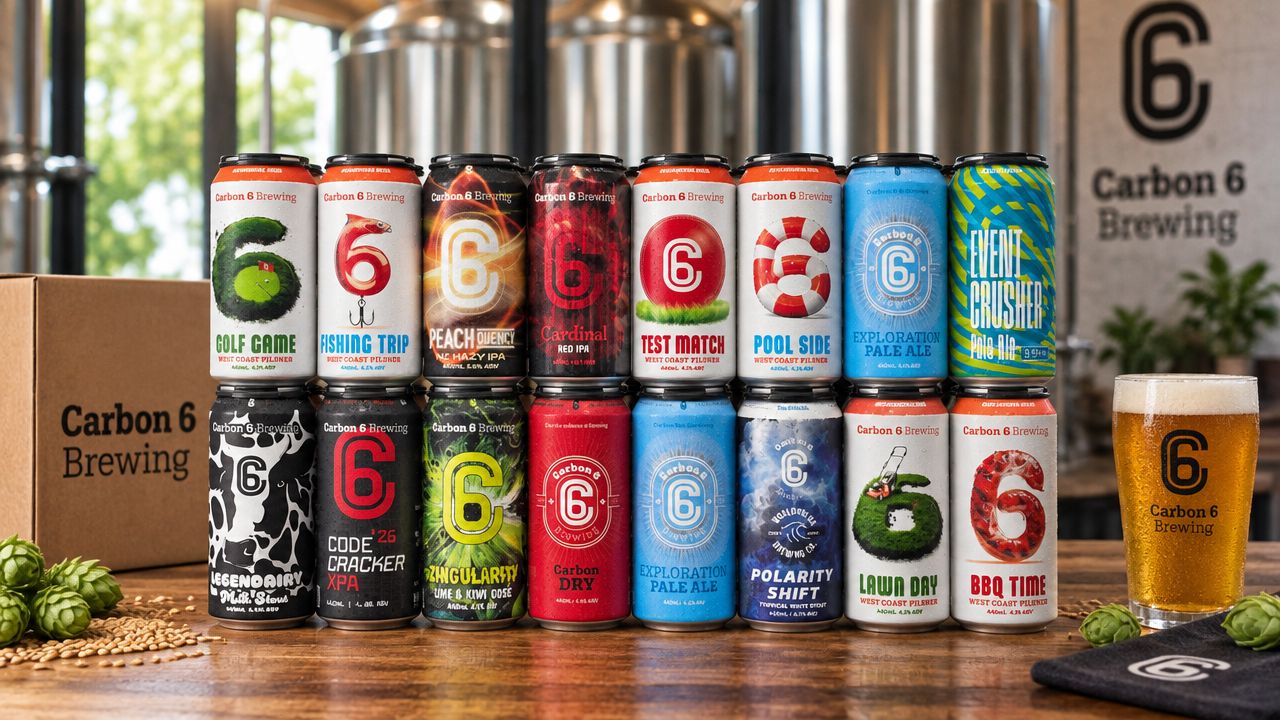
A product such as the Mixed 16-Pack demonstrates the DTC logic without needing a customer to understand the entire range first. It contains sixteen 440mL cans, presents a selection of styles, and allows a substitute when a particular beer is unavailable, subject to the product note that the image is illustrative.
The working definition is simple: DTC means the brewery owns the customer journey, not merely the web page where the beer appears. If another business controls the checkout, customer record and follow-up permission, you're operating through a channel rather than owning a direct relationship.
Why Australian Craft Breweries Are Leaning In
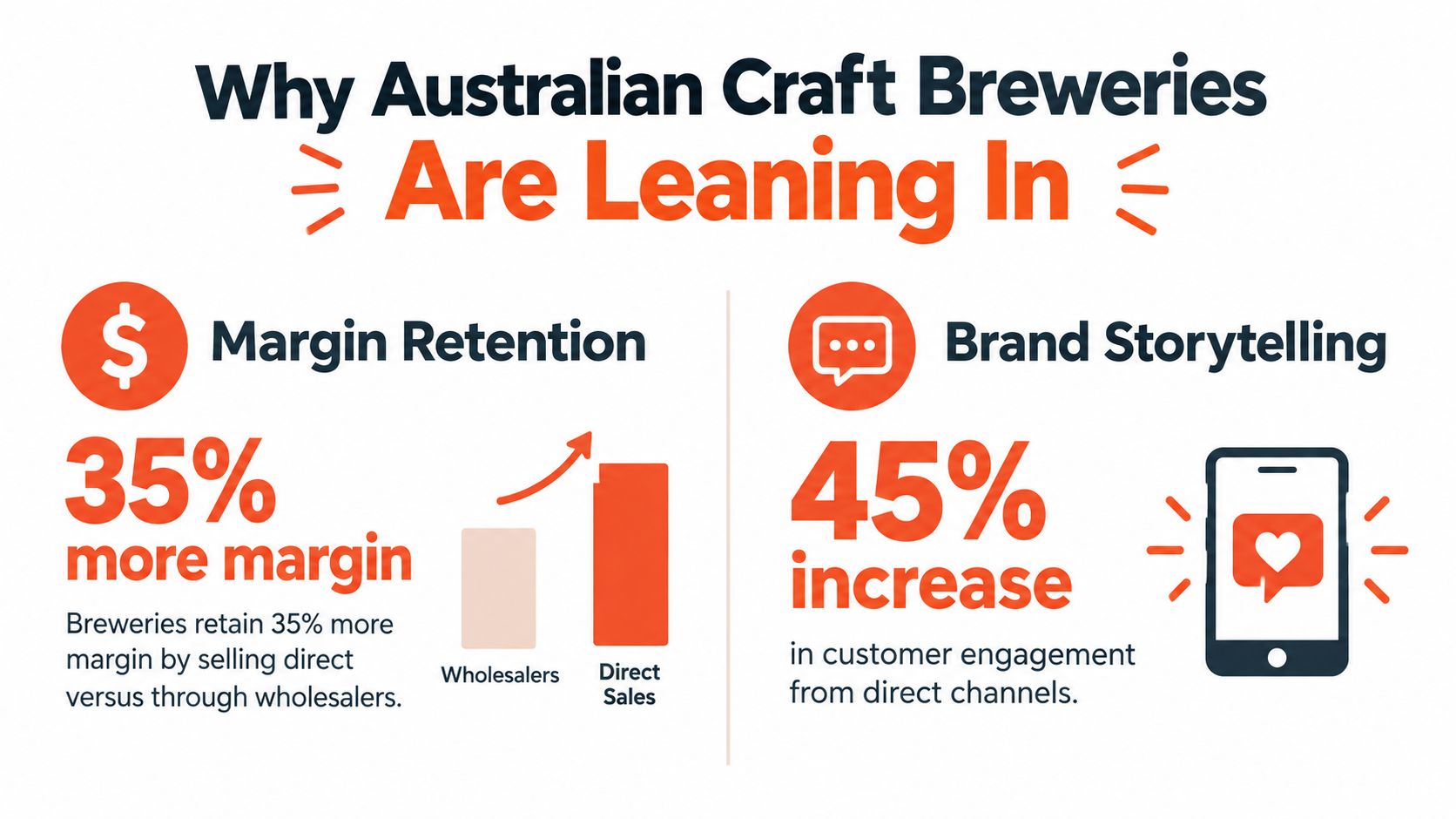
The strongest case for DTC isn't that every carton sold online is automatically more profitable. The case is that a brewery can retain more control over the sale while reaching drinkers outside its normal physical radius.
Australia Post reported that $2 billion was spent online on liquor in 2025, yet only 8.2% of total liquor spend occurred online (Australia Post ecommerce report). The same report counted 1.1 million households shopping for liquor online, with an average online basket of $120.44. That combination matters to brewers. Customers are already comfortable placing larger orders, but the channel still has room to develop.
NielsenIQ reported that the average online liquor basket was 2.4 times higher than an in-store basket, while only 8.3% of households bought liquor online in the last year (NielsenIQ research). Higher baskets don't remove freight or packaging costs, but they give the order more room to absorb them.
Where the value comes from
A direct order also creates space for the brewery's story. A shipping-only mixed pack can include tasting notes, serving suggestions, the release background and a clear next step. A bottle-shop shelf rarely gives you that same amount of context.
Geographic reach is another practical advantage. A brewery in Stapylton can serve a customer in Ballarat without opening a venue there, provided the freight, delivery controls and product economics work. That reach doesn't replace local distribution. It gives the brewery another route for seasonal releases, experimental beers and customer segments that local shelves don't serve.
The Occasional Beer: WC Pils shows how a direct channel can carry a more detailed product proposition, including its 4.3% ABV, limited-edition label concept and stated pack formats. The point isn't to copy the product. It's to use the owned page to explain why a particular beer belongs in a customer's next order.
DTC doesn't fix inconsistent brewing, weak stock control or poor delivery. It also doesn't make a low-value order viable because the checkout is attractive. Work backwards from the delivered carton:
- Beer value: What does the customer receive, and can the page explain it quickly?
- Freight allowance: What portion of the order disappears into delivery?
- Packaging: Can the carton survive handling without creating avoidable replacements?
- Repeat path: What gives the customer a reason to buy again?
Subscriptions and mixed packs can lift basket value, but only when the range is reliable and the customer can manage the cadence. A larger basket improves the maths. It doesn't excuse sloppy fulfilment.
Legal and Compliance Basics in Australia
Alcohol compliance starts before the ad and continues until an adult receives the carton. The ABAC Responsible Alcohol Marketing Code covers brand advertising, competitions, digital communications, social media, user-generated content, packaging, point-of-sale material and retailer advertising (ABAC overview). It also applies to placement, not just wording.
The audience control commonly used for alcohol advertising is that the audience should be reasonably expected to be at least 80% adults aged 18 or over, and available age-restriction tools should be used on social platforms (Australian parliamentary submission on the ABAC scheme). Don't treat a Meta audience setting as a substitute for responsible creative. Avoid youth-oriented imagery, language, music and settings, and don't imply that drinking delivers social, sexual or professional success.
Build controls into the journey
At checkout, use a hard age gate and capture the information your compliance process requires. Don't create a loophole where a customer can bypass the gate through a quick-buy button, abandoned-cart link or customer-service payment request. Store the consent and order records in a way staff can retrieve during an audit.
ABAC provides four compliance checkpoints: internal review, external pre-vetting, consumer complaint through Ad Standards, and compliance action if the panel finds a breach (ABAC Code process). A quarterly review should cover campaign creative, targeting, landing pages, email, SMS, competitions and retailer assets.
Delivery rules vary by jurisdiction, and guidance must be checked against the state where the order is delivered. Industry guidance states that the national code applies across states and territories, same-day unattended delivery isn't permitted, and ID must be checked on delivery so the receiver is over 18 (Retail Drinks online alcohol guidance). Confirm current requirements with Liquor & Gaming NSW, OLGR Queensland, and Consumer Affairs Victoria.
| State | Recipient must be home | ID re-check by driver | Notes |
|---|---|---|---|
| NSW | Confirm current order and delivery conditions with the regulator | Follow the approved carrier process | Requirements can differ from Queensland |
| Queensland | Treat purchaser presence and ID verification as required controls | Yes, use the carrier's compliant process | A Stapylton brewery must build this into dispatch |
| Victoria | Confirm current requirements before shipping | Follow the approved carrier process | State guidance should govern the workflow |
| Western Australia | Don't assume standard interstate delivery is permitted | Confirm the current position first | Treat WA as a separate compliance decision |
For a broader operational checklist on how to meet compliance in commerce, use a resource that covers the full transaction rather than advertising alone. Carbon 6's guide to ordering beer in Australia can also help identify customer-facing questions that your checkout and delivery policy should answer.
Fulfilment and Shipping Models That Fit a Brewery
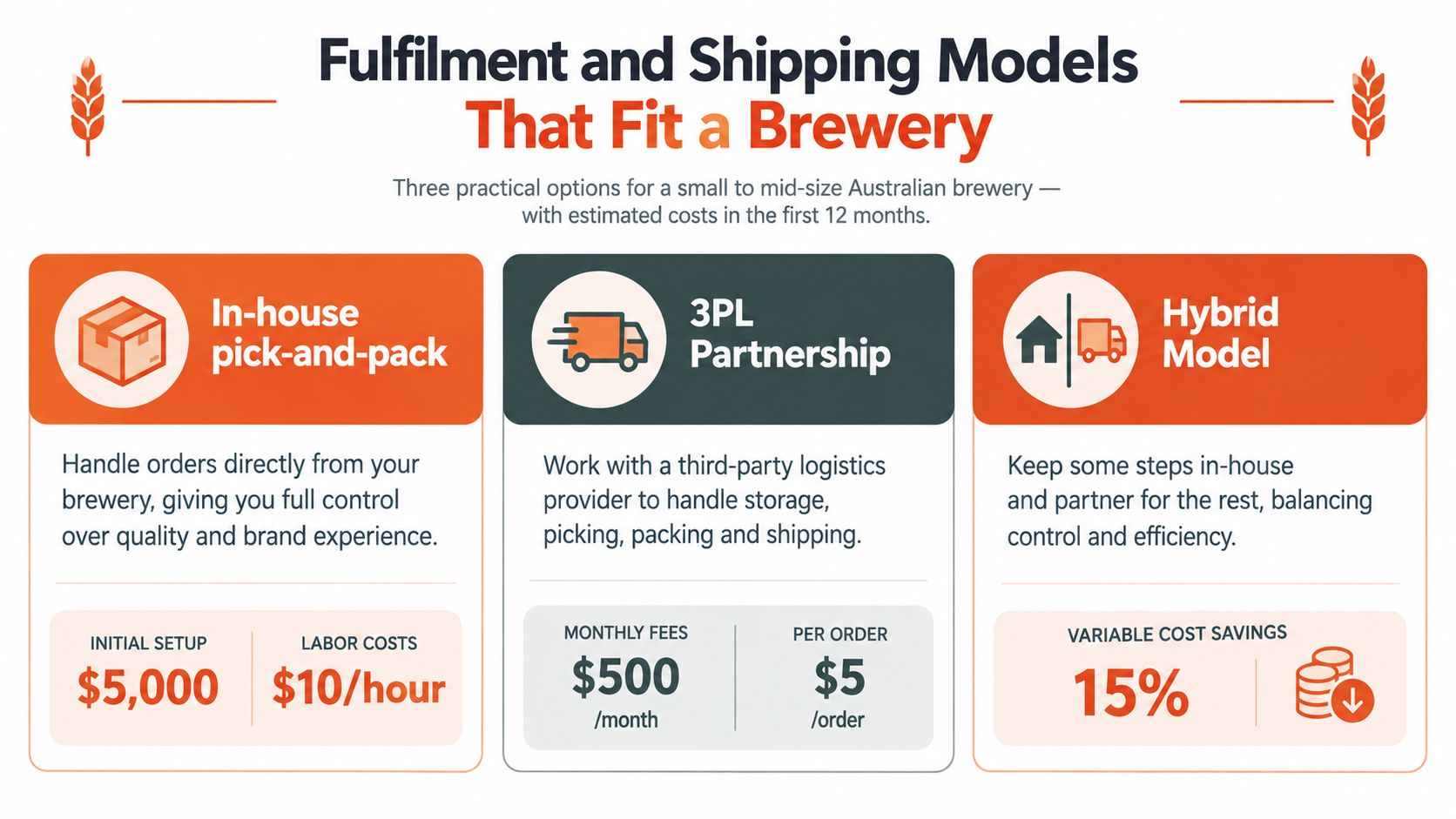
Fulfilment is where attractive DTC projections become real operating work. The right model depends on order concentration, range complexity, labour availability and how much control you need over the unboxing.
Three workable models
In-house pick-and-pack gives the brewery control over mixed packs, tasting notes, substitutions and local dispatch. It works well when the cellar door and warehouse team can absorb the work without delaying production or service. The weakness appears during a limited release. A sudden order spike can turn the brewer, taproom staff and office team into an improvised warehouse crew.
Third-party fulfilment brings predictable pick rates, storage processes, returns handling and broader carrier access. The trade-off is cost and control. A 3PL may not curate a mixed carton exactly as the head brewer would, and inserts or last-minute substitutions can become slower or more expensive.
Hybrid fulfilment keeps core Gold Coast and Brisbane orders in-house while sending east-coast capital-city work to a 3PL. It preserves local control and gives the brewery a release valve when national volume grows. It also creates two inventory and service processes, so the handover rules must be explicit.
Model the carton, not just the carrier quote
Your spreadsheet should include:
- Packaging: Compare EPS, moulded pulp and reflective wrap against breakage and temperature exposure.
- Labour: Record pick time, label printing, carton sealing and dispatch staging.
- Carrier mix: Test Australia Post, StarTrack and private carriers against postcode coverage and delivery handling.
- Exceptions: Allow for damaged cartons, failed age checks, returns and the re-route fee that appears when an address or recipient fails.
- Cold-chain limits: State clearly when the brewery can and cannot promise temperature-controlled transport.
The public guidance and the carrier contract matter more than a generic shipping app. A cheap rate that produces repeated re-deliveries isn't cheap.
A practical guide to craft beer boxes can help with packaging decisions, but test any carton with your actual can mix and carrier handling before making it the standard. Choose packaging that protects the product without making every parcel unnecessarily heavy or awkward.
Choosing a Practical Tech Stack
The platform question should follow the operating model. A brewery processing a modest order flow needs reliable stock, payments, age controls and dispatch more than it needs an elaborate custom build.
Shopify is often the cleanest starting point because its app ecosystem supports age verification, carrier connections, product merchandising and taproom integrations. Shopify Plus may suit a larger operation, but the platform fee and app stack can rise quickly. Review apps such as AgeChecker or Eightysix, a POS such as Shopify POS, Square or Vend, and email tools such as Klaviyo or Mailchimp should each earn their place through a specific operational job.
WooCommerce on WordPress suits a brewery that already has content capability and wants deep control over pages about hops, process and releases. It can support strong SEO, but plugin updates, security and payment compliance create an ongoing maintenance burden. Don't choose it because the licence looks cheaper if nobody owns the upkeep.
Match tools to the stage
| Volume tier | Storefront | POS | Email/SMS | Subscriptions |
|---|---|---|---|---|
| Early testing | Shopify or managed WooCommerce | Square, Vend or Shopify POS | Mailchimp or basic Klaviyo setup | Native or lightweight app |
| Growing range | Shopify with selected apps | Shared inventory POS | Klaviyo with behavioural segments | Recharge, Bold or native Shopify subscriptions |
| Complex operation | Shopify Plus or managed WooCommerce | Integrated POS and warehouse stock | Klaviyo with SMS and lifecycle flows | Subscription platform with skip and swap controls |
The taproom is where inventory discipline matters most. If Friday customers drink through a beer that the website still shows as available, the problem isn't cosmetic. It creates refunds, support work and damaged trust. Use one inventory source or make the reconciliation routine unavoidable.
Add reviews, analytics and clear campaign tagging for Untappd, Instagram, Google and email. You don't need enterprise tooling to see which channels assist a sale, but you do need consistent naming and a weekly review.
Before a release, run a schema and speed audit to check that search engines and customers can access the pages efficiently. A fast store won't rescue a poor pack offer, but a slow or confusing checkout can waste traffic you've already paid to earn.
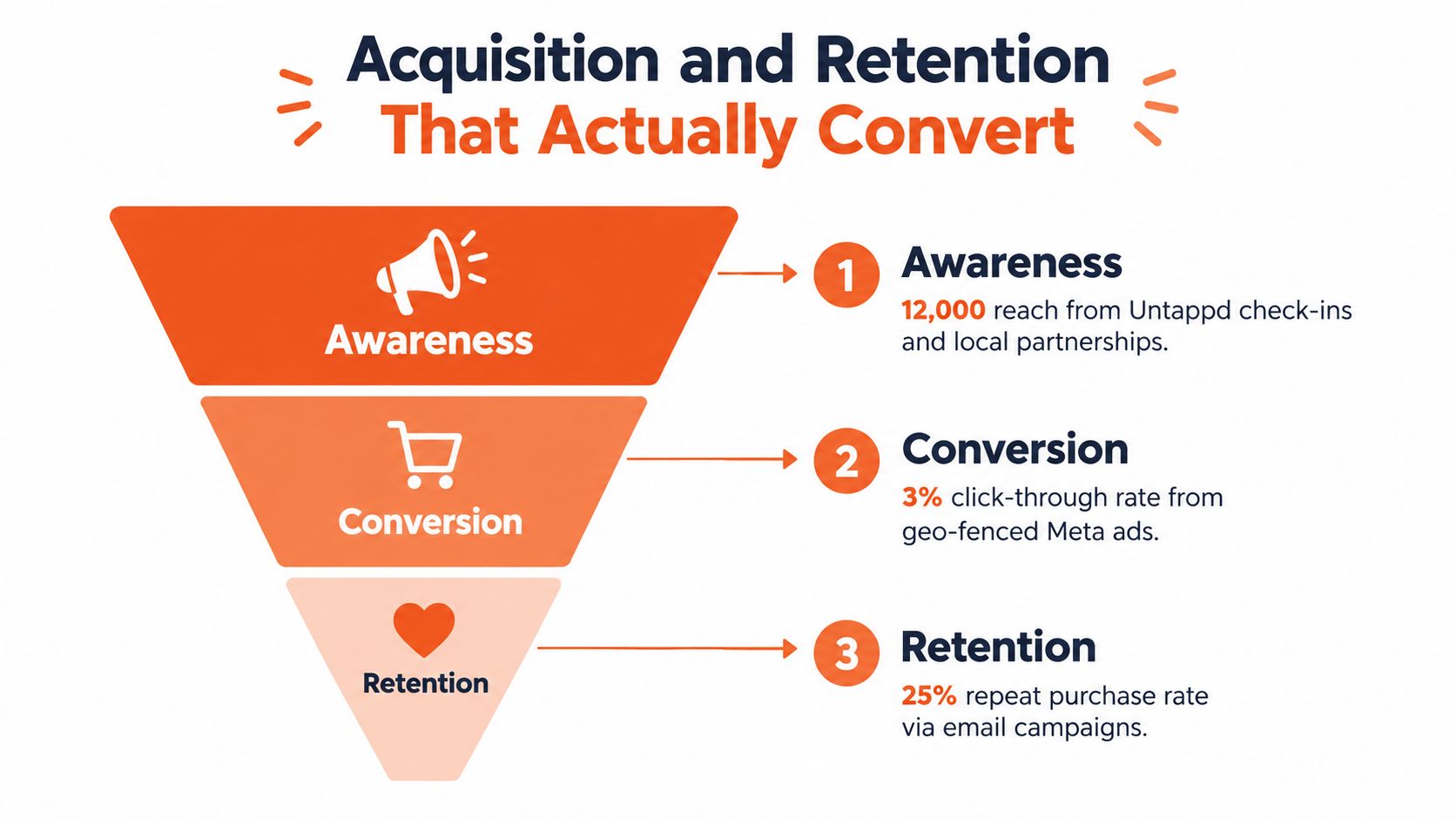
Acquisition and Retention That Actually Convert
Acquisition gets the first carton moving. Retention determines whether the brewery can afford to keep paying for attention.
Start with channels that already contain relevant intent. Untappd check-ins can support release discovery, local hospitality reviewers can provide credible context, and geo-targeted Meta campaigns can amplify a new beer around the venues where craft drinkers already spend time. Paid social works best as a launch and limited-release amplifier. It becomes fragile when the brewery expects cold traffic to carry every ordinary replenishment order.
The creative also has to follow ABAC requirements. Don't target or depict minors, don't imply intoxication is desirable, and use platform age controls where available. A high-converting alcohol ad should make the product and occasion clear without exploiting personal vulnerabilities or claiming that beer fixes loneliness, confidence or status.
Ask what the customer is really buying
The best prospect research goes beyond “likes pale ale”. A customer may be buying discovery, a way to host mates, a connection to an independent local producer, or confidence that a mixed pack won't contain sixteen beers they dislike. Those motivations should guide merchandising, but they must be used responsibly, to help adults choose a product that suits them, not to pressure them into drinking more.
Retention mechanics should remove friction:
- Mixed-pack subscriptions: Let customers skip, pause and change the pack. A subscription without an obvious skip button creates resentment.
- Post-delivery feedback: Ask whether the beer arrived safely and how it tasted. Keep the question specific enough to improve the next order.
- Loyalty progression: Reward useful behaviours such as repeat purchase, reviews or collaboration-release access, without framing alcohol consumption as a status achievement.
- Release planning: Build a quarterly calendar your stock, CRM and fulfilment team can execute.
A first order at $45 and a fifth order at $42 can produce very different economics because the fifth order doesn't carry the same acquisition burden. Those figures are a planning example, not a market benchmark. The commercial point is straightforward: subscription improves the unit economics by creating a repeat path, but it doesn't repair weak beer, poor service or an unreliable delivery promise.
Use this customer retention cost guide to structure the acquisition-versus-retention conversation, then test the conclusion against your own order data. Carbon 6's beer subscription guide is a useful customer-facing reference when shaping the questions, cadence and expectations around recurring orders.
Your 90 Day DTC Plan and the KPIs to Watch
Use the first fortnight to lock the licence review, ABAC process, age gate, carrier rules, packaging test and inventory connection. In weeks three to six, run a controlled launch with founding subscribers and resolve delivery, substitutions and customer-service issues before scaling traffic. In weeks seven to twelve, increase acquisition only where the retention path and fulfilment capacity hold up.
The dashboard should trigger decisions, not decorate a report.
| KPI | Target by Day 90 | Decision Trigger |
|---|---|---|
| Average order value | Above $55 | Rework packs, thresholds or cross-sells if lower |
| Repeat purchase rate | Above 28% by month four | Improve post-purchase, release and subscription journeys |
| Cost of acquisition | Under $22 | Reduce or pause channels that don't repay their spend |
| Fulfilment cost per parcel | Under $9 | Reprice freight, change packaging or review the carrier |
| Age-verification audit pass rate | 100% | Stop dispatch and correct the control failure immediately |
Review the numbers weekly and inspect individual orders behind the averages. A profitable-looking basket can still hide breakage, failed handovers or customer-service time that the dashboard misses.
Carbon 6 Brewing Pty Ltd operates from Stapylton on Queensland's northern Gold Coast, with a direct online range and local wholesale distribution for Australian customers. Visit Carbon 6 Brewing Pty Ltd to explore the brewery's current beers and choose a DTC order structure that fits your next release.