
Best Beer Brewing Kit Australia 2026: Top Kits Reviewed
Oct 08, 2026
You've bought a starter kit, picked a recipe, and cleared a corner of the garage. Then a Queensland afternoon rolls in, the fermenter warms up, and the finished beer tastes nothing like the clean, balanced pint you had in mind. That's the point where many brewers realise the best beer brewing kit Australia isn't necessarily the biggest, cheapest or most automated package.
For Gold Coast brewers, the main decision is about control. Temperature, water, sanitation and recipe flexibility have more influence on flavour than shiny buttons or advertised capacity. This guide focuses on the equipment choices that hold up in Australian conditions, plus the legal line you need to understand before sharing beer commercially.
| Brewing kit type | Best suited to | Main strength | Main limitation |
|---|---|---|---|
| Extract kit | First batches and convenient brew days | Simple process with less equipment | Less control over wort composition |
| All-grain kit | Brewers chasing recipe control | Maximum influence over flavour and body | More process work and measurement |
| Automatic all-in-one system | Repeatable brew days in limited space | Integrated heating and timed steps | Automation doesn't replace fermentation control |
Why Brewing at Home Feels Different in Australia
A Gold Coast brew day can start smoothly. The kettle hums, the hops smell bright, and the garage seems comfortable. By afternoon, the fermenter may be warmer than the yeast prefers, leaving fermentation temperature to shape the beer more than the recipe does.
That is why Australian kit comparisons need to look beyond vessel size and automation. In Queensland, temperature control can matter more than extra brewing capacity. A suitable fridge, temperature controller or cooler setup may improve a batch more than another feature on the kettle.
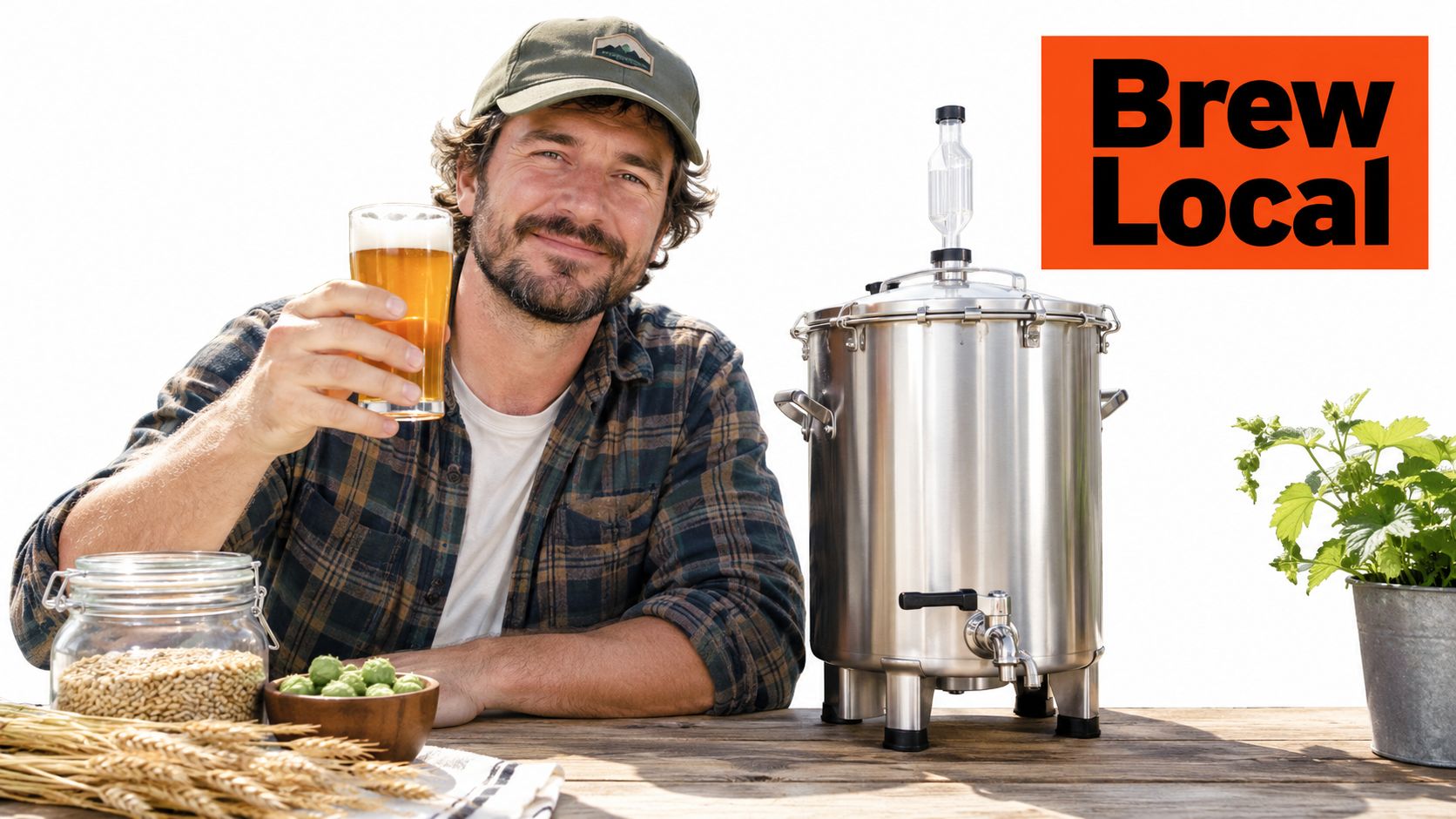
The motivation is positive as well. You may have tasted independent beer at events such as Crafted on the Gold Coast, noticed how freshness changes the experience, and decided to make something with that identity at home. A kit gives you a practical way to explore flavour, support independent Australian businesses and learn what each ingredient contributes.
Water is another hidden quality driver. Regional supplies can differ in mineral balance and chlorine character, so the same recipe may perform differently across Queensland. A kit should leave room to measure, adjust and record water treatment rather than forcing every batch through one fixed process.
Practical rule: Buy equipment that gives you control over the part of brewing currently causing disappointment.
Australia's beer culture adds context. Beer represented 31% of all pure alcohol available for consumption in 2022–23, and Australians were supplied with approximately 78 litres per person aged 15 and over, equivalent to about 3.3 litres of pure alcohol per person, according to the Australian Institute of Health and Welfare's alcohol availability estimates. For a home brewer, the useful takeaway is not volume. It is the expectation that beer should be fresh, distinctive and worth choosing.
Keep the legal boundary in view too. Brewing for personal use is different from producing beer for commercial sale, so anyone moving beyond the hobby should check the applicable requirements before selling or supplying it commercially. A good kit suits your space, water, preferred styles and willingness to monitor fermentation. Quality per batch beats litres per dollar.
Understanding Australia's Beer Culture and Brewing Market
On a hot Gold Coast afternoon, a light pale ale may suit better than a heavy, full-strength brew. Australian beer drinking is shifting in that direction. In 2022–23, full-strength beer accounted for 72% of available beer, its lowest proportion since 2000–01. Mid-strength beer reached 25%, its highest share over the same period, while low-strength beer represented 3.0%. The figures are reported in the AIHW alcohol data.
That change gives kit buyers a practical test. Choose equipment that lets you adjust strength, recipe and fermentation performance instead of locking every batch into one generic result. A lighter beer can work well in Queensland's heat, while a fuller style may suit cooler weather. The kit should support deliberate choices, with enough control to avoid producing more alcohol than you want.
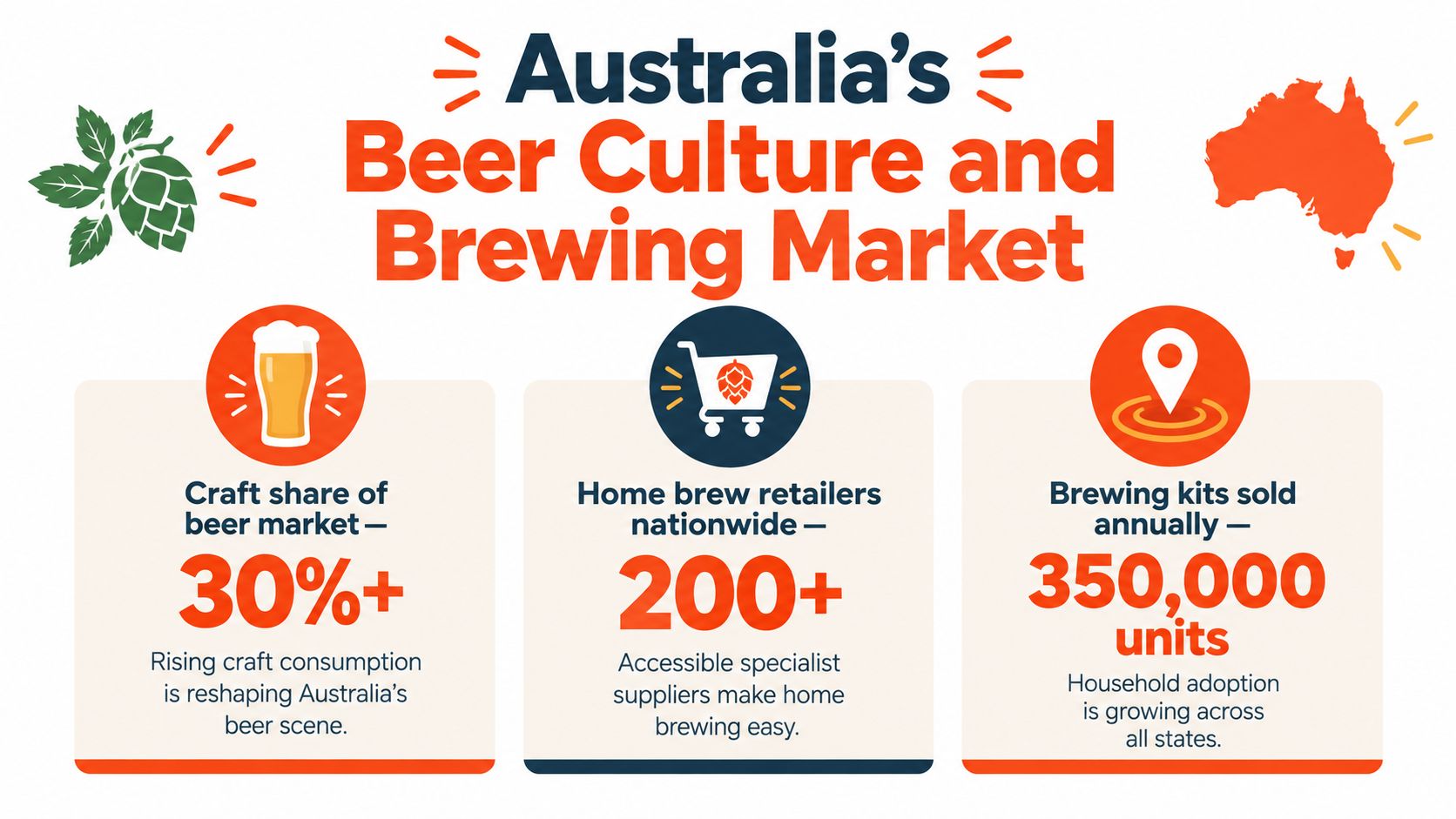
Queensland matters for any Gold Coast-focused recommendation. In the 2022–2023 National Drug Strategy Household Survey, 79% of Queensland residents reported drinking alcohol during the previous 12 months, and 37% drank at least weekly but not every day, according to AIHW Queensland and national alcohol trends data. That broad drinking audience makes batch-strength control and responsible use relevant kit features.
The craft market also raises expectations around freshness, distinctive recipes and repeatable quality. A home setup is not automatically cheaper after ingredients, sanitation, packaging and upgrades. Its value is customisation, learning and freshness, provided the brewer can manage fermentation temperature and adapt water treatment to local supply.
For context on regional preferences, read this guide to the Australian craft beer movement. The right kit supports the styles you enjoy and gives you enough process control to reproduce them. Commercial production is a separate legal step, so selling beer requires more than hobby equipment.
Choosing Between Extract, All-Grain, and Automatic Kits
The three main categories solve different problems. Extract kits shorten the brew day, all-grain systems maximise control, and automatic systems organise several steps inside one appliance. None of them can rescue poor sanitation or uncontrolled fermentation.
Extract kits keep the first batch manageable
Extract brewing is the sensible starting point if you want to learn fermentation, gravity readings, sanitation and packaging without managing a full mash. The malt extract has already done much of the conversion work, so you can focus on clean handling and yeast performance.
The trade-off is recipe flexibility. You can still vary hops and yeast, but the extract's composition limits how precisely you control fermentability, colour and mouthfeel. For a first batch or an occasional brew, that limitation may be a fair exchange for simplicity.
All-grain gives you the deepest control
All-grain brewing suits the brewer who wants to understand why a pale ale finishes dry, why a stout carries more body, or how mash choices affect the final glass. You control the grain bill, mash conditions, water treatment and wort collection.
It also demands more from your setup. You'll need reliable temperature measurement, a practical way to manage the mash and enough room to clean properly. The learning curve is real, but so is the ability to run split batches and compare yeast, hops or water adjustments.
Automatic systems trade manual work for convenience
An automatic all-in-one brewer can make brew-day organisation easier, particularly where kitchen space is limited. Integrated heating and programmed steps reduce the need to move hot vessels around, but automation doesn't guarantee better flavour. Fermentation still happens after the machine has finished its job.
| Kit type | Best for | Quality control | Learning curve | Australian climate fit |
|---|---|---|---|---|
| Extract | Quick, accessible batches | Moderate, with emphasis on yeast and sanitation | Gentle | Good if fermentation is controlled |
| All-grain | Recipe development and experimentation | Highest process control | Steeper | Strong, provided temperature and water are managed |
| Automatic | Organised brew days and repeatability | Good on brew-day steps, variable after fermentation | Moderate | Useful, but only with a separate fermentation plan |
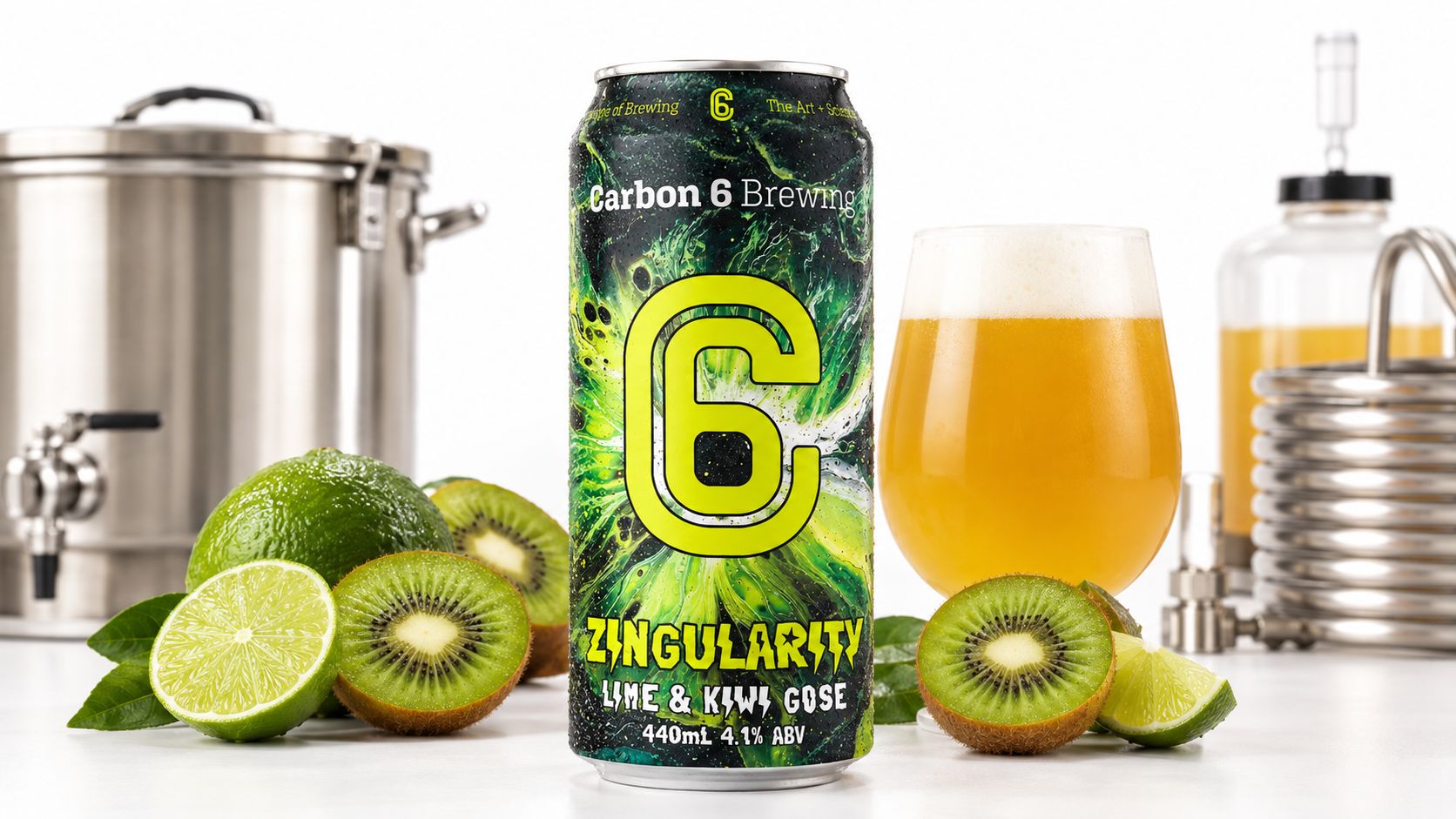
A kit designed around experimentation can be more valuable than a larger unit that makes one standard recipe repeatedly. For example, Zingularity Lime & Kiwi Gose is described as a tangy lime and kiwi gose with subtle salt, an ABV of 4.1%, and four-pack and 16-pack formats. That kind of flavour profile shows why recipe flexibility matters to craft-oriented drinkers.
Temperature Control and Water Chemistry for Australian Brewers
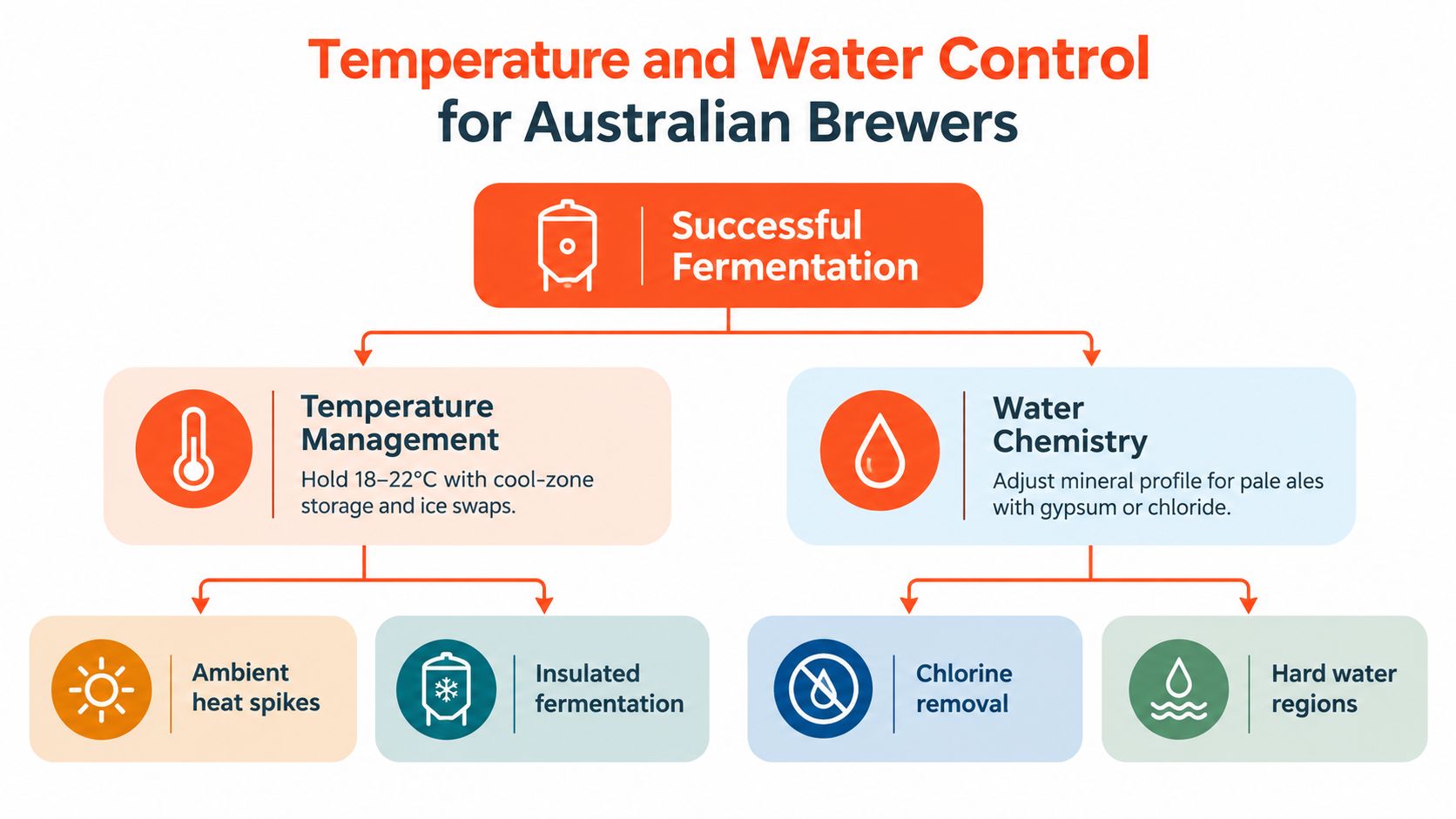
Temperature control is the feature Queensland buyers should prioritise before automation, screens or oversized brew volumes. Fermentation produces its own heat, and a warm Gold Coast room can push the fermenter beyond the yeast's preferred range even when the surrounding air feels comfortable.
A practical benchmark is keeping the fermenter within approximately 16–22°C for the full fermentation period, based on Australian brewing equipment guidance. A 40 W heating wrap can raise fermentation temperature by roughly 5–15°C, depending on insulation and vessel configuration, as outlined by Australian brewing equipment guidance on heating and temperature control.
Build the temperature system around the fermenter
Look for a food-grade fermenter of at least 25 L, an accurate probe and hardware compatible with Australian 240 V supply. The most useful arrangement controls both heating and cooling, using a temperature-controlled refrigerator or insulated chamber with a digital controller.
Passive methods can help, but they demand attention. A damp towel and fan, or an insulated container with ice changes, may reduce heat, yet the result can fluctuate when you're away from home. A controller gives you a clearer process and makes seasonal brewing less dependent on luck.
Queensland reality: A brew system that controls the wort but ignores fermentation is only solving half the problem.
The second hidden driver is water. Municipal supplies vary by region, and chlorine, hardness, alkalinity and mineral content can alter mash performance and flavour. Melbourne brewing guidance identifies calcium deficiency as a recurring issue, while Australian brewing guidance recommends testing source water before adding salts or making recipe adjustments, as explained in this water treatment guide for brewers.
Treat water as a repeatability tool
Start with a local water report or test baseline alkalinity and hardness. A capable all-grain or high-end extract setup should leave room for a calibrated thermometer, hydrometer, sanitiser and measured mineral additions.
Don't add gypsum or chloride by guesswork. Record what you change, use the same process for comparable batches and make one adjustment at a time. That approach gives you a better chance of understanding why a beer changed.
For a practical explanation of the fermentation side, use this guide to temperature control in home brewing. It's the difference between buying a kit that looks capable and building a process that produces repeatable beer.
Top Beer Brewing Kits Available in Australia
There isn't one universal winner. The better question is which package solves your current problem without forcing you to pay for equipment you won't use.
For the first-time brewer
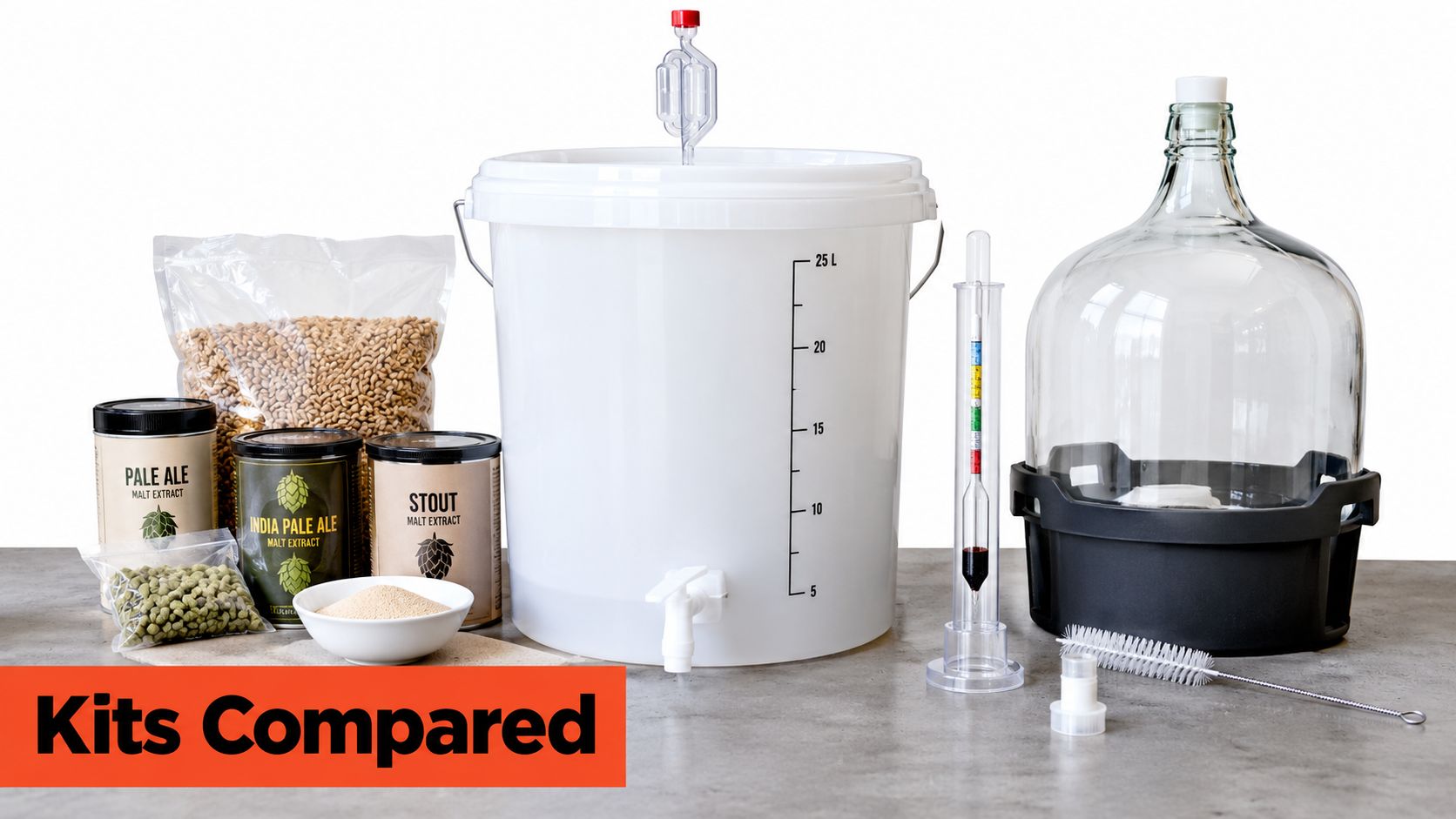
A basic extract starter kit makes sense when your priority is getting through a clean first batch. Look for a food-grade fermenter, airlock, hydrometer, thermometer, sanitiser and a reliable way to package the beer. If the box contains only a fermenter and ingredients, it may look affordable, but you'll still need to assemble the measurement and cleaning essentials.
This type of kit suits an adult who wants a manageable home project and doesn't yet know whether brewing will become a regular hobby. Choose recipes based on the styles you enjoy rather than accepting an unfamiliar generic beer. The kit should also leave a clear upgrade path for temperature control.
For the quality-focused experimenter
An all-grain setup is the stronger choice if you want to adjust grain, hops, yeast and water with intention. The best version isn't necessarily the largest vessel. It's the setup that makes measurements easy, keeps hot-side handling safe and gives you enough flexibility to compare recipes or split a batch.
The weakness is convenience. All-grain brewing takes more preparation and cleanup, and poor water data can undermine the control you thought you were buying. It rewards organised brewers who enjoy the process as much as the finished beer.
For the brewer short on time
Automatic all-in-one systems suit brewers who want a structured brew day and fewer separate vessels. They can help hold mash temperatures and organise heating, but they don't remove the need to cool wort safely, clean thoroughly or manage fermentation.
A larger automated brewer also creates a false sense of progress if your fermenter sits in a hot room. Spend on temperature regulation before chasing extra capacity. In Queensland, a smaller controlled batch can deliver a better result than a bigger uncontrolled one.
For the brewer building a local craft identity
A modular package often wins over a fixed bundle. Start with equipment you'll use every batch, then add a fermentation chamber, better measurement tools or water-treatment capability when your process shows the need.
Buying from an Australian specialist can also make troubleshooting easier. You're more likely to find locally compatible fittings, 240 V equipment and advice that accounts for Queensland conditions. Check delivery arrangements before ordering bulky hardware, particularly if you're outside the main Gold Coast and Brisbane corridor.
The same practical mindset applies beyond the brew setup. The Carbon 6 Can Head Brewer Tee is a 100% combed cotton, 180 GSM unisex tee listed in sizes from M to 3XL, with machine-washable care instructions. It isn't brewing equipment, but it reflects the broader connection between making, drinking and supporting independent beer businesses.
Where to Buy Home Brewing Kits in Australia
Buy the kit from a supplier that can answer questions about replacement parts, sanitiser, yeast storage and temperature control. Australian home-brew shops and specialist online retailers are usually more useful than anonymous marketplace listings because brewing depends on consumables and ongoing troubleshooting, not just the first delivery.
For a Gold Coast brewer, local knowledge has practical value. A Queensland supplier understands warm fermentation rooms, summer shipping conditions and the difference between equipment that works in a cool southern garage and equipment that needs active control up here.
Check the complete ownership picture
Before paying, confirm what the package includes. A low headline price can exclude the hydrometer, thermometer, sanitiser, packaging equipment or compatible controller that makes the kit usable.
Ask yourself:
- Replacement support: Can you obtain seals, tubing and airlocks without importing obscure parts?
- Climate suitability: Does the supplier offer a realistic cooling and heating solution?
- Water process: Can the kit accommodate measured treatment and repeatable testing?
- Shipping practicality: Are bulky or temperature-sensitive items packaged appropriately?
This country brewer perspective on local brewing and independent beer is useful if your purchase is part of a wider interest in Australian craft production. Support shouldn't mean ignoring value, but the cheapest imported bundle can become expensive when parts, advice and upgrades are difficult to source.
The Legal Reality of Home Brewing in Australia
A home brewing kit isn't automatically a stepping stone to selling beer. The important question is what you intend to do with the beer, not how advanced the equipment looks.
The Australian Taxation Office states that beer made for non-commercial purposes with non-commercial equipment isn't excisable and doesn't require an excise licence. However, that beer cannot be sold or offered for sale, as set out in the ATO guidance on beer made for non-commercial purposes.
Use this decision path
- Personal consumption: A non-commercial kit can support hobby brewing for your own use, subject to the applicable rules.
- Gifting: Treat gifts cautiously and don't use gifting as a disguised sales channel.
- Paid sales: Selling beer or offering it for sale moves you beyond the home-brew exemption and requires proper advice.
- Contract production: Using a commercial producer doesn't remove the need to understand licensing, records and obligations for your intended activity.
- Wholesale distribution: Supplying venues or retailers is commercial production, not surplus hobby beer.
The common mistake is assuming that a bigger automated system creates a legal pathway. It doesn't. A hobbyist who develops a popular recipe and wants to supply an event, friend, venue or local business needs to stop and establish the correct commercial structure before taking payment or offering the beer.
Before selling a single batch: Confirm the licensing, excise, record-keeping and state requirements that apply to your intended activity.
For many people, the right answer is to keep the kit as a learning tool and work with a compliant brewery if a recipe shows commercial potential. That separates recipe development from production obligations and prevents an enthusiastic home project becoming an avoidable legal problem.
Making Your Final Brewing Kit Decision
Taste should decide the direction. Australian independent-brewing research identifies taste as the primary driver of craft-beer repurchase across light, medium and heavy craft-drinker segments, while medium and heavy drinkers are willing to experiment through trial, according to the Independent Brewers Association FutureBrew roadmap.
Match the kit to the experience you want:
- Choose extract if you want a straightforward entry into fermentation and packaging.
- Choose all-grain if recipe control, water adjustment and experimentation are central to your interest.
- Choose automatic if integrated brew-day handling saves time, but budget separately for fermentation control.
- Choose modular equipment if you want to learn first and upgrade only when a real process problem appears.
The hidden quality drivers remain the same. Control fermentation temperature, understand your water, measure rather than guess, and sanitise every piece of equipment that touches cooled wort or beer. A cheaper or more automated kit can still be the wrong purchase if it leaves those jobs unresolved.
If you publish or promote content about beer or brewing, remember that Australian alcohol marketing rules apply across websites, email, search, social media and Facebook. ABAC's responsible digital marketing guidance requires platform-neutral compliance, while its alcohol marketing information sheet sets clear limits around minors, irresponsible consumption, risky activities and claims that alcohol improves mood, solves problems or provides health benefits. Keep promotional language adult-focused and centred on brewing, flavour and responsible enjoyment.
Carbon 6 Brewing Pty Ltd produces independent craft beer from Stapylton on the northern Gold Coast and serves Australian customers through direct online sales and local wholesale distribution. Visit Carbon 6 Brewing Pty Ltd to explore its beers and local brewing resources while you plan a kit and process suited to Queensland conditions.