
Best Local Brewery: How to Judge Queensland's Craft Scene
Sep 25, 2026
You're standing in a Gold Coast bottle shop on a Friday afternoon, staring at a cold wall of colourful cans. You recognise a few labels, but you don't know which beer was packaged recently, which brewery actually suits your taste, or whether the local badge means anything beyond clever branding. Ordering online brings the same problem, only with more tabs open and less chance to inspect the stock.
The search for the best local brewery usually isn't about finding an objective winner. It's about reducing purchase risk. You want beer that tastes fresh, suits the occasion, feels worth the spend, and lets you support an independent business without sacrificing quality. Taproom atmosphere can help, but it won't rescue a beer that doesn't fit your palate or arrives tired.
Finding Your Best Local Brewery on the Gold Coast
A good buying decision starts with a more useful question than “Which brewery is ranked first?” Ask, “Which brewery is most likely to give me the experience I'm chasing?”
That experience changes with the moment. A crisp lager can be the right call for a barbecue or a hot afternoon. A hazy IPA might suit someone chasing tropical fruit and a fuller mouthfeel. A mixed pack can work better than a single style when friends have different preferences. None of those choices is automatically superior. The right brewery makes the decision easier by showing what its beers taste like and how recently they reached the customer.
There's also an emotional layer. Local beer buyers often want reassurance that their money is supporting people, not an anonymous multinational portfolio. They want a brewery with a point of view, a recognisable local connection, and enough discipline to deliver the same quality beyond one memorable taproom visit. Authenticity matters, but consistency proves it.
What the label can't tell you
A polished can and a busy venue create a strong first impression. They don't tell you whether the beer has spent too long in distribution, whether the brewery understands the style, or whether the same recipe will taste right on your next order.
Look for practical signals:
- Style clarity: The description should tell you whether the beer is crisp, bitter, fruity, dry, creamy, light or full-bodied.
- Packaging information: A brewery that makes freshness visible gives buyers a better basis for choosing.
- Direct access: Online ordering, local pickup or a brewery venue can shorten the path between packaging and drinking.
- Independent recognition: Awards can provide useful third-party reassurance, provided you understand what was judged.
- Range balance: A brewery should offer more than one flavour direction, without hiding weak core beers behind constant novelty.
Practical rule: Choose the beer that matches your palate and occasion first. Choose the venue second.
Queensland has a substantial independent brewing foundation. The Queensland craft beer strategy recorded nearly 90 independent craft breweries as at September 2018, employing an estimated 1,700 people and contributing about $62 million annually to the state economy. Craft-brewing revenue grew at 9.7% a year between 2013 and 2018, compared with 2.1% for beer manufacturing overall, according to Deloitte's Australian craft beer analysis. That history helps explain why Gold Coast drinkers can approach local beer as a serious category, not a novelty shelf.
What Makes a Local Brewery Truly the Best
A strong local brewery earns repeat purchases through several connected details. Taproom atmosphere is one part of the equation, but it sits beside freshness, beer quality, consistency, community roots and value. The practical test is whether those qualities still matter after the first visit.
Six signals worth checking
Freshness comes first. Ask how the brewery sells and stores its beer, and look for packaging information where it's available. Hoppy beers are especially dependent on handling and time, while lagers reward clean storage and careful presentation. Freshness isn't a sentimental benefit. It affects what you taste.
Beer quality needs style discipline. A pale lager should be judged differently from a hazy IPA or a stout. Look for balance, aroma, mouthfeel and finish within the intended style, rather than treating intensity as proof of quality. Carbon 6's explanation of what craft beer means is a useful starting point for readers who want to understand the category beyond the label.
Consistency protects your confidence. One excellent pint is encouraging. A brewery becomes part of your regular rotation when the next can delivers the same recipe with the same care. Check whether the core range remains dependable while seasonal beers provide room for experimentation.
The taproom should build community, not distract from the beer. Friendly staff, useful tasting guidance and a welcoming space can turn an unfamiliar brewery into a place you return to. But a great venue isn't evidence that every beer on the list will suit you.
Direct-to-consumer availability reveals commitment. A brewery that sells through its own shop, venue or online store gives drinkers a closer connection to the product. It can also make mixed packs, local pickup and freshness questions easier to handle.
Value means fit, not the lowest price. A beer can offer better value because it arrives fresh, matches your preferred style and avoids a disappointing carton. Buyers should compare what they will drink, not just the number on a shelf ticket.
| Criterion | What to Look For | Why It Matters |
|---|---|---|
| Freshness | Recent packaging and sensible storage | Protects aroma, flavour and finish |
| Beer quality | Balanced recipes and clear style execution | Helps you choose with confidence |
| Consistency | Reliable core beers across purchases | Turns curiosity into loyalty |
| Taproom experience | Welcoming staff and useful guidance | Builds trust and community connection |
| Community roots | Local ownership and local participation | Keeps spending connected to the region |
| Value | Suitable formats and honest product information | Reduces waste and improves the buying decision |
A brewery's wider food and hospitality culture can also matter when you're planning a gathering. If you're making a themed spread, a resource such as how to make grass jelly can help you add a non-beer element without turning the venue visit into a generic pub outing.
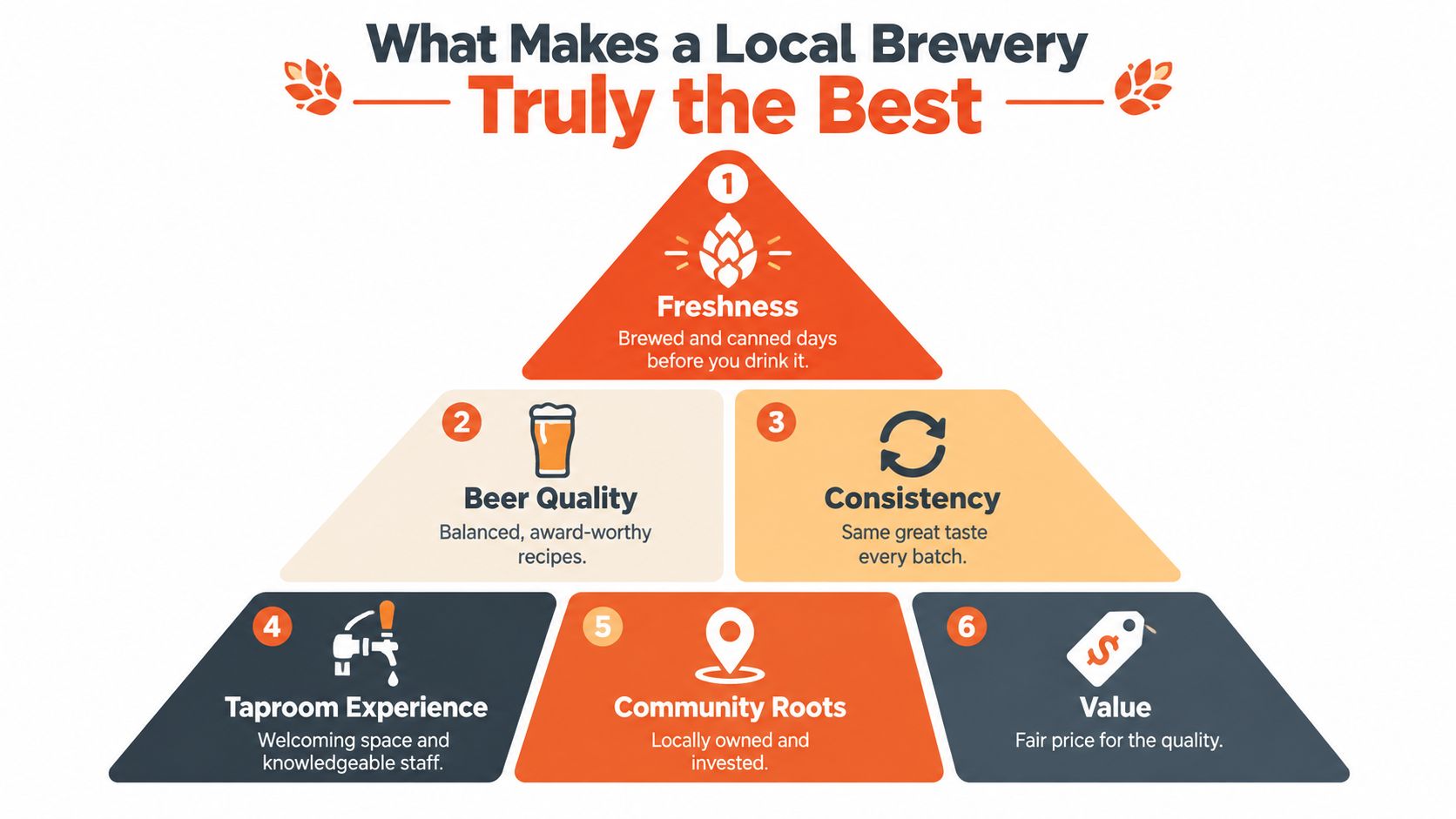
The hierarchy is deliberate. Freshness and quality sit at the top because they determine whether the beer delivers. Experience, community and value matter more when the liquid itself is right.
How Queensland Drinkers Actually Choose Their Brewery
Queensland drinkers don't have exactly the same preferences as drinkers elsewhere in Australia. CGA research reported that 39% of beer drinkers enjoy craft beer, with Queensland preferences showing a distinct tilt towards pale lager. The research found that 30% of Queensland craft drinkers preferred pale lager, compared with 23% in New South Wales, and that Queensland drinkers averaged 2.8 beer styles, compared with 3.2 in New South Wales. Those figures appear in CGA's comparison of NSW and Queensland beer habits.
| Preference | Queensland | New South Wales |
|---|---|---|
| Beer drinkers who enjoy craft beer | 39% | Not stated in the cited comparison |
| Preference for pale lager | 30% | 23% |
| Average number of beer styles | 2.8 | 3.2 |
The useful lesson isn't that Queensland drinkers should restrict themselves to lager. It's that a local brewery needs to understand the drinking context around it. Warm weather, outdoor gatherings and relaxed social occasions can make crisp, refreshing styles especially relevant, while more adventurous beers still have a place for drinkers who actively seek fruit, bitterness, roast or texture.
Style fit is a practical filter
A broad tap list isn't automatically a better tap list. If a brewery makes several styles but none feels balanced or repeatable, variety becomes clutter. Conversely, a focused range can work extremely well if it gives regular drinkers a dependable option and offers occasional releases for exploration.
The strongest buying process is simple:
- Start with your usual preference. If you normally reach for a pale lager, begin there rather than forcing yourself into the brewery's most unusual release.
- Choose one adjacent style. Move from a lager to a pale ale, or from a pale ale to a hazy IPA, so you can compare without losing your bearings.
- Notice the finish. Ask whether you'd happily drink another, not just whether the first sip was attention-grabbing.
- Record what worked. A quick note on bitterness, sweetness, body and aroma makes future online orders less random.
Local connection also influences confidence. Queensland's independent brewing sector has enough depth that buyers can support a nearby producer while still demanding technical standards. The emotional reward comes from alignment, but the repeat purchase comes from a beer that earns its place in the fridge.
Why Freshness and Direct-to-Consumer Distribution Change Everything
Freshness is one of the least visible quality signals in craft beer. A customer can see the can design, read the tasting notes and visit a taproom, but they often can't see how long the beer has travelled or waited before reaching the fridge.
Direct-to-consumer sales shorten that chain. They don't guarantee that every beer is perfect, but they give the brewery more control over stock movement, product information and the customer relationship. Local pickup can reduce handling further, while online ordering can make cartons or mixed packs practical for people who already know what they enjoy.
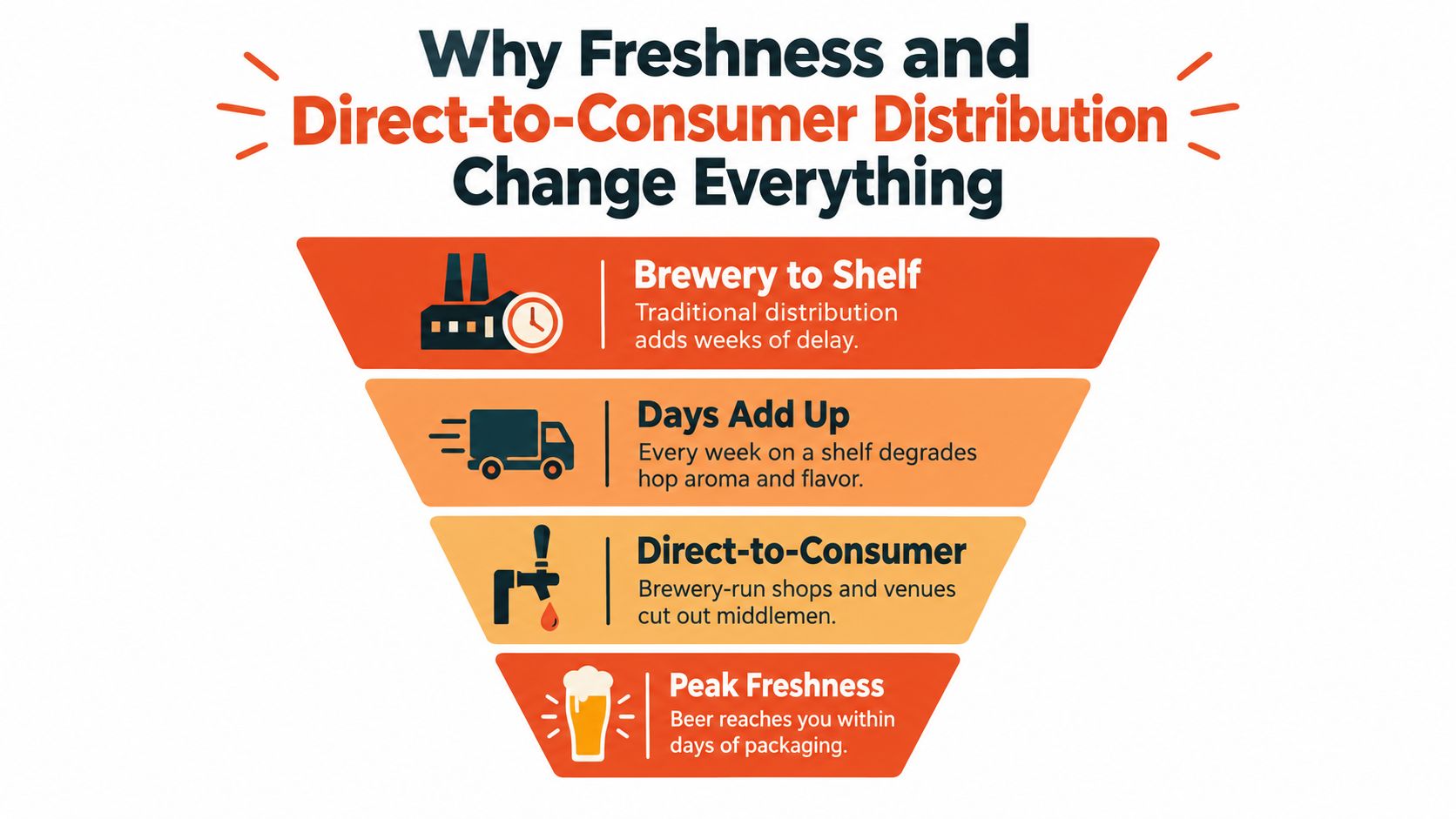
Why distribution affects the pour
A beer moving through several commercial stages may spend longer in storage before it reaches you. That matters most for styles where aroma and freshness are central to the experience. Buyers should therefore treat the route from brewery to glass as part of the product, not an invisible logistics detail.
Australian craft beer remains a small but growing category, with craft share rising within the broader beer market and revenue around $1.9 billion in 2025–26, according to IBISWorld's craft beer production overview. The same source describes a Queensland independent-brewer ecosystem increasingly shaped by digitally savvy consumers and direct-to-consumer channels. That shift gives drinkers more ways to compare breweries by freshness, format and convenience.
Carbon 6's guide to craft beer shelf life is useful reading before you order a carton. It encourages a more informed conversation about storage and timing, rather than assuming that every packaged beer performs identically.
A concrete example is Peach & Mango - Oat Cream IPA | Craft Beer. It's described as a hazy oat cream IPA with peach, mango and rolled oats, using HPA-033, Citra and Galaxy hops, lactose and fruit additions. The product is listed at 7.2% ABV and in 440 mL cans, with four-pack and 16-pack formats stated for online or brewery purchase.
That example also shows why style fit matters. A drinker seeking a crisp, restrained lager may not want a creamy, fruit-forward IPA, while someone chasing tropical aroma and a fuller body may find the format more relevant. Direct ordering is valuable only when the beer suits the person placing the order.
Awards and Quality Signals That Separate Good from Great
Awards are useful when you read them as evidence of judged performance, not as a substitute for your own palate. A medal can indicate that brewers submitted a beer to a defined judging process and that the entry performed well against the relevant criteria. It doesn't mean every beer from that brewery will suit every drinker.
The award itself needs context. Look for the competition name, the category, the year and whether the claim comes from the brewery or an independent organiser. “Award-winning” without those details is weak shorthand. A named result is more useful because it gives you something specific to verify.
Carbon 6 has a clear recent signal
Carbon 6 Brewing was crowned Best New Brewery at the 2025 Royal Queensland Awards and states that it also won a range of gold, silver and bronze medals for its craft beers, as recorded on the brewery's official website. That creates a credible reason for curious drinkers to sample the range, particularly when they combine the award information with style descriptions and freshness details.
The sensible interpretation isn't “every Carbon 6 beer is automatically the best choice”. It's that the brewery has received meaningful recognition while establishing itself as a new presence in the Queensland scene. A drinker can use that recognition as a filter, then judge the beer against personal preferences.
How to use medals without outsourcing your judgement
- Verify the result: Check the brewery's named award and the relevant year.
- Match the category: Compare a lager award with lager expectations, not with the standards of a different style.
- Taste for repeatability: Ask whether the beer works beyond the novelty of the first tasting.
- Check the buying route: A medal doesn't remove the need to think about packaging, storage and delivery.
- Keep your own notes: Your favourite beer may be different from the judges' favourite, and that's perfectly reasonable.
For a deeper look at how Australian beer competitions fit into the buying conversation, Carbon 6's guide to craft beer awards provides additional context. The practical takeaway is straightforward: awards can reduce uncertainty, but freshness and style fit still decide whether you'll reorder.
Where to Find and Support Your Best Local Brewery
Start with the brewery's own channels, then test what you find against the actual buying experience. A polished social feed can show releases and events, but it won't answer every practical question. Look for a current tap list, clear style descriptions, direct ordering options, pickup details and evidence that the brewery stays engaged with its local audience.
A practical discovery routine
Visit the taproom when you want guidance. Ask staff what's freshest, which beer is closest to your usual preference and what differs between the core range and limited releases. Good staff won't push the strongest or strangest option automatically. They'll help you make a better match.
Order direct when convenience matters. Compare mixed-pack suitability, delivery information, local pickup and packaging formats. The cheapest single can isn't always the best value if the beer doesn't suit you or the order leaves stock sitting around unused.
Use festivals and local food communities as tasting opportunities. These settings let you compare several breweries in one outing, but pace yourself, eat properly and arrange safe transport. Sampling broadly is useful only when you can remember what you tasted.
Support the beer you'd buy again. Local purchasing has more meaning when it becomes a repeat habit rather than a one-off novelty visit. Choose a brewery because its beer, service and community presence fit your priorities.
Queensland's independent sector has meaningful economic weight. A Queensland independent brewing industry submission states that approximately 97 independent breweries operated in the state and that the sector contributed $588 million to the Queensland community while providing 6,715 jobs in the 2023–24 financial year, as reported in the Queensland Parliament submission. The same submission notes that independent craft breweries account for about 51% of brewing-industry employment while holding less than 8% of market share. Those figures show why independent breweries can matter locally even when they don't dominate national shelf space.
Responsible purchasing matters too. Alcohol marketing and sales need to respect adult audiences and responsible consumption. ABAC's Responsible Alcohol Marketing Code applies to digital and social media communications, packaging, product names and retailer advertising. Queensland guidance also says promotions must not encourage excessive or rapid drinking, depict people under 25, or suggest alcohol creates significant mood or social success, as set out in Queensland Government alcohol advertising guidance. Online and social advertising should take reasonable steps to reach adults, with ACMA's alcohol advertising explainer noting the 80% adult-audience standard where suitable age controls aren't available.
The best local brewery isn't just the venue with the loudest branding. It's the one that gives you a clear reason to return: beer that suits your taste, arrives in good condition, earns trust through quality signals and contributes to the local brewing community. Carbon 6 Brewing Pty Ltd operates from Stapylton on the northern Gold Coast, giving locals and other Australian buyers a direct route to an independent Queensland brewery.
Visit Carbon 6 Brewing Pty Ltd to explore locally brewed beers, review the range by style and choose an order or brewery visit that suits your preferences. Use the freshness, quality and style-fit checks above, then make your next Gold Coast craft beer purchase with confidence.