
Winter Beer Variety Packs: A Buyer's Guide
Sep 26, 2026
You've got a Queensland winter evening sorted. The barbecue's cooling down, the Gold Coast air has finally lost its daytime heat, and you're staring at a mixed beer box wondering whether it should be packed with stouts, reds, lagers, or a bit of everything. The wrong choice leaves half the case sitting untouched. The right one gives you an easy run of dinners, catch-ups and quiet nights without forcing every beer into the same dark, heavy mould.
Winter beer variety packs should match the Australian drinking context, not copy a northern-hemisphere winter menu. Queensland winters are mild, so a balanced pack needs rich beers for cooler nights, but also fresher options for warm afternoons and casual meals. This guide will help you choose styles, assess pack value, compare online ordering with local pickup, and build a case that earns its fridge space.
What Winter Beer Variety Packs Actually Are and Who They're For
A winter beer variety pack is a curated mixed case for cooler-weather drinking, not a box of whatever stock needs clearing. It may contain six, eight, 12 or 24 cans or bottles, bringing together darker malt beers, seasonal ales, amber styles and a few fresher options. The best packs create a useful progression from one beer to the next, so you can match the drink to the meal, temperature and occasion.
That approach fits Queensland better than a stout-heavy northern winter template. A Gold Coast evening might suit a rich stout with dinner, while the following afternoon still calls for a crisp lager or bright red ale. A carton made entirely of heavy dark beer can lose its appeal quickly. A balanced pack gives you choice without turning the fridge into a puzzle.
A mixed case also gives newer drinkers a practical introduction to craft beer. The plain-language guide to what craft beer means explains how malt, hops, yeast and brewing choices shape different results. You do not need to memorise style guidelines. Start with the flavours you enjoy, such as roast, caramel, spice, bitterness, sweetness or a clean finish, then use those preferences to choose the next can.
Who gets the most from a mixed case
- The seasonal fridge builder gets dependable options for weeknight meals, warm afternoons and cooler weekends.
- The gift buyer can give a more interesting present than a single carton, especially to someone who enjoys unfamiliar beers.
- The host can offer guests different weights and flavours instead of assuming everyone wants the same IPA.
- The craft-curious drinker can sample several styles without committing to a full case of one label.
A brewery-built seasonal pack and a DIY mixed six-pack serve different purposes. The brewery-built option usually follows a deliberate tasting journey. A bottle-shop mix gives you more control, but you must balance styles, freshness and total cost yourself.
Australian retailers already sell mixed packs as regular tasting and gifting formats. Beer Cartel lists an Australian Craft Beer Mixed 12 Pack at A$69.99, a Hottest 100 Aussie Craft Beers Mixed 24 Pack at A$149.99, and a Limited Edition Australian Craft Beer 24 Mixed Pack at A$129.99. The range shows how pack size can move from smaller exploration formats to larger cases for sharing or extended fridge variety (Beer Cartel's mixed beer pack collection).
Winter Beer Styles Worth Knowing Before You Buy
Don't judge a Queensland winter beer by colour alone. Dark beer can be light on the palate, and a deep amber ale can deliver plenty of warmth without the sweetness or roast of a stout. Read the style name, flavour description and ABV together.
The main style families
Winter warmers and stronger ales bring dried fruit, caramel, spice and a fuller malt body. They suit a slow dinner or a cooler night when you want something warming rather than refreshing. Look for an ABV around 5.5% to 8%, then check whether the beer leans sweet, spicy or hop-forward.
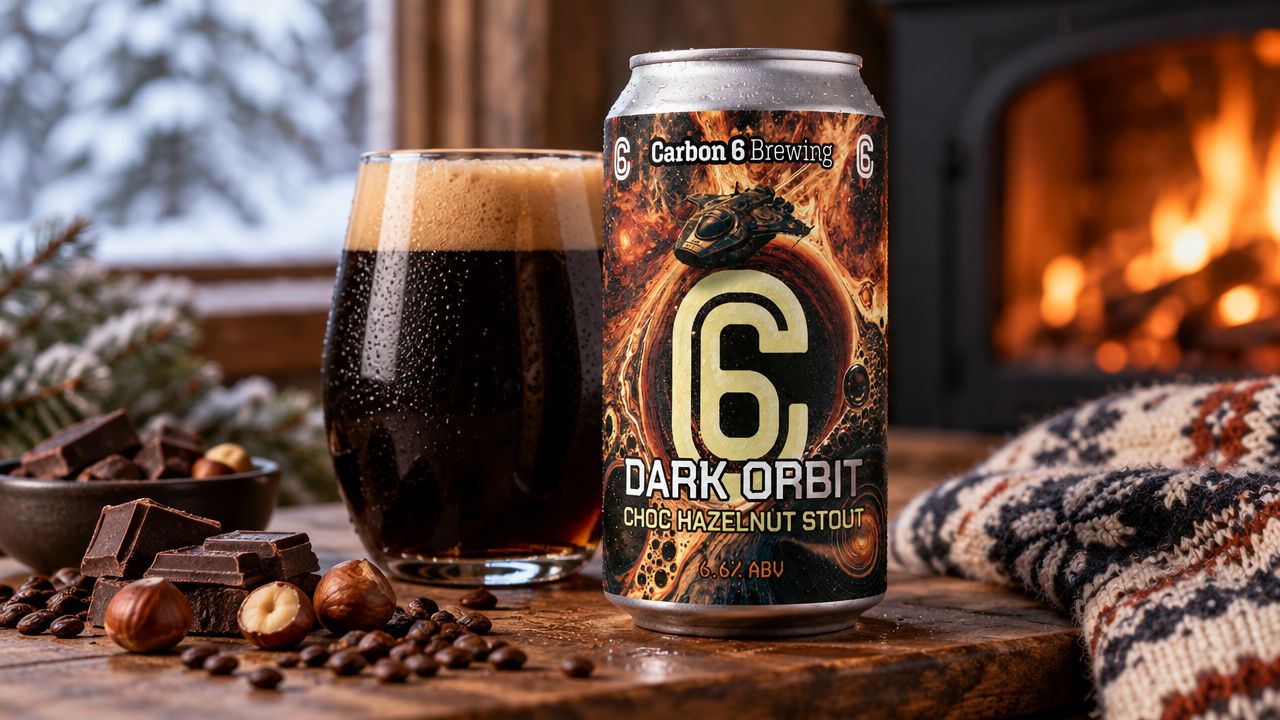
Milk stouts and imperial stouts cover a wide range. Milk stouts use lactose for a creamy texture with roast, cocoa and coffee notes, while imperial versions push further into alcohol warmth, dark fruit and intense roast. Milk stouts commonly sit around 4% to 6% ABV, while imperial stouts can move well beyond that. For an approachable Queensland option, Dark Orbit Stout BAR is a 4.4% ABV milk stout with roasted malt, subtle chocolate notes, a creamy finish and lactose, available in four-packs.
Porters are the bridge between dark lagers and heavier stouts. Expect chocolate, toast, coffee and a firm malt backbone without necessarily getting the creamy sweetness of lactose. Standard porters are useful middleweights, while Baltic porters offer more dark fruit and alcohol warmth, often around 6% to 9% ABV.
Belgian-style dark ales use yeast and spice as much as malt to create flavours such as raisin, plum, clove and pepper. They're excellent with slow-cooked food and hard cheese, but they can dominate a pack if every other beer is also sweet or fruit-driven.
Dark lagers, including schwarzbier and dunkel, are the answer for drinkers who want colour and malt flavour without a heavy, sugary finish. They tend to show toast, bread crust, cocoa or gentle roast with a clean lager finish, often around 4% to 6% ABV.
For mild Queensland winter weather, don't overlook session-strength amber ales, red ales and hop-forward winter beers. Around 4% to 6% ABV, they offer caramel, biscuit, citrus or pine with enough bitterness to stay refreshing. They're better suited to a weeknight barbecue than a dense imperial stout.
| Style | Flavour Cues | ABV Range | Best For |
|---|---|---|---|
| Winter warmer | Caramel, dried fruit, spice | 5.5% to 8% | Slow dinners and cool nights |
| Milk stout | Roast, chocolate, coffee, cream | 4% to 6% | Dessert, roast meats and relaxed sipping |
| Imperial stout | Dark fruit, intense roast, alcohol warmth | Above 6% | Long evenings and small pours |
| Porter | Toast, chocolate, coffee, dry malt | 4.5% to 7% | A balanced dark beer with dinner |
| Dark lager | Toast, bread crust, gentle roast | 4% to 6% | Drinkers who dislike sweetness |
| Amber or red ale | Caramel, biscuit, citrus, pine | 4% to 6% | Queensland winter afternoons and barbecues |
Match the beer to the occasion, not to an imaginary snowstorm. Heavy stouts belong in a pack, but they shouldn't own the whole pack.
How to Build a Winter Mixed Pack That Actually Works
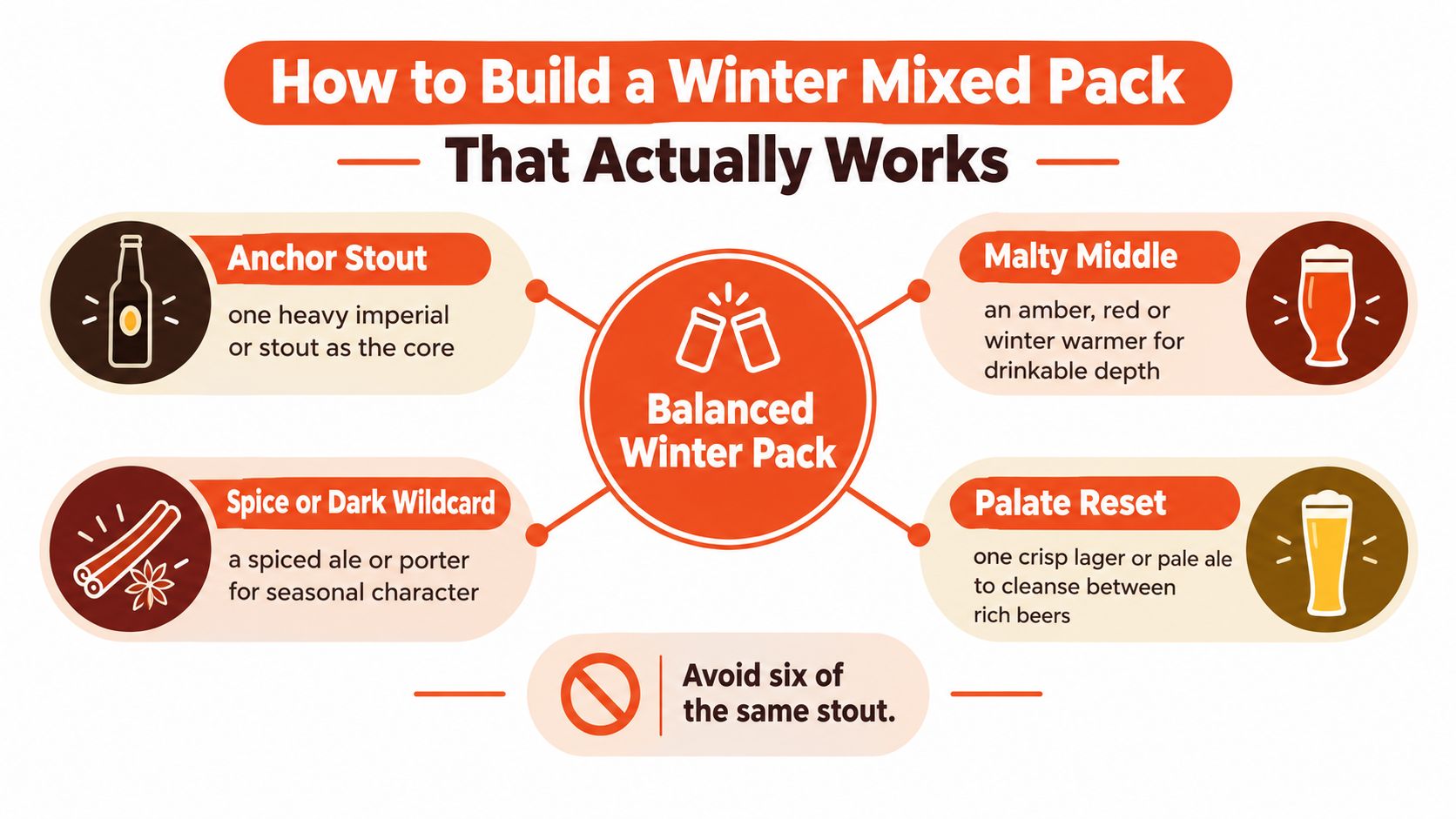
The easiest way to build a good pack is to use three or four style clusters, then assign each beer a job. This stops you from buying six versions of the same idea and gives every pour a place in the week.
Start with an anchor. Choose one stout, imperial porter or richer dark ale that carries the most weight. Buy two of these if you're building a larger pack, because the anchor gives the case its winter identity.
Add a malty middleweight, such as a porter, dark lager, amber ale or Belgian dark ale. This beer should still feel seasonal, but it needs to be easier to drink with pizza, sausages or a midweek meal.
The third slot is a lighter contrast. A red IPA, mild, pale ale or crisp lager resets the palate between richer beers. In Queensland, this isn't a compromise. It's what makes the pack useful when the temperature lifts.
Finish with one wildcard. That could be a spiced winter warmer, fruited sour, smoked beer or experimental seasonal release. One unusual beer creates discovery. Three can make the pack feel unfocused.
Use the portion rule
For a mixed case, try:
- Two anchor beers for the deepest malt and roast.
- Two middleweights for dependable meals and sharing.
- One or two lighter beers for warmer conditions and palate relief.
- One wildcard for the beer that gives everyone something to talk about.
Avoid putting two aggressively hop-forward beers beside each other if the rest of the pack is already bitter. Likewise, don't pair several sweet dark beers and call it variety. Different colour isn't enough. You want differences in body, bitterness, sweetness, aroma and finish.
Brewer's rule: A balanced winter pack should give you a clear next choice after every beer.
Pre-built packs still deserve an audit. Read the actual style list before checkout, count the repeated style families, check the ABV spread and ask whether you'd choose each beer individually. The practical advice in this guide to mixed beer packs in Australia is useful when a retailer's product name sounds more varied than the contents.
Pack Sizes, Pricing and Whether Larger Packs Offer Better Value
In a Queensland winter, a larger pack can look tempting, especially when the per-beer price drops. It also commits your money, fridge space and drinking schedule to beers you may not enjoy.
Australian retailers sell mixed formats from six packs through to 12-, 16-, 24- and 25-pack bundles. Beer Cartel's mixed-pack collection shows the range, from a A$69.99 Australian Craft Beer Mixed 12 Pack to larger 24-pack options priced at A$129.99 and A$149.99 (Australian mixed-pack examples from Beer Cartel). BoozeBud lists a 25-can winter mix at A$99.99, reduced from A$169.99, with 25 different beers and seasonal autumn positioning (BoozeBud's Discount Winter Mixed 25 Pack).
Calculate the pack price per beer, then add delivery. After that, inspect the contents. A low unit price means little if several cans sit untouched while Queensland weather swings back to warm afternoons. A smaller, focused pack often gives better value because it rotates faster and leaves less unwanted beer behind.
| Pack Size | Best For | Approx. Per-Beer Range (AUD) | Freshness Window | Fridge Footprint |
|---|---|---|---|---|
| 6 pack | A short tasting run or weeknight trial | Varies by retailer and beer | Fast rotation | Small |
| 12 pack | A long weekend, couple or small gathering | Varies by retailer and pack | Moderate rotation | Medium |
| 16 or 24 pack | Gifting, entertaining or shared household stock | Varies by retailer and mix | Slower rotation | Large |
Use drinkability per dollar as the final test. Check how many beers suit your meals, sharing plans and local climate, not just the carton size or sale label. For retailers comparing a larger case, a trial pack or a themed gift bundle, TikTok idea generator pricing can help assess promotional content and campaign concepts without confusing marketing activity with customer value.
Serving, Storing and Pairing Your Winter Pack
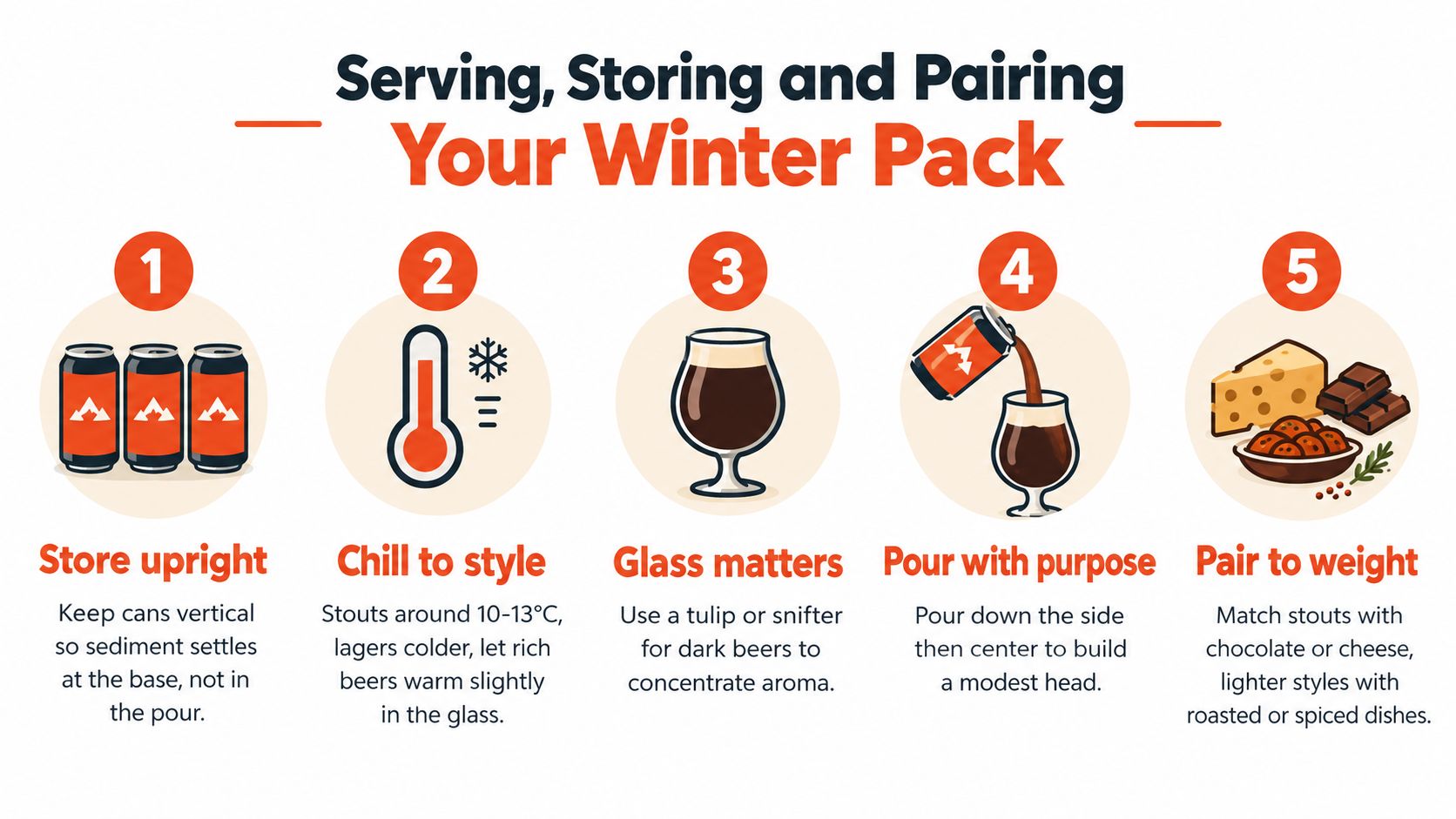
A good pack can still disappoint if every beer is served straight from an overworked fridge. Start by keeping cans upright in a cool, dark place, away from heat and direct light. Upright storage helps sediment settle at the base, and rotating older beer forward makes it less likely to disappear behind a newer delivery.
Don't store cans on top of the fridge. That spot gets warm and experiences more temperature movement than the main compartment. For a deeper explanation of temperature control and storage habits, use this beer temperature and storage guide.
Serve by style
Stronger stouts and winter ales open up around 10°C to 13°C, while hoppier winter pilsners are better around 6°C to 8°C. You don't need laboratory equipment. Let a dark beer sit in the glass for a few minutes, taste it, and decide whether more warmth brings out chocolate, coffee, fruit or spice.
Glassware helps, but it doesn't need to become a hobby. A tulip concentrates aroma on darker beers. A nonic pint gives porters and amber ales a clean, practical shape. A weizen glass suits wheat-based winter beers by giving the foam and yeast character room to develop.
Pair by weight
Roast beef and lamb can handle a stout's roast and body. Grilled sausages work with a spicy winter warmer or amber ale. Aged cheddar brings out the malt and roast in porter, while lighter roast chicken or fish suits a winter pilsner.
For a casual gathering, serve the lighter beer first, then move into amber and dark styles. That keeps the palate fresh and lets the stronger beers feel satisfying rather than exhausting. If you're organising a birthday or winter get-together, birthday plans from EventUploader can help with the wider event planning, while the beer pack handles the tasting component.
Pouring advice: Serve stout slightly warmer than you expect, but pour a modest first glass. You can always add more.
Where to Buy Winter Beer Variety Packs in Australia
Queensland buyers have two practical routes. Order online from a brewery or specialist retailer when range and convenience matter most. Buy locally when you want cold beer now and advice from someone at the taps. For a subtropical winter, local access can be especially useful because a pack built around heavy northern-hemisphere styles may feel wrong on a warm afternoon.
Online ordering opens access to seasonal releases, brewery-built mixes and a wider spread of styles. It also suits anyone planning a larger order. An Australian industry snapshot found that 8.3% of households purchased liquor online in the previous year, according to a 2026 NielsenIQ report described in Parliament of Australia alcohol home-delivery study and market context. Online buying is an established channel, so delivery terms, pack design and shipping policy deserve the same attention as the beer itself.
Online ordering suits planned purchases
Check delivery zones before choosing a seasonal case. Freight rules and costs vary, and an attractive product page can hide poor value after shipping. Some Australian retailers set free-shipping thresholds. Compare the delivered total, not only the headline pack price.
A larger mixed pack can make freight more reasonable, provided you have fridge space and a clear plan for drinking it. Read the full style list, check packaging or best-before information, and confirm that the beers suit the season. In Queensland, give priority to packs that include a crisp lager, pale ale or lighter amber alongside darker beers. That keeps the selection useful through both cool evenings and warm winter days.
Local pickup suits immediate drinking
Gold Coast bottle shops, Brisbane craft beer retailers and Queensland brewery taprooms trade some range for speed. You can leave with cold cans, avoid freight and ask staff what is pouring well. Local pickup also fits a smaller, style-specific purchase, especially when you want to test a few beers before committing to a larger case.
A mixed six-pack can work as an accessible discovery format, particularly when it combines local brewery releases rather than repeating one style. Check the current product details before buying, since listings and seasonal ranges change.
Whichever channel you choose, alcohol marketing and sales require adult-focused handling. ABAC covers alcohol marketing communications in Australia, including content and placement, with parts 3 and 4 applying across communications (ABAC Responsible Alcohol Marketing Code). Queensland guidance prohibits advertising that encourages rapid or excessive drinking, appeals strongly to minors, depicts people under 25, links alcohol with achievement or mood change, or shows drinking around high-alertness activities such as driving, boating or swimming (Queensland Government alcohol advertising guidance).
Digital placement matters as much as the copy. On platforms without age controls, ABAC placement standards require an audience reasonably expected to be at least 80% adults, and marketing must not appear beside content primarily aimed at minors (ACMA explanation of alcohol advertising under the Free TV Code). That covers social campaigns, retail media and paid digital promotion, not only the product page.
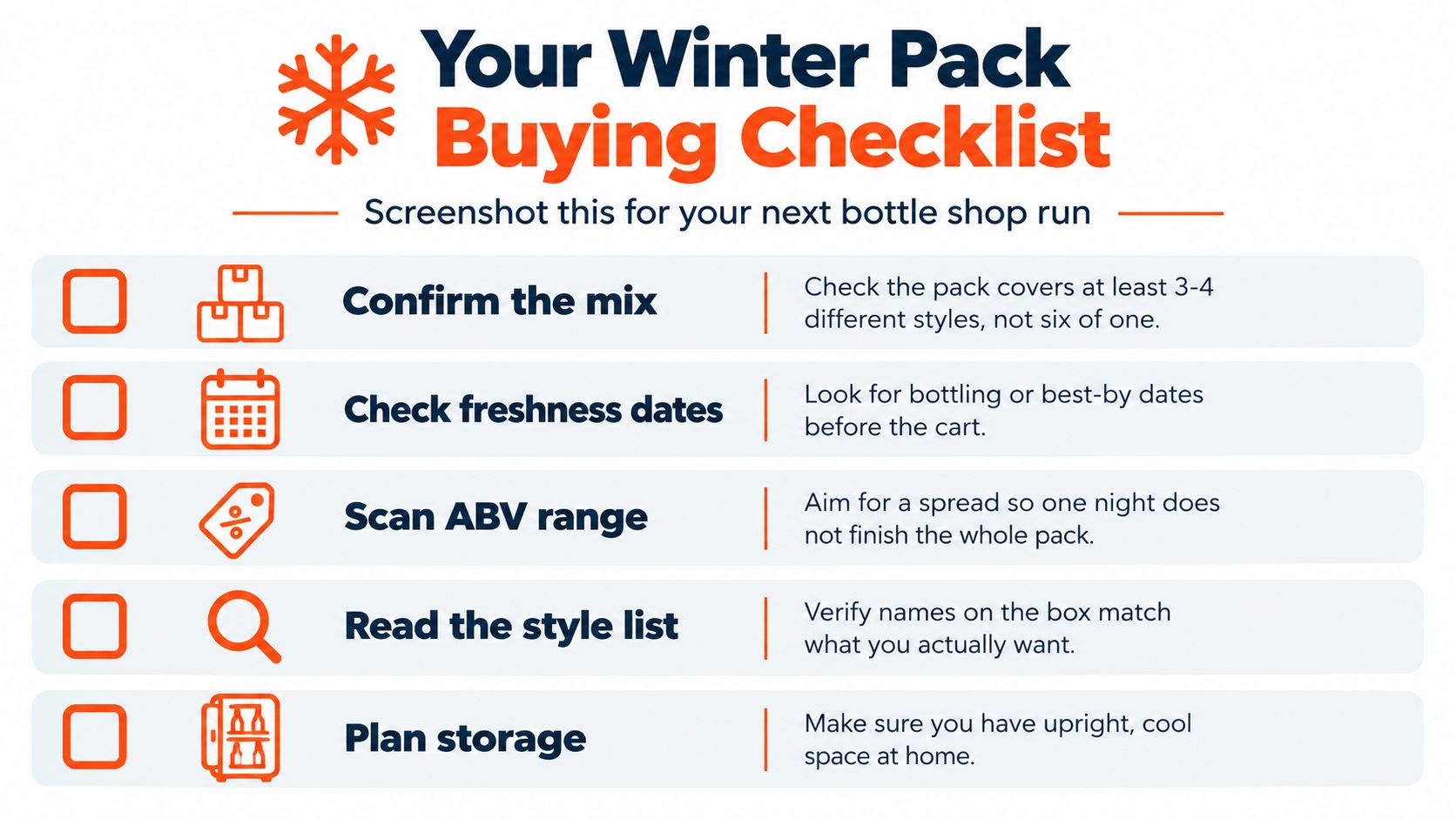
Your Winter Pack Buying Checklist
Use this list before you click checkout or carry a mixed case to the counter. It keeps the decision anchored to your drinking habits instead of the loudest seasonal label.
- Confirm the occasion. Decide whether the pack is for weeknight dinners, a long weekend, gifting or entertaining, then choose a size that matches the window.
- Choose the climate fit. For Queensland, include at least one fresh, lighter option so the pack still works when winter serves up a warm afternoon.
- Build the cluster. Aim for an anchor stout or porter, a malty middleweight, a lighter amber or hop-forward beer and one wildcard.
- Check the actual style list. Don't trust “winter mix” on the box alone. Read every beer name and remove packs built around one repeated family.
- Scan the ABV spread. A varied range gives you options for a quiet meal, a social session and a slower after-dinner pour.
- Lock the pack size. Buy six for a focused trial, 12 for a useful household mix, or 16 to 24 when you're sharing, gifting or deliberately stocking up.
- Check freshness information. Look for packaging or best-before details before buying, especially when the pack contains hop-forward beers.
- Calculate delivered value. Add freight, check any threshold and compare the final cost with a smaller local purchase.
- Plan storage first. Make room for upright cans in a cool, dark spot before the delivery arrives.
- Choose the first pairing. Match a stout with roast meat or aged cheddar, an amber with sausages, or a lighter lager with chicken or fish.
- Set the serving plan. Chill lighter beers more firmly and let rich styles warm in the glass towards their intended range.
- Check the marketing context. If you're promoting a pack, use adult targeting and review the copy, imagery and placement against ABAC and Queensland requirements.
The best winter beer variety packs aren't the darkest or largest. They're the ones that fit your weather, your fridge, your food and the people drinking them.
Carbon 6 Brewing Pty Ltd offers seasonal and mixed craft beer options from its brewery in Stapylton on the northern Gold Coast, including four-packs of its 4.4% ABV Dark Orbit Stout. Visit Carbon 6 Brewing Pty Ltd to see the current range, check pack options and choose a Queensland-friendly winter mix.