
Best Session Lager in Australia: How to Choose One
Oct 16, 2026
The biggest mistake people make with a session lager is treating it like a maths problem. They chase the lowest ABV on the shelf and call it a day, then wonder why the beer feels thin, flat, or forgettable halfway through the carton. A better session lager keeps you interested sip after sip, which means flavour, freshness, and serving condition matter just as much as alcohol strength.
Australia's beer market still gives lager plenty of room to matter, with beer making up 31% of all pure alcohol available for consumption in 2022–23, second only to wine at 42% (AIHW alcohol data). That doesn't mean every lager is worth your money. It means the good ones need to earn their place by drinking clean, holding shape, and staying lively in the glass.
What Actually Makes a Lager Sessionable
A session lager isn't just the weakest beer in the fridge. It's the one that gives you enough flavour to keep going without tiring you out, and enough balance to stop you chasing the next drink too quickly. That's why flavour-to-strength ratio beats raw ABV every time.
Start with strength, but don't stop there
In Australia, beer at or below 3.0% ABV sits in a different excise band to beer above 3.0% and up to 3.5%, which is one reason that strength matters commercially as well as sensorially (ATO excise rates). But a lower number on its own doesn't make the beer better. A 3.0% lager can drink more satisfyingly than a 4.5% beer if it's built with enough malt shape, clean fermentation, and proper hop balance.
What you want is a beer that stays interesting over time. Too little body and it tastes watery. Too much body and it starts feeling heavy before the second can. The sweet spot is a lager that still tastes like beer after the first few gulps, not a compromise that just happens to be weak.
Judge the balance, not the badge
Bitterness and malt weight are the two levers that usually decide whether a lager feels crisp or dull. A lean beer with a dry finish invites another sip, while a flabby one lands like half-finished cereal. You don't need a lab sheet to spot the difference, you just need to ask whether the beer feels finished or smeared across the palate.
Practical rule: if the beer tastes clean, finishes dry, and still has enough malt and hop character to hold your attention, it's sessionable. If it disappears the moment you swallow, it's just light.
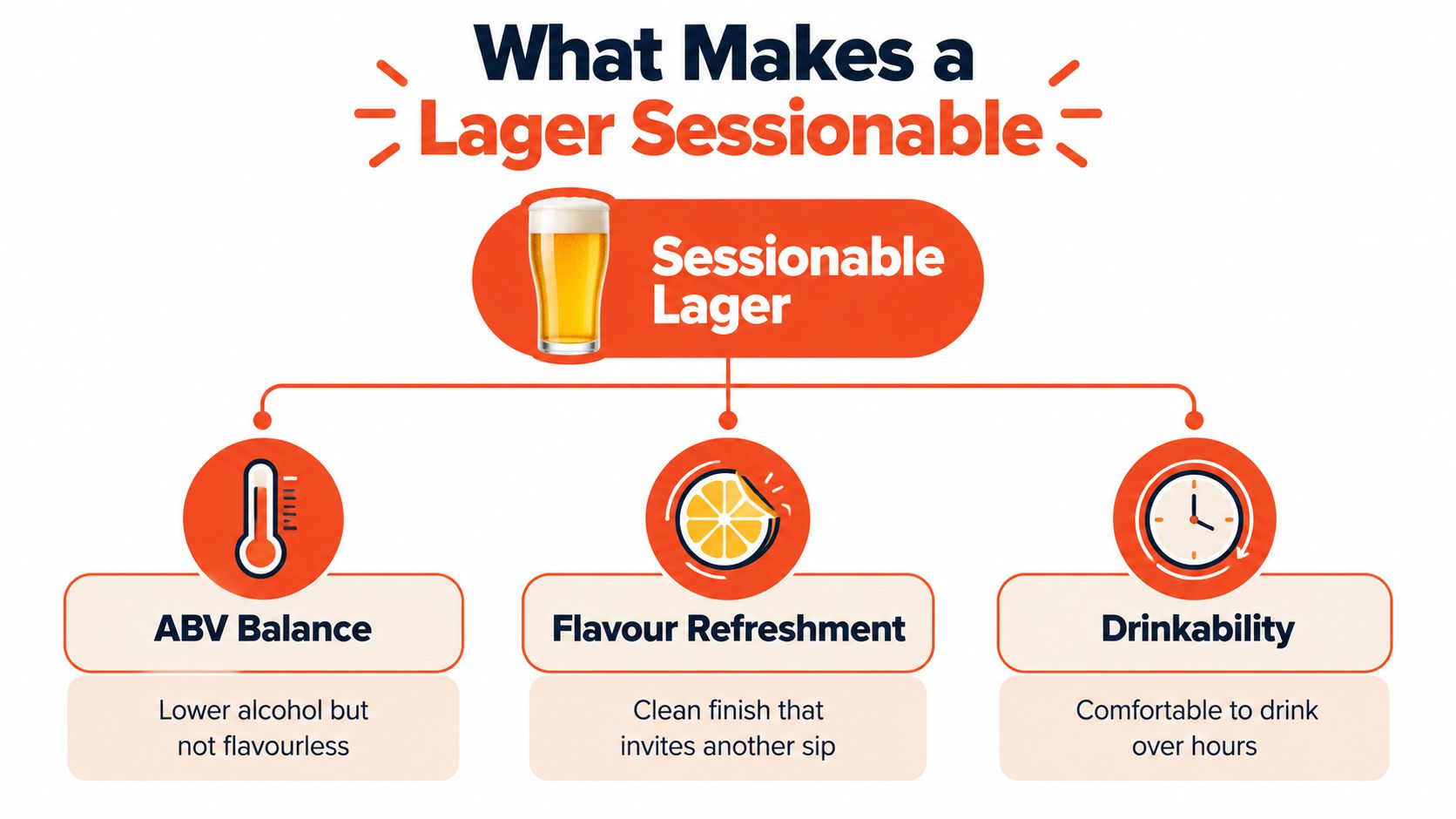
The working test is simple. ABV balance keeps the beer easy to pace. Flavour refreshment keeps it worth drinking. Drinkability is what is left when the glass is empty and you want another one.
If you want a clean comparison between lager and ale behaviour, the basics are laid out well in this carbon 6 guide to the difference between ale and lager. Once you get that distinction straight, sessionability becomes a much easier call at the shelf or on tap.
Flavour Markers Worth Judging a Session Lager On
Freshness is the first thing I look for, because a dull lager usually isn't a recipe problem, it's a handling problem. A bright lager should lift out of the glass straight away, with a clean nose and a head that behaves like it means business. If the aroma is already hiding, the beer's probably past its best before you've even cracked it.
What to check in the glass
Start with the foam. It doesn't need to be huge, but it should form cleanly and sit there for long enough to do its job. Then look at the aroma, because a session lager that's still alive will smell crisp rather than dusty, stale, or oddly sweet.
Hop character matters too, but not in a “pile on the hops” way. Noble hop spice gives a lager a tidy, old-school snap, while brighter modern hopping can add a bit of citrus lift without turning it into an IPA impersonator. The point isn't to chase intensity, it's to make sure the finish stays alert.
A lager that still smells bright after pouring is usually going to drink brighter as well. If the aroma feels muted, the rest of the beer usually follows.
Don't ignore malt shape
Malt is what stops a session lager becoming air with bubbles. A good pilsner malt profile brings a little sweetness and cracker-like grain character, which gives the beer some spine. Too little, and it feels hollow. Too much, and it starts behaving like a light dinner instead of a beer.
That balance matters even more in warm weather, because hot days make thin beer feel thinner and dull beer feel duller. This is why a well-made session lager can absolutely beat a stronger one. It's not about how much alcohol you're getting. It's about whether the beer stays clean, structured, and worth another mouthful.
If you want a deeper read on hop character, the clearest brewery explainer is this Carbon 6 guide to hops in beer. Keep it in mind when you're scanning a tap list, because the hop line on the menu often tells you more than the marketing blurb.
A Quick At-Home Test You Can Run Tonight
You don't need a tasting panel to sort out a decent session lager from a dead one. Pour three beers side by side, keep the setup simple, and judge them in ten minutes. The trick is to ask one sharp question at each stage and stop yourself from overthinking it.
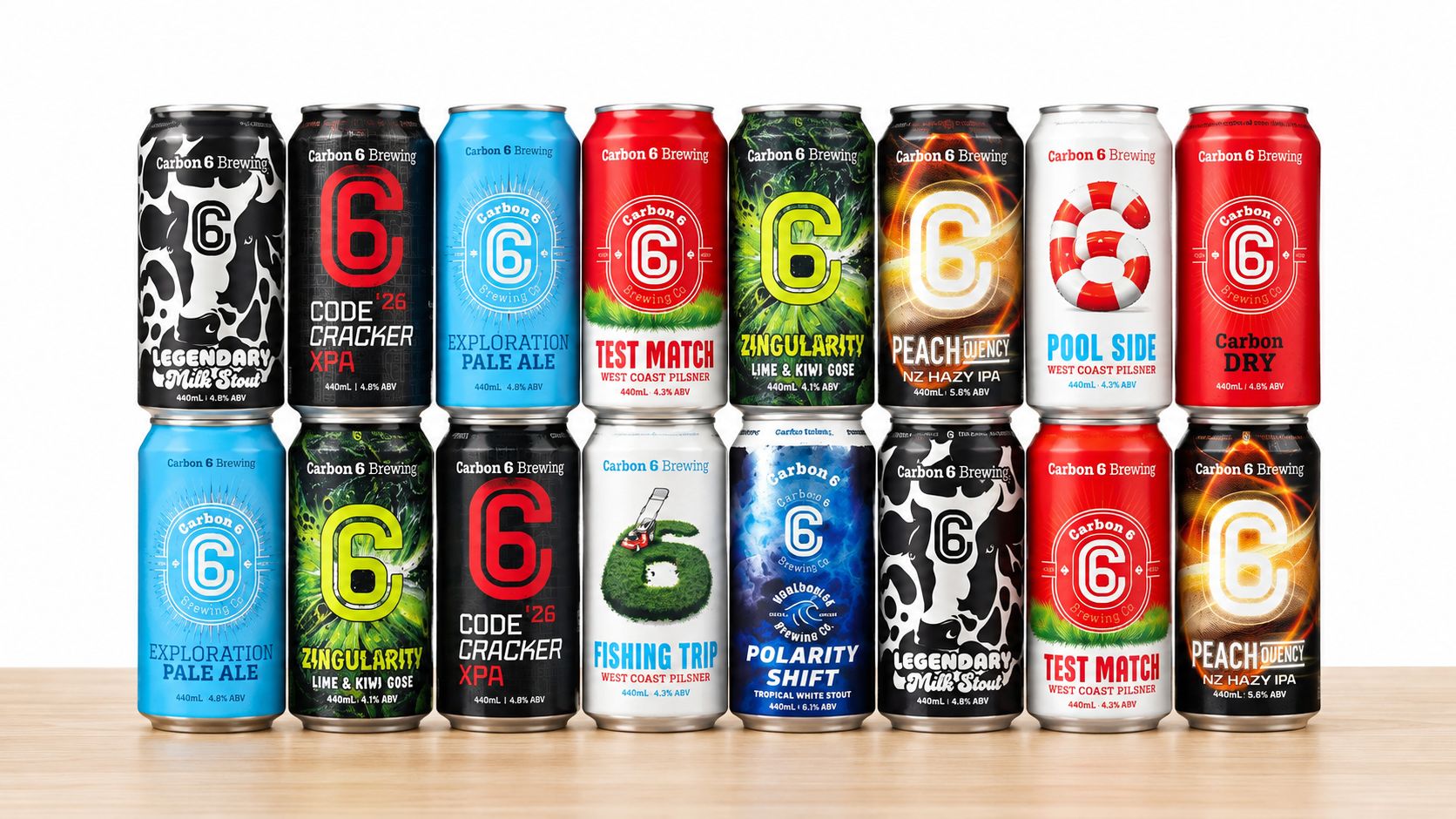
If you want something broad to compare against, the Mixed 16-Pack is a straightforward way to taste across styles without locking yourself into one case.
Pour, sniff, sip
First, chill the beer properly and use a clean glass. A lager that's served too cold shuts down its flavour, and one that's too warm starts showing its rough edges. You're aiming for balance, not numbness.
Within 30 seconds of pouring, smell the beer and ask yourself one thing, does it still smell bright? If yes, keep going. If no, you've already learned something useful. Fresh lager should smell clean, not tired.
Check the middle of the drink
Halfway through the can or bottle, take a proper sip and let it sit across the tongue for a moment. Ask whether the beer still tastes lively or whether it's already fading into plain fizz. A good session lager keeps its shape halfway through, not just at the first pour.
Then pay attention to the finish. Does it ask for another sip, or does it tell you to stop? That's the difference between a beer that carries an afternoon and one that just fills a glass.
Finish with the warm-up test
As the beer comes up in temperature a touch, the flaws show themselves. If it stays crisp, that's a good sign. If it turns papery, muddy, or overly sweet, the lager probably wasn't much chop to begin with.
Use that quick test on two or three beers and you'll start spotting the pattern fast. The best session lager is usually the one that keeps earning its place as the glass warms, not the one that only shines for the first two mouthfuls.
Matching a Session Lager to the Moment
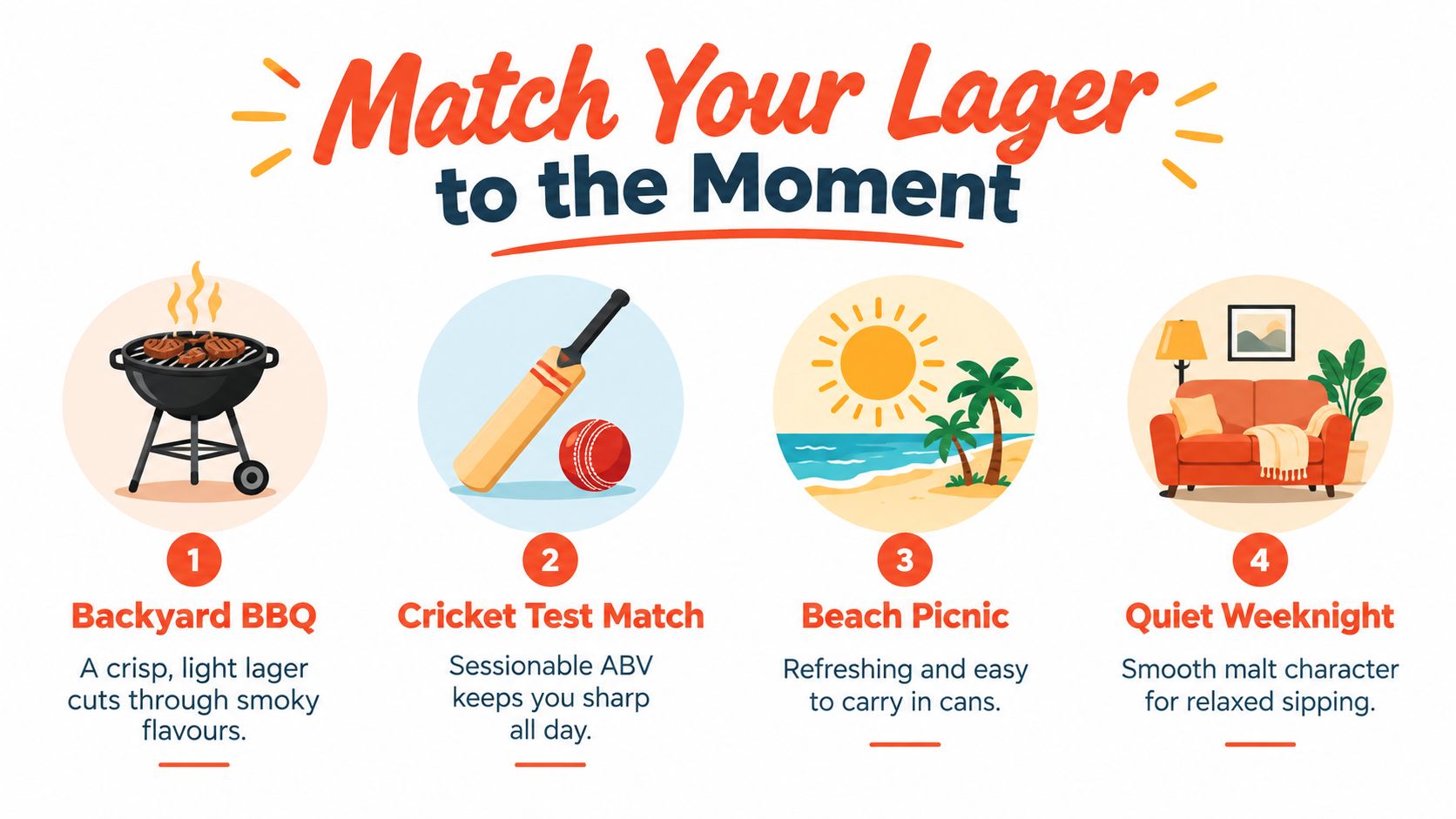
Context changes everything. The right lager for a backyard barbecue isn't always the right lager for a long couch session, and neither is the right pick for a salt-and-sun afternoon at the beach. The best call is the beer that fits the pace of the day without flattening the mood.
Backyard BBQ
For smoky snags, charred chicken, and spice off the grill, I'd reach for a lager with a bit more malt depth and enough bitterness to cut grease. A beer that's too delicate gets bullied by barbecue. A beer that's too heavy turns the meal into a slog.
A clean, crisp lager handles the job best when it still has some backbone. You want refreshment, but you also want the beer to stay present after the first sausage roll. That's the trade-off, and it's worth getting right.
Cricket on the couch
A long cricket day calls for something that doesn't wear you out. Keep the lager clean and dry, and don't go chasing aggressive flavours. The beer should stay in the background while you watch the innings unfold.
A sensible can size matters more than people admit. Bigger formats are fine if the beer is fresh and you're going to drink it at a measured pace. If not, smaller serves can be the smarter move.
Beach or boat
At the beach or on the boat, brightness wins. A lager with a lively finish and a bit of citrus lift works well because it cuts through salt, glare, and heat without feeling clumsy. Cans are the obvious choice here because they're easier to carry and less fussy in casual outdoor settings.
Practical rule: the hotter and more active the setting, the cleaner and more refreshing the lager should be.
If you're thinking in health terms, keep them separate from taste terms. Sessionable is not the same thing as low-risk drinking. The NHMRC benchmark cited in ABAC materials is no more than four standard drinks on any one day and no more than ten standard drinks per week (ABAC compliance resource). That's guidance, not a challenge.
Buying Smart Cartons, Mixed Packs and Online Orders
Buying a session lager well comes down to four things, freshness, shipping cost per can, minimum order thresholds, and whether you can trust the stock you're getting. A cheap carton can turn expensive fast if the beer arrives warm, stale, or not quite what you wanted. That's why the smartest buyers think like brewers, not bargain hunters.
Carton, mixed pack, or local pickup
A single carton from a local brewery gives you the cleanest read on freshness, especially if you can collect it yourself. You can check the date coding, ask how the beer's been stored, and take it home without dragging it through too much transit time. If you're in Queensland, that heat exposure matters more than people like to admit.
Mixed packs are useful when you're still working out what kind of lager suits you. They spread your risk and let you compare flavour profiles without committing to a dozen of the same beer. They're also handy if you want a few styles in the fridge for different occasions.
Online orders need a different lens
Home delivery is convenient, but convenience only works if the brewery handles stock properly. If the packaging's been sitting around, or the beer's spent too long in transit, the pint in your glass will tell on the process. That's why delivery from a local brewery can make more sense than a slightly cheaper interstate box.
For product structure and bundling logic, ServeApps' bundling pricing insights are a useful read because they show why packs often make more sense than single-item thinking. The principle is simple enough, the right bundle should match how people drink, not just how a store wants to move stock.
Where Carbon 6 fits
If you want a straight session option from Carbon 6 Brewing Pty Ltd, Carbon Mid sits at 3.0% ABV and comes in 440 mL cans or 50 L kegs direct from Stapylton. That makes it relevant for buyers who want a lower-strength lager without drifting away from proper beer character. It fits the same buying logic as any good session lager, freshness first, then the rest.
The Freshness Question Most Best-Of Lists Skip
Most best-of lists get lazy here. They rank by medals, name recognition, or whatever looked good at a tasting, then ignore the thing that decides whether the beer is worth opening at home. In the session lager category, freshness is brutal, because a simple lager gives you nowhere to hide.
Date code, cold chain, and drink window
Read the date coding before you buy. If a seller can't tell you when the beer was packaged, or the cans have been sitting in warm light, move on. A clean lager will expose stale handling faster than a hop bomb or a barrel-aged beer ever will.
That's also why shelf life matters more than people think. The Carbon 6 guide on craft beer shelf life makes the basic point clear, beer doesn't stay identical forever, and lager usually shows the drift quickly. Buy with a drinking window in mind, not as if the carton will improve while it sits around.
Temperature and serving conditions
Serve the beer cold, but not ice-cold. Too cold, and you mute the malt and hop detail that makes a lager worth paying for. Too warm, and the clean finish starts slipping away. That small window matters more with lager than with many louder styles because the beer's character is subtler.
If you're buying online, check how the store presents the product page. Clear stock details, current packaging info, and proper section structure aren't just web niceties. Online Store 2.0 sections are a good reminder that good product pages should help buyers understand what they're getting before they click. In beer terms, that means clear product copy, accurate format info, and enough detail to judge freshness risk.
The real reason people pay more
People don't pay extra for a good session lager because they want a weaker beer. They pay for confidence. They want the beer to arrive in good nick, taste the way the brewer intended, and hold up in the glass when the weather gets hot or the afternoon runs long.
That's the filter. Forget chasing the lowest ABV label and start asking whether the lager has enough flavour, freshness, and balance to justify the slot in your fridge. If it does, you've found your session beer.
If you want a lager that's built for Australian drinking conditions, not just shelf talk, have a look at Carbon 6 Brewing Pty Ltd. Carbon 6 Brewing Pty Ltd makes fresh, independent beer for Queensland drinkers who care about flavour, format, and getting the beer home in good shape, and their range is worth a look if you're chasing a session lager that actually drinks like one.