

Craft Ale Glass: What It Is and How to Use It
Oct 22, 2026
You've opened a craft ale you were looking forward to, grabbed a glass from the cupboard and poured. It's perfectly drinkable, but something feels different from the brewery pour. Before you blame the beer or buy a cupboard full of specialist glassware, it helps to understand what a craft ale glass can do, and what it can't.
Why Your Beer Deserves a Proper Glass
That mismatched kitchen tumbler isn't necessarily the problem. It might be clean, comfortable and perfectly suitable for the beer you've chosen. The trouble starts when you expect every glass to give you the same tasting experience.
Think about what you notice before taking a sip. There's the beer's colour, the head above it and the aroma as you bring the glass towards your nose. A craft ale glass is glassware chosen to support that experience, rather than merely hold the liquid.
There's no need to treat it as precious equipment. For a home drinker, the useful question is whether the glass helps you notice what you enjoy about the beer without making pouring, washing or storage a hassle.
A useful upgrade, not a rescue mission
Perhaps you want to pick out the fruit character in a pale ale. Perhaps you'd rather take your time with a rich stout without committing to a large serve. Those are sensible reasons to think about glassware.
Less useful is the fear that you're somehow drinking beer incorrectly unless the brewery's logo appears on the bowl. You don't need matching merchandise to appreciate a well-made ale.
- Choose for your habits. A glass you enjoy holding and regularly use is more practical than a delicate showpiece.
- Start with the beer. Consider its condition and serving guidance before assuming a different vessel will solve a disappointing pour.
- Keep the purchase proportionate. Try suitable glassware you already own before buying a specialist version.
Practical rule: Buy a glass to solve a tasting or serving problem you can name, not because the label promises perfection.
For curious drinkers, the benefit is confidence. You can make a deliberate choice, notice the result and decide whether it suits your palate. That's more useful than memorising a supposedly correct glass for every beer you might encounter.
What Makes a Craft Ale Glass Different
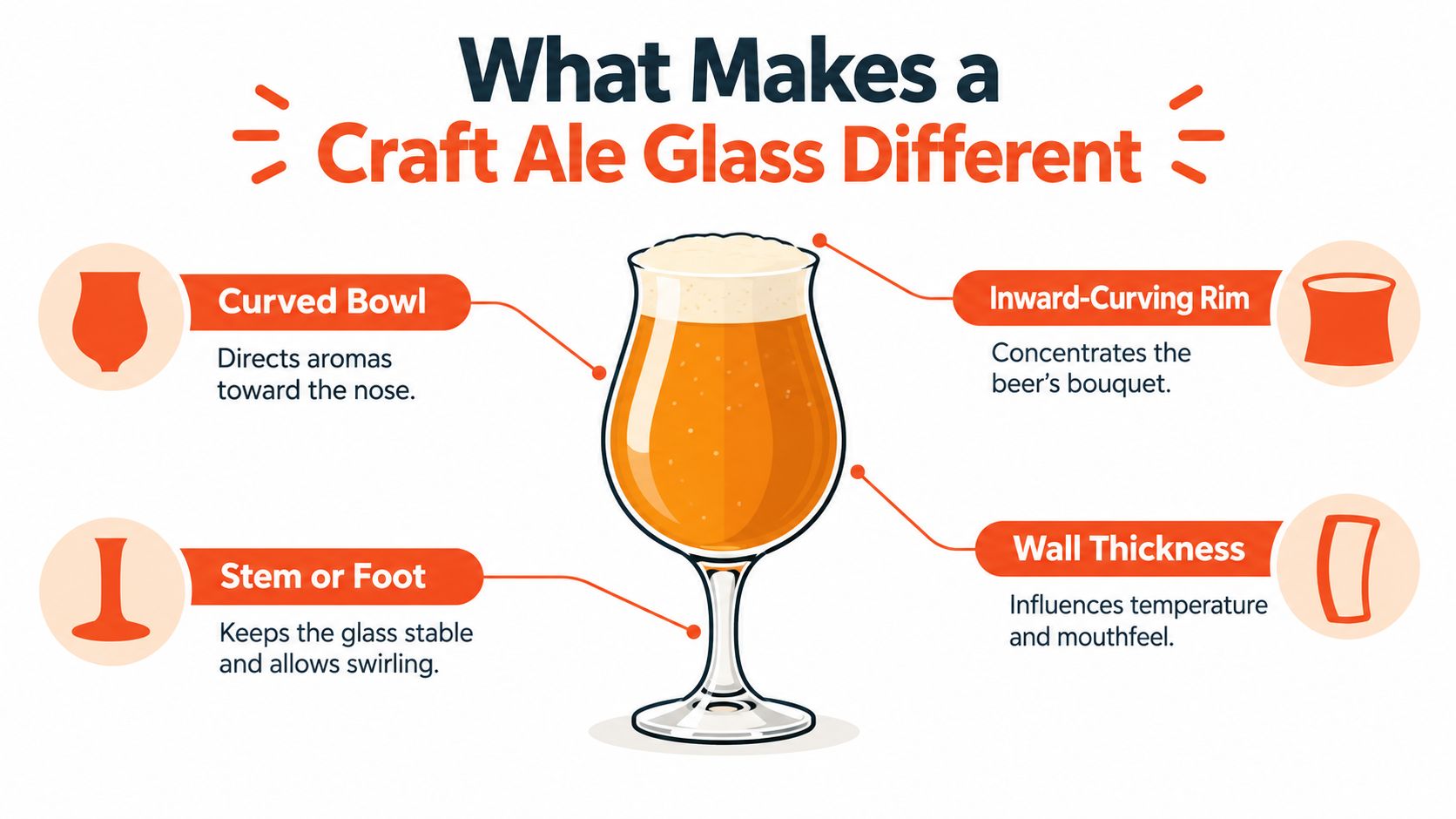
Look past the branding and concentrate on the profile. A curved bowl, a gently narrowed opening and a comfortable stem or foot are useful starting points. None is a guarantee of quality, but each gives you something concrete to assess.
Published technical discussion identifies shape and wall thickness among the glass characteristics that influence beer's warming, carbonation loss, foam stability, colour perception and evolving aroma. A practical all-round specification is a moderately thin, curved glass with an inward-turning rim and a stem or narrow foot, as described in this technical overview of beer glass characteristics and service.
Read the shape from top to bottom
- Curved bowl. This gives the beer room beneath the opening and provides a useful profile for aromatic ales.
- Inward-curving rim. The narrower opening helps concentrate volatile aromas near your nose. It shouldn't be so tight that drinking feels awkward.
- Stem or foot. You can hold the glass without wrapping your palm around the bowl. Check that the base feels stable on your table.
- Wall thickness. Moderately thin glass can be pleasant to drink from, but don't sacrifice everyday durability for an exceptionally fine rim.
Capacity needs a closer look
In Queensland, a 425 mL schooner is a familiar reference point. Australia's glass-size history includes NSW standardisation in 1946, followed by metric equivalents including the 285 mL middy, 425 mL schooner and 570 mL pint, documented in this history of Australian beer-glass measures.
That makes a schooner-sized option a sensible place to start for flavour-forward ales, but the label alone isn't enough. Check the stated millilitres, and establish whether the listed capacity is measured to the brim or to a serving line.
A glass filled to its absolute capacity leaves no practical room for head. Choose the vessel around the portion you want to serve, not around the assumption that every can must fit in a single pour.
How to Use a Craft Ale Glass Properly
Good service starts before you open the beer. Set out a cool, dry glass free from detergent and grease, then check the beer's own storage and serving advice. A consistent routine is more useful than an elaborate pouring ritual.
Prepare, pour and pause
- Inspect the glass. Look for residue, lipstick, greasy fingerprints and chips around the rim. Don't use damaged glassware.
- Skip the freezer. Frozen glassware can encourage excessive foaming on contact and suppress flavour through over-chilling. Cool is the aim, not frosted.
- Begin gently. Tilt the glass and pour steadily down the inside. Watch the beer rather than rushing to empty the package.
- Adjust as the head forms. Gradually bring the glass upright. Slow down or pause if foam rises faster than expected.
- Leave room above the beer. Stop before the rim becomes crowded. You need space for the head and a comfortable approach to the aroma.
These are practical starting points, not a demand for an identical head on every style. Beer condition and carbonation vary, so use what you can see to guide the pour.
For a more detailed cleaning routine, use the beer-clean glass guide to a better pour.
Let serving guidance lead
Don't assume that colder is always better. For a pale ale or IPA, start with the brewer's recommendation and notice whether the aroma becomes clearer as the beer loses its initial chill. With a stout or strong ale, avoid automatically applying the same ice-cold treatment you might choose for a crisp lager.
There isn't a universal temperature that suits every beer within a style. If the package gives specific advice, follow that rather than a generic chart.
Keep the glass, fill level and pouring method consistent when comparing beers. Otherwise, you may be comparing your serving technique as much as the beers themselves.
After use, wash according to the glassmaker's instructions and let the glass dry properly before storage. A simple, repeatable process makes the glass easier to use well next time.
Choosing the Right Glass for Each Ale Style
Choose around the tasting experience you want, not just the style name printed on the can. A pale ale you're drinking with dinner may call for a different portion from a strong ale you're examining slowly.
The recommendations below are practical starting points, not a claim that each style requires dedicated equipment. If you're still getting familiar with beer families, the difference between ale and lager is useful background before shopping by glass name.
Ale Styles and Recommended Glass Shapes
| Ale Style | Recommended Glass | Why It Works |
|---|---|---|
| Pale ale | Gently curved all-rounder | A straightforward choice when you want aromatic presentation without a specialist vessel. |
| IPA | Tulip | A useful starting point when hop aroma is your main interest. |
| Hazy IPA | Rounded tulip | Suits a fruit-focused tasting approach while leaving room for head. |
| Saison | Tulip or smaller stemmed glass | Offers an adaptable format for a deliberate, aroma-led serve. |
| Sour | Small tulip or suitable wine glass | Lets you choose a modest tasting portion without needing another specialist purchase. |
| Stout | Curved tumbler or tulip | Gives you a choice between everyday sturdiness and a more aroma-focused profile. |
| Strong ale | Small snifter or tulip | Encourages a manageable serving choice rather than defaulting to a large glass. |
Match the portion as carefully as the profile
Australian glass names can cause confusion. Queensland commonly recognises a 425 mL schooner and 570 mL pint, while South Australia commonly uses 285 mL and 425 mL respectively; these regional conventions and the 2009 trade-measurement changes are outlined in the Australian beer serving-size overview.
That's why millilitres are more useful than pub shorthand when choosing glassware online. A familiar name doesn't guarantee a nationally fixed volume.
For intensely hopped, experimental or high-strength beer, consider a smaller portion rather than treating a large pour as better value. You can appreciate a beer without filling the largest vessel available.
For a mixed carton, start with the curved all-rounder in the table. Add another shape only when you can explain what you want it to do differently. A specialist IPA glass may appeal to an enthusiast, but it's not an entry requirement for enjoying an IPA.
The Science Behind the Shape
Can the same beer seem different in another glass? Yes, although that doesn't mean the glass has changed the recipe.
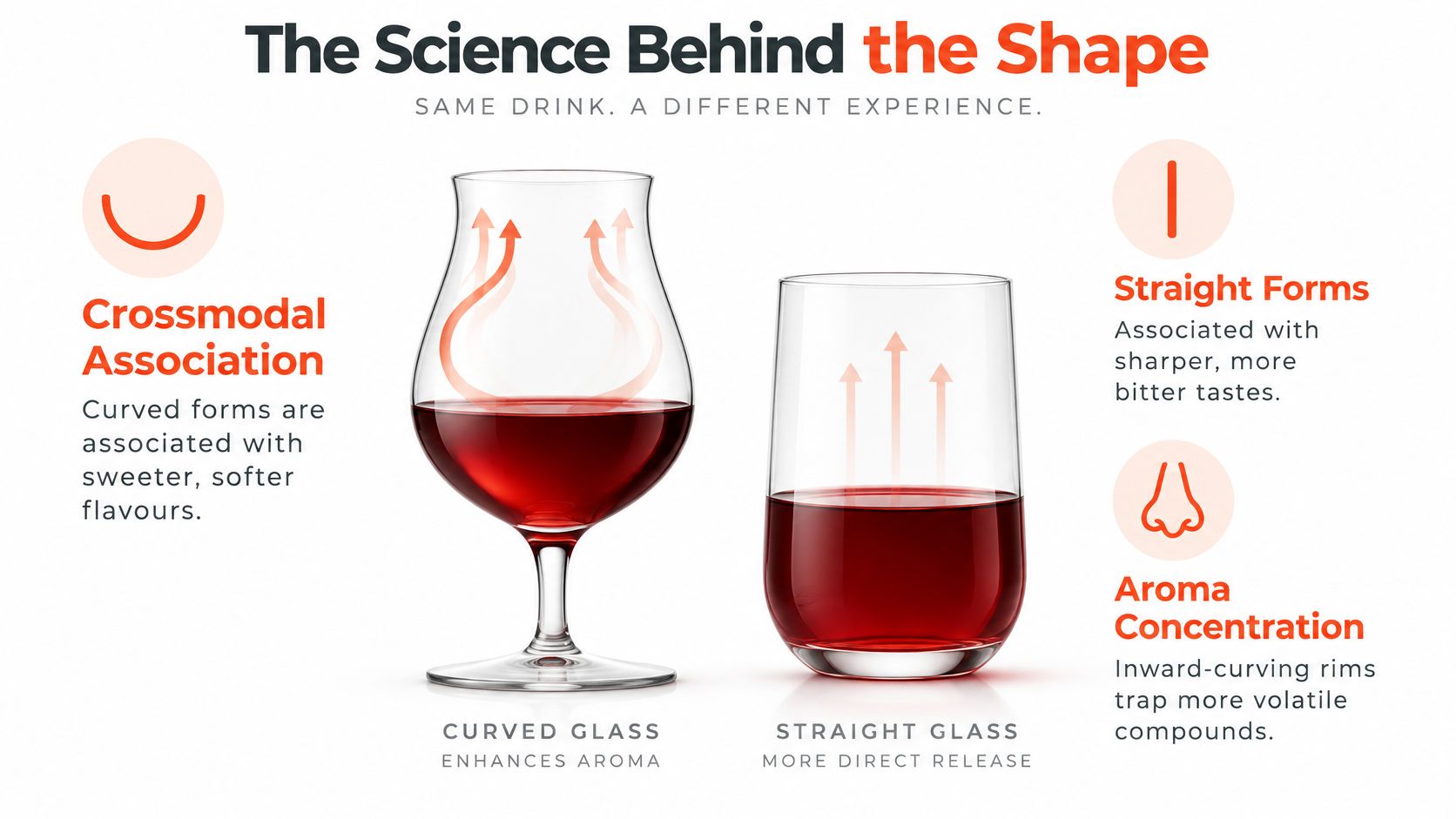
A 2017 experiment involving 53 Australian participants found that beer in a curved-sided glass was perceived as approximately 4% more intense and 5% fruitier than the same beer in a straighter-sided glass, according to the Australian glass-shape sensory experiment.
The important words are perceived as. This is evidence about the tasting experience, not proof that curved glass creates extra fruit compounds.
Your senses work together
The likely explanation includes crossmodal association. In plain language, people connect information from different senses. A rounded form can suggest fruitiness, while a straighter or more angular form can suggest sharper qualities.
That sits alongside the physical glass characteristics discussed earlier. The useful distinction is between what happens to the beer during service and how you interpret the complete experience.
Neither should be dismissed as meaningless. Enjoyment includes what you smell, see and feel, not just an isolated taste on your tongue.
Try a fair comparison at home
Use a small shared sample of the same beer across differently shaped glasses rather than opening extra beer solely for the exercise.
- Keep conditions comparable. Use clean glasses, similar fill levels and the same pouring approach.
- Describe before judging. Note what seems fruity, roasted, sharp or soft before deciding which glass you prefer.
- Allow an inconclusive result. You might notice a difference, prefer the straight glass or find no meaningful distinction.
The guide to writing beer tasting notes can help you put those impressions into ordinary words.
A noticeable difference doesn't automatically make one glass better. The useful result is learning which presentation you prefer.
Avoid turning a modest sensory finding into a promise of dramatic improvement. Glassware is a presentation tool, not a cure for beer that's past its best.
One Glass or Many - What's Practical for Home
Start with a versatile glass, then earn the next purchase through use. That's my recommendation for most home drinkers, especially if you enjoy mixed packs and don't want the washing-up cupboard to become a glassware display.
A tulip or gently curved schooner-style glass is an adaptable starting point. Before buying, check its height against your cupboard shelf, its base against your dishwasher rack and its care instructions against how you wash up.
Buy for everyday handling
A beautiful glass isn't good value if you avoid using it because it feels too fragile. Equally, a heavy tumbler isn't automatically the sensible option if you find its rim uncomfortable.
- Check care instructions. Don't assume that every stemmed beer glass is dishwasher-safe.
- Test the grip. Look for a shape you can hold comfortably without feeling that it might slip.
- Consider replacement. An easily replaced everyday glass can be a more relaxed choice than an elaborate matching set.
If you're organising the wider drinks cupboard, the guide to stylish bar essentials from Jolitee provides context for considering glassware alongside other home-bar items. Treat any suggested collection as optional, not a shopping list you need to complete.
Don't let the label limit the glass
A glass chosen for ale can still be part of your broader beer routine. For example, Carbon Dry Lager - Crisp & Refreshing Easy-Drinking Beer is a lager rather than an ale, so it needn't prompt a separate glass purchase just because it belongs to another beer family.
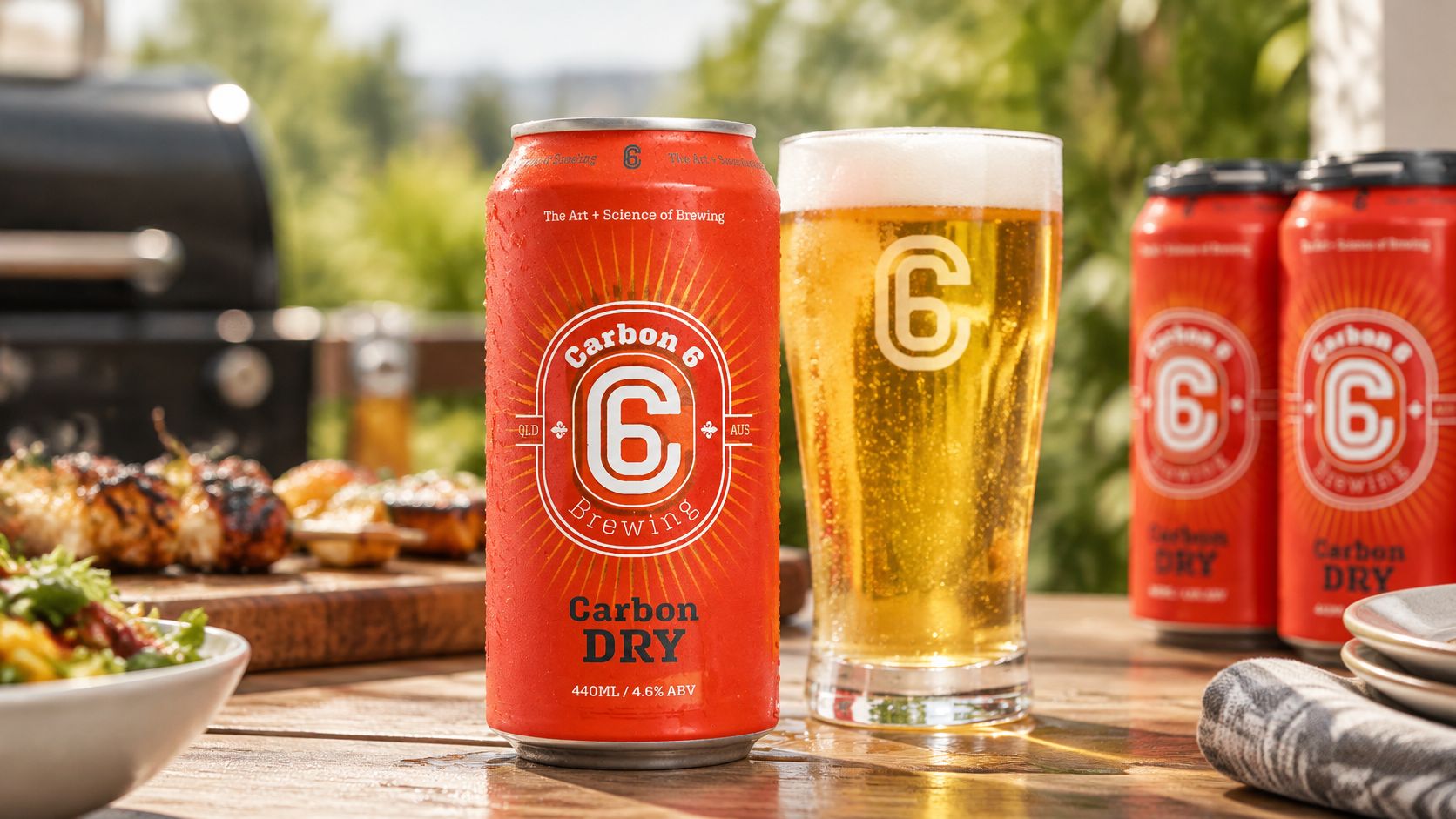
My buying priority would be beer freshness, appropriate serving conditions and reliable pouring before an expanding specialist collection. Add a snifter or another shape when your preferences give you a clear reason, not because you're worried your current setup isn't advanced enough.
The Sustainability Reality of Beer Glassware
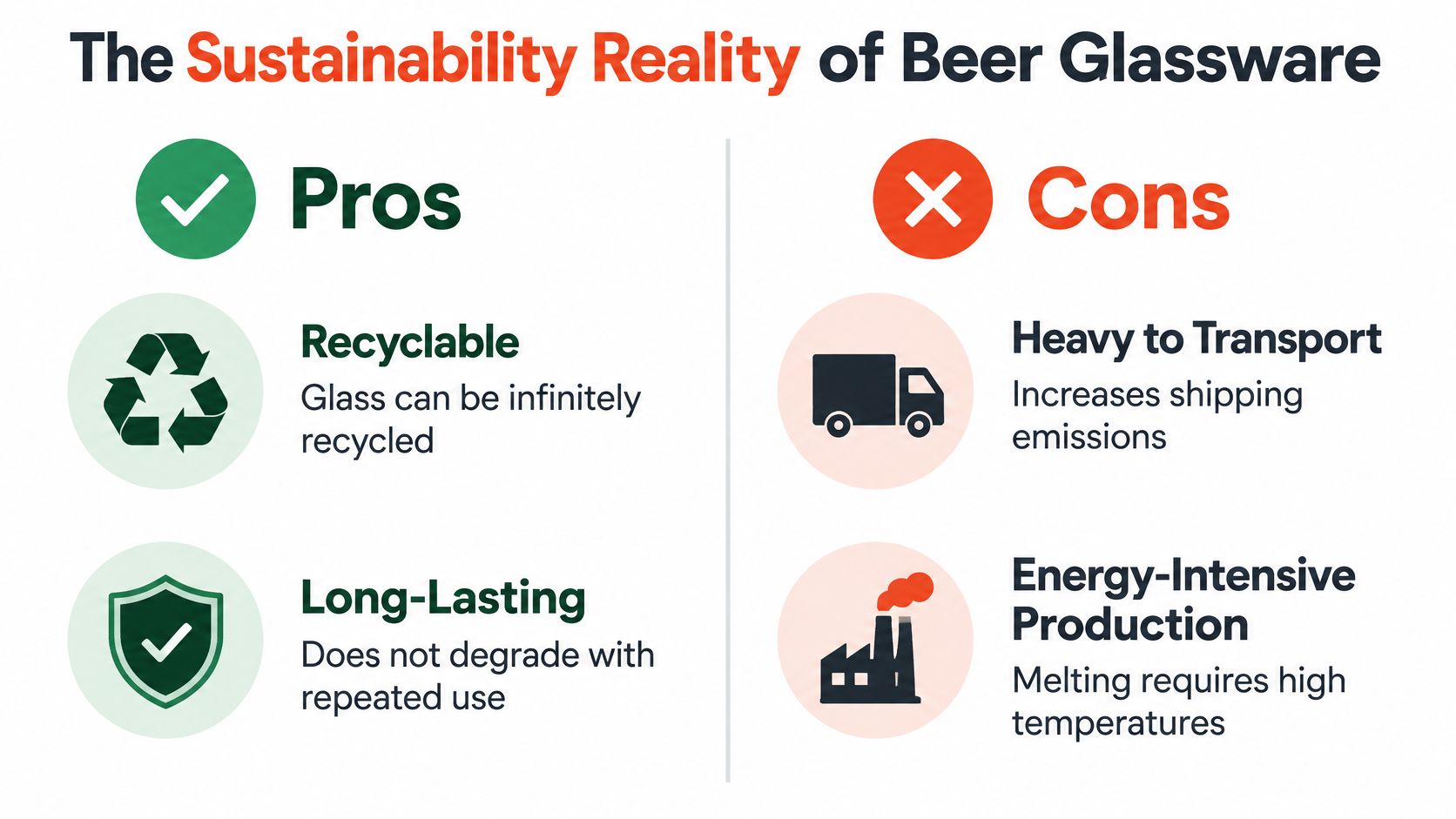
Buying glass doesn't automatically make a purchase sustainable. A reusable drinking glass and a single-use beer package also perform different jobs, so comparing them as though they're interchangeable can lead you astray.
Australian packaging reporting offers encouraging context: glass post-consumer recycled content increased from 41% in 2021–22 to 50% in 2022–23, and glass was reported as the first material group to meet its 2025 recycled-content target, according to this summary of the APCO packaging report. Those figures concern packaging, not the environmental performance of every drinking glass.
Ask what you'll actually reuse
A more useful purchase test considers the glass's whole working life. Where is it made? How far will it travel? Will protective packaging prevent breakage? Does it suit your washing routine well enough to stay in use?
An existing tumbler that already does the job may be the more sensible choice than new branded merchandise bought solely for environmental reasons.
- Reuse first. Assess what's already in your cupboard.
- Choose lasting usefulness. Favour a glass you expect to use regularly and care for properly.
- Check local disposal guidance. Don't assume a drinking glass belongs in the same recycling stream as beer bottles.
Glass bottles versus cans isn't a simple contest
For home-delivered beer, avoid judging packaging on appearance alone. Manufacturing, weight, transport, recycled content and local recovery arrangements all matter. Without a relevant comparison covering those conditions, neither material deserves an automatic environmental victory.
Likewise, a larger order isn't a better choice if it encourages buying beer you don't want. Choose delivery quantities around your actual needs.
The practical sustainability decision is often restraint: keep useful glassware, replace it thoughtfully and be sceptical of claims that buying extra accessories is itself an environmental benefit.
Frequently Asked Questions About Craft Ale Glasses
Is a craft ale glass worth buying if I already have pint glasses?
Only if it offers something you want to change. That might be a smaller comfortable serve, a different rim or a shape you prefer for aroma-focused tasting.
Keep your existing pint glasses if they work for you. Borrowing a different shape or trying it at a brewery can help you decide before purchasing.
How should I care for the rim and stem?
Follow the manufacturer's washing instructions and avoid forcing a delicate glass into a crowded rack. When drying or polishing, don't twist the bowl against the base.
Check for chips before use. Replace damaged glassware rather than trying to keep a favourite in service.
Will everyone notice a difference in shape?
No individual response is guaranteed. The sensory result discussed earlier is a useful reason to experiment, not a promise that every person will identify the same change.
You don't need to agree with a tasting description. Your preference is the relevant outcome for your own cupboard.
Can I use the same glass for other drinks?
You can choose a general-purpose shape rather than reserving it for beer. Check that the glass is suitable for the intended drink and follow its care guidance, particularly before considering hot liquids.
Keeping it multipurpose may make it easier to justify the space it occupies.
What makes a sensible gift?
Choose around the recipient's habits rather than your own favourite style.
- For a mixed-pack explorer. Consider a versatile shape with clear capacity information.
- For someone short on storage. Check dimensions before buying a tall or wide-bowled glass.
- For a practical household. Prioritise straightforward care and replacement over elaborate presentation.
Avoid assuming that an alcohol-related gift suits every adult. If you're unsure, ask about their preferences first. Thoughtful glassware should support an existing interest, not create an expectation to drink.
Carbon 6 Brewing Pty Ltd offers independently brewed beer from Stapylton on Queensland's northern Gold Coast, with online ordering for Australian customers. Visit Carbon 6 Brewing Pty Ltd to explore the beer range, check individual serving information and choose something that suits your taste and preferred portion.