APA Pale Ale Explained: A Complete Aussie Craft Guide
Oct 21, 2026
You're standing at a Gold Coast taproom, mates already ordering, and the board reads pale ale, APA Pale Ale, XPA and IPA in a row. They all sound hoppy, they all sound cold, and you don't want to pick the one that belts you with bitterness when you just wanted something fruity and easy. That's the confusion worth clearing up first, because once you know what the letters promise, the tap list gets a lot less random.
What APA Pale Ale Actually Means at the Bar
Picture a Friday arvo at a northern Gold Coast brewery bar. One punter asks for something with flavour but not a full-on IPA, another wants the tropical one, and a third just points at APA and hopes for the best. The bartender pours three slightly different beers, and only one person gets exactly what they expected.
APA in this Aussie context means Australian Pale Ale. It's our local take on the wider pale ale family, built around a pale malt base and, above all, Australian hop character. Think bright, fruity aroma up front, a clean malt backbone underneath, and bitterness that supports the beer rather than running the whole show.
That distinction matters because APA can mean American Pale Ale overseas. The American version leans on US hops and their citrus, pine and resin notes. An Australian APA leans south, towards mango, passionfruit and stone fruit from local varieties, with a drinking feel shaped for warm weather and food off the barbie.
Why So Many Drinkers Start Here
Pale ale isn't a niche order in Australia. In national consumer polling commissioned by the Independent Brewers Association, 32% of 2,017 surveyed Australians selected pale ale as their preferred style, narrowly ahead of lager at 31% and well clear of IPA at 9%. That polling groups pale ale together rather than splitting APA from other pales, so don't read it as an exact APA scorecard. It does show why brewers put a pale front and centre. People recognise it, trust it, and still expect proper flavour.
If you want hop aroma without signing up for an IPA bitterness contest, APA is usually the safest first question to ask about, not a blind guess.
At the bar, ask two quick things. Which hops are in it, and is it more crisp or more full bodied? Those answers tell you more than the abbreviation alone. If you're pouring for a crowd at home, you might compare beer tower options for serving, but style choice still starts with aroma, bitterness and body. Get those three right and you'll order, buy and recommend an APA Pale Ale with confidence instead of crossing your fingers.
The Building Blocks of an Australian Pale Ale
Think of an APA like a good sanga. The bread has to hold together, the filling brings the flavour, and if either part dominates, the whole thing feels off. Brewers build that balance from four main parts, and each one changes what lands in your glass.
Malt Sets the Canvas
Pale malt forms the base, giving gentle biscuit, bread crust and light honey notes plus the sugars yeast turns into alcohol. A brewer might add a touch of crystal malt for colour and soft caramel, or wheat for head retention and a slightly fuller feel. Too much specialty malt and the beer turns sweet and heavy. Too little and the hops have nothing to lean on.
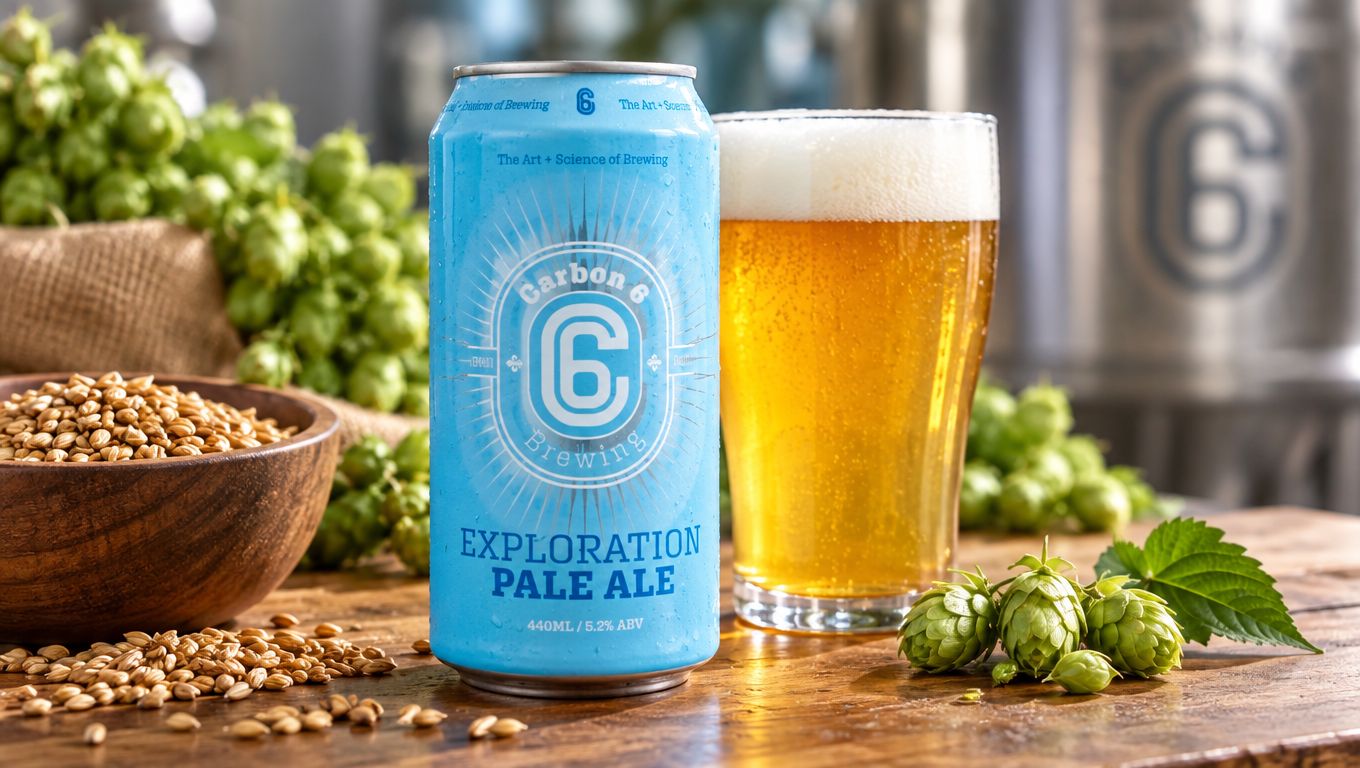
Australian pale ale emerged as a recognisable modern style during the 1990s, generally described at approximately 6% ABV with substantial Australian hops, with Galaxy as a representative variety. Treat that strength as a style reference, not a legal recipe. Plenty of modern examples sit a bit lower for easier drinking, including Exploration Pale Ale - 5.2% ABV, which is described as a crisp, refreshing pale ale in 440mL cans onsite and in 4 packs and 16 packs online.
Hops Bring the Aussie Accent
Galaxy and Vic Secret are the names you'll see most often, alongside varieties such as Enigma and Topaz. If you're still getting your head around the ingredient itself, start by learning what hops do in beer before worrying about variety names. Early kettle additions create baseline bitterness, while late boil, whirlpool and dry hop additions protect the volatile aromatics you smell.
APA Building Blocks at a Glance
| Component | Typical Role | Common Australian Example |
|---|---|---|
| Pale malt | Biscuit base, fermentable sugars, golden colour | Australian pale malt |
| Specialty malt or wheat | Head, body and light caramel support | Light crystal, wheat malt |
| Australian hops | Tropical aroma and measured bitterness | Galaxy, Vic Secret |
| Clean ale yeast | Fermentation with restrained fruity esters | Neutral ale strains |
| Water | Mash performance and bitterness perception | Adjusted local brewing liquor |
Yeast is the quiet worker here. A clean, moderately attenuating ale yeast lets hops shine, finishes the beer fairly dry, and avoids banana or clove notes that belong in other styles. Pitching health, fermentation temperature and oxygen control after fermentation all affect whether that hop aroma stays bright or turns dull and grassy.
What an APA Tastes and Smells Like
Pour an APA properly cold into a clean glass and give it ten seconds before you drink. The first thing should hit your nose, not your tongue. If the beer is fresh and well made, you'll get fruit salad energy straight away, passionfruit, ripe mango, peach skin, sometimes a little citrus pith or pineapple.
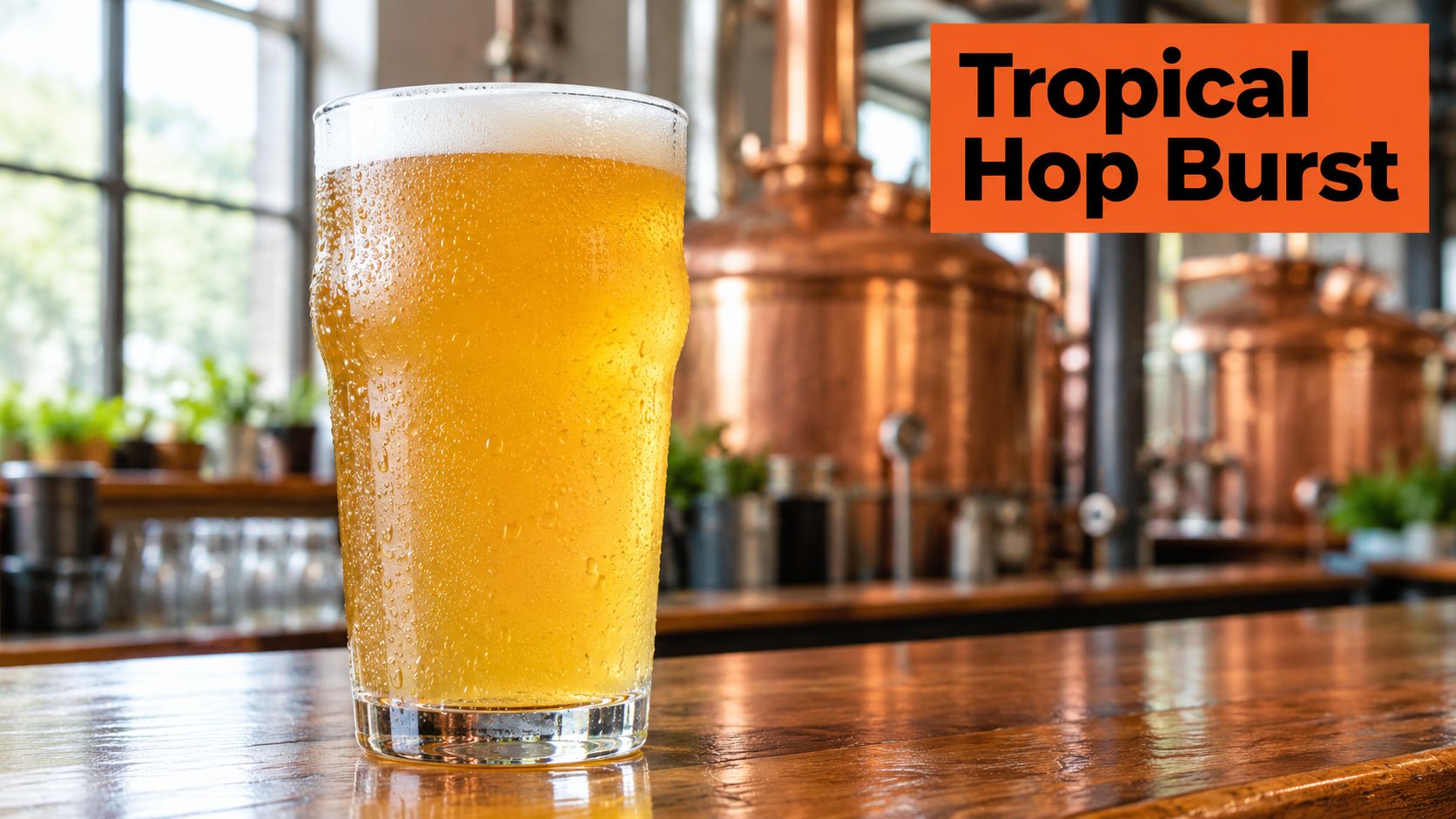
That perfume comes from Southern Hemisphere hop expression. Australian pale ale character is strongly associated with tropical fruit, mango, passionfruit and stone fruit aromatics from Galaxy and Vic Secret. It smells generous and juicy, but that doesn't automatically mean the beer tastes sweet. Aroma can trick you in the best possible way.
From First Sip to Finish
On the palate, expect a quick flash of fruit, then light biscuit malt, then a clean, dry finish. The body usually sits in the middle. It's not watery, it's not chewy, and carbonation should lift the beer so the next sip feels refreshing rather than sticky. A well judged APA leaves your mouth reset, with a soft bitter edge like grapefruit pith, not a harsh scrape at the back of your throat.
A tropical smelling APA can still drink crisp and dry. Big aroma and big bitterness aren't the same thing.
Hopping technique explains that gap. Hops boiled for a long time contribute more bitterness as their compounds isomerise. Hops added late, in the whirlpool at a lower than boil temperature, or as a dry hop after fermentation mostly contribute aroma. That's why two APAs with similar bitterness can smell wildly different, and why a heavily dry hopped APA can feel softer than a lean, early bittered IPA.
Watch for faults while you're tasting. Grassy or vegetal notes can point to dry hop contact that went too long. A dull, papery character suggests oxidation, and a sulfurous edge can signal fermentation or handling issues. Fresh APA should smell alive, like cut fruit, not like a fruit bowl left in a warm car all weekend.
Try this simple check next time. Smell, sip, swallow, then breathe out through your nose. That retronasal hit is where mango and passionfruit really show up, and it's the clearest way to understand what Australian hops are doing in your glass.
How the Australian APA Got Its Identity
Australian pale ale didn't arrive as a photocopy of an American beer. British pale ale traditions came with early brewing culture, built on pale malts and firmer bitterness than the dark ales around them. The distinctly Australian turn came much later, when local independent brewers started asking what a pale would taste like if it used hops grown for this part of the world.
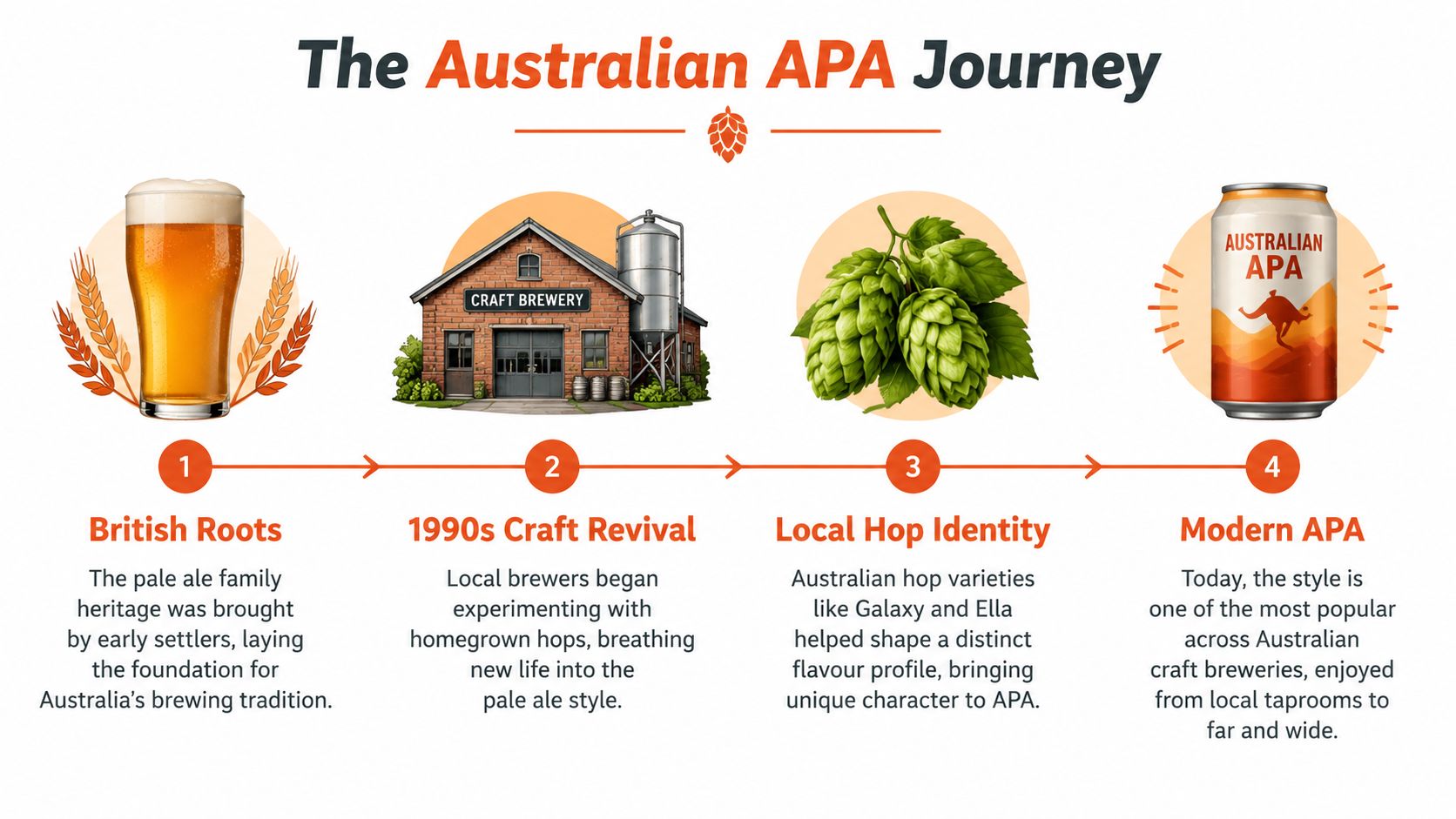
The 1990s craft revival is the key decade. Australian pale ale became recognisable then, after the first wave of small brewery experimentation and before independent brewing and premium beer retailing expanded rapidly in the following decades. Brewers leaned into local hop varieties, a flavour forward strength, and a cleaner, brighter profile than many mainstream lagers of the time.
Local Hops and Local Water
Galaxy became the headline hop because it gave brewers something unmistakably their own. Instead of chasing American pine and grapefruit, they could build around passionfruit and tropical fruit. That choice helped define modern Aussie independent beer, a style that tasted like it belonged here rather than in California.
Water played a quieter role. Australian research identifies regional variation in pH, alkalinity and hardness as factors influencing beer taste and aroma, affecting mash pH, enzymatic conversion, hop bitterness perception and yeast performance. For a Queensland brewery, that means water isn't just what comes out of the tap. It's a process control.
- Test the liquor: Check alkalinity, calcium, magnesium, sulfate, chloride and pH when supply changes.
- Record the brew: Log water results beside mash pH, original gravity, final gravity and tasting notes.
- Adjust for balance: Extra sulfate can sharpen bitterness, while extra chloride can push fullness.
That discipline matters at Carbon 6 Brewing Pty Ltd in Stapylton as much as at any local producer. Same grist, same hops, different water chemistry, and the beer can pour with different bitterness or attenuation. The Aussie APA identity, then, isn't only hops. It's local ingredients, local conditions and brewers learning to make both work consistently, batch after batch.
APA Versus XPA, American Pale Ale and IPA
No, an APA isn't just a weak IPA. That's like calling a ute a failed truck. They're related, they share parts, but they're built for slightly different jobs and you'll feel the difference in the first mouthful.
Australian coverage often describes XPA as sitting between American Pale Ale and IPA, with stronger hop flavour but less bitterness than IPA, yet shoppers rarely get a practical comparison of bitterness, strength, body and food use. That's the missing piece when you're staring at a mixed pack online. If you want the neighbouring style unpacked further, compare XPA in an Australian context before you commit to a carton.
The Four Styles in Plain Language
An Australian APA puts local tropical hops over a balanced pale malt base, with moderate bitterness and a dry, refreshing finish. An American Pale Ale uses the same basic template but swaps in US hop character, so citrus zest, pine and resin take over from mango and passionfruit. Neither is better. They speak with different accents.
XPA, or extra pale ale, usually turns the hop flavour up while keeping the body lean and the bitterness below IPA territory. Drinkers often choose it when they want maximum aroma in a crisp, warm weather beer. IPA turns up both strength and hop intensity, with firmer bitterness and a fuller presence that can dominate lighter food.
APA vs XPA vs American Pale Ale vs IPA
| Style | Typical ABV | Bitterness Feel | Hop Aroma | Best For |
|---|---|---|---|---|
| APA Pale Ale | Moderate, flavour forward | Soft to moderate | Mango, passionfruit, stone fruit | Grilled seafood, roast chicken, mixed packs |
| XPA | Moderate | Moderate, usually below IPA | Intense tropical or citrus, lean body | Hot days, salads, lightly spiced food |
| American Pale Ale | Moderate | Moderate and piney | Grapefruit, pine, resin | Burgers, barbecue, hard cheese |
| IPA | Higher than pale ale | Firm to strong | Bold citrus, tropical fruit or resin | Spicy dishes, rich meats, slow tasting |
Shopper rule: Choose by bitterness and body first, hop aroma second. Your palate notices the first two long after the first sniff fades.
Labels also blur. One brewery's APA may be dry hopped hard and taste close to an XPA, while another's XPA may drink softer than expected. Yeast, residual malt sweetness and late hopping all shift the result. Read the tasting notes, look for the hop names, and match the beer to the plate in front of you, not just the acronym on the can.
Buying and Storing APA So It Still Tastes Right
An award sticker doesn't guarantee a fresh hop hit. Awards judge a sample at a particular moment. Your carton might have sat warm in transit or in a shed for weeks, and hop aroma doesn't wait politely while that happens. For an APA Pale Ale, freshness is flavour.
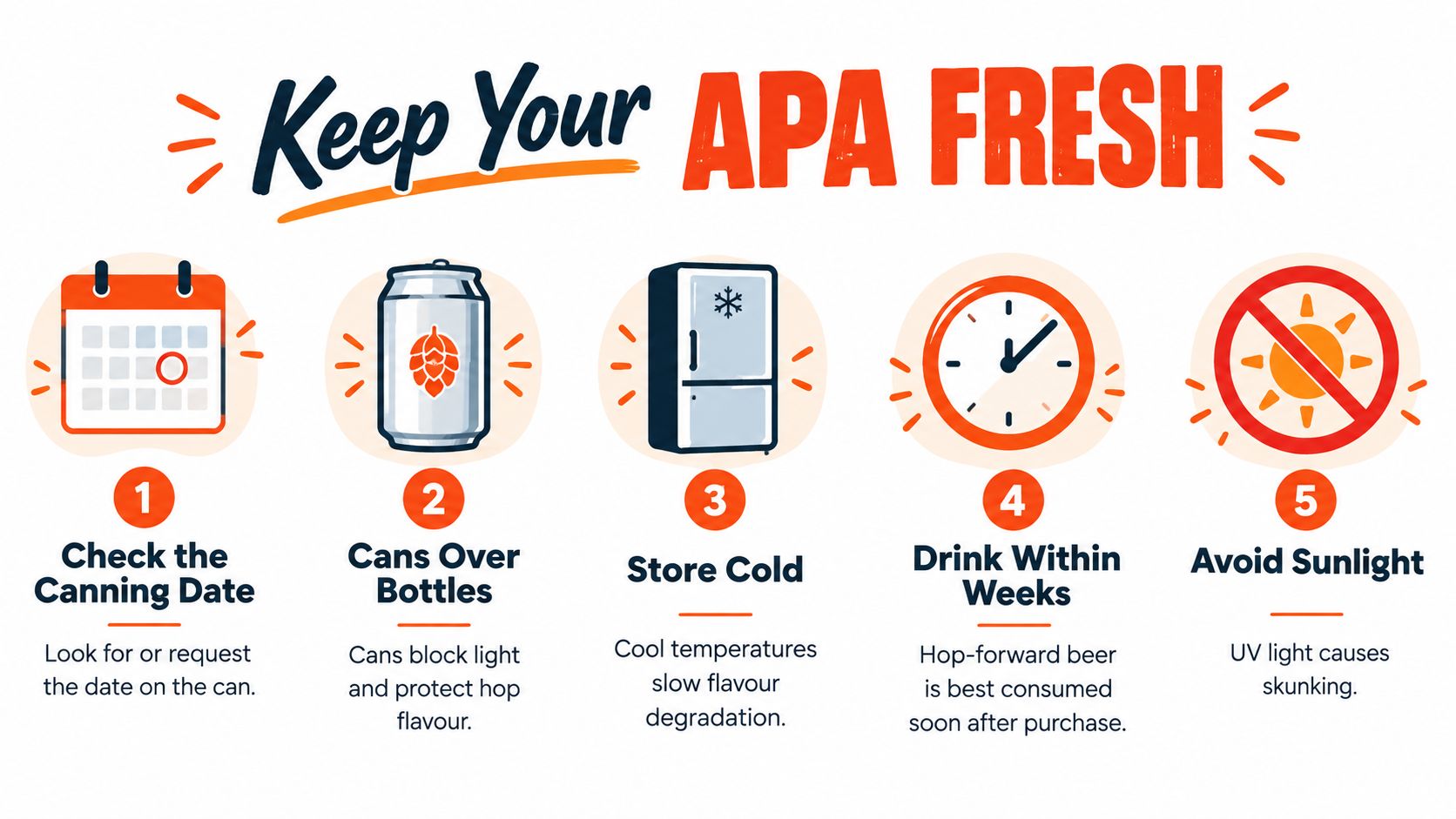
Start with the canning date. Look for it on the base or ask the brewery before you order, especially when you're buying a larger pack to make delivery worthwhile. For deeper detail on serving and storage conditions, check the guide to beer temperature and storage and apply it from the day the box lands.
What to Do When the Box Arrives
- Get it cold fast: Move cans into the fridge on arrival, don't leave them in a hot garage or car boot.
- Keep them dark: Cans block light well, but cool, dark storage still protects aroma.
- Drink hop forward cans first: Put the freshest, most aromatic releases at the front of the fridge.
- Avoid warm cold cycling: Repeated temperature swings and oxygen exposure dull tropical notes.
- Finish opened beer promptly: Once poured, aroma fades and carbonation drops, so don't nurse a can all arvo.
Cans suit APA for practical reasons. They block light, chill quickly, travel well around Queensland, and give brewers a tight seal against oxygen when packaged properly. Bottles can still be fine, but light strike and poor storage punish hoppy beer quickly. Format alone won't save a beer that's old, hot or badly handled.
Local buying helps because shorter, clearer supply chains make freshness easier to judge. Queensland's independent brewing industry contributed $588 million and 6,715 jobs in 2023-24, which underlines how substantial this local market is for craft buyers. Ask when it was canned, store it cold, and drink it while the hops still smell like fruit, not memory. That's how the beer the brewer signed off reaches your glass.
Putting APA to Work at Home and on the Day
The best APA is the one matched to your palate, your plate and the moment after the day's activities are done. A crisp, lower bitterness example suits grilled prawns, fish tacos or a chicken salad at the dinner table. A fuller, more bitter APA handles spicy Thai, roast meats and mature hard cheese without getting lost.
Build food pairings around contrast and weight. Carbonation and dryness cut through fat, tropical hop aroma lifts chilli and lime, and biscuit malt echoes char from the grill. If you're cooking chook over coals, you can try this beer can chicken technique and pour a balanced APA alongside the finished meal, keeping the drinking occasion clearly at the table.
Building a Mixed Pack You Will Actually Enjoy
Don't buy six near identical pales and call it exploration. Spread your bets across the spectrum so you learn what you like.
- One crisp APA: Lean body, soft bitterness, built for seafood and warm evenings.
- One fuller APA: More malt weight for roast chicken, lamb cutlets or cheese.
- One XPA: Extra hop aroma when you want brightness without IPA force.
- One IPA: Firmer bitterness for curry night or slow, deliberate tasting.
Ask the brewery three questions before a case purchase. When was it canned, which hops lead the aroma, and does it drink dry or sweet? Those answers prevent most disappointments. People rarely dislike APA as a category. They usually bought one that was stale, too bitter for the food, or fuller than the occasion needed.
Keep a few quick notes on your phone after each can, even just fruity, crisp, too bitter, great with prawns. Within a few weeks you'll stop shopping by guesswork and start shopping by taste. You'll know whether you chase Galaxy driven tropical lift, a more restrained biscuity pale, or something in between. That's real style literacy, and it'll serve you at every taproom board and online checkout from here on.
Keen to taste the Aussie side of pale ale fresh from Stapylton on the northern Gold Coast? Visit Carbon 6 Brewing Pty Ltd to explore the current range, check pack formats for home delivery, and choose an APA Pale Ale that suits your next meal at home. Pick the style that fits your palate, store it cold on arrival, and enjoy it responsibly with good food and good company.