

Craft Lager Australia: The Complete Guide
Sep 05, 2026
Most beer advice tells you to start with hops, novelty and the loudest label on the shelf. For craft lager Australia, that's often the wrong starting point. The more useful question is whether the beer is fresh, technically clean, locally made and good enough to earn another pour.
Independent brewers are leaning into lager because drinkers want premium beer they can keep drinking, not just taste once. That shift puts pressure on brewers, because lager exposes every shortcut. It also gives Australian drinkers a clearer way to judge quality, from fermentation control to cold storage and the final glass.
Why Craft Lager Is Australia's Best-Kept Beer Secret
Lager has an image problem. For many drinkers, the word still suggests pale, mass-produced beer bought in a slab, served very cold and chosen for convenience rather than character. That assumption misses what independent brewers are doing with the style.
A 2025 market report places lager at over 52.4% of Australian craft beer revenue, while valuing the Australian craft beer market at USD 3.10 billion in 2025 and forecasting strong growth through 2034. Those figures come from IMARC's Australian craft beer market report, and they explain why lager has become more than a safe fallback. It's a major commercial lane within craft beer.
Precision beats noise
A hop-heavy ale can sometimes hide small fermentation flaws behind aroma and bitterness. A pale lager can't. Its lighter malt profile and restrained bitterness leave nowhere for sulfur, esters, sweetness or haze to hide.
That makes the style technically demanding. Brewers have to manage wort fermentability, yeast health, temperature, attenuation, clarity and conditioning as one connected system. A lager that finishes too sweet feels heavy. One with rough bitterness feels thin and hard. One fermented too warm can lose the clean profile drinkers expect.
Practical rule: If a lager tastes simple in the best possible way, the brewer probably did a lot of work to make it that simple.
The move towards lager also says something about Australian beer culture. Drinkers have already explored the extremes, from intensely bitter IPAs to fruit-led sours and hazy ales. Many now want a beer with detail that still works at a barbecue, beside a bowl of chips, or through a long afternoon with mates.
Why brewers are pivoting
Independent breweries need beers that can appeal beyond the specialist tap list. Lager offers that reach without forcing a brewer to abandon quality or local identity. A Gold Coast brewery can use careful fermentation, regional distribution and fresh packaging to make a familiar style feel distinctly its own.
The national supply base has expanded alongside that demand. Deloitte reported annual Australian craft beer sales above A$370 million, annual growth of around 10%, and craft beer at an estimated 5% of total Australian beer sales. The same Deloitte analysis of Australian craft beer recorded about 350 brewers and microbreweries, up from 200 in 2013.
More independent breweries create more room for lager experimentation, from crisp pale examples to dry, mid-strength and pilsner-inspired beers. For drinkers, that means lager isn't a step backwards from craft ale. It's a deliberate choice for precision, freshness and drinkability.
How Craft Lager Differs from Mainstream and Ale Styles
The simplest way to understand craft lager is to compare what the brewer controls and what the drinker experiences. Mainstream lager is designed for dependable large-scale production. Craft lager applies more attention to malt character, yeast performance, fermentation and conditioning. Craft ale takes a different route, usually using warmer fermentation to build fruitiness, hop expression or both.
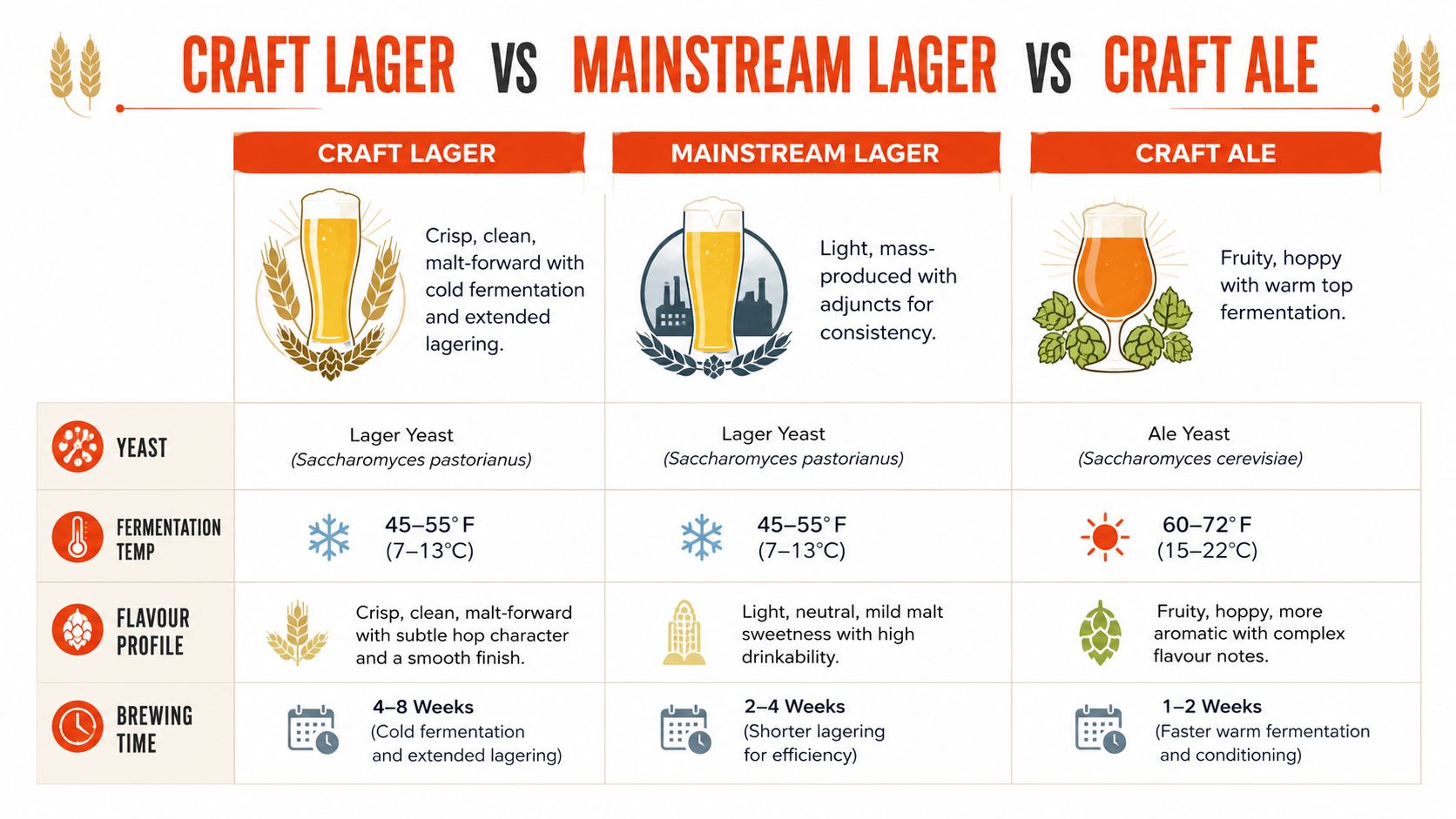
Think of the difference as tuning rather than simple quality ranking. A mainstream lager is built like a reliable family sedan, familiar and consistent. A well-made craft lager is closer to a carefully tuned sports car, still usable every day but more revealing in how it handles. A craft ale takes the scenic route, with a more expressive engine and a bigger flavour profile.
| Characteristic | Craft Lager | Mainstream Lager | Craft Ale |
|---|---|---|---|
| Yeast | Clean lager yeast with restrained fermentation character | Yeast selected for scale and consistency | Ale yeast with more expressive fruit and fermentation notes |
| Fermentation temperature | Cold fermentation with close control | Controlled production fermentation | Warmer top fermentation |
| Flavour profile | Crisp malt, subtle hop character and clean finish | Light, consistent and highly familiar | Fruity, hoppy, bitter, hazy or malt-forward depending on style |
| Brewing time | Longer conditioning is common | Optimised for commercial production | Often shorter primary fermentation, with timing varying by style |
| Drinking experience | Detailed but refreshing | Straightforward and predictable | More aromatic and noticeable |
Australian pale craft lager targets commonly sit around 4.2–5.6% ABV, 1.006–1.012 FG, 2–20 IBUs and 2.5–5 EBC, according to Beer & Brewing's coverage of craft lagers in Australia. Those ranges show why bitterness isn't the main test. The brewer needs tight control over attenuation, clarity, colour and final body.
What you notice in the glass
A craft lager should often begin with a clean grain or light bread note, followed by restrained hop spice, herbal freshness or gentle floral character. The finish should feel dry enough to invite another sip, but not stripped of flavour. Carbonation should lift the beer rather than prick the tongue aggressively.
Mainstream lager can be enjoyable for exactly what it is, especially when cold and fresh. Craft lager earns its premium when the drinker can taste a more deliberate malt profile, cleaner fermentation and better integration between bitterness and finish.
For readers who want a deeper technical comparison, this guide to the difference between ale and lager is a useful reference. A local example is Carbon Mid | Mid-Strength Lager, a clean, crisp mid-strength lager brewed at 3% ABV and available in 440mL cans, with four-pack and 16-pack formats listed by the brewery.
The Queensland Craft Beer Boom and Gold Coast Brewing Scene
Queensland gives the craft lager story a strong local foundation. The state's brewing sector isn't just following a national trend. It has built enough scale for local breweries, hospitality venues, bottle shops and direct-to-consumer businesses to support a broader range of independent beer.
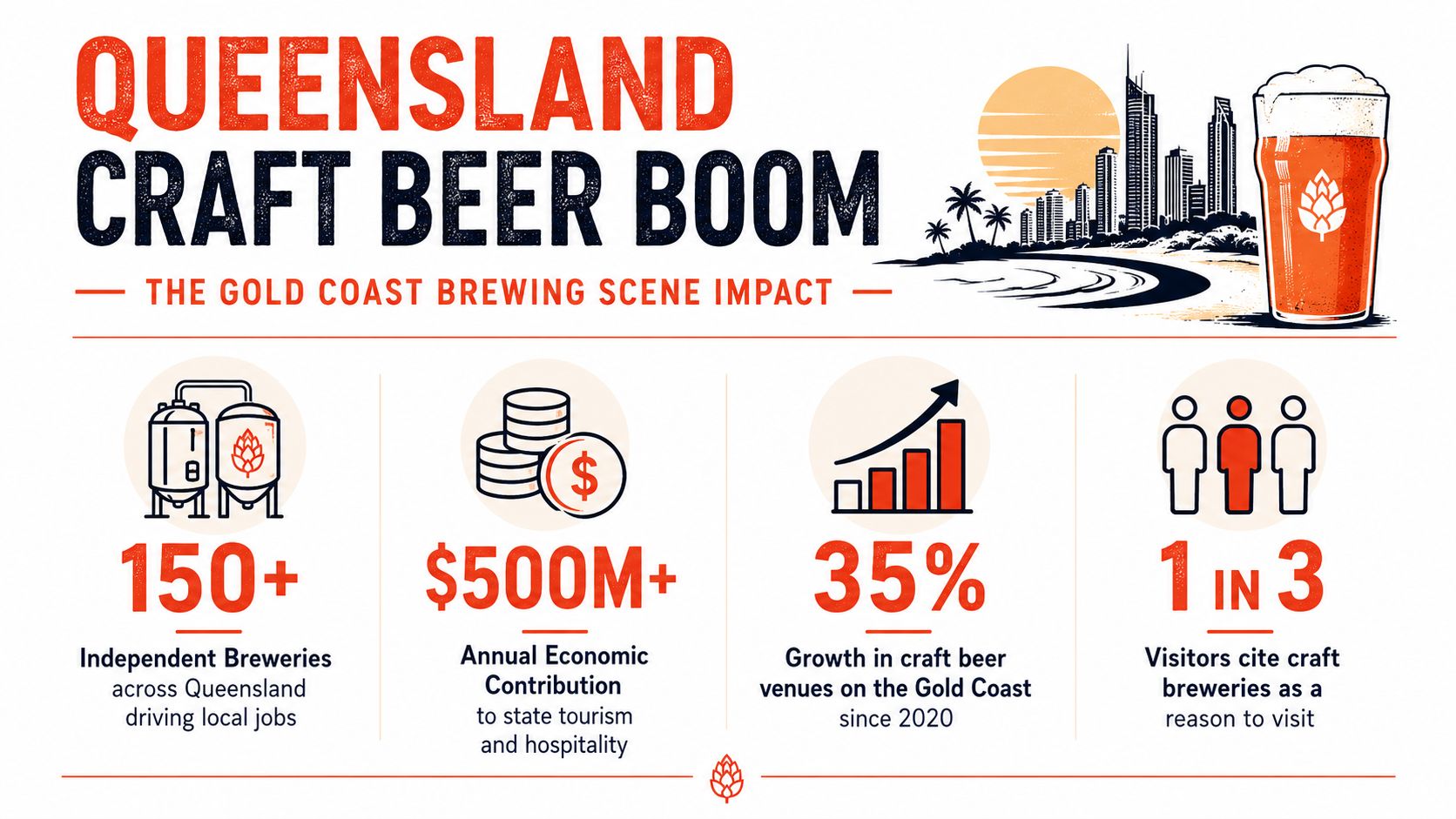
The Queensland Government's craft beer strategy estimated that the sector contributed A$62 million annually to the Queensland economy. It also recorded annual growth of 9.7% between 2013 and 2018, compared with 2.1% growth for beer manufacturing over the same period.
Why place matters
Gold Coast drinkers live in a culture built around outdoor meals, warm weather, beaches, weekend gatherings and casual hospitality. Lager fits those occasions, but a local craft version adds something the national brands can't provide, a direct connection to the people and place behind the beer.
That connection matters when the beer is fresh. A locally distributed lager can move from brewery to taproom, bottle shop or home with fewer logistical steps than an imported product. It also gives drinkers a reason to pay attention to packaging dates, storage and brewery practices rather than choosing only by brand familiarity.
Queensland's craft beer strategy also recorded that the state's share of the Australian craft beer market rose by over 9% between 2013 and 2018. That growth created a stronger platform for styles that need repeat purchase, not just one-off curiosity. Lager is well suited to that role because a brewery can build a reliable house profile while still refining malt, hop and fermentation choices.
The Gold Coast advantage
A Gold Coast brewery doesn't need to imitate Melbourne's hop culture or Western Australia's beer identity. It can make beer that suits local conditions and local habits, then sell it through a mix of taproom service, online ordering and wholesale relationships.
The Gold Coast craft beer guide from Carbon 6 Brewing reflects that local focus. The useful question for a buyer isn't whether a beer carries a fashionable style label. It's whether the brewery has made a clear choice about flavour, freshness and the people it wants to serve.
The Brewing Process Behind a Great Australian Craft Lager
Great lager starts with restraint, but restraint isn't the same as doing less. Every part of the brew has to support a clean finish, from the grain bill to the way the packaged beer is stored.
Building the wort
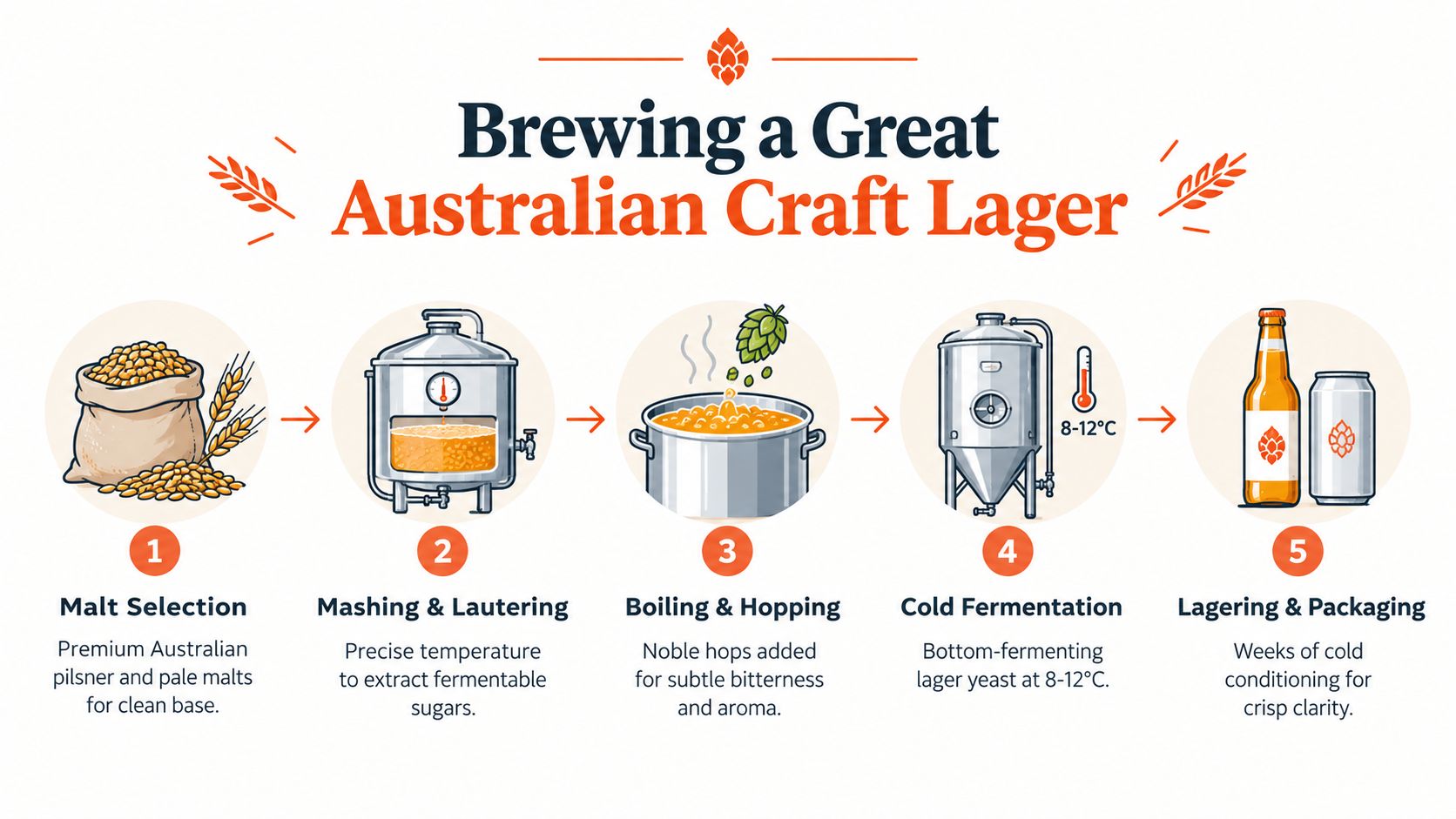
Most pale lagers begin with a clean malt base. Pilsner and pale malts can provide light grain, cracker and soft bread notes without dominating the beer. The brewer then chooses a mash schedule that supports the intended finish. A highly fermentable wort gives the yeast less residual sweetness to leave behind, which helps the beer feel crisp rather than heavy.
Lautering follows the mash. The aim is to collect clear, fermentable wort without extracting harsh grain character. Boiling sterilises the wort, concentrates it and allows the brewer to add hops at carefully chosen points. Lager usually benefits from restrained hopping, with noble-style spice, herbal notes or gentle floral lift rather than aggressive bitterness.
Managing fermentation
Yeast does the quiet work that defines the beer. Lager yeast ferments cold and tends to produce a cleaner profile than typical ale fermentation, but it also reacts badly to poor temperature control. Sudden heat can encourage sulfur, esters and roughness that remain obvious in a delicate beer.
Local industry coverage identifies glycol cooling as the best available method for controlling lager fermentation temperatures, because lagers are especially sensitive to thermal spikes. BeerCo's lager brewing guidance explains why stable cooling matters in Australia's warmer climate.
Brewing reality: Cold fermentation isn't a switch you turn on. It's a controlled environment that protects yeast performance from pitch through conditioning.
Cold conditioning and packaging
Once primary fermentation is complete, the beer needs time to settle and mature. Cold conditioning helps reduce rough edges, improve clarity and integrate the malt, hop and yeast character. The exact schedule depends on the recipe, equipment and brewery, but rushing this stage usually costs the beer its polish.
Packaging then becomes part of the flavour process. Oxygen exposure, warm storage and poor handling can dull hop freshness and create stale notes. A brewer who spends weeks making a clean lager can still lose that work after packaging if the supply chain isn't careful.
The full path from grain to glass is described in this walkthrough of how craft beer is made. For drinkers, the practical lesson is simple. A great lager should taste bright, integrated and deliberate, not merely cold.
Tasting Notes and Food Pairings for Every Occasion
A fresh craft lager should meet you with a clean aroma rather than a strong blast. Pour it into a proper glass and look for pale gold through light amber tones, depending on the malt bill. The aroma may suggest grain, fresh bread, light herbs or delicate spice, while the palate should move quickly from malt to bitterness and then finish dry and refreshing.

Pairings that work
Lager is one of the most flexible food beers because it cleans the palate without competing with the meal. Its carbonation cuts through richness, while modest bitterness can lift grilled and fried flavours.
- Backyard barbecue: Snags, chicken skewers and grilled vegetables work with a crisp pale lager because the beer refreshes between smoky, salty bites.
- Seafood lunch: Prawns, grilled fish and calamari suit a lager with restrained bitterness and a dry finish. Avoid beers with heavy roast or intense hop character, which can overwhelm delicate seafood.
- Pizza night: A clean lager handles melted cheese, tomato, herbs and salty toppings without making the meal feel heavier.
- Spicy food: The carbonation and light malt sweetness can soften chilli heat, especially when the lager finishes cleanly rather than sweetly.
- Long lunch: Choose a balanced, moderate-strength lager when the beer needs to remain part of the meal instead of becoming the entire event.
Read the beer, not just the label
A good tasting test is to let the first sip sit briefly before taking another. Check whether the malt tastes fresh, whether the bitterness is smooth and whether the finish leaves a clean invitation to continue. Harsh bitterness, sweet stickiness, excessive sulfur or a dull cardboard note point to a problem with recipe balance, fermentation or freshness.
The best craft lager doesn't demand a tasting lecture. It makes the food better, stays refreshing in warm weather and gives you enough detail to come back for another glass. That's the sweet spot between technical brewing and everyday Australian drinking culture.
How to Choose Fresh Local Craft Lager and Where to Buy
Freshness is the first filter. Lager's clean profile makes stale flavour easier to notice, so check the packaging date where the brewery or retailer provides one. Choose cans or bottles that have been stored cool and away from direct light, and be cautious with stock that looks dusty, sun-exposed or poorly handled.
Buying direct from a brewery can reduce the distance between packaging and drinking, although the buyer still needs to check delivery conditions and storage after arrival. A taproom gives you the advantage of seeing how the beer is kept and asking staff what has recently been packaged. A reputable bottle shop should also be able to explain stock rotation and storage.
Make the online order work for the beer
Direct-to-consumer ordering suits drinkers who want mixed packs, regular releases or access to a brewery outside their immediate suburb. Before checking out, look for clear information about pack format, delivery areas, responsible service and the brewery's handling process. Don't assume the cheapest shipping option is the best value if it means the beer sits around in unsuitable conditions.
For larger orders, compare the total delivered cost rather than focusing only on the can price. A mixed pack can help you compare a pale lager, a dry lager and a more malt-driven version without committing to one profile.
Let values guide the shortlist
Price matters, but it isn't the only reason people choose independent beer. Independent Brewers consumer polling found craft beer was most popular among 24 to 44 year olds, with 40% having purchased it. The same polling found 72% of surveyed beer consumers considered brewers' sustainable values important or very important.
That gives buyers practical questions to ask:
- Check the brewery: Is it independent, Australian-owned or locally based?
- Check the beer: Is the style, ABV and pack format clearly stated?
- Check the condition: Has the product been stored away from heat and light?
- Check the reason for buying: Are you choosing freshness, flavour and local support, or only chasing a familiar label?
The strongest purchase is one that satisfies both taste and trust. You should know what you're buying, who made it and why the beer suits the occasion.
Your Guide to Supporting Independent Australian Brewers
Supporting an independent brewer isn't just a sentimental choice. It's a practical way to buy beer with a clearer connection between production, place and drinking experience. The value shows up in freshness, recipe decisions, local distribution and the ability to discover styles that large-scale brands rarely prioritise.
Use a simple filter whenever you choose a craft lager:
- Freshness first: Look for recent packaging, sensible storage and a supply chain that suits lager.
- Clarity of purpose: Choose a beer with a recognisable profile, whether that's pale and crisp, dry, mid-strength or pilsner-inspired.
- Technical balance: Look for clean fermentation, controlled bitterness, a dry finish and no distracting sulfur or stale character.
- Local connection: Consider whether your purchase supports an Australian independent brewery and its surrounding hospitality network.
- Personal value: Buy the beer that fits your meal, your pace and your preference, not the one with the loudest marketing.
Australian craft lager has earned attention because it combines familiarity with precision. It can be fresh, local and premium without becoming precious. For drinkers, that means the next good beer may not be the most extreme one on the tap list. It may be the lager that gets every detail right.
Carbon 6 Brewing Pty Ltd produces locally made Queensland lagers from its brewery in Stapylton, including crisp, easy-drinking options suited to barbecues, gatherings and outdoor occasions. Explore the range and make your next craft lager choice through Carbon 6 Brewing Pty Ltd.