
Online Bottle Shop Australia: A Practical Buyer's Guide
Sep 06, 2026
It's 5pm on the Gold Coast. The local bottleshop has shut, the group chat is filling up with “who's doing the beer run?”, and nobody wants to drive across town for a few mixed six-packs. You open an online bottle shop, add some local craft beer, then pause at the checkout. Is the delivery fee worth it? Will someone be home to show ID? Is this order for tonight, or are you really buying a carton to cover the next few weekends?
That pause is useful. Online alcohol shopping in Australia works best when you treat it as a planned purchase, not a panic button. The right shop gives you better range, clearer freshness information and a sensible way to buy mixed packs. The wrong one gives you vague delivery terms, questionable stock handling and a courier problem at the front door.
This guide takes a Queensland view, with the Gold Coast as the practical reference point. I'll cover how online bottle shops operate, what delivery compliance looks like, when direct-from-brewery wins, and why the cheapest or fastest option often isn't the best value.
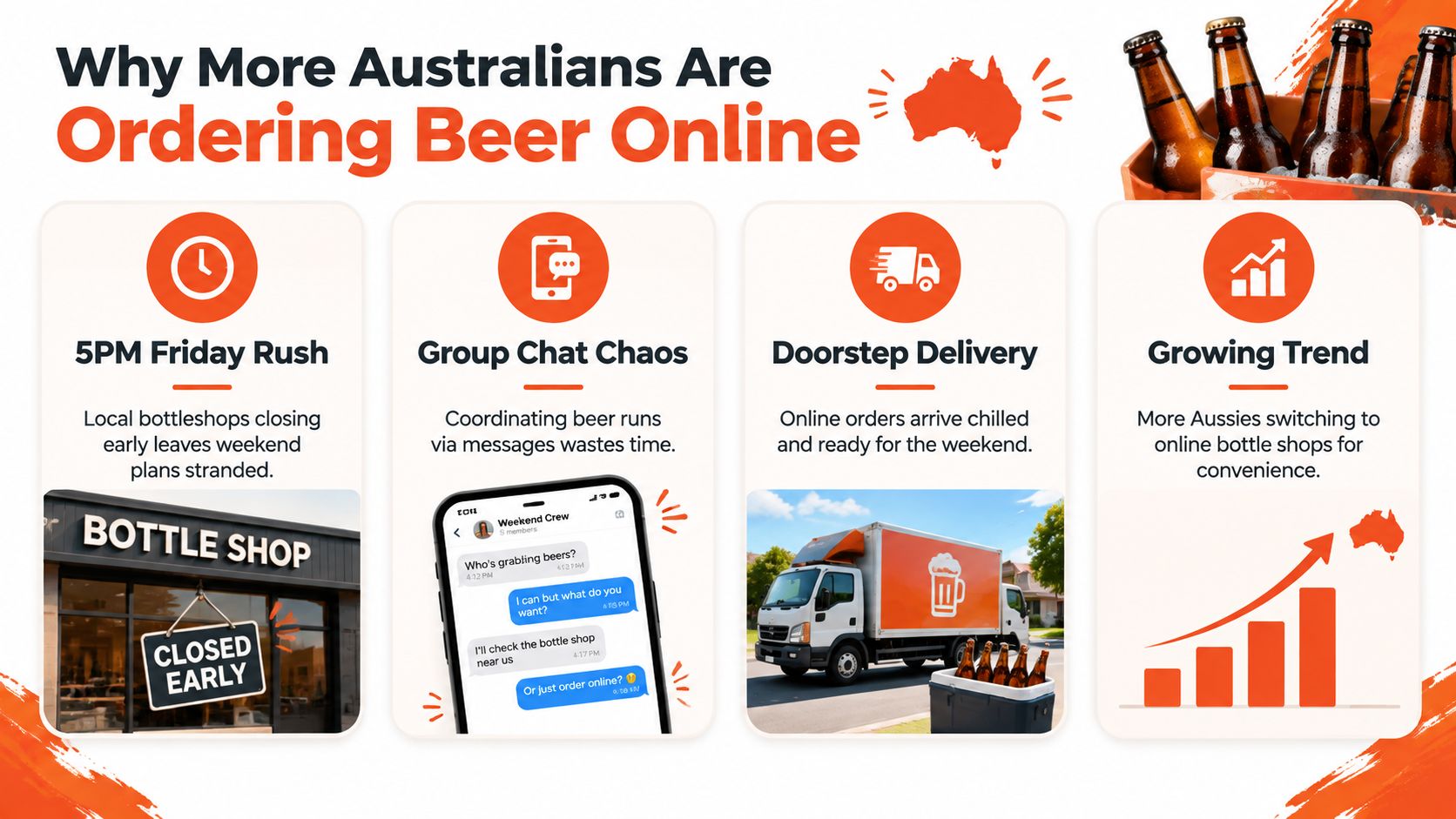
Why More Australians Are Ordering Beer Online
That Friday-night Gold Coast scramble is familiar. One mate wants lager, another wants something hoppy, someone else has remembered a limited release, and the local shelves don't have much beyond the usual national brands. Ordering online opens a wider field, including independent Australian beer, brewery releases and mixed packs that would be hard to assemble from one neighbourhood shop.
The shift isn't just about convenience. Australia's online alcohol retail market grew from A$539 million in 2012 to A$2.0 billion in 2022, nearly quadrupling across the decade, according to Australian evidence on online alcohol sales and delivery. The same source records that one in ten Australians who bought takeaway alcohol purchased it online in 2020, a threefold increase from 2019. That points to a lasting change in how people shop, rather than a short-lived response to lockdowns.
Convenience has a limit
Online ordering removes the beer run, but it doesn't remove the trade-offs. You may face delivery charges, minimum order thresholds, delivery windows and an adult handover requirement. A six-pack for tonight is a different purchase from a mixed carton designed to sit in the fridge over the coming weeks.
Australia Post's liquor e-commerce reporting estimated A$2 billion was spent on liquor online by 2025, while online purchases represented 8.2% of total liquor spending and 1.1 million households shopped for liquor online. The reported average online liquor basket was A$120.44, which supports a simple conclusion: online shoppers often buy with a larger basket in mind. See the Australian parliamentary evidence on online alcohol purchasing for the earlier context on channel growth.
My rule: use an online bottle shop for range, freshness and a properly planned basket. Don't use it to dodge a closed shop and expect every delivery promise to hold.
For a closer look at practical ordering choices, the guide to beer delivery in Australia is a useful companion. The key question isn't whether beer can reach your door. It's whether the seller can explain who handles it, how it's packed and how the handover is controlled.
How an Online Bottle Shop Actually Works
An online bottle shop is mostly a licensed liquor operation joined to a warehouse, payment system, packing bench and delivery network. The website is the visible part. The important work happens behind the checkout.
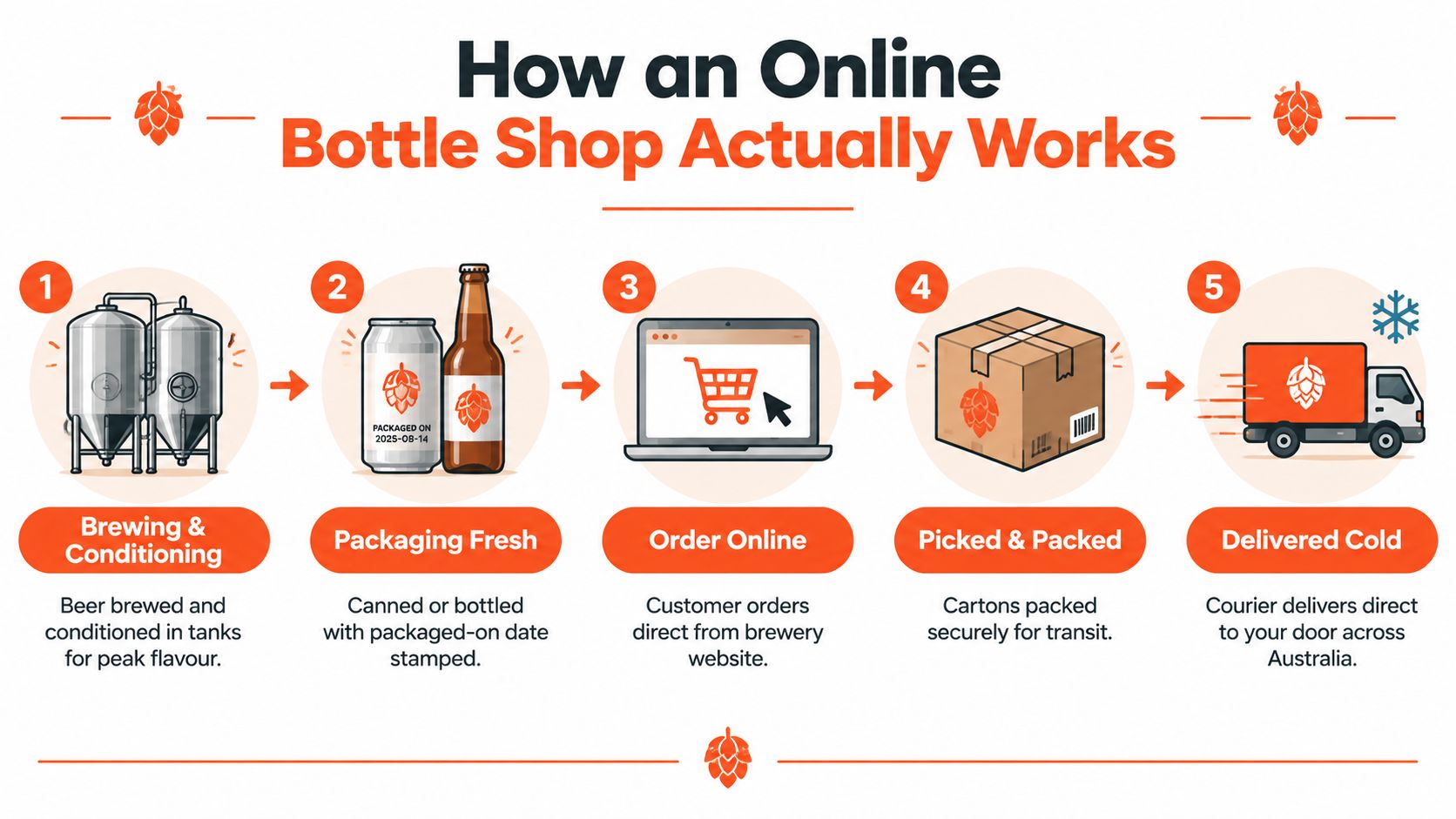
From tank to packed carton
A craft brewery order generally follows this path:
- Brewing and conditioning: The brewery makes the beer, then allows it to condition in tanks so the finished product is ready for packaging.
- Canning or bottling: The beer is packaged, with the brewery's date and product information applied according to its process.
- Cold storage: Stock waits in suitable storage before picking. Hop-forward beer especially needs careful handling because flavour and freshness are central to the purchase.
- Order picking: Staff match the website order to physical stock, checking product and quantity before packing.
- Carton preparation: Cans or bottles go into a secure carton, sometimes with protective or insulated packaging suited to the journey.
- Courier hand-off: The packed order moves to a courier or Australia Post service, then the customer receives tracking information.
A mixed order such as the Mixed 16-Pack can include sixteen 440mL cans across a brewery's lineup. The stated product information says the selection is hand picked and that another brew may be substituted if a particular beer is unavailable, so read those terms before paying.
The controls behind checkout
The seller needs the appropriate liquor licence for the sales it conducts, and responsible service obligations shape how staff and delivery drivers handle alcohol. Payment processing confirms the order, while the seller may apply customer checks before dispatch or require identification at handover.
The delivery stage is where a generic e-commerce model falls short. Industry code signatories represent more than 80% of alcohol purchased online in Australia, and the code prohibits same-day unattended delivery, requires age-verification procedures, provides self-exclusion and third-party exclusion options, and requires driver-specific training. Those requirements are set out in the online alcohol delivery code of conduct.
A well-run store should therefore show delivery zones, tracking, handover expectations and refusal procedures. If you're researching how digital commerce systems are built, a practical guide to AI app development can help explain the technology layer, but technology doesn't replace licensing or responsible delivery practice.
Australian Shipping and State Rules Explained
The basic rule is straightforward: alcohol must be sold by a properly licensed seller, and delivery needs a responsible handover process. The details become less tidy once you cross state borders, enter regional areas or encounter local restrictions.
For a Queensland buyer, the first check is whether the seller can legally deliver to your address and whether the chosen service can complete an adult signature and ID check. A street address is usually more practical than a parcel locker because alcohol delivery needs a person available for handover. Dry areas, restricted suburbs and local rules can affect whether the order is accepted, delayed or refused.
State and territory comparison
The table below is a buying guide, not a substitute for checking the seller's licence and current delivery terms.
| State / Territory | Liquor Licence Required | ID Check on Delivery | Same-Day Metro Delivery | Regional Delivery Notes |
|---|---|---|---|---|
| Queensland | Yes | Confirm the seller's adult handover process | Often offered by selected services in Brisbane and the Gold Coast | Regional and remote areas may rely on standard courier or postal services |
| New South Wales | Yes | Confirm before ordering | Available from selected metropolitan operators | Delivery windows can widen outside Sydney and major centres |
| Victoria | Yes | Confirm before ordering | Available from selected metropolitan operators | Regional delivery depends on route, carrier and address |
| Western Australia | Yes | Confirm before ordering | Available from selected metropolitan operators | Longer distances and local restrictions can affect service |
| South Australia | Yes | Confirm before ordering | Available from selected metropolitan operators | Check delivery coverage outside Adelaide |
| Tasmania | Yes | Proof-of-age requirements apply | Limited to suitable metropolitan services | Island freight and regional routes can extend delivery times |
| Northern Territory | Yes | Confirm before ordering | Limited and address-dependent | Community restrictions can affect delivery eligibility and timing |
| Australian Capital Territory | Yes | Confirm before ordering | Available from selected metropolitan operators | Check suburb coverage and service windows |
Queensland is relatively friendly to courier delivery, but “courier-friendly” doesn't mean unattended drop-offs are automatically acceptable. Independent Australian analysis found that online age verification remains weaker than in physical bottle shops. UNSW reported that in 2021 most jurisdictions allowed online alcohol sale and delivery, while only seven jurisdictions globally required age verification at the point of purchase, with some Australian jurisdictions allowing unattended delivery in specific circumstances. The UNSW analysis of online alcohol age protections explains why a checkout checkbox isn't enough.
At the door, the buyer and seller both carry responsibility. If nobody eligible can accept the order, a compliant driver should be able to refuse delivery rather than leave it beside the garage.
Same-day metro delivery may be realistic in Brisbane, Sydney, Melbourne and Perth when a seller offers it and the order beats the cut-off. Regional Queensland is a different proposition. Build your basket early, allow for standard freight and don't assume a Gold Coast promise applies to a rural address. For practical fulfilment planning, these battle-tested shipping strategies cover the operational side of delivery rates and service design.
The guide to ordering beer in Australia is worth checking before you submit an interstate order, particularly if the seller's licence details or delivery restrictions aren't obvious.
How to Spot a Reputable Online Bottle Shop
Start with freshness, not the homepage design. A serious shop should tell you how it manages stock and should make it possible to identify packaged-on or best-before information. For hop-forward styles, batch information is another useful signal because it helps you understand what you're buying and how recently it was produced.
A shop doesn't need to promise that every beer was packaged yesterday. It does need to explain the handling chain clearly. Look for cold storage details, secure cartons and delivery terms that acknowledge the product is alcohol rather than an ordinary parcel.
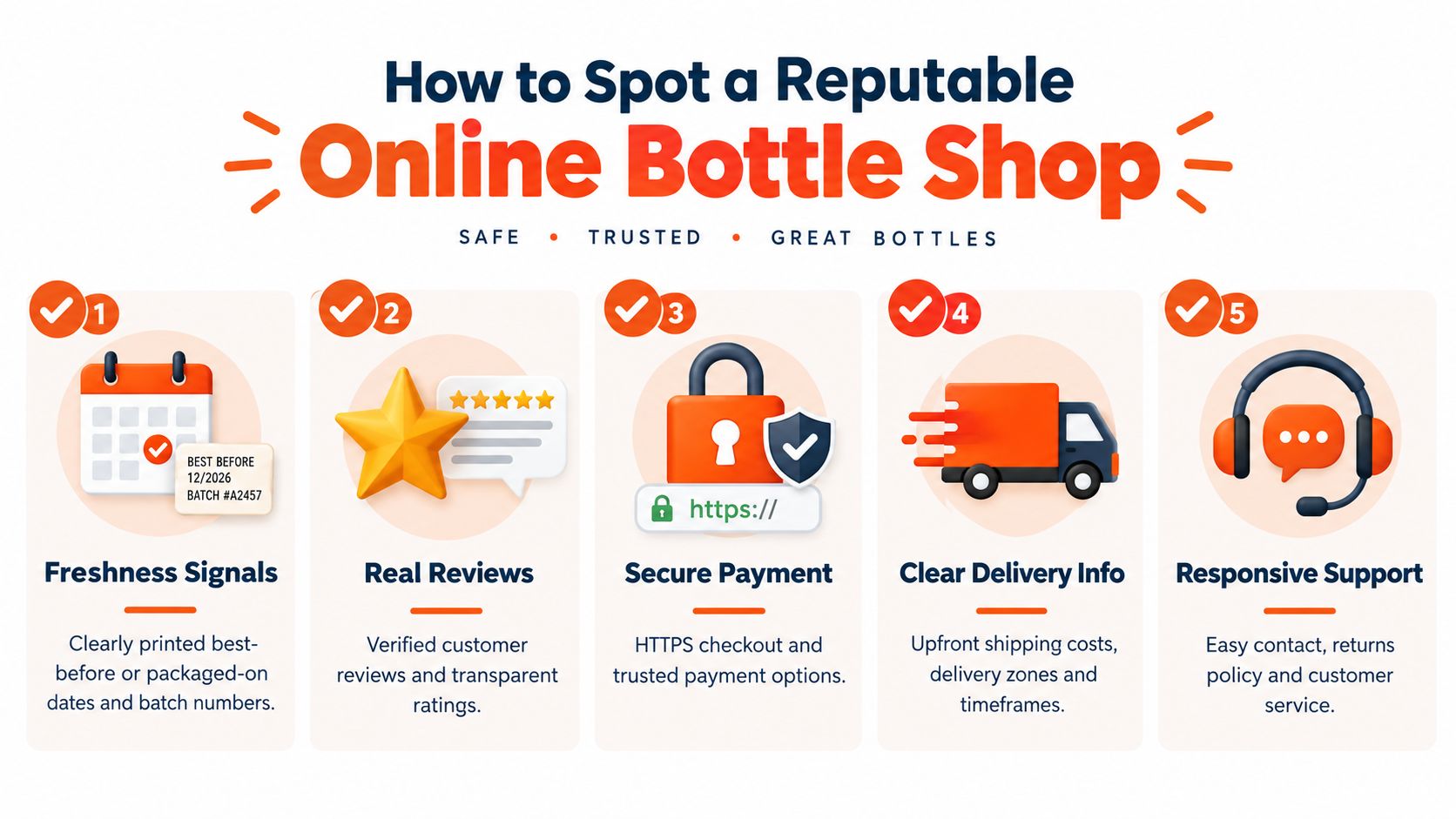
Five checks before you pay
- Check the licence: A visible liquor licence number, with the issuing state identified, is a basic trust signal. If you can't find it, ask why.
- Read the product information: Tasting notes should sound like a person describing beer, not a cloud of empty adjectives. Styles, ingredients, packaging details and storage guidance should be clear.
- Look for a useful range: Independent Australian producers, mixed packs and cartons give you more choice than a shop built around a narrow list of familiar brands.
- Inspect the delivery process: The site should explain adult signatures, ID checks, plain packaging, delivery zones and what happens if nobody eligible is home.
- Test the support channel: A working contact method and a clear returns or damaged-goods policy matter more than a glossy badge at checkout.
Mixed cartons are revealing. A retailer that lets you build a sensible selection, breaks cases transparently and explains the per-can cost is generally easier to trust than one pushing single bottles at a premium without showing the maths. Prices that look suspiciously low for supposedly fresh, carefully handled beer deserve questions, not instant celebration.
ABAC rules also apply to online bottle shop advertising, social content, competitions, retailer advertising, point-of-sale material, packaging and marketing collateral. The ABAC Responsible Alcohol Marketing Code says marketers must use available age-restriction controls to limit visibility to minors. Facebook and Instagram branded alcohol content must be age-gated to people aged 18 or over, as explained in ABAC's platform guidance.
Direct From the Brewery or Through a Third-Party Shop
I favour direct from the brewery when freshness and discovery matter. I favour a third-party shop when range and one-cart convenience matter more. There's no virtue in pretending one channel wins every order.
| Factor | Direct From Brewery | Third-Party Online Bottle Shop |
|---|---|---|
| Freshness | Often clearer because the producer controls stock and dispatch | Depends on the retailer's storage and rotation |
| Range | Usually limited to one brewery's lineup | Can combine products from many producers |
| Releases | Better access to brewery-specific drops and seasonal stock | Easier access to a broad selection in one checkout |
| Basket design | Mixed cartons can be built around the brewery's beers | A single order can cover several breweries and styles |
| Producer margin | More of the purchase supports the producer's own channel | The retailer takes a role in the sale and fulfilment |
| Delivery | Interstate coverage and minimum orders can vary | Combined shipping may simplify a multi-brand order |
| Main risk | Limited choice or less flexible delivery | Older stock or less visibility of the producer's handling |
A Gold Coast brewery shipping a fresh NEIPA direct can give you a clearer packaging date and a shorter route from brewery stock to your fridge. A national retailer may let you add a Mornington Peninsula pale ale, a Queensland lager and an imported specialty beer in the same basket. That convenience has real value, especially if you're organising a shared order.
The catch is stock age. A third-party shop may have excellent storage, but you should still ask how it rotates beer and whether its product pages show useful date information. Direct ordering can also cost more per delivery if the brewery has a minimum order threshold or doesn't service your region as efficiently as a national network.
The commercial choice
Direct-to-consumer technology makes the brewery's website part of the retail experience. A useful example of a polished wine-commerce build is this branded Shopify implementation example, which shows how a producer can present products, brand and buying journey in one place.
Choose direct when you care about packaging freshness, brewery-only releases, producer support and a focused tasting journey. Choose third-party when you want one cart, broad comparison and combined delivery. For a first order from a local independent producer, direct is usually the better way to understand the beer and the people making it. For a party basket spanning several regions, the third-party shop earns its place.
Getting Real Value Out of Cartons and Mixed Packs
The smart online beer order is usually planned, not rushed. Australia Post's reported average online liquor basket of A$120.44 indicates that online buyers often put together a more substantial shop, and that makes sense once delivery enters the equation. A small order can leave you paying freight for very little beer, while a well-built carton spreads the transport cost across the whole basket. See the Australia Post liquor e-commerce report for the underlying basket context.
Don't copy a rigid 24-bottle formula just because a graphic says it saves money. The actual saving depends on the seller's product pricing, delivery fee and any minimum order threshold. Work out the delivered cost per can, then compare it with buying singles locally.
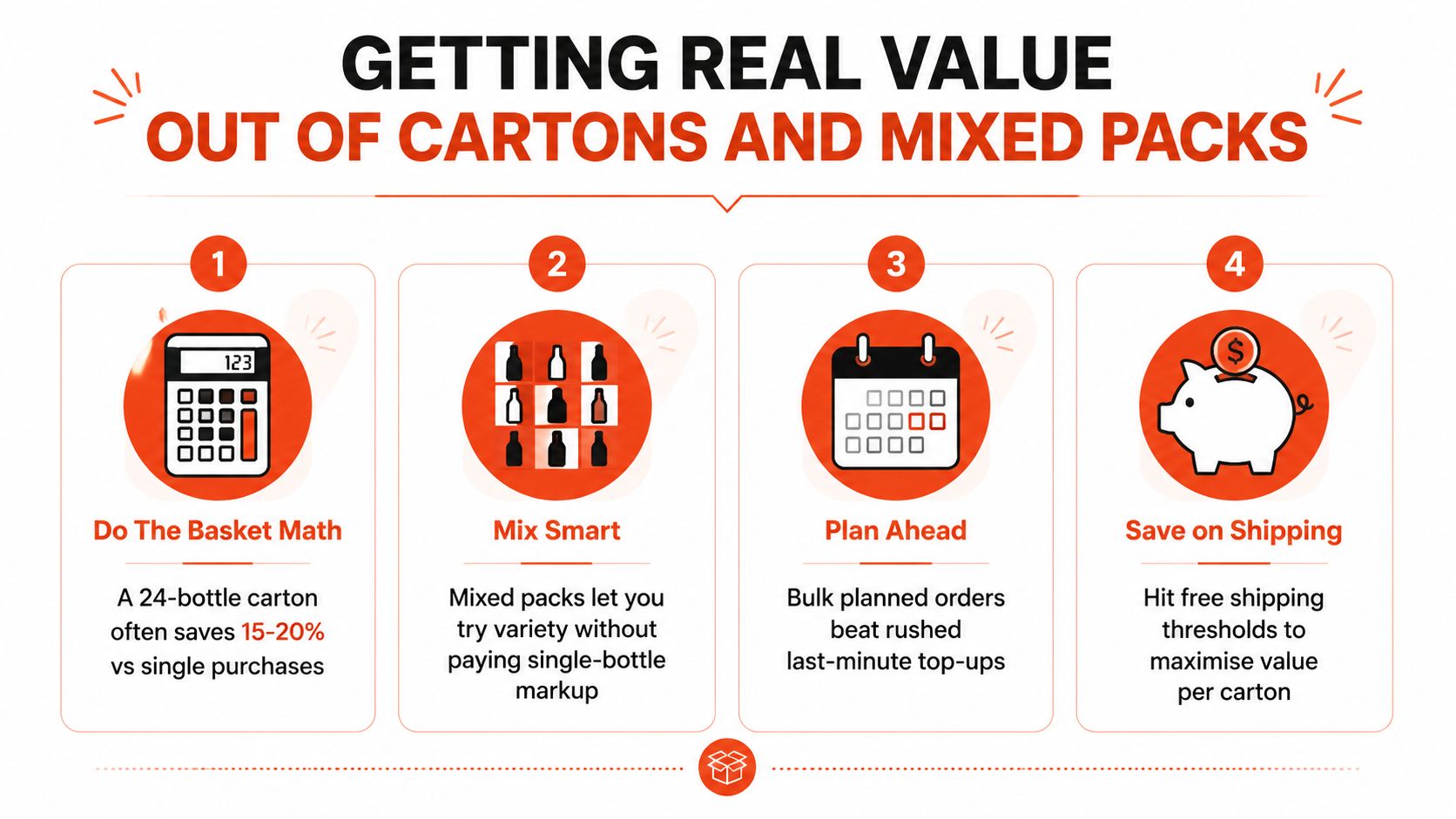
Build for how you'll drink
A balanced mixed carton should match your actual habits rather than a marketing bundle. You might choose:
- Easy weeknight beers: Keep lighter, familiar styles for casual meals and low-fuss evenings.
- Hop-forward options: Add IPAs or pale ales for the nights when you want aroma and bitterness.
- Darker beers: Include porters or stouts if you enjoy fuller malt character and want variety across the season.
- Wild or fruited styles: Treat these as occasional exploration rather than filling the carton with beers you may not reach for.
The Australian craft beer buyer is often motivated by quality, freshness and variety, not price alone. Mixed packs work because they reduce the commitment of choosing one full case while still creating enough volume to make delivery feel sensible. They're particularly useful for explorers who want to compare styles without buying every can separately.
The trick is honest maths:
- Add the product total and delivery fee.
- Divide by the number of cans or bottles.
- Compare that delivered unit cost with local singles or a full case.
- Check the date and storage guidance before ordering more than you can drink responsibly.
Read more about choosing a suitable selection in this guide to mixed beer packs in Australia. Once the carton arrives, keep it away from direct sun and heat, and don't leave it sitting at the front door. Good packaging can't undo poor storage after delivery.
Your First Online Beer Order Checklist
You don't need to become a beer buyer overnight. Run through this list before you hit pay, and you'll avoid most of the mistakes that make online alcohol ordering frustrating.
Verify the seller and destination
- Find the liquor licence: Check that the online bottle shop displays its licence details and identifies the issuing state.
- Confirm your address: Enter the actual street address, not a parcel locker, and check that the seller delivers to your Queensland suburb or regional location.
- Read the delivery window: Same-day courier services have cut-offs, and those cut-offs can differ between Brisbane, the Gold Coast and surrounding areas.
Check the beer itself
- Look for freshness information: Packaged-on dates, best-before guidance, batch details and storage notes show whether the seller understands the product.
- Read the substitution policy: Mixed packs may change when a beer is unavailable. Know whether the seller selects a replacement or contacts you first.
- Match the basket to your plans: Buy beer you'll drink, rather than filling a carton with styles that look interesting but don't suit your fridge or meals.
Make the basket work
- Compare delivered cost: Include freight before deciding whether a carton or mixed pack represents value.
- Use volume deliberately: A larger basket can make shipping more practical, but don't order more than you can store and consume responsibly.
- Choose variety with purpose: Combine familiar beers with a few exploratory choices so the order remains useful rather than becoming a tasting challenge you never finish.
Organise the handover
- Make sure an adult is available: Alcohol delivery requires the right person to receive the order and complete the ID check.
- Expect refusal where necessary: A compliant driver shouldn't leave alcohol unattended or hand it to an unsuitable recipient.
- Plan for the courier: If you're ordering in Queensland, check the same-day cut-off and choose a delivery time when somebody can sign.
ABAC also prohibits alcohol advertising that suggests drinking improves mood, overcomes problems, guarantees success or provides health benefits. It restricts depictions of excessive or rapid drinking and alcohol before risky activities such as driving or swimming, as set out in ABAC's current advertising information. Those standards are a useful reminder that a responsible online bottle shop should sell the product clearly, without pushing reckless behaviour.
Use the state rules and direct-from-brewery comparison above as your final filter. If the licence is unclear, freshness is unexplained or the handover process sounds casual, keep your card in your wallet.
Carbon 6 Brewing Pty Ltd offers direct-to-consumer craft beer ordering from Stapylton on Queensland's northern Gold Coast, including mixed-pack options for buyers who want variety rather than a rushed single purchase. Visit Carbon 6 Brewing Pty Ltd to explore the current range and organise your next responsible online beer order.