

Teku Beer Glass Guide Aroma Design and Aussie Choice
Sep 18, 2026
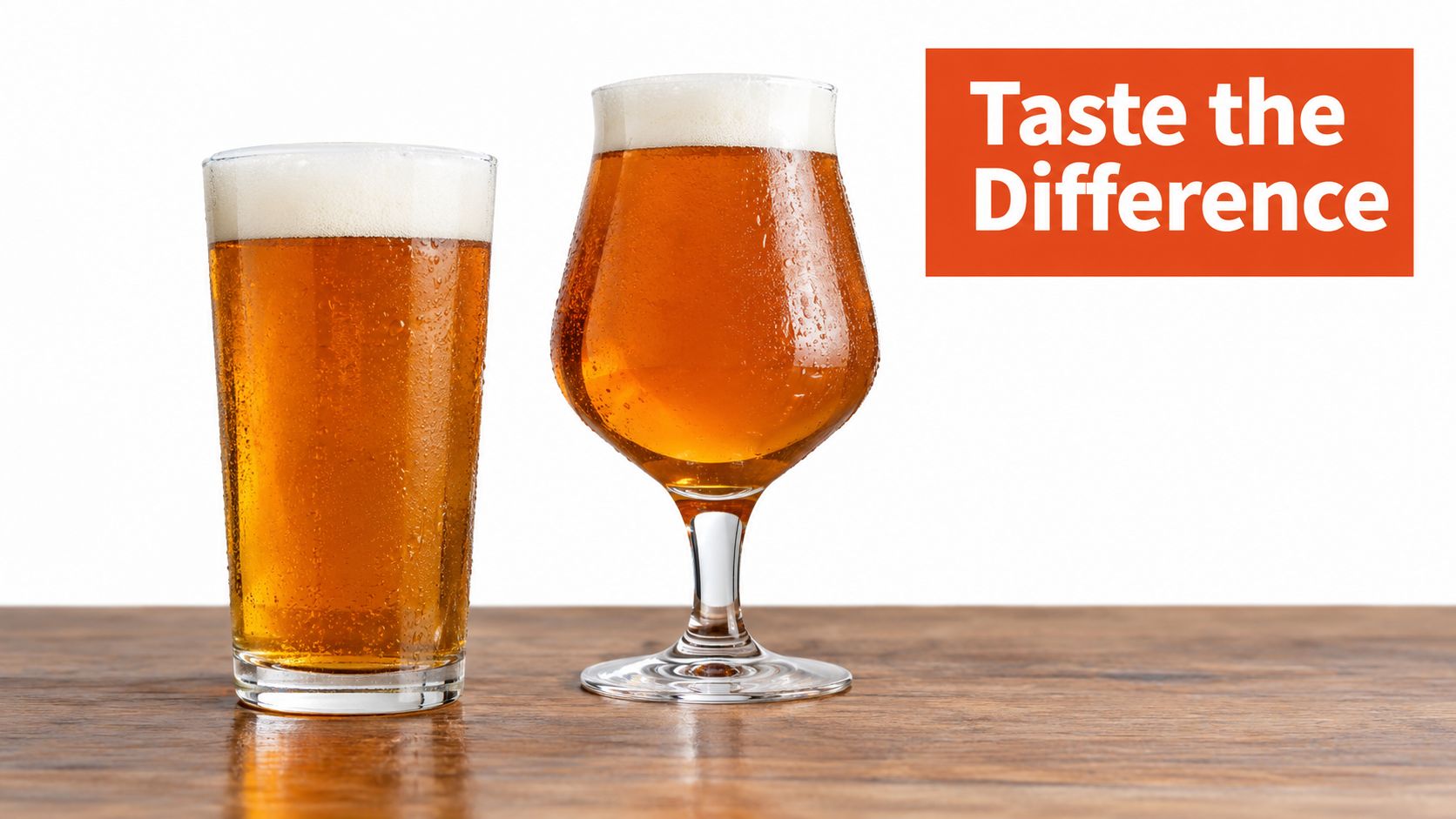
You've poured the same amber craft beer into a familiar schooner and a stemmed Teku. The beer hasn't changed, yet the first sniff seems brighter from one glass, while the other gives you a broader, simpler impression. That difference isn't magic. The shape changes how aroma gathers, how foam sits on the surface and how the beer reaches your mouth.
The Teku beer glass was designed as a universal craft-beer tasting glass, but Australian drinkers have a practical question to answer: does it offer a noticeable improvement over the everyday schooner or pint? The answer depends on the beer, the pour and what you want from the session.
This guide starts with the physical shape, then follows the path from glass geometry to aroma, head retention and mouthfeel. It also compares the Teku with familiar Australian glassware, looks at sizes and materials, and finishes with care and buying advice for curious drinkers who value quality without chasing unnecessary fuss.
Introduction Why Your Glass Changes Your Beer
A glass doesn't alter the beer's recipe, but it can alter your experience of that recipe. Pour a hop-forward beer into a wide, straight-sided vessel and its aroma has more room to disperse. Pour it into a bowl that narrows towards the rim and more of that aroma can collect near your nose before each sip.
That's why a glass is more than a container. It helps organise the tasting sequence. You see the colour, notice the foam, smell the beer and then taste it, with each stage shaping the next.
For an Australian drinker, the comparison needs to stay grounded in local habits. A 425mL schooner is widely used in New South Wales and Queensland, so it's a natural benchmark for judging whether a Teku earns space in the cupboard. Australian retailers also sell Teku glasses in formats that sit close to familiar serving volumes, rather than treating the glass as an imported curiosity.
The useful question isn't whether the Teku looks more sophisticated. It's whether its shape helps you notice more in the beer you're actually drinking.
A schooner remains a sensible choice for a refreshing pub pour, a meal or a casual beer with mates. The Teku becomes more interesting when you want to slow down and investigate aroma, flavour and foam, particularly with expressive craft styles.
The emotional driver behind buying one is usually simple. You're not paying for a fancy prop. You're looking for a better way to appreciate a beer you've chosen carefully, especially when the details matter more than drinking quickly.
What a Teku Beer Glass Is and How Its Design Works
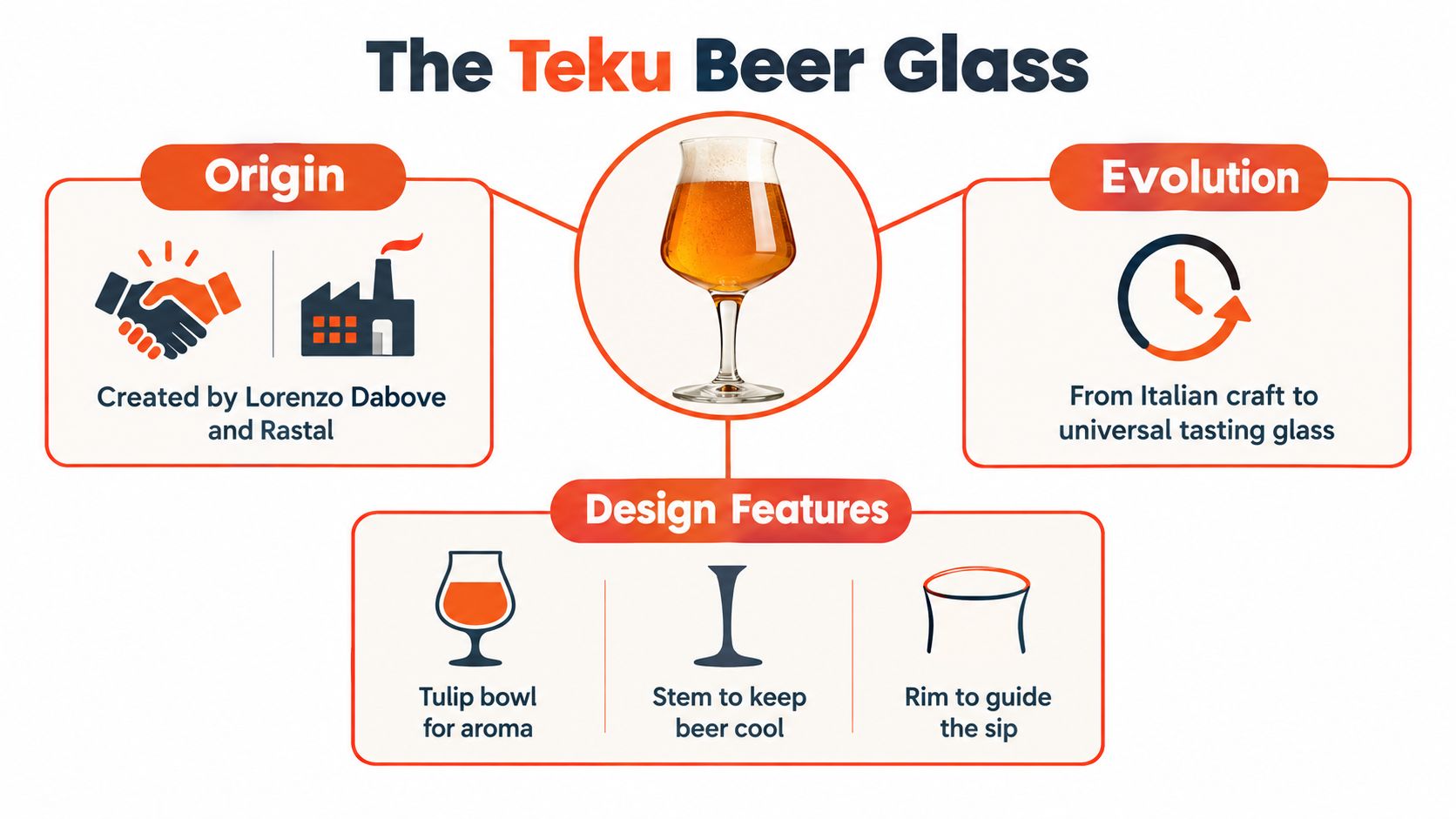
Pour a pale ale into an ordinary schooner and you get a familiar, easy-going serve. Pour the same beer into a Teku and the shape changes how aroma gathers, how foam sits and how comfortably you can inspect the beer. The Teku was developed by Italian beer expert Lorenzo Dabove, known as Kuaska, and Rastal, the glassmaker. Australian retailers describe it as a universal craft beer tasting glass, suited to aromatic styles and drinkers who want more sensory focus from a pour, as shown by Australian Teku glass specifications and retail positioning.
Its profile combines features associated with wine glasses and beer vessels. The bowl gives aroma space to collect, the upper section narrows that space towards your nose, and the stem keeps your hand away from the beer-filled bowl. The result is a practical tasting tool, not an imported novelty.
Start with the bowl
The angular, tulip-like bowl creates a broader aroma zone than a straight-sided glass. A gentle rotation brings more beer into contact with air, helping aromas gather inside the bowl instead of disappearing immediately. You do not need to swirl hard. A small movement is enough.
The bowl also gives the foam a defined surface to form against. That matters because the head carries aroma and shapes the texture of the first sip.
Notice the rim and stem
Common Australian Teku glasses are typically specified at 420mL to 425mL, with a narrow mouth opening of around 63mm and a tapered rim around 60mm. These dimensions appear in local product descriptions, including One Drop Brewing Co's 425mL Teku listing.
The stem separates your hand from the bowl. Holding the stem or foot limits direct contact with the beer vessel, which helps you examine and taste the pour without warming the bowl as quickly.
See the Australian adaptation
Local suppliers stock Teku variants in 330mL, 420mL, 425mL and 460mL capacities. Brew HQ's 460mL Teku listing places the format alongside familiar Australian serving norms, including the schooner.
That range makes the glass useful for different beers and occasions. A smaller pour leaves room for foam and aroma, while a larger format suits a generous home serve. Choose according to the beer, the occasion and the space you want above the liquid.
How the Teku Enhances Aroma Head Retention and Mouthfeel
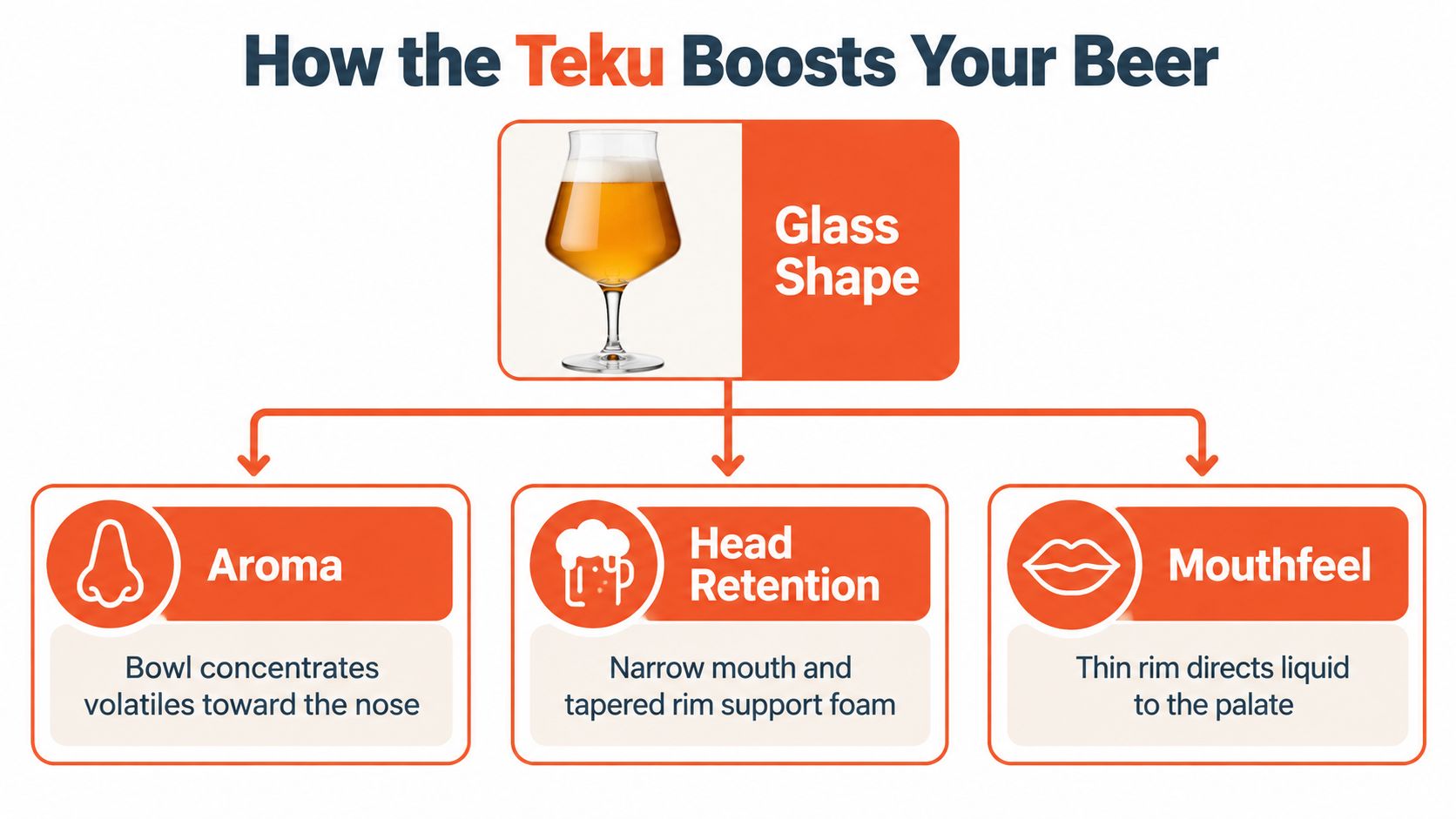
The sensory benefit starts at the nose. Beer contains aromatic compounds that rise from the liquid, and the Teku's bowl and narrowing upper shape help direct those aromas towards you. With a hazy IPA, that can make hop character feel more immediate. With a stout, it can bring roast, coffee-like and chocolate-like impressions closer to the front of the tasting.
The glass doesn't create new flavour. It changes the route your senses take to the existing flavour.
Aroma arrives first
Hold the glass by the stem and bring it towards your nose before sipping. The tapered opening gives aroma a more concentrated path than a broad-mouthed pub glass. You may notice a clearer distinction between citrus, resinous, floral or malt-led impressions, depending on the beer.
That effect is especially useful for styles Australian sellers commonly recommend for the Teku, including IPAs, stouts and Belgian ales. Carbon 6 Brewing's beer tasting glass guide provides further context on how different shapes influence the tasting experience.
Foam supports the first sip
The narrow mouth and tapered rim help support the head as you drink. A stable head can hold aroma above the beer and maintain a more consistent texture across the pour. A dirty or greasy glass can undermine that result, so glass cleanliness matters as much as the silhouette.
You'll often notice this most with beers that arrive with a lively pour and expressive aroma. The Teku gives the foam a more deliberate stage, rather than letting it spread thinly across a wide surface.
The rim shapes the sip
The relatively fine rim affects how the liquid meets your lips and palate. Instead of a thick edge dominating the first contact, the beer arrives through a narrower, more controlled point. That can make the texture feel tidier and help you focus on the beer's balance.
Sensory rule: aroma sets up the sip, foam carries the impression and the rim helps deliver the beer cleanly.
Try the same beer in a schooner and a Teku without changing the temperature or pour. Smell both before tasting, then take small sips. You're looking for a difference in perception, not a claim that one glass makes every beer better.
Teku Compared With Schooner Pint Tulip and Snifter
The Teku makes the most sense when you compare it with glassware already used around Australia. A 425mL schooner is a particularly useful reference for drinkers in New South Wales and Queensland, where that serving size is familiar in pubs. It offers practicality, easy handling and a straightforward drinking experience.
A pint usually gives you a broad, versatile vessel for a larger serve. A tulip brings some aroma focus without the Teku's angular, stemmed profile. A snifter offers a wide bowl and narrowing top, making it suited to strong or richly aromatic beers where you want room to explore the nose.
| Glass Type | Aroma Focus | Head Retention | Best For |
|---|---|---|---|
| Teku | High, with a tapered aroma path | Strong support from the narrowing bowl and rim | Craft-beer tasting, IPAs, Belgian ales and aromatic beers |
| 425mL schooner | Moderate, with an open drinking profile | Practical rather than aroma-led | Everyday pub serves and familiar Australian pours |
| Pint | Moderate to lower, depending on shape | Reliable for general drinking | Larger casual serves, lagers and easy-drinking beers |
| Tulip | Strong, with a curved bowl | Good support for expressive foam | Hoppy beers, Belgian styles and general craft use |
| Snifter | High, with a broad bowl and narrow top | Useful for rich, strong beers | Full-bodied, barrel-aged or spirit-forward beers |
Australian glassware retailers continue to position the Teku as a niche craft item rather than standard tableware. Beer Cartel's Australian beer glassware range reflects that distinction, with specialist shapes sitting alongside more familiar household and pub formats.
Choose by occasion
The schooner wins when you want a durable, uncomplicated serve. It's a good fit for a barbecue, a meal or a beer you plan to drink without analysing every detail. The pint offers similar convenience when volume and familiarity matter more than aroma direction.
The Teku earns its keep during a tasting, when opening a carefully selected can or when comparing beers side by side. Its stem and narrower rim ask you to handle the beer with a little more care, which can be a benefit when you're deliberately paying attention.
For a broader look at local serving terminology, Queensland beer glass sizes helps place the Teku beside the formats Queensland drinkers already recognise.
The practical verdict
The Teku isn't a replacement for every glass in the cupboard. It's a specialised tool that can provide a noticeable sensory gain with aromatic beers, while a schooner remains perfectly practical for everyday drinking.
If your favourite beers are hop-forward, yeast-driven or malt-rich, the Teku is easier to justify. If most of your drinking is casual draught lager, the improvement may feel less important than durability and convenience.
How to Choose the Right Teku Size and Material for You
The right Teku starts with your usual pour. Australian suppliers offer 330mL, 420mL, 425mL and 460mL variants, giving you options from a compact tasting serve to a roomier home pour. A smaller glass suits flights, stronger beers and side-by-side comparisons. The 420mL and 425mL sizes sit nearer to familiar Australian serving habits, while 460mL leaves extra space for foam and a larger serve.
The capacity printed on the bowl is a limit, not an instruction to fill it to the brim. A schooner remains the everyday reference point. Choose the Teku size that gives your local pour enough headroom without making the serve feel awkward.
Use this buying checklist
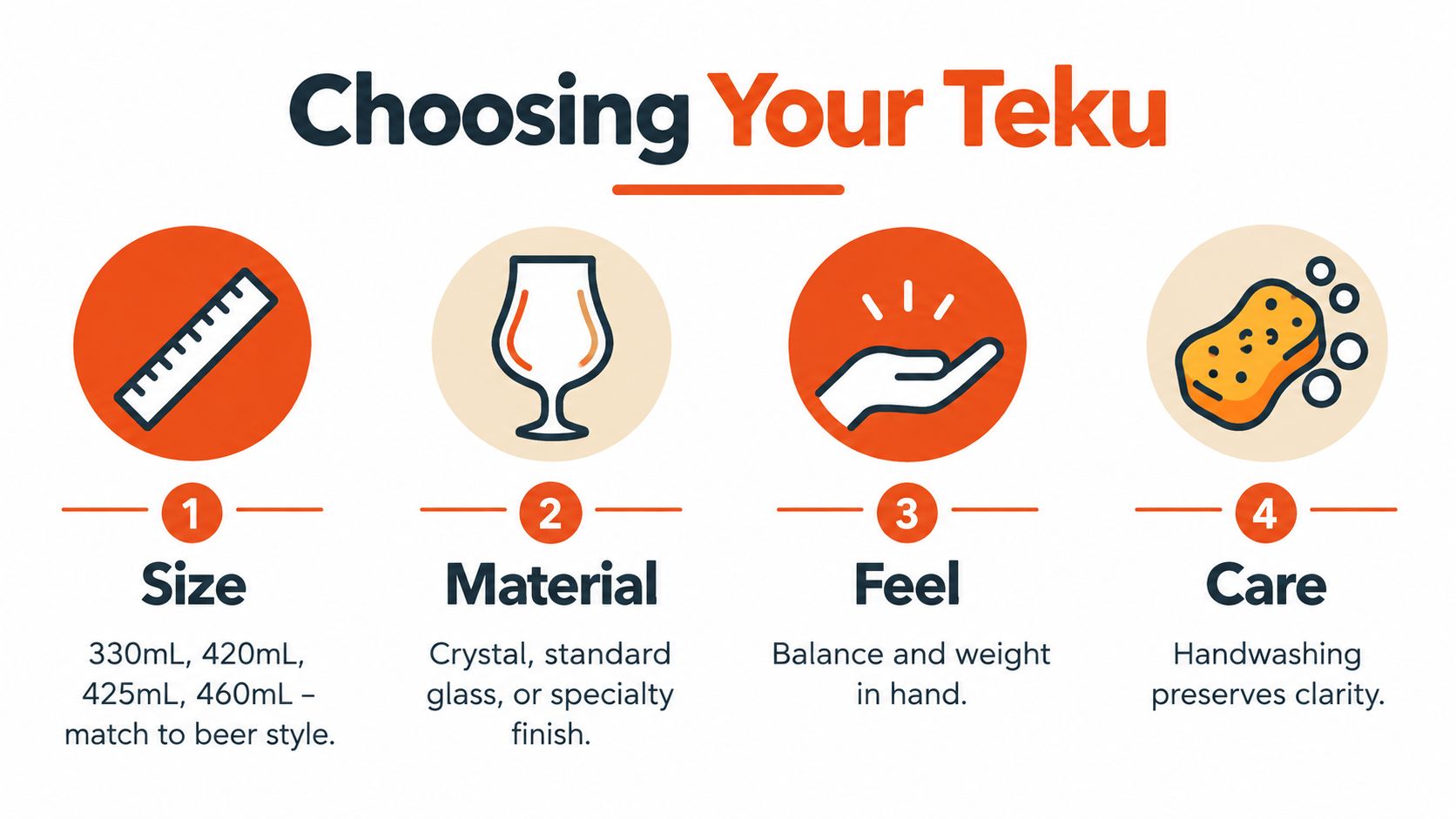
- Size: Choose 330mL for compact tasting pours, 420mL or 425mL for a familiar Australian middle ground, or 460mL when you want more room for foam and a larger serve.
- Material: Crystal can provide clear colour viewing and a lighter feel. Standard glass may suit regular use where practicality matters more. Finishes also affect appearance and handling, so inspect the rim and stem.
- Feel: Hold the glass by the stem where possible. A balanced foot, comfortable stem and steady bowl make slow tasting easier.
- Care: A thin rim and stem need safe washing and storage. Check that the chosen size fits your cupboard, dishwasher routine and shelf space.
Material changes more than appearance. Clarity lets you inspect colour and foam, while sturdier glass can feel more reassuring for frequent use. The choice is practical: a crystal Teku may suit careful tastings, whereas standard glass may make more sense beside the barbecue or during an ordinary evening pour.
For further shape, use and care considerations, see this beer glass buying advice from Simply Hospitality. The useful test is how the glass fits your habits, not whether it is the lightest, most decorated or most expensive option.
Australian retail listings commonly place individual Teku glasses around A$13.48 to A$20.00, with pairs around A$25.99. Treat those figures as a guide to the local specialty segment and check the current listing before buying.
Caring for Your Teku Cleaning Storage and Handling Tips
A Teku works best when it's clean. Grease, lipstick, scented detergent and rinse-aid residue can interfere with foam and leave aromas muted before the beer reaches your nose.
Hand washing is the safest routine for a delicate stem and rim. Use warm water, a small amount of unscented detergent when needed, and a soft glass brush that won't scratch the bowl. Rinse thoroughly so no cleaning scent remains.
A simple care routine
- Wash promptly: Don't let dried beer residue sit around the rim or in the bowl.
- Avoid fragrance: Strongly scented washing-up liquid can leave an unwanted smell that competes with the beer.
- Rinse completely: Pay attention to the inside surface, where residue can affect foam.
- Air-dry safely: Place the glass upside down on a clean rack or allow it to drain naturally. A cloth can leave lint or transfer grease.
- Handle the stem carefully: Support the bowl and foot when moving several glasses, rather than gripping the stem tightly.
- Store with space: Keep the rim away from hard shelves, crowded glassware and areas where it can be knocked.
A dishwasher may be convenient, but heat, movement and contact with other items can put pressure on the stem and thin rim. If you use one, check the manufacturer's care guidance and position the glass where it won't collide with heavier items.
Keep the whole system clean
The glass can only present a beer well if the beer arrives cleanly from the tap. If you serve draught beer at home, beer line cleaning supplies from Star Cleaner Australia Pty Ltd can help you maintain the equipment that feeds the glass.
For the final pour, this beer-clean glass guide offers a practical reference for preparing glassware. The aim is straightforward: no grease, no detergent aroma and no residue that interferes with foam or flavour.
Buying a Teku in Australia Value Responsible Enjoyment and Next Steps
In Australia, a Teku is a practical aroma tool, not a premium import novelty. Local listings offer individual glasses and pairs, with pricing information available in Australian Teku pricing and pack information. Check the current listing before buying, as stock and prices can change.
Value depends on your drinking routine. If you often explore aromatic craft beer or compare pours side by side, the Teku can earn its place. If you mainly want an easy glass for a casual schooner, an everyday schooner or pint may do the job with less care required.
A single glass suits solo tastings and smaller storage spaces. A pair works better for comparing two beers with another adult, or for keeping one available while the other is washed. Neither option wins automatically. The useful question is whether the glass will support how you already drink.
Keep promotion responsible
A product article can become alcohol advertising if it links beer with social success, mood changes or risky behaviour. The ABAC Responsible Alcohol Marketing Code applies to marketing communications within a marketer's reasonable control, including digital communications, social media, packaging, competitions and retailer advertising. The ABAC Code also says marketing must not encourage minors to consume alcohol.
Queensland guidance addresses excessive or rapid consumption, people under 25, claims about improved social outcomes and drinking around activities requiring alertness and coordination. Queensland Business advertising guidance sets out these boundaries.
Digital placement needs the same care. ABAC guidance covers platforms such as YouTube, Facebook, Instagram and Snapchat, with audience-placement requirements to check before publishing an alcohol-related campaign. ABAC's digital marketing guidance provides the relevant framework.
Use millilitres, litres and degrees Celsius, alongside Australian spelling conventions. Australian parliamentary material on measurement and Australian usage provides national context for measurement and usage.
Choose the Teku for expressive beers when aroma deserves closer attention. Keep the schooner or pint for relaxed everyday pours. That comparison answers the practical question: the Teku improves the experience when its aroma-focused shape matches the beer and your attention, rather than because it is imported or specialised.
Carbon 6 Brewing Pty Ltd offers independently made craft beer for Australian drinkers, with online options and local distribution from Stapylton on Queensland's northern Gold Coast. Visit Carbon 6 Brewing Pty Ltd to explore suitable beers, and enjoy them responsibly.