
Best Craft Beer Club in Australia: A Buyer's Guide
Sep 17, 2026
You're on the Gold Coast, it's Friday arvo, and the fridge is full of the same familiar lagers. You want something with more character, but the local bottleshop has a narrow craft range, the brewery taproom is a drive away, and that limited release from Sea Legs, Black Hops or Your Mates has already disappeared. That's the moment a search for the best craft beer club starts making sense.
The right club can solve more than beer selection. It can make brewery discovery easier, reduce the hassle of ordering across state lines, and give you a reliable way to keep fresh independent beer at home. The wrong one leaves you paying too much freight for ageing stock you never wanted. This guide cuts through the curation, Queensland delivery, subscription and responsible-signup issues so you can choose a format that fits the way you drink.

Why Aussie Drinkers Are Searching for a Craft Beer Club
It's Friday on the Gold Coast, the fridge has the usual lagers, and the beers you want are spread across brewery websites, taproom announcements and social feeds. The problem is not a shortage of beer. It is finding interesting beer that's convenient to buy, arrives fresh, and suits Queensland tastes.
A brewery visit can deliver an excellent pour, but getting that beer home may require separate orders, separate freight charges and careful timing. Shipping across state lines can quickly change the value of a mixed pack. A club earns its place by combining discovery with a practical delivery option, ideally through local or nearby breweries rather than older retail stock.
The emotional reason people subscribe
Discovery matters, but avoiding regret matters more. Nobody wants to hear about a small-batch release after it sells out, or pay for a mixed box filled with six beers in a style they already dislike. A good subscription has a clear point of view, useful tasting notes and enough choice to prevent every delivery feeling like a gamble.
Local sourcing adds another reason to subscribe. A box featuring independent Queensland breweries connects the beer to the place you live, while brewery-direct supply can give freshness an advantage over stock that has travelled through several warehouses. That does not make every local box better. Check the brewery mix, packaging dates and delivery conditions before committing.
Practical rule: Choose the club that removes the most friction from your routine, not the one with the flashiest box design.
Check whether the club buys direct or aggregates retail stock, how it calculates freight to Queensland, and whether delivery timing protects freshness. Confirm that you can pause, skip or customise boxes before the first charge. The signup should also handle age checks and alcohol marketing in an ABAC-compliant way, rather than treating responsible service as an afterthought.
A good club should save you from comparing scattered releases every weekend. If it cannot offer fresh beer, transparent freight and a signup process you trust, buying directly from a favourite local brewery may be the better choice.
How the Australian Craft Beer Market Actually Stands
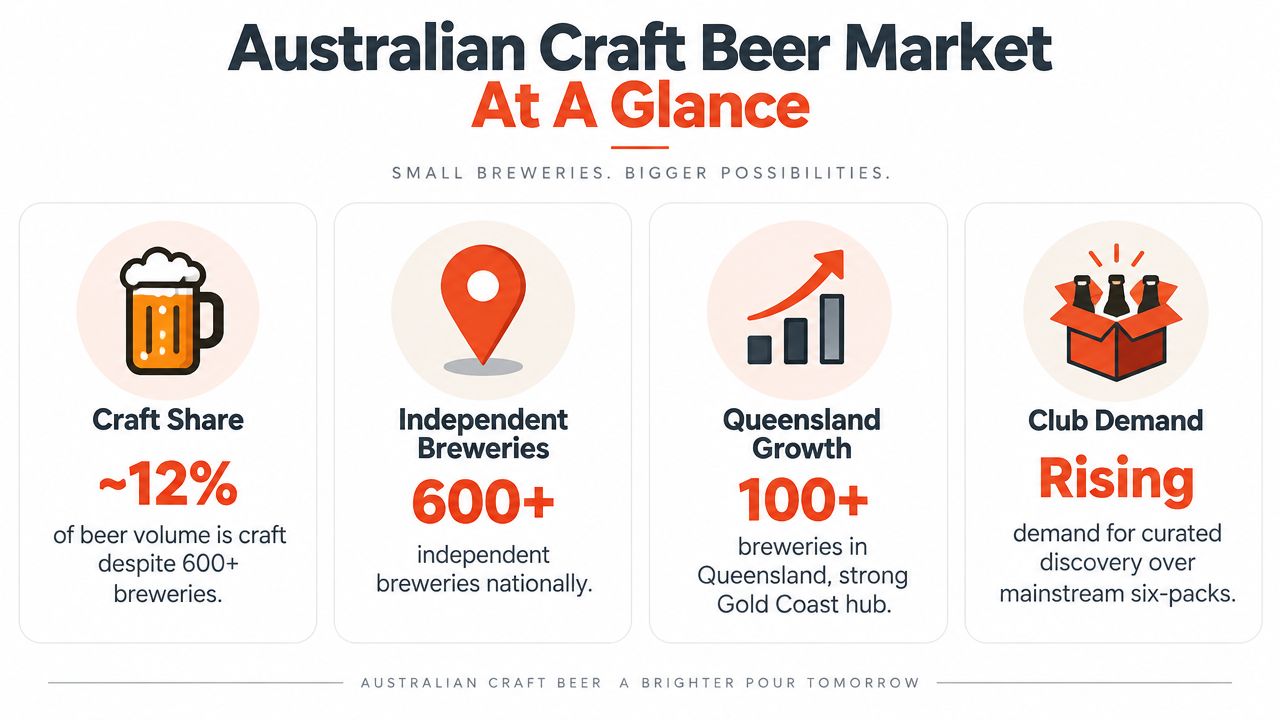
Australian craft beer has enough scale to support a serious club, not just a novelty box. Deloitte reported annual craft beer sales above $370 million, estimated craft beer at 5% of the total Australian beer market, and recorded growth of around 10% per year. Its analysis counted about 350 brewers and microbreweries, compared with 200 in 2013. Deloitte's Australian craft beer analysis supports the case for genuine variety, although a club still needs to curate rather than repeat familiar labels.
Queensland gives local drinkers an even stronger reason to look closely at sourcing. The state strategy recorded annual craft-sector revenue growth of 9.7% between 2013 and 2018, compared with 2.1% for the broader market, and documented nearly 90 independent craft brewers by September 2018. It estimated an annual contribution of $62 million to Queensland's economy and reported that Queensland increased its share of Australia's craft beer market by more than nine percentage points between 2013 and 2018. The result is a substantial local supply base for drinkers in Brisbane, the Gold Coast and regional hubs. Queensland's craft beer strategy provides the state context.
Why the category supports club models
IBISWorld places Australian craft beer production at a $1.9 billion market size in 2026, with 578 businesses and a 2.1% compound annual growth rate between 2021 and 2026. That breadth supports mixed packs, regional rotations and limited releases. It also makes poor curation obvious, especially when a box ships interstate and freight raises the cost of every unwanted can. IBISWorld's craft beer production overview outlines the current industry scale.
Online buying supports larger orders. A survey of more than 14,000 consumers found that 57% had bought beer online in the previous 12 months, compared with 40% in 2019. Cartons and mixed packs therefore make more sense than low-value single-can orders when delivery costs apply. The same survey recorded alcohol-free beer consumption rising from 15% in 2020 to 32% in 2022, giving clubs a reason to include alcohol-free and mid-strength choices for drinkers who want variety without a full-strength beer every time. The Australian craft beer survey results offers that buying context.
The Main Club Formats Compared at a Glance
Choose the format before comparing brands. Australian shipping costs, Queensland freshness and how much control you want matter more than a flashy membership name.
| Format | How it works | Typical AUD price | Customisation | Best for |
|---|---|---|---|---|
| National mixed curation box | A club selects beers from breweries across Australia and ships a recurring mixed pack | Varies by pack size and operator | Usually style preferences, skips or pauses | Drinkers who want broad discovery |
| Brewery-direct subscription | One brewery sends its own core range, seasonal releases or members' selections | Varies by brewery and carton size | Often flavour preferences, release access or pack choices | Local regulars who prioritise freshness |
| Beer-and-snack gift club | Beer arrives with food, glassware or other presentation extras | Varies by inclusions and delivery location | Usually limited on beer selection | Birthdays, celebrations and one-off gifts |
| Explorer or style pack | The selection follows a style, region or brewing theme | Varies by theme and number of beers | Often low, because the theme drives the selection | Curious drinkers who want guided tasting |
| Hybrid retail subscription | A retailer combines recurring ordering with a broader catalogue | Varies by selected products and freight | Often the strongest product choice | Buyers who want subscription convenience with control |
National mixed curation
A national box offers the broadest brewery and regional mix. It suits drinkers who want to compare styles without placing several separate orders. Check the freight terms before subscribing, especially for Queensland delivery. Interstate shipping can make unwanted cans expensive, and a national operator may not prioritise local release timing or heat-aware handling.
Brewery-direct subscription
Brewery-direct is my pick for regular drinkers who already know their preferred styles or want fresher local stock. The range is narrower, yet the brewery, release schedule and route to your fridge are easier to understand. Gold Coast buyers may also have a local pickup option, depending on the brewery. You give up some variety in exchange for clearer provenance and a stronger connection to the producer.
Gift and explorer formats
Gift clubs focus on presentation. Beer, snacks and glassware can make a better birthday package, but the extras rarely suit someone building a regular drinking supply.
Explorer packs provide more direction. Choose one when tasting notes, a regional theme or a defined style matters more than selecting every can yourself. They are less suitable for drinkers who already know they want pale ale, lager or a particular brewery.
Hybrid retail subscriptions
A hybrid retailer offers the most control over products, with recurring ordering layered onto a larger catalogue. It is a practical middle ground if you want subscription convenience but need to adjust styles, pack sizes or freight choices. Read the cancellation, pause and delivery terms carefully, then confirm the signup includes responsible-service and age-verification steps that meet Australian requirements.
My Gold Coast verdict: Pick brewery-direct for local freshness, national curation for discovery, explorer packs for guided tasting and gift clubs for presentation. Choose a hybrid retailer when control matters most.
What Separates a Good Club from a Box-Standard One
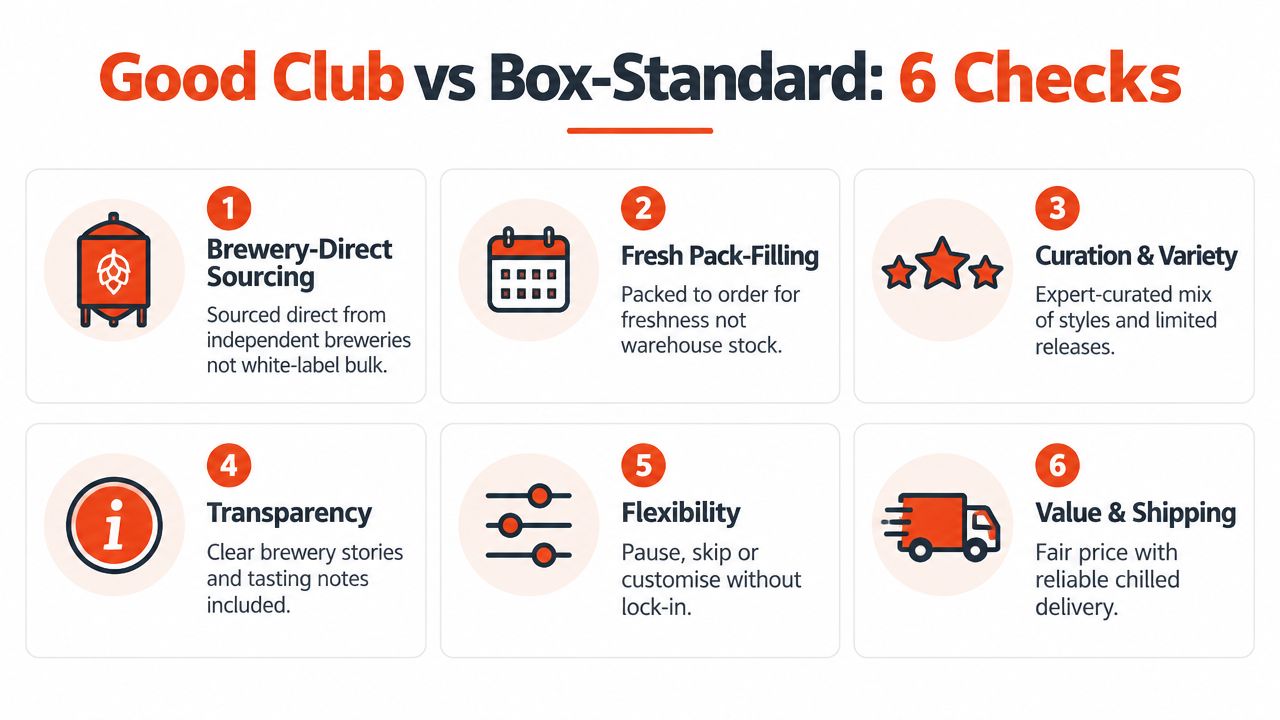
A quality Australian club should show its work. You should be able to find the breweries involved, when the beer was packed and how the operator manages Queensland heat. If those details stay vague, keep your money.
Six checks worth making
-
Brewery-direct sourcing
Named independent breweries beat vague claims about “premium selections”. Direct sourcing connects the club with release dates, brewery information and stock condition. A white-label pack can offer wider variety, but provenance and freshness become harder to assess. -
Pack-filling information
Hoppy beers need sensible stock rotation. Look for clear best-before details and a packing process that does not turn old warehouse stock into a discovery box. -
Summer freight handling
Heat affects the beer before it reaches your fridge. Ask whether dispatch is timed sensibly, cartons receive protection during transit and the club explains its response to delays or damaged parcels. This matters more across Queensland than a polished product page suggests. -
Curation with a reason
Queensland drinkers show a clear preference for Pale Ale at 34% and Lager at 29%, followed by IPA at 10% and Stout at 8%. A thoughtful local pack should reflect that mix, using pale ale and lager as its anchors while rotating IPA and darker styles. The Queensland style preference data gives clubs a useful regional reference point. -
Responsible age-gated signup
A responsible signup needs more than a buried tick box. Check for age verification, clear alcohol terms and marketing controls that fit Australian requirements. ABAC covers digital and social media, competitions, packaging, product names, retailer advertising and other communications within the marketer's reasonable control. ABAC's Responsible Alcohol Marketing Code sets the standard a legitimate club should follow. -
Human customer service
Freight problems happen. The test is simple: can someone answer a postcode, delivery-window or damaged-carton question without trapping you in an automated loop?
Marketing conduct matters after signup as well. ABAC prohibits promotions that encourage excessive or rapid drinking, depict people under 25, strongly appeal to minors, connect alcohol with success or mood change, or show drinking before activities requiring high alertness. Queensland Business guidance on alcohol advertising and promotions explains the practical boundaries.
Check ad placement too. Under the updated rules, alcohol advertising should appear beside content where reliable data shows at least 80% of the audience are adults, with available age controls used. The 80% adult-audience placement requirement matters particularly for clubs buying broad social reach.
Queensland and Gold Coast Delivery Realities
A Gold Coast metro address can make a craft beer club look affordable. A regional Queensland postcode can change the calculation through longer transit times and higher freight, so compare the delivered total rather than the carton price alone.
For South East Queensland, reputable operators may offer short delivery windows between Gold Coast and Brisbane metro areas. Regional routes usually take longer and depend more heavily on the courier network. Check the estimated arrival date at checkout, and confirm whether an adult signature is required. If nobody can receive the parcel, the carton may face a failed delivery or depot collection.
| Club Type | Gold Coast Metro Transit | Regional QLD Transit | Typical Freight Cost | Pickup Option |
|---|---|---|---|---|
| Local brewery-direct | Often the shortest available route | Depends on the brewery's courier network | Usually lower for nearby postcodes, but confirm at checkout | Sometimes available |
| South East Queensland mixed pack | Generally straightforward | Longer and more postcode-dependent | Varies by carton size and destination | Occasionally available |
| National curator | May involve interstate warehousing | More exposure to longer freight legs | Often higher for regional destinations | Rare |
| Retail-subscription hybrid | Depends on dispatch warehouse | Can vary significantly | Check thresholds and exclusions | Depends on retailer |
Heat, timing and collection
Queensland summer adds another delivery risk. Beer left in a hot vehicle or depot can arrive in poorer condition, particularly if the order has already spent time in transit. Select a delivery window when someone can accept the carton and move it somewhere cool.
A parcel locker is not a dependable workaround for alcohol deliveries under current arrangements. Use a staffed address or arrange collection through the retailer where that option is available.
Local collection can make a brewery-direct club practical for Gold Coast drinkers, while regional customers should check the courier coverage before subscribing. A club dispatching from Sydney or Melbourne may offer broader variety, but interstate freight adds handling and another transit leg. Review the guide to beer delivery on the Gold Coast before choosing a delivery setup, especially if you live outside the metro area.
Why Brewery-Direct Often Beats Big National Clubs
Your Gold Coast carton is easier to judge when you know where it came from and how far it travelled. For local subscribers, I'd start with brewery-direct before a large national aggregator. Freshness and local relevance beat endless choice when the beer is going into your own fridge.
A can packaged recently in Burleigh Heads or Yatala has a short route to a Gold Coast address. A mixed pack assembled in a Sydney warehouse can still drink well, but extra handling and storage create more opportunities for quality to slip. The difference shows most in hop-forward beers, where citrus, pine and tropical flavours need freshness to stay bright.
The local advantage
Queensland drinkers tend to favour Pale Ale and Lager, with IPA and Stout taking smaller shares in the available state data. A Queensland-focused pack can use those familiar styles as reliable anchors, then add hazy beers, tropical IPAs, fruited sours or darker releases without turning every delivery into a challenge.
Buying direct can also keep more value with the brewery. It removes a wholesale layer and may shorten the route between the brewhouse and your door. That does not guarantee the lowest delivered price, because postcode and carton size still affect freight. It can improve freshness, brewery support and your understanding of who made the beer. Read the local brewing company information from Carbon 6 Brewing before subscribing, especially if supporting nearby producers matters to you.
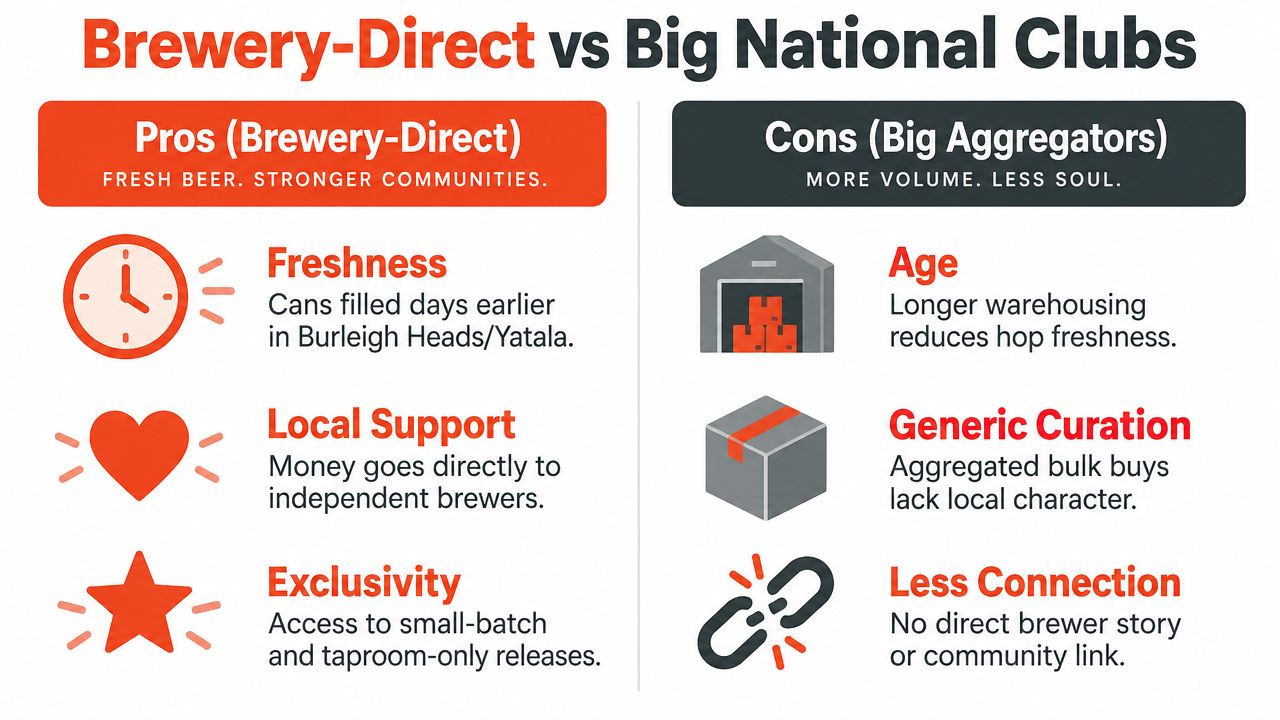
The trade-off is real: Brewery-direct usually brings less variety, occasional stock gaps and a closer relationship with one producer. Choose it if drinking quality matters more than collecting labels.
National clubs still suit broad exploration, gifts and drinkers who want beers from several states in one delivery. They make sense when variety is the priority. If you want fresh beer from independent Queensland producers, give a local subscription or direct mixed pack first consideration. Check the signup flow too, including age confirmation and delivery terms, so the convenience matches the way Australian alcohol orders must be handled.
Matching the Right Club Type to Your Drinking Style
The right club depends on what happens after delivery. Match the format to your drinking routine, available storage and tolerance for freight costs across state lines.
The gift buyer
Choose a curated national box or beer-and-snack format. Presentation, variety and a one-off purchase matter more than controlling every can. Confirm delivery timing, adult-signature requirements and whether the recipient can be home. A polished gift loses its value if it waits at a depot.
Gift inclusions can raise the cost per beer and leave less room for personal selection. That trade-off suits a present, but rarely suits regular fridge stock.
The weekday sipper
Choose a smaller brewery-direct pack with sessionable beers, reliable dispatch and simple pause controls. This drinker wants dependable after-work options, not a new tasting challenge every delivery. A South East Queensland brewery can offer a practical local route, though the delivered price still depends on postcode and carton size.
Mid-strength and alcohol-free options make the box more useful across different occasions. Australian beer drinkers have shown growing interest in alcohol-free choices, so clubs that include them can fit more households without forcing every delivery toward full-strength beer. The earlier survey finding supports treating flexibility as part of the club's value.
The flavour explorer
Choose a rotating discovery club. Limited releases, hazy IPAs, sours, mixed fermentations and detailed tasting notes are the appeal. Broader interstate reach matters more for this drinker than the shortest freight route, but shipping costs can quickly change the value of a national box.
Check how the club handles Queensland heat, transit time and freshness. A rare beer is less exciting after a rough journey or a long wait in a depot.
The home entertainer
Choose a brewery-direct subscription or mixed carton when beer is poured for visitors. Quantity options, larger cartons, keg arrangements or cellar-friendly formats matter more than surprise curation. Local producers can make replenishment simpler, especially for Gold Coast households, while a national club gives wider style variety.
Before committing, check minimum orders, freight thresholds and cancellation rules. Match the club to how quickly your household drinks, not how impressive the first box looks.
Signing Up the Smart Way and Getting the Most Out of It
Start with the responsible basics. You must be 18 or older to buy alcohol, and a delivery may require ID or an adult signature. Legitimate clubs should use age verification before dispatch, and their advertising, signup pages, emails and social creative should align with ABAC's rules on adult audiences, responsible consumption and youth appeal. ABAC's definition of strong or evident appeal to minors covers targeted material, imagery, motifs and merchandise, so avoid operators whose branding leans on cartoon cues or youth-oriented presentation. ABAC's determination on appeal to minors explains the scope of that rule.
Then choose the commitment that matches the reason you're buying:
- One-off mixed pack: Best for testing curation before joining a recurring plan.
- Ongoing subscription: Suits a regular fridge routine, provided pausing and cancellation are simple.
- Prepaid plan: Useful for gifting or setting a fixed budget, but read the delivery and renewal terms carefully.
Before checkout, confirm the freight charge, delivery window, minimum order threshold and auto-renewal setting. Gold Coast metro orders may move quickly, while Far North Queensland and western routes can require more patience. Once the box arrives, record what you liked, note the styles you'd skip and store the beer cool, dark and upright.
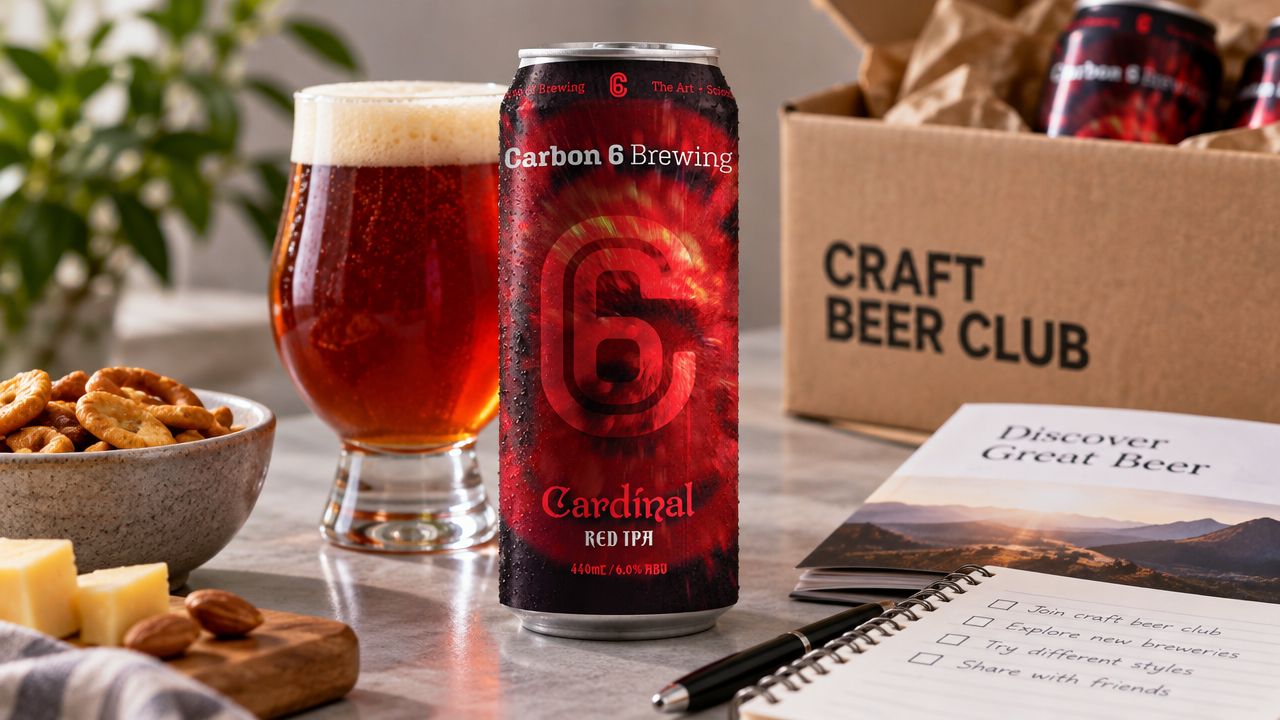
For a style outside the usual pale and lager anchors, Cardinal Red IPA 6% ABV 440ml can combines citrus, pine and tropical fruit aromas with caramel notes, three red malts and a subtle roast. It's listed at 6% ABV, making it the sort of richer, hop-led beer that can add contrast to a mixed pack without defining the entire subscription.
For a practical overview of what to assess in a delivery box, this craft beer subscription box guide is a useful companion. Take your time with the first delivery, pair the beers with food, and judge the club on freshness, selection and convenience rather than the novelty of the packaging.
Carbon 6 Brewing Pty Ltd operates from Stapylton on the northern Gold Coast and offers brewery-direct beer through its Australian online and local distribution channels. If you want to compare a local option against national clubs, visit Carbon 6 Brewing Pty Ltd and check the current range and delivery details before ordering.