
What Is a Craft Brewery and Why Locals Love It
Sep 27, 2026
You're standing in front of the beer fridge at the bottle-o, surrounded by bright cans, unfamiliar brewery names and labels promising hops, sourness, freshness or a taste of somewhere local. One beer is owned by a small brewery down the road. Another looks just as “crafty”, but the brand may belong to a much larger alcohol company. The shelf doesn't always make that difference obvious.
So, what is a craft brewery? In everyday terms, it's a brewery that makes beer with a strong focus on flavour, brewing skill and a distinct point of view, usually at a smaller scale than the major producers. In Australia, though, size alone doesn't settle the question. Ownership and independence matter just as much, which is why the word “craft” can become blurry when a large company buys a small-looking brand.
This guide breaks down the definition in plain English, then gives you practical ways to work out whether a beer is genuinely independent.
What Exactly Counts as a Craft Brewery
Start with the simple version. A craft brewery is a bit like a corner bakery compared with a supermarket bread factory. The bakery may still use professional equipment and produce plenty of loaves, but the people running it have more room to choose ingredients, change recipes and respond to local tastes. A large factory is built around repeatable production, broad distribution and the same result every time.
A craft brewery works in a similar way. Its beers often have a stronger connection to the brewers' ideas, the local market and the ingredients in the recipe. That might mean a hop-forward pale ale, a roast-heavy porter, a tart sour or a lager made with careful attention to fermentation and freshness. Craft doesn't mean every beer must be extreme. It means the brewery has a meaningful hand in what it makes and how it presents it.
Australian research commonly describes a craft brewery as a small, independent brewery producing less than 40 million litres of beer per year, with independence treated as a core condition rather than an optional extra. The definition also captures breweries that are locally focused and known for distinctive or experimental flavour profiles. You can read a plain-language introduction to the category in this guide to what craft beer means.
The three questions behind the label
When you're trying to understand a brewery, ask:
- Who owns it? A brewery may look local while its parent company sits inside a much larger alcohol group.
- How much does it produce? Small scale can support freshness, variety and experimentation, although production volume alone doesn't prove independence.
- How involved is the brewery? Craft brewers generally make deliberate choices about recipes, ingredients, processes and the styles they offer.
These questions matter because “craft” is used both as a description and as a marketing signal. A can may use independent-looking artwork, local language and a small-batch story without making the ownership structure clear.
A useful shelf rule: Don't judge a brewery only by its can design. Check who owns the business and where the beer is actually made.
The edge case is straightforward. A large company can acquire a smaller brewery or brand and keep its craft appearance. The beer might still be well made, but it isn't necessarily independently owned craft beer. That distinction matters to drinkers who want their purchase to support local decision-making, local jobs and a brewer's own creative direction.
The Three Pillars That Define a Craft Brewery
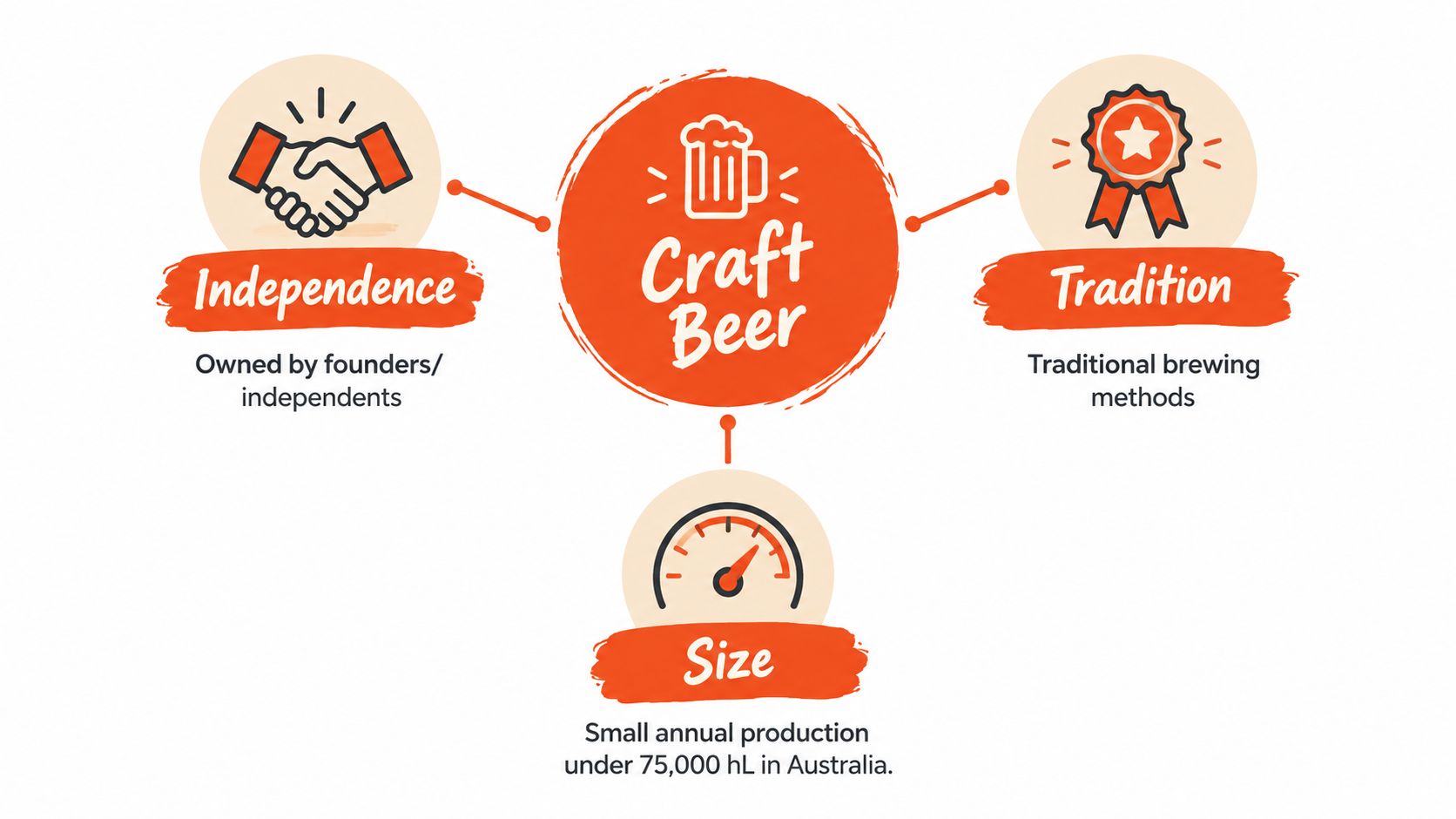
A useful definition rests on three connected pillars: independence, scale and brewing focus. None works perfectly on its own. A small brewery controlled by a multinational isn't independent, while an independent producer that makes bland, highly standardised beer may not match the spirit of craft brewing.
Independence comes first
Some industry definitions use a threshold where less than 20% of the company is controlled by a non-craft member of the larger alcohol industry. That threshold helps separate an independently directed brewery from a brand whose major decisions may sit with a corporate parent.
Ownership affects more than the name on a website. It can influence which beers receive funding, whether experimental batches get approved, how widely a product is distributed and whether a brewer can change direction quickly. An independent brewery may still face commercial pressures, but the people running it retain greater control over those choices.
Scale gives the idea practical boundaries
Another Australian craft definition places annual production at or below roughly 6 million litres, while many local craft brewers operate well below 50,000 litres a year. Those figures help show the difference between a regional producer and a national factory, although they shouldn't be treated as the only test.
For context, a separate Australian industry definition describes a craft brewery as producing less than 40 million litres annually. The thresholds differ because industry groups use definitions for different purposes. The consistent idea is that craft brewing sits within a smaller, more flexible production model than the biggest beer manufacturers. The Australian overview is discussed in this Queensland craft brewing research paper.
Ingredient and process focus gives the beer its character
The third pillar concerns what happens in the brewhouse. Craft breweries tend to make deliberate choices about malt, hops, yeast, water, fermentation, maturation and packaging. Some use traditional methods, while others experiment with new techniques or unusual combinations.
That doesn't mean craft beer must be loud, hazy or bitter. A carefully made pilsner can show just as much intent as a heavily hopped IPA. The important point is that the brewery's recipes and methods express a clear brewing purpose rather than just copying the broadest-selling profile.
A craft-led brewery brings the pillars together. It has meaningful independence, operates at a relatively small scale and takes responsibility for the flavour and process behind its beer. If one pillar is missing, look more closely at the label.
How a Craft Brewery Differs From a Macro Brewery
The easiest way to understand the difference is to compare the businesses rather than memorise a definition. A macro brewery is built for reliable, large-scale production and broad availability. An independent craft brewery usually works with a smaller footprint, a narrower trading area and more room to rotate recipes.
A macro producer may send the same lager through a national or international supply chain. Its priority is consistent flavour, dependable supply and mass-market appeal. An independent brewery may instead release seasonal batches, shift between styles and sell much of its beer through taprooms, nearby pubs and independent bottle shops.
| Aspect | Craft Brewery | Macro Brewery |
|---|---|---|
| Ownership | Often founder-led or independently controlled | Often part of a large corporate group |
| Volume | Smaller annual production and more limited releases | Very large production built for wide distribution |
| Flavour direction | May explore IPAs, sours, hazies, porters and seasonal recipes | Usually prioritises familiar profiles and repeatable consistency |
| Distribution | Taprooms, local pubs, independent bottle shops and direct sales | Major retail chains and broad distribution networks |
| Customer relationship | Personal, local and experience-led | Scaled through packaging, advertising and availability |
That contrast isn't a judgement about quality. A macro lager can be clean, refreshing and exactly what someone wants after a hot day. Craft beer offers a different proposition, one centred on discovery, local identity and a brewer's particular approach.
Follow the beer's journey
Consider two shopping trips. On one, you buy a familiar lager stocked across the country. The brewery's strength is reliable production and access. On the other, you visit a local taproom, taste a limited pale ale and see the brewing tanks behind the bar. The second experience connects the beer with a place and the people making it.
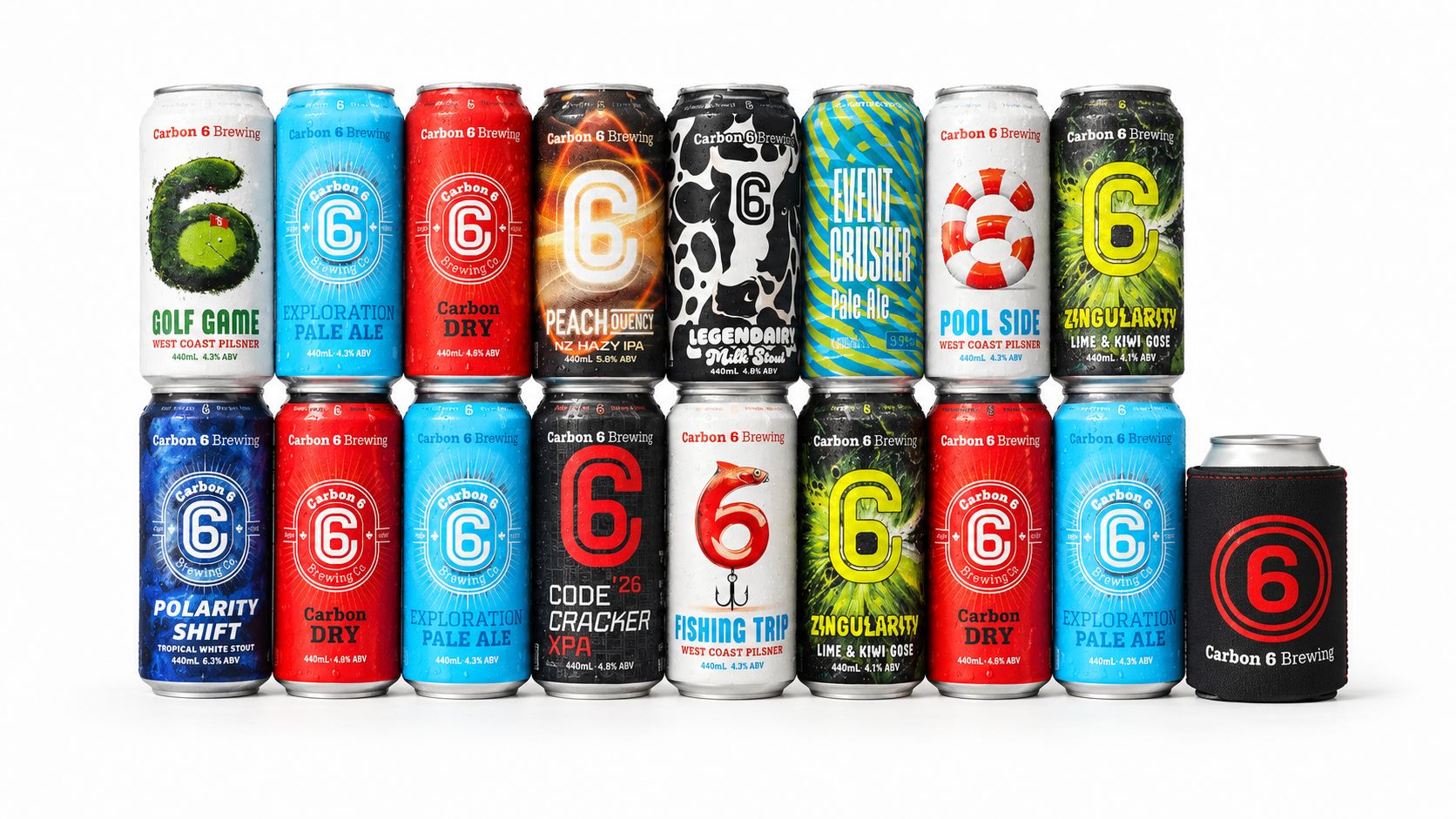
An independent brewery might also package a broad tasting selection. The Mixed 16-Pack, for example, contains sixteen 440mL cans intended to show different beers from Carbon 6's lineup. The selection can change if a particular can is unavailable, so the product should be understood as a mixed tasting format rather than a guarantee of one fixed assortment.
If the beer's story depends on local ownership, check the ownership. If it depends on flavour, taste the beer. Those are separate questions.
At the shelf, use this shortcut: look for independent ownership, modest production and evidence that the brewery controls its recipes and brewing process. A colourful can can invite you in, but it can't answer all three questions.
Common Business Models in Independent Brewing
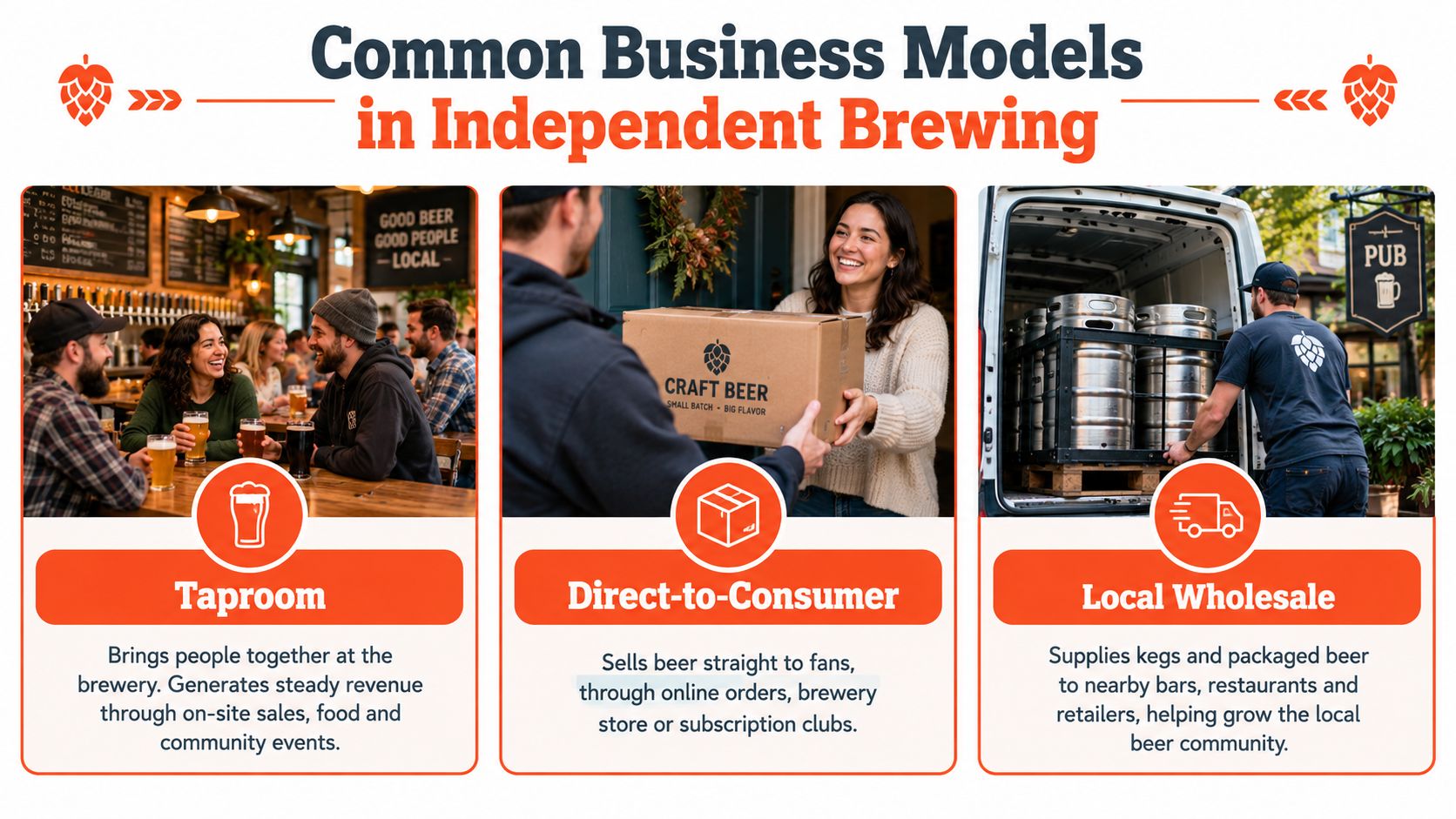
Independent breweries rarely rely on one route to market. A brewery might pour beer across its own bar on Friday night, pack cans for online orders on Saturday morning and load kegs into a van for local pubs later that day. Each channel reaches drinkers differently and carries its own commercial trade-offs.
The taproom turns a brewery into a local venue
At a taproom, the brewery controls the pour, the explanation and much of the customer experience. A first-time visitor might ask for something approachable, receive a taste of a hop-forward pale ale and learn how it differs from a lager. Food, music, tours and community events can make the venue feel more like a neighbourhood gathering place than a production site.
That direct contact helps a brewery build loyalty. Brewers hear immediate feedback, introduce new releases in person and keep more of the customer relationship under their own roof. The limitation is capacity. A taproom can only serve the people who visit, and venue operations bring staffing, food, licensing and hospitality demands.
Direct-to-consumer sales remove a layer
Online stores and brewery-fresh cans at markets give independent brewers a direct path to drinkers' homes. A customer can choose a mixed selection, reorder a favourite and learn about the beer from the brewery's own product information instead of relying on limited shelf space.
The brewer keeps more control over the presentation and customer data, but fulfilment becomes part of the job. Packaging, stock accuracy, delivery coordination and responsible alcohol sales all need attention. DTC works best when the brewery treats logistics as seriously as recipe development.
Wholesale creates reach through local partners
A keg delivered to a nearby pub or a carton placed in an independent bottle shop introduces the brewery to people who may never visit the brewhouse. Restaurants can also use local beer to complement a menu and give diners a regional connection.
Wholesale can grow volume, but the brewery shares margin and depends on another business for tap position, refrigeration and staff recommendations. A buyer may choose a different beer when the keg runs out or the shelf becomes crowded.
Many independents combine these models. A taproom can support food and events, an online store can move packaged beer beyond the local area and wholesale can keep the brand visible in venues across the Gold Coast and surrounding regions. The mix gives a small brewery more than one way to earn a living when demand shifts.
The Australian Craft Brewing Context and Buyer Mindset
Australia's craft brewing scene has moved well beyond a handful of niche producers. An industry estimate places craft beer production revenue at around $1.9 billion in 2025-26, with 578 businesses operating in the segment, according to IBISWorld's Australian craft beer production overview. The figures describe a material manufacturing category, not merely a hobbyist corner of the beer market.
Queensland offers a useful regional example. The Queensland Government's strategy identified nearly 90 independent craft breweries, around 1,700 jobs and an estimated $62 million annual contribution to the state economy. It also described brewpubs that combine beer production with food pairing, live music, tours and community events, as outlined in the Queensland Craft Beer Strategy.
| Metric | Figure |
|---|---|
| Estimated Australian craft beer production revenue in 2025-26 | Around $1.9 billion |
| Craft beer businesses in Australia in 2025-26 | 578 |
| Independent craft breweries identified in Queensland | Nearly 90 |
| Queensland craft beer jobs identified in the strategy | Around 1,700 |
| Queensland annual economic contribution identified in the strategy | About $62 million |
Those numbers help explain why locals care about more than what's in the glass. A brewery can support brewing, hospitality, logistics and events while giving a town or region another reason for visitors to stop. The economic effect grows from the combination of manufacturing and experience.
Buyers often want a story they can verify
Local identity carries real weight. Mintel reported that over a fifth of urban Australians would pay a premium for local everyday goods, a finding summarised by Deloitte's Australian craft beer discussion. For beer buyers, provenance can mean knowing the brewery's suburb, recognising the people behind the label or understanding where the beer is brewed.
The independent seal helps, but it isn't a perfect shortcut. The Independent Brewers Association reports that 67% of craft beer drinkers say independence matters, while 68% of beer consumers don't recognise the independent seal. By 2025, about 95% of packaged beers from IBA members carried the seal, according to the association's FutureBrew roadmap.
That gap creates a practical problem. Drinkers may value independence without knowing how to identify it. Reading ownership information and asking where a beer is brewed can be more useful than relying on visual cues alone. For a broader look at the local category, explore this Australian craft beer movement guide.
Advertising and Marketing Rules Every Craft Brewer Follows
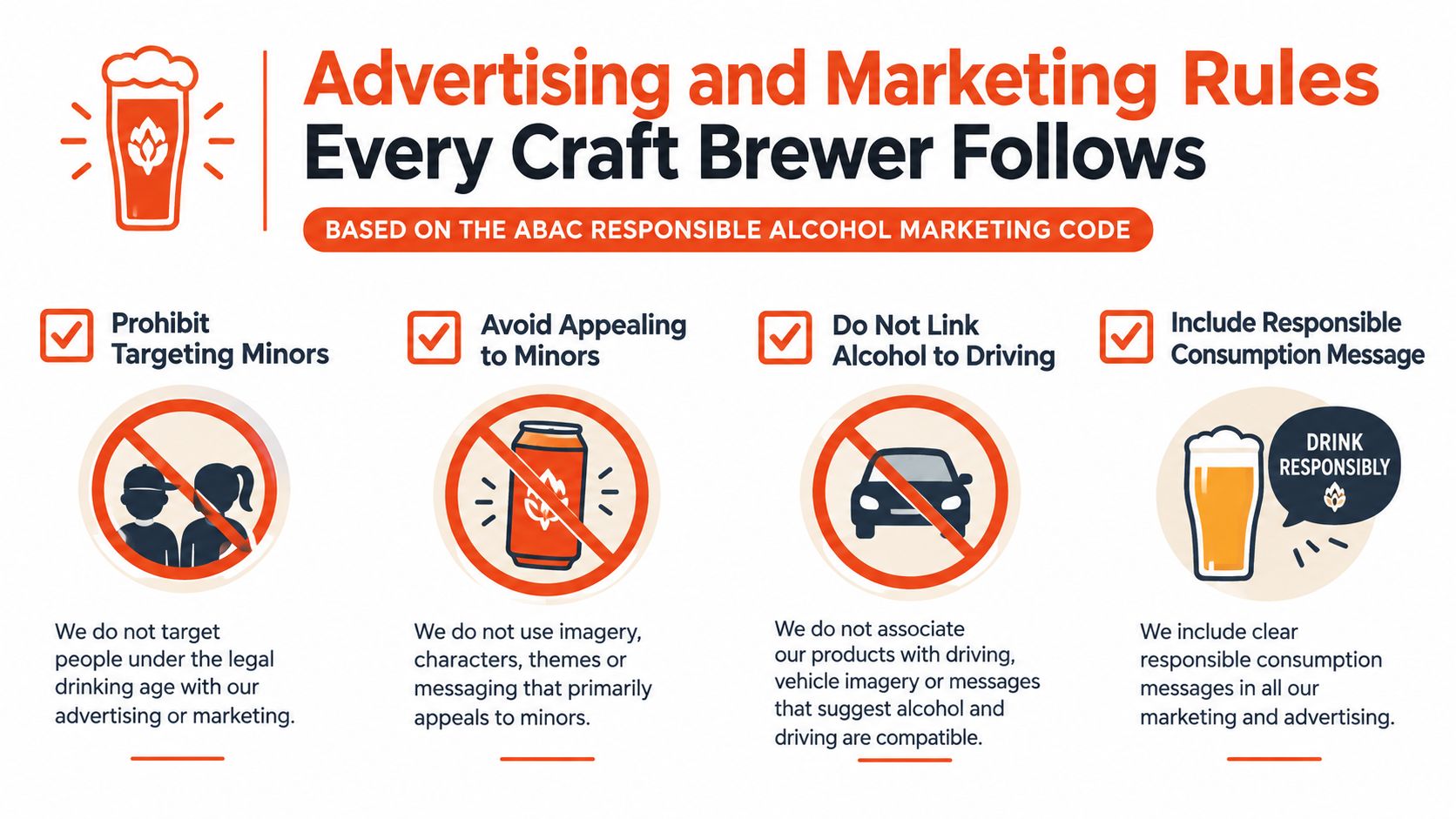
Australian craft breweries can tell stories about place, flavour, ingredients and brewing technique, but alcohol marketing comes with firm boundaries. The ABAC Responsible Alcohol Marketing Code applies to communications within a marketer's reasonable control across digital and social media, packaging, point-of-sale material, retailer advertising and advertorial content. The framework covers both the message and where it appears, as explained by ABAC's Responsible Alcohol Marketing Code.
The practical test is simple: market beer to adults responsibly, and don't use alcohol to promise a better identity or risky behaviour.
What responsible creative looks like
Queensland guidance prohibits depicting people under 25 years old, strongly appealing to minors, encouraging excessive or rapid drinking, or suggesting that alcohol causes success or a mood change. Alcohol advertising also can't link drinking with personal, business, social, sporting or sexual success, or associate consumption with operating a vehicle, as set out in Queensland's alcohol advertising guidance.
For a small brewery, that affects everyday decisions:
- Choose adult-focused imagery: Use brewing equipment, ingredients, venues and clearly adult audiences rather than cartoon characters or youth-oriented themes.
- Avoid risky associations: Don't pair beer with driving, extreme challenges, dares or messages that make rapid drinking look admirable.
- Keep claims factual: Don't present beer as therapeutic or imply it delivers confidence, popularity, achievement or emotional transformation.
- Review placements carefully: An adult message can still create a problem if it appears in a setting that strongly attracts minors.
The framework also includes the pre-vetting service and a complaints and adjudication process, and ABAC guidance notes that marketers must comply with the AANA Code of Ethics. Even a practical item such as branded merchandise needs careful creative choices. Breweries considering promotional can koozie ideas should keep the design adult-oriented and avoid messages that encourage irresponsible consumption.
Compliance doesn't remove creativity. It pushes breweries towards useful stories about ingredients, freshness, local places, food pairing and the work behind the beer, rather than shortcuts based on status, risk or exaggerated promises.
Why Backing Local Craft Breweries Matters and How to Spot the Real Ones
A beer labelled “craft” isn't automatically independent. The ownership question is the one many shelf explainers skip, yet it directly affects whether your purchase supports a founder-led local business or a larger portfolio.
Use a quick check before you buy:
- Read the ownership page: Look for a clear statement about who owns and operates the brewery.
- Look for independent indicators: The Independent Brewers Association seal can help, but lack of recognition doesn't mean the beer is fake craft.
- Check the production story: See whether the beer is brewed on-site, produced at another facility or contract brewed.
- Ask at the venue: Staff at a taproom or bottle shop can often explain the brewery's ownership and brewing arrangements.
The point isn't to reject every beer connected to a larger company. It's to make an informed choice. If independence matters to you, verify it rather than assuming the word “craft” settles the issue.
Buying from an independent brewery can keep more spending connected to regional manufacturing, hospitality and local distribution. It also gives brewers room to keep testing recipes, release small batches and respond to the tastes of their community. Visiting a brewery, asking questions at the bar and choosing brands that clearly meet the three pillars turns your fridge into a practical vote for the kind of beer economy you want.
For more context on how local producers fit into the category, read this local brewing company guide.
Carbon 6 Brewing Pty Ltd operates from Stapylton on Queensland's northern Gold Coast, producing independent craft beer for direct online customers and local wholesale partners. Visit Carbon 6 Brewing Pty Ltd to explore its current beers and choose a format that suits your next tasting session.