
XPA Beer Australia: A Clear Guide to the Style
Oct 05, 2026
You're standing in front of a bottle-shop fridge, surrounded by colourful cans and unfamiliar hop names. You want something aromatic and modern, but not so bitter that it takes over the afternoon. Something refreshing, but with more character than a standard lager.
That's the space XPA beer in Australia has made its own. It offers bright hop flavour, a pale and relatively light frame, and the sort of clean finish that suits a warm arvo, a barbecue or a casual pint with mates. The useful question isn't only “What does XPA mean?” It's when is an XPA the better buy than a pale ale, Pacific ale or hazy IPA?
The Beer That Quietly Took Over the Fridge
At a Gold Coast bottle shop, you pause between a pale ale, a Pacific ale and a hazy IPA. The pale ale looks familiar, the hazy promises a soft fruit hit, and the Pacific ale sounds built for an easy afternoon. XPA earns its place when you want the aroma of modern hops with a cleaner, lighter drinking experience.
That choice helped the style travel well beyond taprooms. Balter XPA launched on the Gold Coast on 8 March 2016, and coverage of its early reception recorded the beer reaching fourth place in the GABS Hottest 100 within eight months of release. A later industry profile described its move into taps, bottle shops and fridges nationwide. Its category recognition included an AIBA Silver for XPA Packaged in 2024 and a third-place result in the GABS Hottest 100 XPA in 2024. Deloitte's Balter profile records that change from a local craft release to a widely available Australian beer.
The decision behind the style
XPA works as a middle-ground choice for drinkers who want flavour without a heavy finish.
- More aromatic than a basic lager: modern hop varieties can bring citrus, tropical fruit, floral notes or light pine.
- Lighter and drier than many hazy IPAs: the malt and body usually stay in the background, leaving a cleaner finish.
- Less demanding than a firm IPA: bitterness supports the aroma, so it does not dominate every sip.
- More distinctive than an ordinary pale ale: the recipe puts hop character at the front of the glass.
Australian brewers use the name across a broad group of beers, including low or no alcohol, mid-strength and hazy interpretations. Local examples have ranged from about 4.2% to 6.6% ABV, as recorded in Crafty Pint's overview of Australian XPA.
Use the label as a starting point: a crisp, hop-forward beer with a lighter frame than a strong IPA. Choose XPA for a bright, refreshing fridge option. Choose hazy IPA when a soft, thick, juice-like texture is the main attraction.
What an XPA Is and What It Means
You are standing in front of a chilly Australian beer fridge, choosing between a pale ale, an XPA and a hazy IPA. The XPA is often the practical middle choice: enough hop character to keep the beer interesting, without the fuller body or heavier bitterness that can make an IPA feel like hard work.
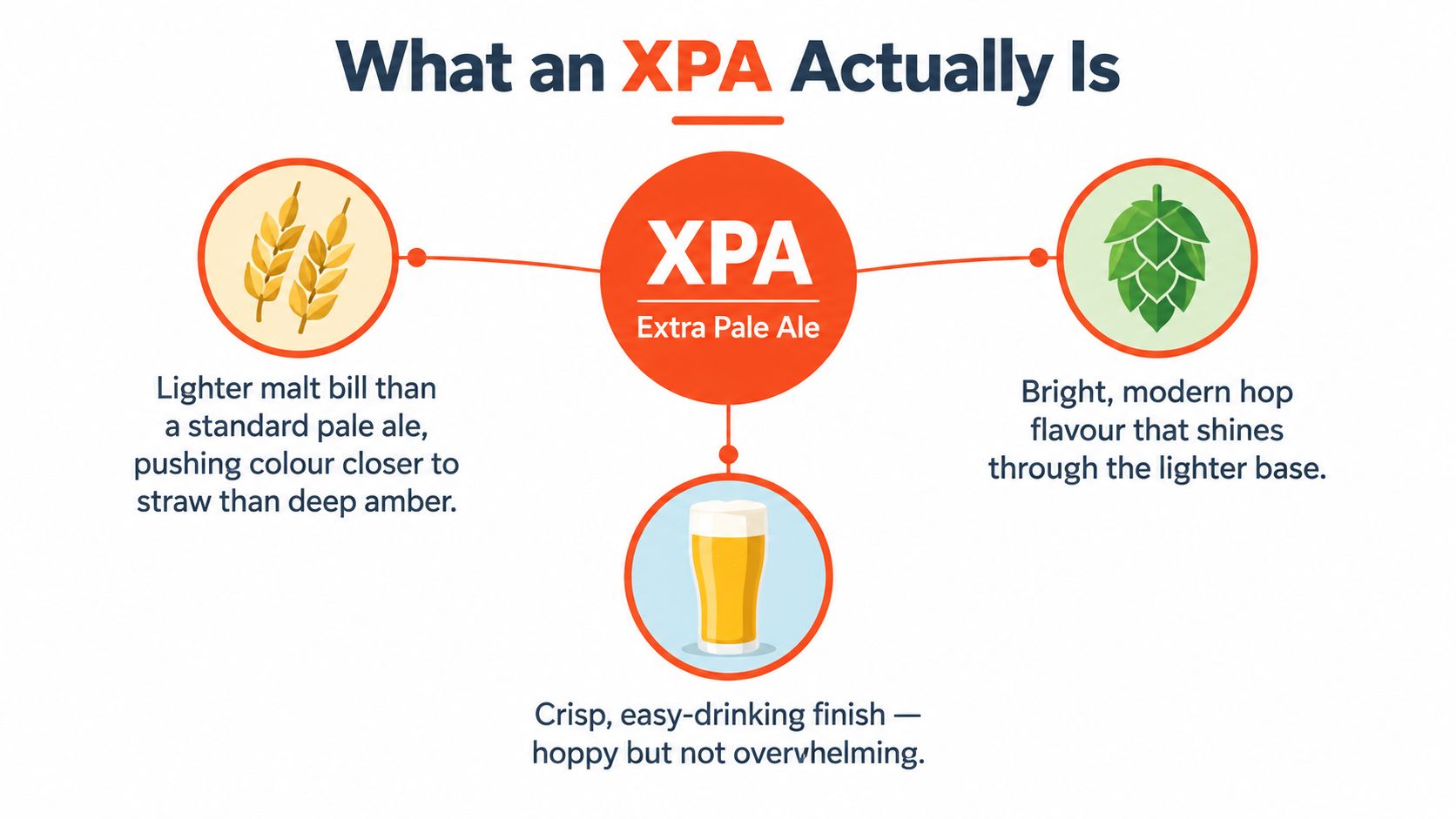
XPA means Extra Pale Ale. The name refers to the beer's pale colour and its malt design. Brewers generally use a light base and keep darker specialty malts restrained, so the beer can pour straw to pale gold rather than deep amber.
That pale foundation changes how the hops come across. With less caramelised, toasted or roasted malt character in the way, citrus, tropical and floral notes have more space to show. The recipe works like a pale ale with the caramel dialled back and the hop aroma turned up. The colour stays quiet, while the nose does more of the talking.
There is no single universal formal standard for XPA in Australia. Style descriptions commonly place it between pale ale and IPA, with a light body, high hop aroma, low specialty malt character and a dry finish. Hop Culture's explanation of XPA describes the Australian interpretation in similar terms, with hop character taking the lead without the more aggressive bitterness associated with many IPAs.
Why “extra pale” doesn't mean bland
Pale colour and pale flavour are different things. An XPA may look delicate while carrying a strong hop nose, with passionfruit, grapefruit, lime, peach or fresh herb notes depending on the varieties and brewing choices.
The name also does not just mean “weaker IPA”. Alcohol strength affects the experience, but the style is better understood through its balance. A brewer can build plenty of hop aroma into a beer while keeping the body lean and the finish brisk. That combination suits drinkers who want flavour but do not want a thick, sweet or tiring palate.
A Queensland reference point is Balter XPA, presented as a hop-forward beer with enough bitterness to provide structure. It shows the local idea clearly: bright aroma and a clean frame, rather than a resinous or syrupy finish. For a drinker choosing at the fridge, that makes XPA a useful call when a standard pale ale seems too quiet and a hazy IPA seems too soft or full.
How to read the name on a can
Treat “XPA” as a starting point, then check the rest of the label.
Look for:
- ABV: Australian examples span lighter and stronger versions. The alcohol level helps indicate whether the beer suits a long social occasion or a slower, food-focused drink.
- Hop language: citrus, passionfruit, tropical fruit, floral and pine point towards different aromatic directions.
- Malt description: clean, light, pale and dry suggest the familiar XPA shape.
- Haze claims: a hazy XPA may be softer or more opaque than a bright example, so the name does not guarantee the same pour every time.
In short, XPA is an Australian craft-beer decision. Buy it when you want hops to lead, with a pale, clean and approachable beer underneath.
How XPA Is Built and What It Tastes Like
An XPA starts with restraint. The brewer wants a pale, clean foundation that supports the hops without competing with them. Pale ale malt or pilsner-style malt can provide that base, while a limited amount of specialty malt keeps sweetness, colour and caramel character under control.
The hop schedule then does much of the talking. Late kettle additions, whirlpool hopping and dry hopping can add aroma and flavour while avoiding an unnecessarily harsh bitterness load. Australian drinkers often associate the style with bright citrus and tropical character, although the exact result depends on the varieties, timing and fermentation choices.
For a useful recipe benchmark, a craft XPA formulation is listed around OG 1.046, FG 1.008, approximately 42 IBUs and 5% ABV in this XPA recipe reference. The high attenuation and dry finishing gravity illustrate the design principle. The brewer wants enough malt structure to carry the hops, but not so much residual sweetness that the beer becomes sluggish.
From recipe to glass
When you pour an XPA, expect a pale appearance that may be bright or lightly hazy. The aroma should arrive before the flavour, particularly if the brewer has used a generous dry-hop addition.
On the palate, the first impression is often citrus, tropical fruit, floral lift or light pine, followed by a clean malt presence. Bitterness gives the beer shape, but the finish should clear reasonably quickly. That dry ending is important. It resets the palate and makes another sip feel inviting rather than filling.
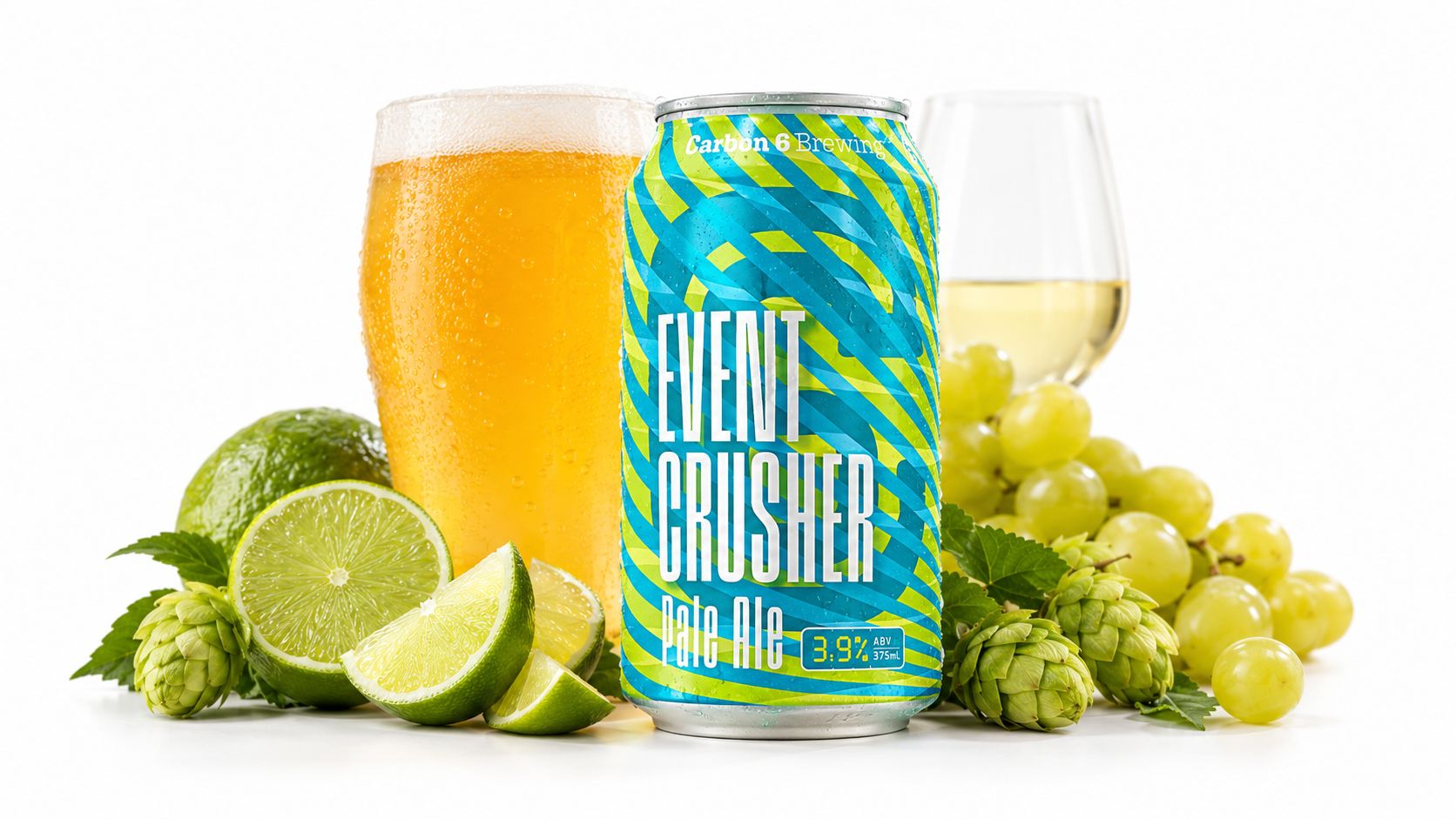
A product such as Event Crusher Pale Limited Edition 375ml shows how a related pale-ale approach can prioritise light colour, citrus and lime from Motueka, white wine and gooseberry character from Nelson Sauvin Amplifire, plus a dry finish. It's listed at 3.9% ABV in a 375mL can, making it a distinct pale-ale example rather than a standard XPA benchmark.
Brewer's shortcut: If the beer smells vivid but finishes cleanly, the brewer has probably achieved the central XPA trick. The aroma can be generous without the palate becoming thick.
XPA at a glance
| Brewing element | Typical XPA range | What you notice |
|---|---|---|
| Base malt | Pale and restrained | Light colour and a clean grain impression |
| Specialty malt | Low | Less caramel sweetness and less weight |
| Hop expression | Noticeable to pronounced | Citrus, tropical, floral or light pine aroma |
| Bitterness | Moderate and supportive | Structure without an aggressively lingering finish |
| Fermentation profile | Clean and well attenuated | Crisp palate and dry finish |
| Appearance | Pale, bright to lightly hazy | Straw, pale gold or soft haze depending on the recipe |
Hops contribute bitterness, flavour and aroma, but their impact changes with variety and timing. For a plain-language refresher, this guide to what hops do in beer is useful when you're trying to connect a can's tasting notes with what's in the glass.
XPA vs Pale Ale, Pacific Ale and Hazy IPA
The easiest way to choose between these styles is to ask what you want the beer to do. Do you want crisp and snappy, fruity and soft, or full and juicy?
A standard pale ale usually gives you more balance between malt and hops. A Pacific ale tends to lean towards soft tropical aroma and an easy bitterness profile. A hazy IPA generally offers more body, stronger fruit expression and a larger overall presence. XPA sits in the middle, keeping the beer pale, dry and hop-forward without necessarily becoming heavy.
The boundaries aren't fixed, so a brewery can make a pale ale that drinks like an XPA or an XPA with hazy qualities. Still, the labels help you make a quick shelf decision.
| Style | Colour (SRM) | Body | Bitterness (IBU) | Typical ABV | Flavour cue |
|---|---|---|---|---|---|
| XPA | Pale to golden | Light to medium | Moderate, hop-supporting | Sessionable to moderate | Clean, dry, citrusy or tropical |
| Pale ale | Pale gold to amber | Light to medium | Balanced | Sessionable to moderate | Malt balance with hop flavour |
| Pacific ale | Pale and often bright | Light and soft | Softer | Sessionable | Tropical, aromatic and gentle |
| Hazy IPA | Pale and hazy | Fuller and rounded | Variable, often softer in perception | Often stronger | Juicy, saturated and fruit-led |
The table is a sensory guide rather than a formal rulebook. Australia has no single XPA standard, and the same applies to the way individual breweries interpret related pale styles. A local Australian pale ale guide can help if you're comparing a particular pale ale with an XPA from the same brewery.
Choose by the mouthfeel you want
Choose an XPA when you want hop aroma, a dry finish and a beer that stays relatively light.
Choose a pale ale when you want a little more malt balance and a familiar all-rounder.
Choose a Pacific ale when tropical hop character matters more than bitterness and you prefer a softer, gentler drink.
Choose a hazy IPA when you want a fuller texture, stronger fruit impression and a beer that feels more substantial.
Don't assume “hazy” automatically means sweet or “XPA” automatically means weak. The recipe and fermentation determine the result. The style name gives you a useful expectation before you take the first sip.
How XPA Became an Australian Craft Institution
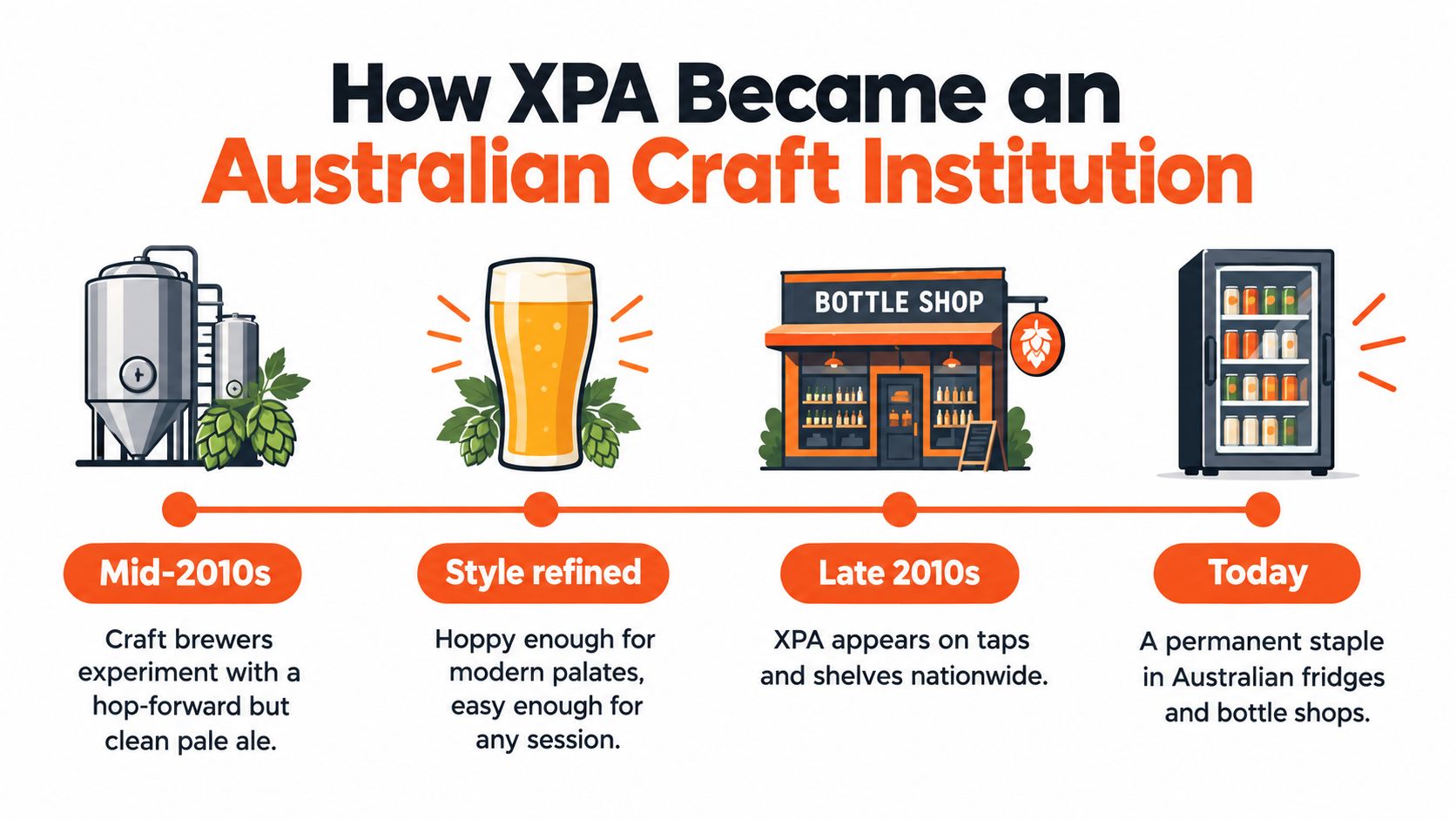
By the time you were choosing between a lager and a full IPA at a Gold Coast pub, XPA was already becoming the practical middle option. Australia's story gathered pace in the mid-2010s. Early local releases appeared in late 2014, followed by Balter XPA's Gold Coast launch in 2016. By 2018, style guides had separated the broader Australian-Style Pale Ale category into distinct styles. That shift showed that XPA had become recognisable as its own local beer style.
The appeal was straightforward. Australian brewers wanted modern hop flavour in a beer that stayed pale, clean and comfortable in warm weather. They reduced heavier specialty malt, focused more on late hop character and kept the body relatively light. The result gave craft drinkers plenty of flavour without the weight or intensity of a big IPA. For a drinker choosing from a crowded fridge, that made XPA an easy buy when pale ale feels too familiar and hazy IPA feels too full.
From experimental release to default order
Independent breweries in Sydney, Melbourne, Brisbane and Perth began releasing their own versions. Taprooms in Surfers Paradise, Brunswick and Newtown helped introduce XPA to drinkers who wanted more flavour than lager but found full-strength IPA too intense.
The path from trial beer to regular order was simple:
- A brewery released an XPA as a limited tinnie.
- Drinkers came back because it delivered flavour without heaviness.
- The brewery placed it on a permanent tap or added it to the regular range.
- Pubs, hotels and retailers made space for it because customers recognised the name.
That pattern moved XPA from a niche craft label into a widely stocked style. It appears in bottles, cans, four-packs, cases and on tap across Australia. Some breweries have built can-only ranges around different XPA interpretations, changing hop varieties and haze levels while keeping the familiar name.
Why the style lasted
XPA works in more than one drinking setting. A taproom can use it as a first step into craft beer, while a pub can offer it to someone seeking more flavour than lager without moving into IPA territory. That flexibility helps explain why it remains a useful choice rather than a short-lived trend.
Deloitte's Balter profile described XPA as one of Australia's most widely available beer styles. Its reach reflects a repeatable drinking experience, not just a memorable label. When you want bright hop character, a relatively light body and an easy second-round prospect, XPA often earns the fridge space.
Serving, Food Pairings and Easy Drinking Occasions
Serve XPA cold, but don't bury the aroma under an ice-cold pour. A practical target is 6 to 8°C, straight from the fridge, as shown in this serving and pairing infographic. That temperature keeps the finish refreshing while allowing citrus and tropical notes to lift from the glass.
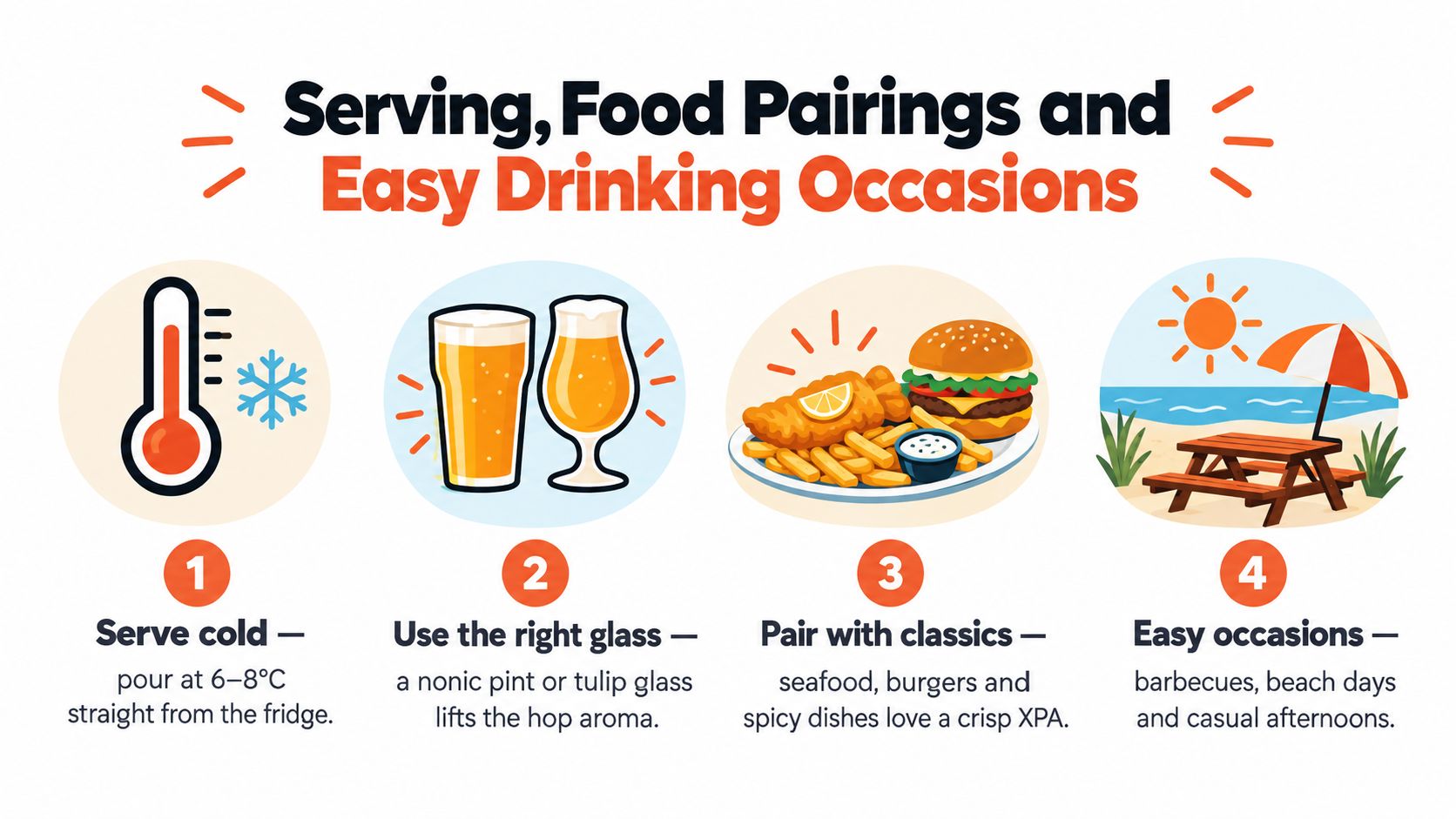
A nonic pint works well for a pub-style serve. A tulip glass concentrates the aroma and suits a tasting pour. The can or stubby still makes perfect sense at a barbecue, particularly when the setting is casual and nobody wants to fuss over glassware.
Match the beer to the plate
XPA's crisp finish makes it useful with food that brings fat, salt, spice or fried texture. The beer can refresh the palate between bites, while its hop aroma adds another layer to a simple meal.
Try it with:
- Grilled sausages: bitterness and carbonation cut through the richness.
- Fish and chips: citrus hop notes suit fried seafood and a crisp batter.
- Thai green curry: tropical aroma can sit comfortably beside herbs and chilli.
- Salt and pepper squid: the clean finish keeps the pairing lively.
- Roast chicken: pale malt and moderate bitterness won't overwhelm the meat.
- Chicken parmi: refreshing bitterness helps balance tomato, cheese and crumbed chicken.
The best pairing doesn't need a tasting menu. XPA is at home with the sort of food you'd order at a suburban pub or cook on a weekend.
Pour it into a glass when you want aroma. Keep it in the can when you want the backyard to stay simple.
Pick the right occasion
A lower-alcohol XPA can suit a longer social occasion, while a stronger example may work better as a single, slower drink with food. Check the label rather than assuming every XPA has the same strength.
The style fits Sunday arvo sessions, cricket on the telly, beach picnics, pre-dinner pints and backyard barbecues because it offers more hop character than a basic refreshment beer without demanding a formal tasting mindset. It's also a useful choice when a group has mixed preferences. Lager drinkers can appreciate the clean finish, while craft drinkers still get aroma and flavour to explore.
Buying XPA in Australia Without Getting Burnt
Start with freshness. Check the best-before information and, where available, the canning or packaging date. Hop aroma fades over time, so a recent package can matter more than an impressive list of hop varieties on the label.
That's particularly relevant when buying a heavily aromatic XPA. A beer can still be safe and drinkable after its freshest period, but the bright citrus, tropical or floral character may have softened. Store cans cool and away from direct sunlight, then avoid leaving them in a hot car or on a sunny windowsill.
Read the label before the artwork
Use a quick checklist at the fridge:
- Check the date: favour the fresher package when the beer is hop-led.
- Check the ABV: the number tells you whether the beer suits a longer occasion or a more measured serve.
- Check the bitterness clue: IBU can help, but it won't describe the whole drinking experience. Malt sweetness, hop timing and water chemistry also affect perceived bitterness.
- Check the pack size: a four-pack suits sharing or keeping a few cans at home, while a single can lets you test an unfamiliar recipe without committing to a larger pack.
- Check storage: cold-chain handling matters for hop aroma, especially after the beer leaves the brewery.
Online ordering gives you access to brewery releases that may not reach every local bottle shop. Buying locally lets you inspect dates and take the beer home immediately. For direct delivery, read the brewery's freight terms and plan around the possibility of delays, particularly during hot weather. The practical details of addresses, delivery instructions and responsible receipt are covered in this guide to ordering beer in Australia.
Order with confidence on tap
Ask the venue when the keg was connected if you're unsure about a tap. A good XPA should smell fresh, pour with an appropriate head and taste lively rather than flat, stale or strangely muted. If the venue offers a tasting paddle, it's a sensible way to compare an XPA with its pale ale or IPA without guessing from the tap names.
Alcohol advertising and online sales also carry responsibilities in Australia. The ABAC Responsible Alcohol Marketing Code applies to brand advertising, packaging, retailer pages, social media, competitions and other digital communications. It prohibits marketing that encourages excessive or rapid consumption, and it covers both the content of a message and where that message appears. Retailers must also follow the national online alcohol Code of Conduct, including rules for unattended deliveries and identification when a recipient appears under 25.
For Queensland drinkers wanting a local option, Carbon 6 Brewing Pty Ltd operates from Stapylton on the northern Gold Coast, with direct-to-consumer online sales and local wholesale distribution, so visit Carbon 6 Brewing Pty Ltd to browse its current beer range and choose an Australian-made pour that matches the occasion.