
Build Your Own Beer Pack: Crafted for Aussies
Oct 06, 2026
Mixing beer styles for discovery is the true value of a custom pack, especially as Australia's independent brewing businesses have grown roughly twenty-five-fold in eighteen years, from approximately 30 in 2006 to more than 750 in 2024. A good pack gives you variety without turning the fridge into a guessing game.
You know the scene. The barbecue is fired up, the esky is packed, and someone arrives with the same familiar lager everyone has already had three weekends in a row. It does the job, but it doesn't give the afternoon much to talk about. One mate wants something crisp, another wants hops, and someone else would rather have a darker beer with the last snag.
That's where a build your own beer pack earns its keep. You aren't buying more beer just for the sake of it. You're choosing a practical mix for real people, real occasions and different levels of beer curiosity.
Why your usual six-pack needs an upgrade
A standard six-pack makes one decision for the whole group. That works when everyone drinks the same style, but it falls over quickly at a Gold Coast catch-up where tastes and plans change throughout the day. A pale lager might be perfect beside lunch, yet feel a little ordinary once the sun drops and the conversation settles in.
The rise of independent brewing has made that one-style approach less necessary. Australia had more than 750 independent brewing businesses in 2024, compared with approximately 30 in 2006, an increase of roughly twenty-five-fold over eighteen years, according to the Independent Brewers Association economic impact assessment. That growth gives drinkers access to more local flavour, but it also creates a selection problem.
Variety should make the occasion easier
The emotional driver isn't just novelty. People want to bring something interesting to the table without wasting money on a carton nobody finishes. They want to support independent brewers, give their mates options and feel confident that the beer suits the afternoon.
A custom pack solves that tension by spreading the risk across styles. You might choose a reliable easy-drinker for the first round, a hop-forward beer for the person who likes a bit of bite, and a darker or unusual option for anyone keen to explore. Each can has a role, rather than sitting in the fridge as a random experiment.
Practical rule: Variety works best when every beer has a reason to be in the pack.
That approach also suits gifting. A recipient may enjoy trying new beer but still want a familiar option among the more adventurous choices. The pack feels considered because it reflects how people drink in practice, not how a shelf happens to be organised.
The best mixed packs don't chase maximum difference. They create a smooth path from familiar to exploratory, so nobody feels punished for stepping outside their usual order.
How to build a balanced beer pack
Start with the drinkers, not the labels. A successful pack should answer three questions before you add the first can: who is drinking it, what are they comfortable with, and which new style might they enjoy next?
Convenience matters here. A market overview of Australian craft beer identifies convenience as the leading motivation for online alcohol purchases, followed by price or discount and time efficiency. A guided builder is useful because it reduces the mental work between “I want something interesting” and “I know what to order”.
Use a four-part tasting architecture
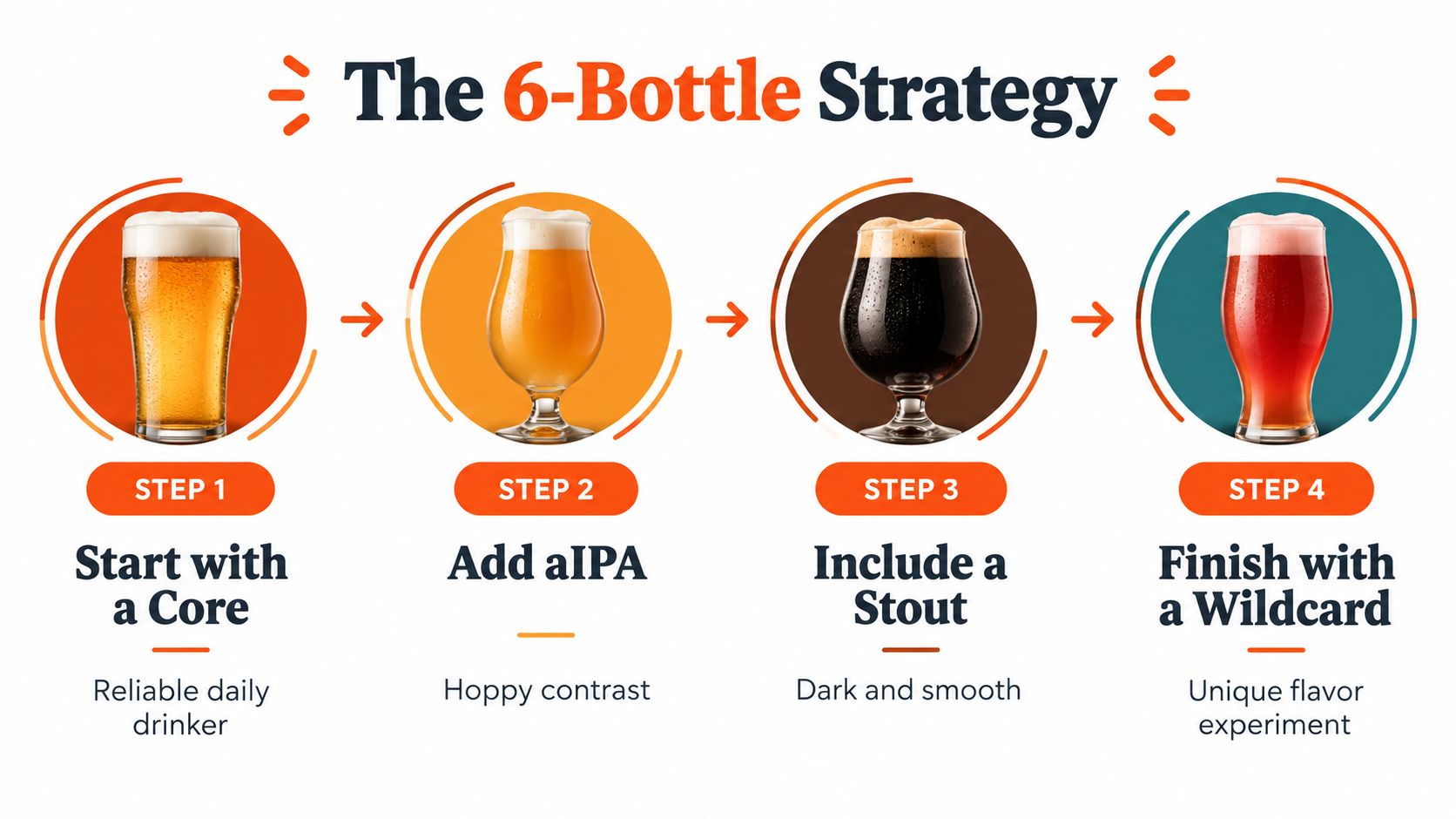
- Start with a core beer. Choose a familiar lager, pilsner or approachable pale ale. This is the dependable pour that gives the group an easy entry point.
- Add a bridge style. A sessionable pilsner can sit beside an IPA particularly well. The pilsner brings a clean, lighter option, while the IPA supplies the hop contrast. Neither choice needs to dominate the whole pack.
- Bring in a darker beer. A stout, porter or dark lager changes the texture and mood. It gives the pack depth and works especially well with barbecue food, roasted flavours and a slower final round.
- Finish with a wildcard. Pick one beer that introduces a distinctive yeast character, fruit note, sour edge or unusual hop profile. One wildcard creates conversation without making the whole carton feel risky.
This is also where sensible bundling strategies with Tagada can help. The bundle should make selection clearer and more useful, not just add more items to the order.
Match strength and bitterness
Don't put every strong or intensely bitter beer together unless the whole group wants that experience. Check the alcohol by volume, bitterness, colour, allergens and serving order for each choice. Start with lighter and lower-bitterness beers, then move towards fuller or more assertive flavours.
For a concrete example, Exploration Pale Ale - 5.2% ABV is described as a crisp, refreshing pale ale with bold character and an easy-drinking profile. It could sit between a familiar core beer and a more intense hop-led choice, depending on the rest of the pack.
A concise tasting card adds real value. Note the intended order, a few sensory descriptors and a food-pairing prompt. Customers can use the mixed beer packs guide for Australia as a starting point, then adjust the balance around their own group.
Matching beer styles to your occasion
The right pack changes with the plan. A beachside afternoon, backyard barbecue and quiet dinner don't need the same flavour profile, even if the weather is warm for all three. The most useful choice is the one that supports the occasion instead of demanding attention from it.
A crisp beer usually earns its place early because it refreshes between bites and suits a broad group. Fuller, darker or more aromatic beers can work later, when people are taking their time and paying closer attention to what's in the glass.
Beer Style Matching Guide
| Occasion | Recommended Style | Why It Works |
|---|---|---|
| Backyard barbecue | Pale ale | A moderate hop character can stand up to grilled food without overwhelming the table |
| Long afternoon outdoors | Pilsner | A clean, crisp profile keeps the pack approachable and refreshing |
| Pizza or fried food | Lager or pilsner | A dry finish helps balance salt, oil and melted cheese |
| Slow dinner with roasted food | Stout, porter or dark lager | Fuller malt flavours complement roasted and savoury dishes |
| Casual tasting with mates | Mixed pale ales and approachable lagers | The group can compare flavour without starting with extreme styles |
| Warm-weather catch-up | Sessionable pale ale or lighter lager | These styles keep the pack easy-going when the day is active |
| Dessert or a late round | Dark beer or fruit-led wildcard | A richer or more distinctive finish gives the tasting a clear change of pace |
This table is a guide, not a set of rules. A hop-forward IPA can work at a barbecue if the food has enough char and richness, while a stout can be welcome on a hot day if the drinker wants a slower, more substantial beer.
Let the activity set the pace
For a fishing trip, golf afternoon or beach gathering, place the lighter and more sessionable choices at the front of the pack. For a winter meal or a firepit evening, give the fuller beers more room. The goal is to make the first choice obvious and the later choices rewarding.
Before ordering, consider the food, the length of the gathering and whether everyone will be drinking the same thing. The guide to craft beer types can help translate broad style names into a more practical decision about flavour and occasion.
Freshness and delivery logistics
Online ordering works best when the pack is treated as a fulfilment job, not just a marketing idea. Beer should leave the brewery in sealed, accurately measured cans or bottles, then travel in packaging that protects the containers from impact, moisture and unnecessary heat.
Australia's online beer, wine and liquor sales market was estimated at approximately $2.1 billion in 2024, according to IBISWorld's Australian market data. That channel supports larger mixed orders, but a larger order also makes poor packing more frustrating. If a carton arrives damaged, the customer has more product and money tied up in the shipment.
Build the carton around the beer
A reliable pack-out process should include:
- Container inspection: Reject dented, leaking or untraceable cans and bottles before they enter the carton.
- Internal protection: Use dividers and moisture-resistant cushioning inside a rigid outer carton.
- Order verification: Confirm the SKU count, product mix, lot codes and best-before dates against the order.
- Weight control: Record the final carton weight so missing items or packing errors can be identified before dispatch.
- Dispatch timing: Avoid letting a mixed pack sit unnecessarily before collection or delivery.
Heat deserves particular attention in southeast Queensland. Hop aroma and carbonation can suffer when beer spends too long in hot conditions, so customers should check the brewery's dispatch timing and delivery expectations before placing a large order. A warm parcel isn't automatically spoiled, but it should be assessed sensibly, especially if a can is leaking, damaged or shows another clear quality issue.
Make delivery worth the trip
Buying a bigger mixed pack can make delivery more practical, provided the selection is useful rather than padded with unwanted styles. Choose beers that suit different moments, then store them promptly in a cool place when they arrive.
A clear replacement policy also matters. Customers should know what to do if the carton arrives damaged, a container leaks or the order doesn't match the confirmation. For local customers, the Gold Coast beer delivery information should sit alongside practical guidance about handover, timing and packaging.
Queensland customers should also check whether eligible beverage containers can enter the state's container-refund system. Packaging recovery is part of the purchase experience, not an afterthought, particularly when customers order a mixed carton rather than a single six-pack.
Navigating Australian alcohol laws
A build-your-own pack still has to follow the same responsible alcohol rules as any other online beer order. Licensed sellers need a process that confirms the purchaser is an adult, records the relevant order details and prevents delivery to a minor or an intoxicated person.
Trust is central to that process. In a recent Australian survey, 84% of online alcohol purchasers considered ID verification an important safety factor, as reported in parliamentary research on alcohol delivery. Customers aren't only judging the beer. They're judging whether the seller handles the handover properly.
What responsible delivery looks like
Depending on the destination, requirements can include:
- Age verification at checkout: The ordering platform may need to collect the purchaser's date of birth and display licensing information.
- Adult handover: Delivery should go to an adult who can satisfy the required identity check, not be left unattended as a safe drop.
- Delivery restrictions: State rules can restrict delivery times and prohibit handover to minors or intoxicated people.
- Accurate records: Failed deliveries, returned parcels and attempted handovers should be documented.
Victoria, for example, requires liquor-licence details and a warning notice on the ordering platform, prohibits delivery to minors or intoxicated people, requires delivery before 11 pm and doesn't permit unattended same-day delivery. Tasmania requires online sellers to display licensing information, obtain the purchaser's date of birth and instruct the carrier to deliver only to an adult. A Queensland seller also needs to consider the rules that apply where the parcel is received, not assume that the dispatch location settles every compliance question.
Marketing needs the same care. The ABAC Responsible Alcohol Marketing Code prohibits strong or evident appeal to minors. Pack imagery and copy should use adult-oriented presentation, avoid cartoon characters or child-focused themes, and never create confusion with confectionery or soft drinks.
People aged 18 to 24 have additional representation restrictions under the ABAC alcohol marketing checklist. For Facebook or other paid digital advertising, advertisers should apply adult age targeting and available minor-exclusion controls, as outlined in ABAC's digital marketing guidance.
Start your next tasting adventure
A good mixed pack gives you permission to leave autopilot without making the whole order a gamble. Keep one familiar beer in the mix, add styles that bridge towards something different and reserve a small space for a beer that might surprise you. That balance respects the person who knows exactly what they like and the person who wants to find a new favourite.
It also makes the pack more social. One person notices citrus, another picks up roast or spice, and someone else decides the pilsner belongs beside the prawns. Those conversations are part of the value. The beer becomes connected to the meal, the weather and the people around the table.
Make discovery repeatable
Use feedback from the pack rather than relying on memory. Ask which beers disappeared first, which styles felt too similar and whether the serving order made sense. Record the favourites, then change only one or two elements in the next order so you learn what the group actually enjoys.
For a mixed household, include a lower-alcohol or lighter option alongside fuller beers. For an IPA-loving group, don't fill every space with bitterness. For a gift, choose approachable styles first and let the wildcard provide the sense of occasion.
The strongest proposition is not “more cans”. It's less decision fatigue, better flavour fit and a clearer reason to try local beer. Independent brewing gives Australian drinkers plenty of choice, while a thoughtful pack turns that choice into something manageable.
So stop defaulting to the same carton when the occasion calls for more range. Build around the people, the food and the pace of the day, then let one or two unfamiliar beers do the interesting work.
Carbon 6 Brewing Pty Ltd offers locally made beers for Gold Coast customers, including flexible pack formats suited to tasting, sharing and home delivery. Visit Carbon 6 Brewing Pty Ltd to choose a mixed selection that fits your next gathering.