

Peanut Butter Stout: Flavour, Brewing and Pairing Guide
Oct 19, 2026
You crack a can, pour a dark, creamy-looking beer, and get a hit of roasted malt before the peanut aroma comes through. Is it a stout, a dessert beer, or something that'll go with dinner? A good peanut butter stout can be all of those, but its flavour depends on more than a sweet-sounding name.
The tricky parts matter as much as the fun ones: how brewers get the peanut character without wrecking the foam, how they manage a real allergen, and how they market the beer without making it look like confectionery for kids. Get those details right, and the result can taste like roasted peanut on dark toast, not an oily muddle.
What Peanut Butter Stout Actually Is
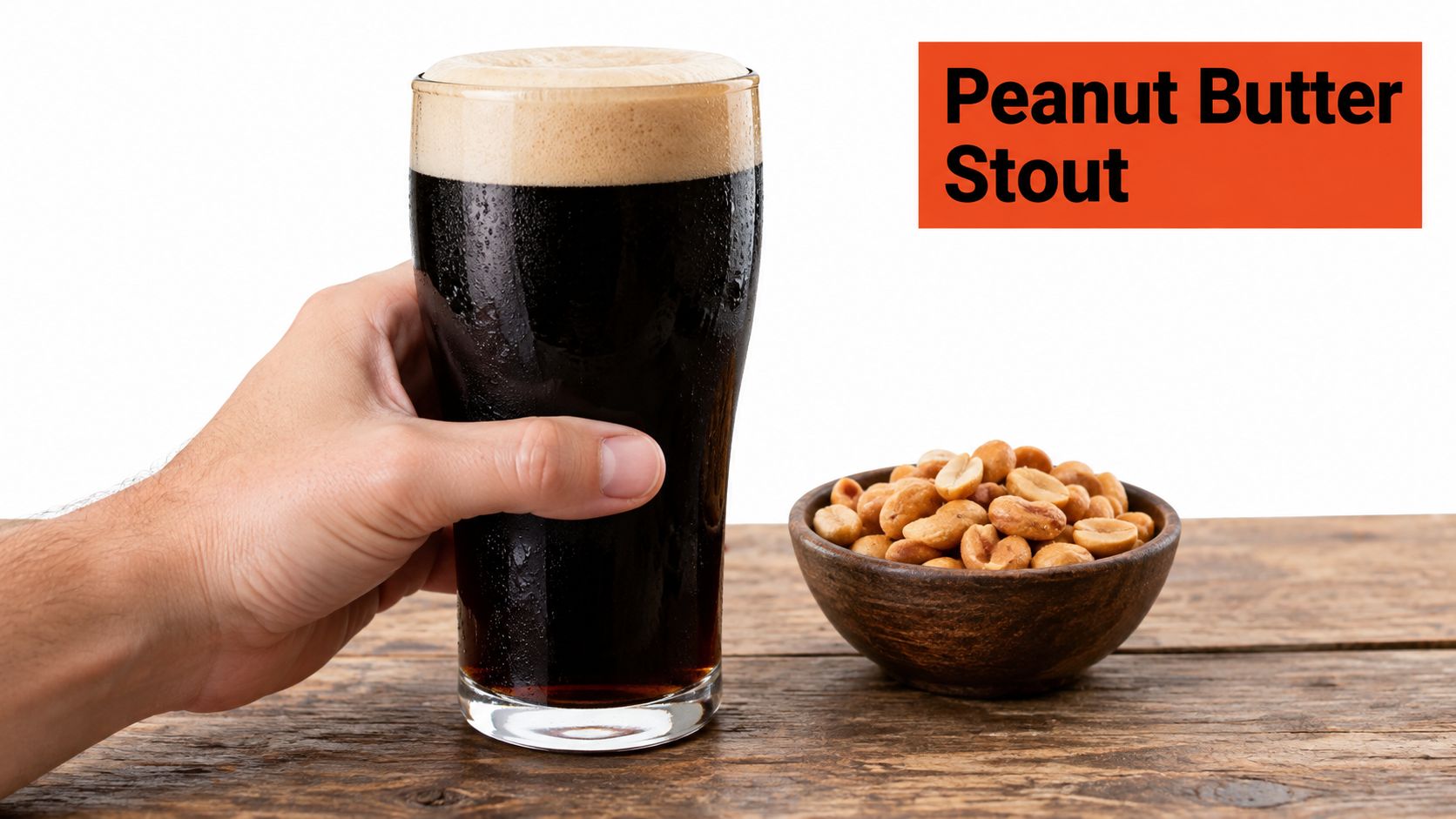
The first sip often catches people out. The beer looks nearly black in the glass, but the aroma might bring to mind roasted peanuts, cocoa and coffee. The body can feel rounder than a dry stout, and the finish may leave a little sweet, savoury nuttiness on the palate.
A peanut butter stout is a stout brewed or conditioned with peanut-derived ingredients to give the beer a peanut-like flavour and aroma. The base is still stout: dark malts create the roast, coffee and chocolate notes. The peanut addition shifts the balance, while ingredients such as lactose may add sweetness and a softer texture. Not every version contains lactose, so check the ingredients if that matters to you.
It's different from a standard dry Irish stout, which is usually more focused on roast and a drier finish than on peanut aroma or dessert-like sweetness. It's also not automatically the same as a chocolate milk stout. That beer leans on chocolate and creamy sweetness, while a peanut butter version puts nutty character closer to the front.
What to expect in the glass
Think dark, roasty and rounded, with the peanut note joining the malt rather than replacing it. Some beers come across like peanut butter on toast, while others are drier and more restrained. Sweetness, body and strength vary by recipe, so don't assume every can is a heavy dessert pour or that it'll suit a long session.
If you're keen to compare this style with a more malt-forward dark beer, Carbon 6 Brewing's guide to imperial stout beers in Australia gives you another point of reference.
The Flavour Profile Layer by Layer
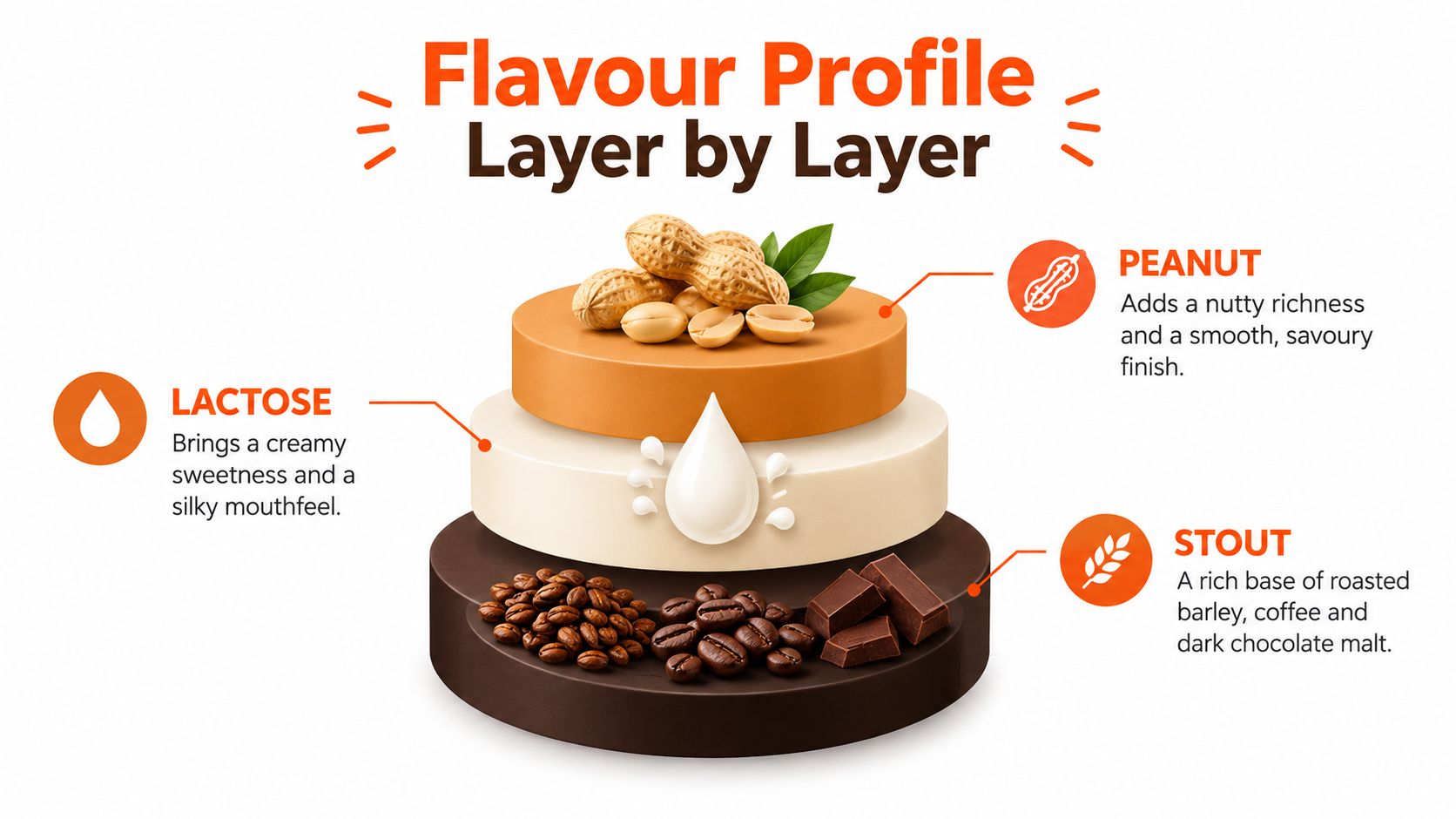
To understand the flavour, start with the stout beneath the peanut. Roasted barley and darker malts bring a toasty, coffee-edged base. Think espresso, a square of dark chocolate, or the smell of toast just as it starts to brown. That roast gives the beer structure, so the peanut doesn't taste like a sweet flavouring floating on its own.
First the roast, then the nut
As the beer moves across your palate, the peanut character can arrive after the first roasty impression. Depending on the ingredient and how it's used, it might suggest dry-roasted nuts, peanut butter, or peanut butter spread across warm toast. A savoury edge can linger into the finish, especially when the sweetness stays in check.
The middle of the beer may feel creamy or sweet. Some recipes use lactose, a milk-derived sugar that adds sweetness and body. It can help round off sharper roast flavours, but it's not a given in every peanut stout. If a beer includes lactose, that's also an allergen ingredient that needs attention in the product information.
Why it can taste dessert-like
The dessert impression comes from the combination of roast, nut character and sweetness, not necessarily from a load of added sugar. A beer can remind you of Milo or a chocolate-and-peanut treat while still retaining a dry, roasted finish. If sweetness dominates and the finish feels sticky, the beer may come across as cloying. If the roast and nut balance it, each sip feels more like peanut butter on toast with a dark-coffee edge.
Tasting cue: Take a sip and note the order. Does roast arrive first, peanut next, and sweetness last? That sequence tells you more than simply calling the beer “nutty”.
How Brewers Actually Make It
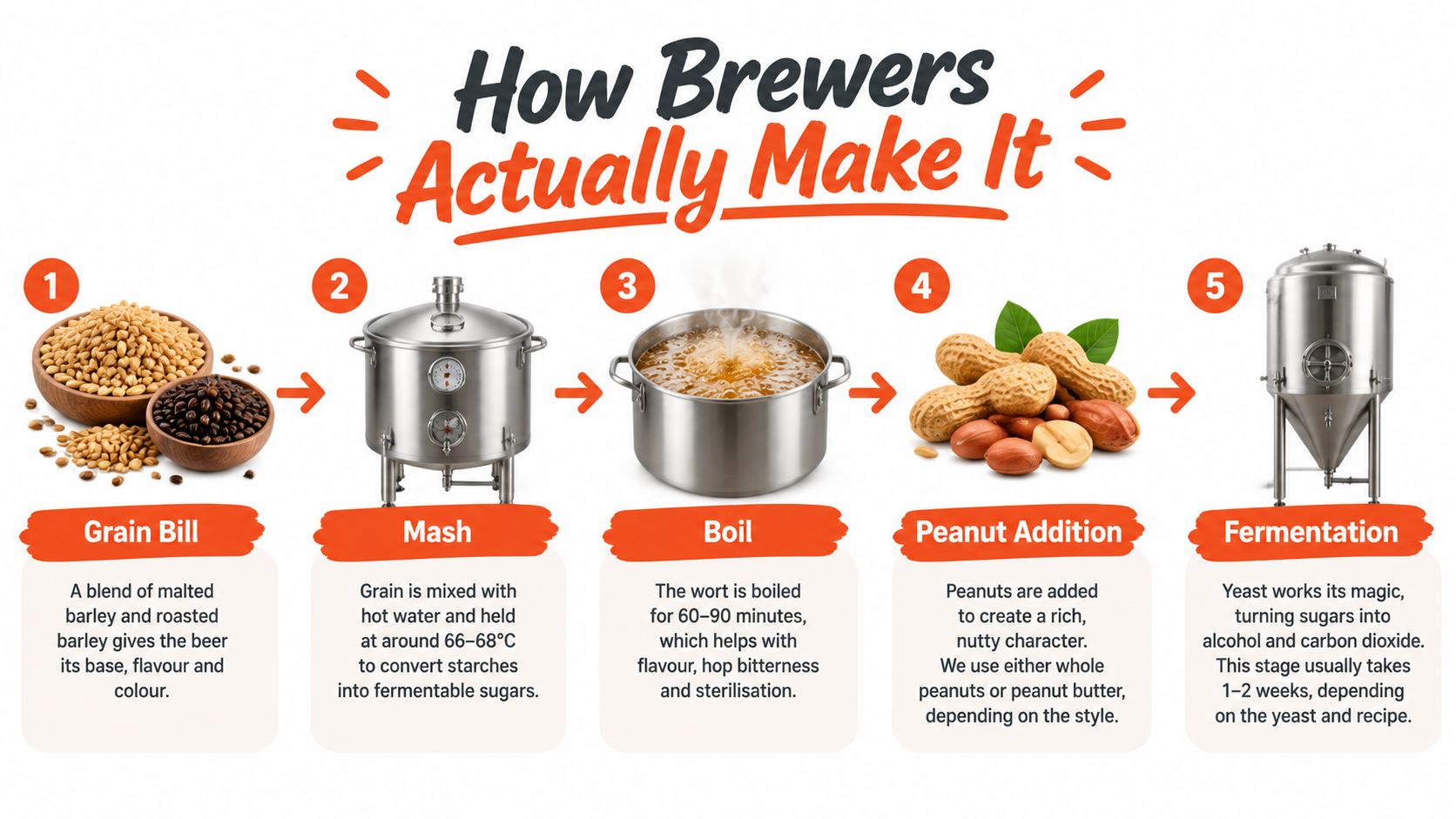
A peanut butter stout starts with a stout recipe, not a tub of spread. Brewers select malts for the base, mash them to draw out fermentable sugars, boil the wort, and ferment it with yeast. The peanut ingredient is a separate design decision, and the choice of ingredient and timing shapes both flavour and production risk.
The awkward bit is the fat
Peanut butter isn't just a flavour. It's an emulsion of lipid, protein and finely milled solids. Those parts can interact with yeast and the bubbles that form beer foam, reducing head retention and increasing losses during clarification or packaging. Peanut-derived fats can also contribute to separation or haze, which means a brewer has to consider how the beer will look and pour, not just how the tank smells.
Timing involves trade-offs. Adding a peanut ingredient hot may help disperse it, but can strip volatile aroma and increase oil extraction. Adding a specified, food-grade ingredient later can preserve more aroma, but brings extra sanitation, mixing and allergen controls. There isn't a magic addition point that solves every problem.
Pilot before scaling up
The sensible approach is to test the recipe at small scale, then compare repeat batches. Brewers can monitor apparent attenuation, final gravity, pH, carbonation, sensory intensity and package sediment. They also need a controlled addition rate, temperature, contact time, recirculation method and clear limits for filtration or clarification.
Peanut butter can make a stout taste lush, but the oils can also take the life out of its foam. Small-scale trials reveal that trade-off before a full batch is at stake.
The same material can be sticky and difficult to clean away, so a process plan needs to include cleaning and changeover controls. The FSANZ consumer information on food allergens provides context on allergen risks that brewers need to account for when handling peanut ingredients.
Ingredients That Make or Break the Beer
A convincing peanut stout needs its ingredients to work together. The base malts build roast and colour; specialty grains can add body and deeper malt notes; and the peanut ingredient supplies the signature character. Oats may contribute a silkier feel, while lactose can add sweetness, but each choice changes the finished beer.
Peanut flour or powder can be easier to measure and handle than a spoonful of peanut butter, though the best option depends on the recipe and the supplier's specifications. Whole roasted peanuts or peanut butter can bring their own flavour and texture considerations. Oils may create foam or separation problems, so a brewer needs to test the chosen ingredient in the actual process rather than assume a good snack ingredient will behave neatly in a fermenter.
Cocoa nibs or vanilla can round out the flavour, but they can also pull attention away from the peanut. For a snack pairing, high-protein peanut butter honey oat bars offer a useful flavour comparison: peanut, honey and oats are familiar together, but the stout's roast will change the balance.
Common Peanut Adjuncts Compared
| Adjunct | Flavour impact | Brewing practicality |
|---|---|---|
| Peanut butter | Rich, spread-like peanut character | Fat and solids can complicate foam, cleaning and packaging |
| Roasted peanuts | Toasted, savoury nut notes | Requires careful handling and flavour testing |
| Peanut flour or powder | Direct peanut flavour with less spread-like texture | Easier to measure, but still needs allergen controls |
| Peanut extract or flavouring | Can provide a focused aroma | Check the full ingredient and allergen specifications |
Before buying, look for a product description that names the kind of peanut character, describes the stout base, and makes allergen information easy to find. If you're comparing it with a related beer rather than a peanut stout, Dark Orbit Stout BAR is described as a milk stout with roasted malt, subtle chocolate, a creamy finish and an ABV of 4.4%. That description makes it a point of comparison for stout body and sweetness, not a peanut beer.
Allergen Labelling and Australian Rules
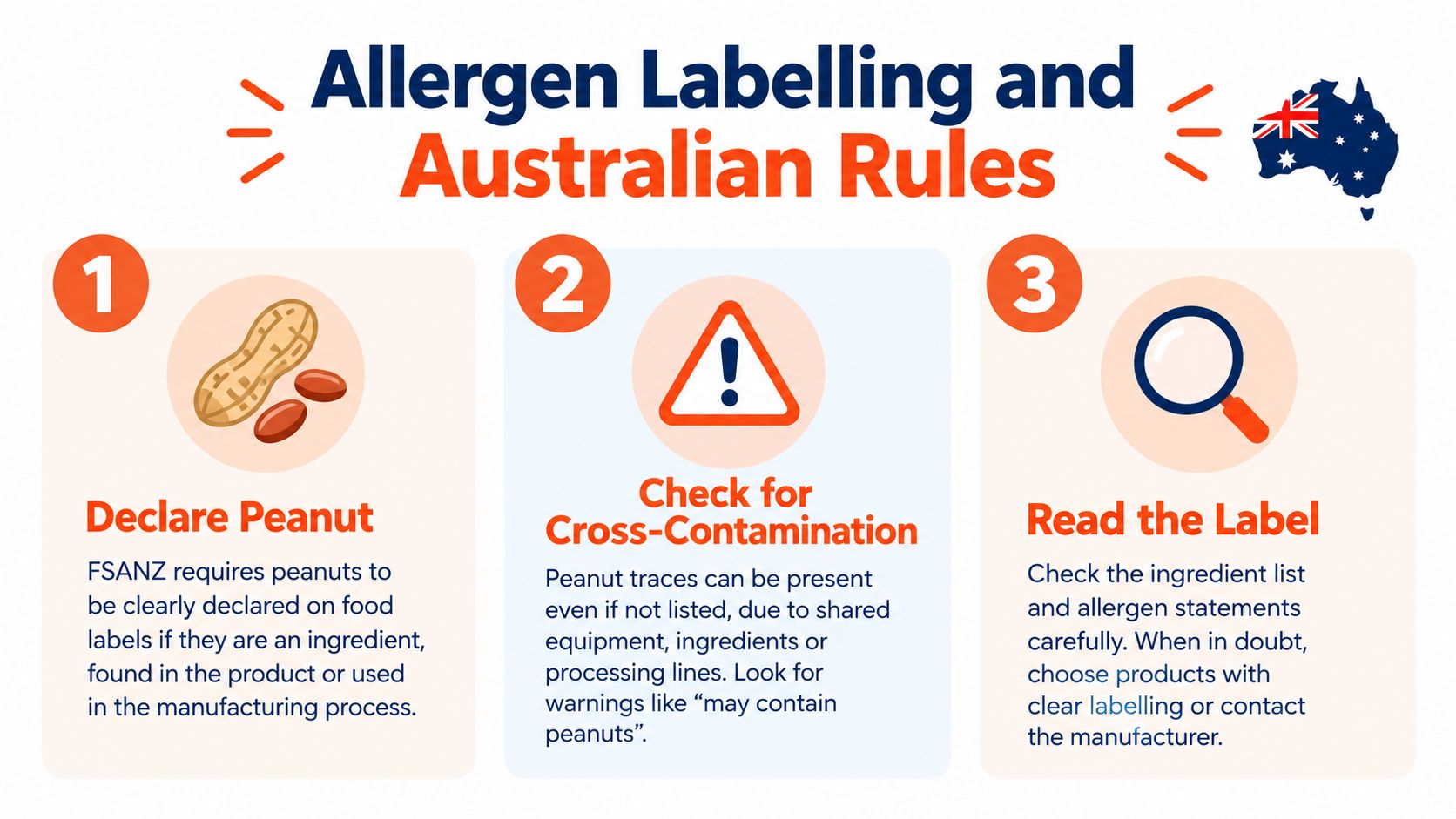
For Australian drinkers, peanut in a beer isn't just a flavour note. It's an allergen that must be declared whenever it's present, regardless of the amount used. That applies if peanut is in the recipe directly, forms part of a compound ingredient, or comes through an additive or processing aid.
Since 25 February 2024, Australian food businesses have been required to use plain-English allergen labelling. The ingredient list must use the exact term “peanut”, emphasise it in bold, and include a separate bold allergen summary beginning with “Contains”. The change followed an earlier amendment to the Australia New Zealand Food Standards Code, with the updated format becoming mandatory for businesses from that date. See FSANZ's allergen labelling guidance for the requirements.
Check beyond the can
The practical question is whether the information is clear wherever the beer is sold. A packaged product needs the right declaration on its label, and online shoppers should be able to find the allergen information before purchase where practical. Retailers, breweries and venues should keep product details consistent across pages, cartons, wholesale material and tap lists.
A “may contain peanuts” warning is different from a declaration that peanut is an ingredient. Precautionary statements about possible cross-contact are voluntary and currently unregulated in Australia and New Zealand. That doesn't make cross-contact unimportant: businesses need to manage it through supplier information, production controls, cleaning and label review.
If you're comparing allergen policies across packaged foods, Bearded Brothers' allergen guide for paleo snacks is another example of the kind of product information consumers may look for. For a beer, though, check the specific product's own label and details rather than relying on a general guide.
Food Pairings That Actually Work
The best pairing depends on whether you want to lean into the beer's sweet, roasty side or give it something savoury to push against. A sharp aged cheddar can cut through a rounded body, while a dark chocolate and sea-salt tart echoes cocoa and roast without making the whole meal taste like dessert.
For a backyard feed, try a snag with caramelised onion. The browned onion brings sweetness, while the sausage gives the stout a savoury partner. Smoked brisket can work along similar lines, particularly when the beer's roast complements the smoke. For a different kind of contrast, spiced pad Thai pairs the beer's rounded character with chilli, though the dish's sauce can make the match feel sweeter.
Banana bread is an easy afternoon pairing, especially if you like the peanut-and-baked-goods combination. Keep the portion modest and let the beer's roast provide contrast rather than adding another very sweet element.
Make the pour part of the pairing
A tulip glass or snifter helps focus the aroma. Serve the beer a little warmer than you'd serve a crisp lager, so the roast and nut notes are easier to pick up. A small pour is a practical place to start: the body and sweetness can make the beer feel richer than a lighter style.
For more pairing ideas across different styles, Carbon 6 Brewing's guide to beer and food is a useful starting point. If you're feeding a crowd and want a lighter option alongside a stout, Carbon Dry Lager is described as a crisp, easy-drinking beer at 4.6% ABV, with BBQs among its suggested occasions.
Marketing and ABAC Compliance in Plain English
Peanut butter sounds playful, but that doesn't mean a beer can be marketed like a kids' snack. Under the ABAC Responsible Alcohol Marketing Code, alcohol advertising must not be more attractive to minors than adults, use elements likely to appeal strongly to minors, or create confusion with confectionery, soft drinks or similar products commonly consumed by minors. The ABAC Code makes those boundaries relevant to branding, packaging and advertising, not just a paid social caption.
A brewery can still describe an adult beer as nutty, roasty or dessert-like. The risk lies in how the whole message lands: cartoon characters, toy-like designs, games, child-associated imagery, or packaging that looks like confectionery can cross the line. A more suitable direction is clear beer-focused language and design that presents the product as alcohol for adults, without borrowing visual cues from children's treats.
The placement matters too
An adult tone alone isn't enough if the campaign reaches minors. ABAC guidance says marketers should use the highest available age restrictions to minimise minors' access to alcohol marketing. That can mean age affirmation on websites, adult audience settings for paid social, and appropriate restrictions on sponsored or influencer content. Alcohol marketing also shouldn't be placed with programmes or content primarily aimed at minors.
For a brewery or venue, a quick red-flag check is useful:
- Look at the artwork: Avoid cartoons, games, toys and child-associated snack styling.
- Read the copy aloud: Keep language directed at adult beer drinkers, not children.
- Check the placement: Apply available age controls and avoid youth-focused channels.
Buying Peanut Butter Stout Online in Australia
An online listing should help you decide whether a beer suits your palate, your dietary needs and the occasion. Start with the basics: can you find the peanut allergen declaration before checkout? Is the ABV clear? Does the product description tell you whether the beer is sweet, roasty, creamy or more restrained?
FSANZ research found that 26.1% of respondents found nutrition information difficult to find online, while 34.9% looked for ingredients and 32.1% looked for a Nutrition Information Panel when shopping online. Those figures point to a practical gap: product pages need to make useful details easy to locate. You can read the FSANZ findings on online shopping and labelling when assessing what shoppers seek.
A useful buyer's check
- Read the product details: Check the ingredient list, allergen information, ABV and serving information if provided.
- Compare the order, not just the can: Work out the delivered cost per serve from the full carton or mixed pack, including shipping.
- Consider the journey: For warm-weather delivery around the Gold Coast or northern Queensland, check how the beer is packed, inspect it when it arrives and chill it promptly.
- Check delivery conditions: Retailers have to account for alcohol shipping rules and destination restrictions. A practical overview of using Ship Restrict for alcohol rules can help online sellers understand that side of fulfilment.
Clear information can matter more than a low headline price when you're choosing a full carton. To browse Australian online beer-buying options, see Carbon 6 Brewing's online bottle shop guide.
If you're keen to explore stout flavours and independent Australian brewing, visit Carbon 6 Brewing Pty Ltd, based in Stapylton on the northern Gold Coast. Check the product details and allergen information before choosing a beer, then pick a pour that suits your table.