
Beer Subscription Box Australia: What It Actually Does
Sep 29, 2026
It's Friday arvo on the Gold Coast. The esky needs restocking, mates are due over, and the local bottle-o has either run out of the beer you wanted or shut before you got there. You can drive around hunting for a decent mixed carton, settle for whatever's cold, or have a curated box of independent craft beer delivered to the door.
That's where a beer subscription box earns its keep. It isn't just a novelty tasting parcel. Done properly, it combines freshness, variety, convenience and sensible carton economics for adults who'd rather buy well once than make several rushed trips for beer that may have been sitting around too long.
Why Beer Subscription Boxes Are Making Sense Now
A beer subscription box gives Queensland drinkers a planned way to buy independent beer. A brewery or specialist retailer selects a range, packs it for delivery, and sends it to the customer on an agreed schedule. Some boxes stay with one brewery. Others rotate through styles, seasonal releases or beers from several producers.
The practical value is freshness, variety and fewer wasted trips. A well-run service can put suitable stock at your door before a limited release disappears, while giving high-volume buyers a more predictable carton purchase. That matters on the Gold Coast and elsewhere in Queensland, where the nearest useful stockist may be a drive away and freight can change the value of an order.
Queensland has enough local brewing depth to support this model. The Queensland Government reported that the state's share of the Australian craft beer market had risen by more than 9% over six years, while craft brewing revenue grew by 9.7% annually between 2013 and 2018, compared with 2.1% growth in beer manufacturing overall. Its strategy also recorded nearly 90 independent craft breweries, around 1,700 employees, and an estimated A$62 million annual contribution to the state economy. These figures come from the Queensland Craft Brewing Strategy.
That producer base gives subscription services room to rotate styles, build mixed packs and feature local releases instead of repeating one standard lager. Buyers can support independent breweries without visiting every taproom, provided the operator manages packing, dispatch and stock age properly.
Practical rule: Judge the box by its stock quality, delivery cost and fulfilment record first. Discovery adds value only when the beer arrives fresh and the carton makes financial sense.
Online alcohol purchasing is also an established sales channel in Australia. A federal parliamentary briefing says online delivery services account for around 5% of Australian alcohol sales and are increasing by at least 10% per year. It recorded online sales and revenue growth of around 14% per year between 2014 and 2018. The broader shift is described in the Australian Parliament briefing on online alcohol sales.
A subscription offer can use scarcity carefully, such as stating a genuine release limit or dispatch window. Guidance on urgency marketing for Shopify stores is relevant to ecommerce, but alcohol sellers must keep claims accurate, adult-focused and ABAC compliant.
What a Beer Subscription Box Includes
A beer subscription box usually contains a selected mix of cans, organised around a brewery, style group or seasonal release. The useful differences are practical: delivery frequency, carton size, substitution rules, dispatch timing and freight terms. A good box makes those details clear before payment.
A one-off trial lets you assess the beer, packaging and service without committing to repeat orders. Monthly delivery suits households that finish a carton steadily and want regular rotation. Quarterly shipping can work better for group drinking, entertaining or buyers with enough storage. Choose based on how quickly your household drinks, available space and how much variety you enjoy.
Queensland's brewing base supports more than a novelty tasting model. As noted earlier, the state has a substantial group of homegrown craft brewing operations, creating scope for curated direct-to-consumer offers that connect buyers with independent producers. That opportunity depends on sound fulfilment. Beer must be packed securely, dispatched promptly and managed so older stock does not sit unnoticed.
Carton size affects the value equation. NielsenIQ's analysis, cited elsewhere in this guide, found that online liquor baskets are larger than in-store baskets, while online purchasing remains limited to a minority of households. That pattern helps explain why direct delivery often works better with a fuller order than with a small, frequent purchase.
Shipping is the deciding cost for many Queensland buyers. A larger mixed pack spreads freight across more cans, but buying extra beer only makes sense when the household will drink it while the product is still in good condition. Compare the delivered price, not just the advertised carton price.
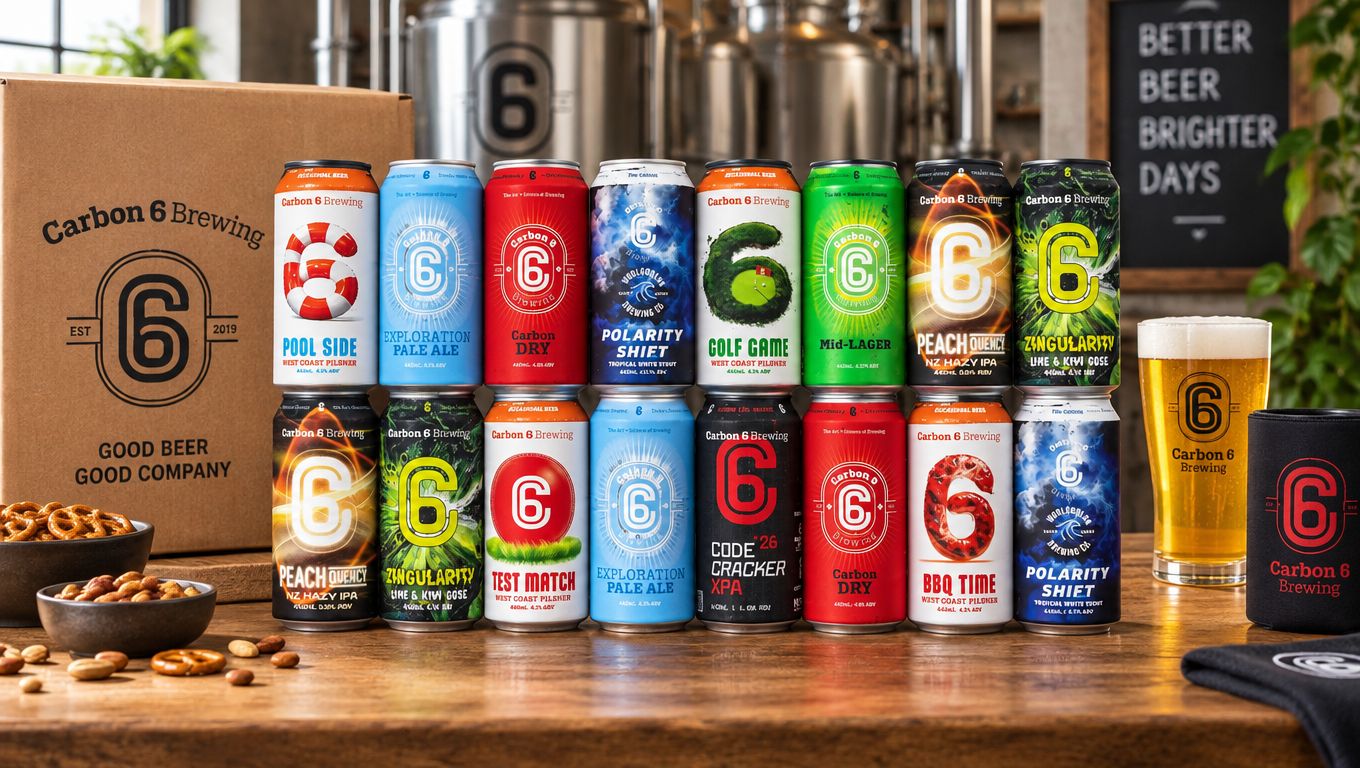
One example is the Mixed 16-Pack, containing sixteen 440mL cans from the Carbon 6 range. Its product information allows unavailable cans to be substituted while keeping the box at sixteen cans. That policy works when replacements are disclosed clearly and still match the promised level of variety. Before subscribing, check whether substitutions preserve style balance, whether dispatch dates are stated, and how the seller handles damaged or delayed cartons.
Subscription Structures That Fit Your Drinking Patterns
Start with consumption, not the label “subscription”. A recurring order is only good value if the delivery arrives at a pace you can manage without beer piling up, losing freshness or forcing you into a purchase you didn't plan to make.
| Structure | Best For | Economic Logic |
|---|---|---|
| One-off trial box | Explorers who haven't tried the brewery | Tests flavour range and packing quality before recurring freight |
| Monthly replenishment | Steady drinkers who want regular rotation | Keeps variety coming while spreading delivery into manageable orders |
| Quarterly bulk delivery | Households, entertaining and groups | Uses carton capacity and shipping amortisation across a larger shipment |
Start with a trial
Choose a one-off box when you don't yet know whether the brewery's styles suit your palate. Check the packaging, can condition, date information and the balance of styles before signing up for repeat deliveries.
A trial is also useful if you're moving from mainstream cartons to independent beer. You may discover that you prefer pale ales and lagers for regular drinking, while stronger or heavily hopped beers work better as occasional selections.
Use monthly delivery with discipline
Monthly replenishment works for people who value a steady flow of fresh beer and can finish the shipment within the intended window. It's less suitable for a household that travels often, drinks irregularly or has limited fridge and storage space.
Look for controls that let you skip, pause or change a shipment. A rigid schedule can turn convenience into clutter. You should also check whether each box repeats popular beers or rotates through different styles.
Reserve quarterly deliveries for volume
Quarterly bulk delivery makes sense when several adults share the beer, you regularly host friends, or you're comfortable storing a larger carton. The freight cost is spread across a more substantial order, but the buyer takes on more responsibility for storage and drinking pace.
A useful test: If a full shipment would sit untouched for weeks, a larger box probably isn't better value for you.
The Australian online alcohol market supports this higher-basket behaviour. NielsenIQ's finding that online liquor baskets average 2.4 times in-store baskets points to an important operational reality, not a recommendation to overbuy. Buyers tend to make online delivery worthwhile by consolidating purchases, so the subscription structure should reflect a realistic household order rather than an artificial monthly ritual.
Freshness, Shipping, and the Queensland Reality
Freshness is the point where a beer subscription box either proves its value or falls over. A beautifully themed box doesn't rescue beer that has spent too long in hot transport or arrived with no clear information about when it was packed.
Queensland conditions make handling important. Transit distance, time in a depot and exposure to heat can affect how beer presents when it reaches the customer. Hop-forward IPA styles deserve particular care because their aroma and flavour are central to the drinking experience. That doesn't mean every beer needs identical treatment, but it does mean a serious operator should explain its dispatch process rather than hiding behind a generic “fresh beer” promise.
What to check before ordering
Read the delivery information before you compare prices. Look for:
- Dispatch timing: Does the brewery explain when orders leave the facility?
- Freshness information: Can you identify packaging dates, best-before guidance or batch details?
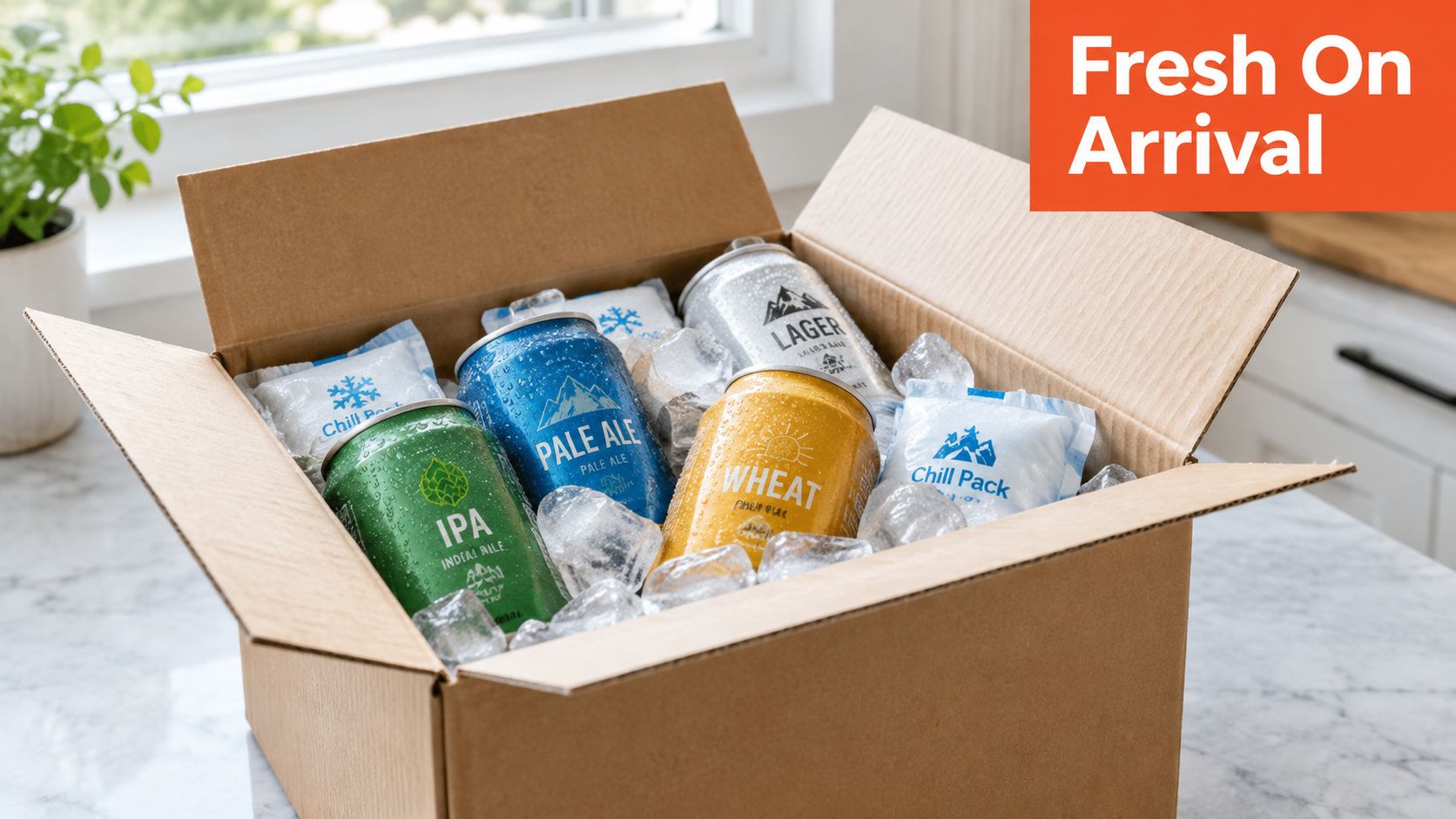
- Transit handling: Does the operator describe protective packing and hot-weather considerations?
- Substitution rules: Will an unavailable beer be replaced with a comparable style, or something random?
- Damage support: Is there a clear process for reporting leaking or damaged cans?
A local Queensland operator may have an advantage because shorter distribution routes can reduce time in transit, though you should judge the actual process rather than assume proximity guarantees quality. Compare the delivered cost with buying direct from a brewery or collecting from a local bottle shop. A direct purchase can win when you already know exactly what you want. A subscription becomes more compelling when it combines fresh stock, useful variety and freight spread across a sensible carton.
For storage guidance after delivery, use Carbon 6's explanation of craft beer shelf life. Keep beer away from heat and direct light, and don't treat a mixed box as a reason to store every can indefinitely.
The key trade-off is clear. Novelty increases discovery, while freshness and predictable logistics protect the value of the purchase. If the box prioritises a theme over dispatch discipline, it isn't solving the problem a regular buyer has.
Legal Compliance and Age Verification in Australia
Alcohol delivery needs more than a checkout button. The operator has to market responsibly, sell to adults and manage delivery in a way that doesn't encourage unsafe or unlawful consumption.
ABAC applies to marketing communications in Australia that are generated by, or within the reasonable control of, a marketer. That includes websites, email, mobile content and social media. The ABAC Code uses four decision points: an internal check, external pre-vetting, a complaint process and compliance assessment.
What responsible digital marketing looks like
ABAC placement standards require alcohol marketing to reach an adult audience. Where a platform doesn't provide age-restriction controls, the audience must be reasonably expected to be at least 80% adults, as explained in ACMA's alcohol advertising guidance. Operators should use available age controls on platforms such as Facebook and avoid creative that appeals strongly to minors or people under 25.
Queensland guidance also prohibits marketing or packaging that shows or encourages excessive or rapid drinking, irresponsible behaviour, drinking before safety-critical activities, or the idea that alcohol causes success or a major mood change. The Queensland liquor advertising guidance specifically covers risks involving driving, boating, machinery operation and swimming.
ABAC's digital guidance says controlled websites and social pages should include a responsible drinking message and comply with both the ABAC Code and the Australian Association of National Advertisers Code of Ethics. That gives buyers a practical quality signal. Calm, adult-focused copy and visible responsibility messaging suggest a more carefully managed customer journey than hype built around rapid consumption.
Age verification also matters at delivery. Buyers should expect an adult-only transaction and may need to provide identification when the shipment arrives. For a fuller explanation of ordering considerations, see how to order beer in Australia.
Mixed Packs, Local Breweries, and Choosing Wisely
A mixed pack earns its place through selection and delivery, not just by containing several styles. Some boxes are curated around a clear drinking brief. Others use variety to move stock that has not found a better route. Check how the operator chooses beers and how clearly it explains substitutions.
Start with provenance. The box should identify the brewery, style and expected contents, while the seller should explain whether the beer comes from independent Queensland producers or a wider national network. Local sourcing can mean shorter delivery routes and closer producer relationships. It does not guarantee freshness, so check dispatch timing, packaging practices and storage conditions.
The questions that expose weak offers
Ask these before committing to recurring delivery:
- What am I receiving? The description should set expectations about styles and range without guaranteeing a beer that may sell out.
- How does substitution work? Replacements should suit the original style and quality, rather than filling space with an unrelated can.
- What happens if cans arrive damaged? Look for a clear process for reporting damage and arranging a remedy.
- Can I pause or cancel? Flexible controls prevent deliveries from outrunning your drinking pace.
- How is delivery priced? Compare the full delivered cost, including freight, rather than the advertised box price alone.
Shipping often determines whether a subscription works for high-volume Queensland buyers. Larger baskets can make freight easier to justify, while small, frequent orders may leave you paying more for transport than the beer warrants. NielsenIQ's omnichannel analysis cited earlier found that online liquor baskets are larger than in-store baskets and that online sales have continued to grow. The practical lesson is simple: assess carton efficiency before comparing labels.
Value isn't the lowest shelf price. It's the delivered cost of beer you want, in condition you're happy to drink, with a cadence you can control.
A local independent box may offer less range but stronger freshness oversight, producer connection and practical delivery. A national service can provide broader discovery, though longer transit and less direct visibility may affect the result. For a Gold Coast buyer, the right choice depends on drinking speed, storage space, preferred styles and the freight cost attached to each order. A curated box only represents good value when those trade-offs suit your routine.
How Carbon 6 Brewing Approaches Direct Delivery
Carbon 6 Brewing Pty Ltd operates from Stapylton on the northern Gold Coast, combining independent craft brewing with direct-to-consumer ecommerce and local wholesale distribution. That operating mix gives the brewery visibility across both production and delivery, which matters when Queensland customers are buying full cartons rather than occasional novelty packs.
The mixed-pack format is designed for a larger shipment, with sixteen 440mL cans across the range and substitutions possible when a particular beer is unavailable. For drinkers still exploring styles, the plain-text Mixed 16-Pack offers variety without building a carton one can at a time. For regular buyers, the trade-off is clear: broader choice can mean less control over every can, while a style-focused order may better match drinking habits and reduce waste.
A brewery-led offer also provides practical visibility. The producer knows when beer was packaged, what is moving through the cellar and which releases are ready for dispatch. That does not remove the need to check freight conditions, delivery timing or storage on arrival, but it can shorten the distance between production and purchase.
Carbon 6 publishes a beer of the month feature, giving customers a way to follow changing releases and choose with more context than an anonymous assortment. That approach suits buyers who value discovery but still want to understand what they are ordering.
For a Gold Coast buyer, direct delivery should balance freshness, useful variety and carton efficiency. Buy familiar styles when volume and value matter most. Choose a mixed delivery when exploration is the priority, and check that the expected range suits the household before ordering.
Practical Questions About Beer Subscription Boxes
A buyer on the Gold Coast usually isn't asking whether a subscription sounds fun. They want to know whether the next carton will be fresh, fairly packed and worth the delivered cost. These answers focus on those decisions rather than the novelty of opening a box.
How do I judge freshness before tasting the beer?
Look for specific handling information. The operator should explain dispatch timing, packaging protection, storage advice and what happens if the box arrives damaged. A vague freshness guarantee isn't as useful as clear information about how stock moves from the brewery to your door.
Freshness also depends on what you do after delivery. Store the cans away from heat and light, and prioritise hop-forward beers if the producer recommends drinking them earlier. A local delivery route can be helpful, but it isn't a substitute for transparent handling.
What makes a mixed pack genuinely useful?
A useful mixed pack gives you meaningful variation, not filler. It should include styles you're likely to drink, identify the beers clearly and explain substitutions when a planned can isn't available.
Think about your household. If everyone prefers pale ales, a box dominated by heavy stouts may create waste rather than discovery. If several adults share the carton, broader variety can make sense because different drinkers can find their own favourites.
Is local Queensland delivery better value than interstate delivery?
It can be, particularly when shorter routes support fresher stock and the shipment reaches you with less handling. But compare the complete offer: beer selection, pack size, freight, dispatch timing, substitution terms and customer support.
Australia's online alcohol channel is expanding, and beer already makes up 41% of delivered online alcohol sales, according to Brews News' coverage of online alcohol research. Convenience is also central to delivery behaviour. A parliamentary exhibit found that 81% of recent online alcohol-delivery users purchase beer or wine, while Australian survey evidence identified convenience as the most common reason for home delivery. Those facts support the channel, but they don't excuse poor fulfilment.
Choose a local beer subscription box when it gives you fresh, clearly sourced beer at a delivery cadence you can manage. That's the practical win, not just receiving a parcel every month.
Carbon 6 Brewing Pty Ltd offers direct-to-consumer craft beer delivery from its Stapylton brewery, including mixed packs designed for drinkers who want variety without assembling a carton themselves. Visit Carbon 6 Brewing Pty Ltd to explore the current range and choose a delivery option that suits your fridge, your mates and your drinking pace.