
Best Session Beer in Australia: 2026 Guide
Sep 12, 2026
You've got mates arriving, the esky's cracked open, the afternoon's warm, and nobody's planning to call it after one beer. That's where the best session beer earns its place. It should bring enough flavour to stay interesting, enough refreshment to keep the next mouthful inviting, and a sensible alcohol load for a long social occasion.
In Queensland, that usually means reaching for something crisp, bright and properly made rather than choosing the strongest can on the shelf. The right session beer isn't a watered-down consolation prize. It's a deliberate style choice for a Gold Coast barbecue, a day at the cricket, a seafood lunch or any arvo where conversation matters as much as the drink.
What a Session Beer Is and Why Australians Love Them
A proper session beer is built for repeat drinking without palate fatigue. Think light to medium body, restrained bitterness, a clean finish and enough aroma to make each pour worthwhile. In practice, Australian craft session beers commonly sit around 3.5% to 4.5% ABV, while session IPA products are often benchmarked around 3.2% to 4.6% ABV according to Australian craft beer style guidance.
That range matters on a long Saturday. A beer can be flavourful without being heavy, and the brewer's job is to keep the malt, hops, carbonation and finish in balance. Push the alcohol too low without rebuilding the body and the result can taste thin. Push it too high and the beer starts behaving like a standard-strength craft ale rather than something you can comfortably return to.
Practical rule: Sessionability is about how the beer drinks over time, not just the number printed beside “ABV”.
Australia's drinking habits have made this style commercially important. The Brewers Association reports that mid-strength, low-strength and zero-alcohol beers account for 26.5% of total local beer sales volume, while the same report describes those categories together as making up almost 30% of total beer sales volume. It also identifies XXXX Gold and Great Northern as Australia's two largest beer brands, both mid-strength brands, reinforcing that lighter beer is central to mainstream drinking rather than a niche craft preference. Read the Brewers Association economic contribution report for the market context.
Session beer is a choice, not a compromise
“Light”, “mid-strength” and “session beer” overlap, but they aren't identical. Light and mid-strength are commonly understood through alcohol content and familiar Australian serving categories. Session beer is more about the drinking experience. A crisp lager might be sessionable, as might a pale ale, a table beer, a wheat beer or a restrained IPA.
The broader direction is clear. The ABS recorded beer available for consumption falling from 1,742.4 million litres to 1,661.5 million litres between 2015–16 and 2016–17, a 4.6% decline, and noted that beer volume declined faster than the alcohol content from beer. More recently, AIHW data records 78 litres of beer per capita made available in 2022–23, equivalent to about 3.3 litres of pure alcohol per person aged 15 and over, with beer representing 31% of all pure alcohol available in Australia. Those figures come from the ABS beer consumption data.
On the Gold Coast, heat makes the logic even simpler. A dense, high-alcohol beer can be excellent as a single slow pint, but a dry, refreshing session ale is usually more useful when the esky needs to last through lunch, sport and dinner. For a deeper look at the style, this guide to session IPA beer explains how brewers protect hop character while keeping the beer easy to drink.
Reading a Session Beer on the Label
The label won't tell you everything, but it gives you a reliable starting point. Read it in this order: ABV, style, bitterness, then flavour descriptors. That sequence helps you predict whether the beer will suit a long session before you spend money on a pack.
Start with alcohol and style
ABV is the first filter. A beer under 4.5% ABV will generally sit comfortably in session territory, while beers approaching 5% ABV may still drink easily if the body and bitterness are well controlled. The style name then adds context. “Session lager” usually points towards a clean, crisp profile. “Table beer” suggests a lower-alcohol ale designed around food and conversation. “Session IPA” promises more hop aroma, but it doesn't guarantee a soft finish.
A Gold Coast XPA may show citrus or tropical hop notes with a light malt base. A Victorian table pale might lean towards bready malt and restrained fruit. A session lager should signal clean fermentation, lively carbonation and a dry finish. None of those styles is automatically the best session beer. The useful question is whether its structure matches your occasion.
Use bitterness and aroma as predictions
IBU is a bitterness measurement, but the number isn't a complete taste forecast. Water chemistry, malt sweetness, hop variety and final gravity all change how bitterness feels. As a practical guide, under 20 IBU often suits easy-drinking lagers and golden ales, while sessionable pale ales commonly sit around 20 to 40 IBU, as reflected in Australian craft-market examples from Drinks Trade.
Citrus and tropical descriptors suggest bright hop aroma. Biscuit, bread or cracker points towards a more noticeable malt backbone. Floral notes can make a pale ale feel lifted without adding aggressive bitterness. A dry, sharp descriptor usually signals refreshment, while caramel or toasted malt may indicate a fuller beer that works better with food than as an all-afternoon quaffer.
| Label Cue | What to Look For | What It Means for Drinkability |
|---|---|---|
| ABV | Around 3.5% to 4.5% | Lower alcohol load and a better chance of repeat pours |
| Style | Lager, table beer, pale ale or session IPA | Gives you a rough idea of body, fermentation character and hop intensity |
| IBU | Lower figures for lager, moderate figures for pale ale | Helps predict bitterness, though malt balance still matters |
| Body words | Light, crisp, dry or medium-light | Usually points towards refreshment and a clean finish |
| Aroma words | Citrus, tropical, floral, biscuit or bread | Indicates whether hops or malt will lead the flavour |
Treat the label as a map, not a guarantee. Freshness, serving temperature and your own palate can move the destination.
How to Taste a Session Beer Properly
You don't need a judging sheet or a fancy stemmed glass to taste beer properly. You need a clean glass, a second beer for comparison and enough attention to notice what happens after the first sip.
Pour and look
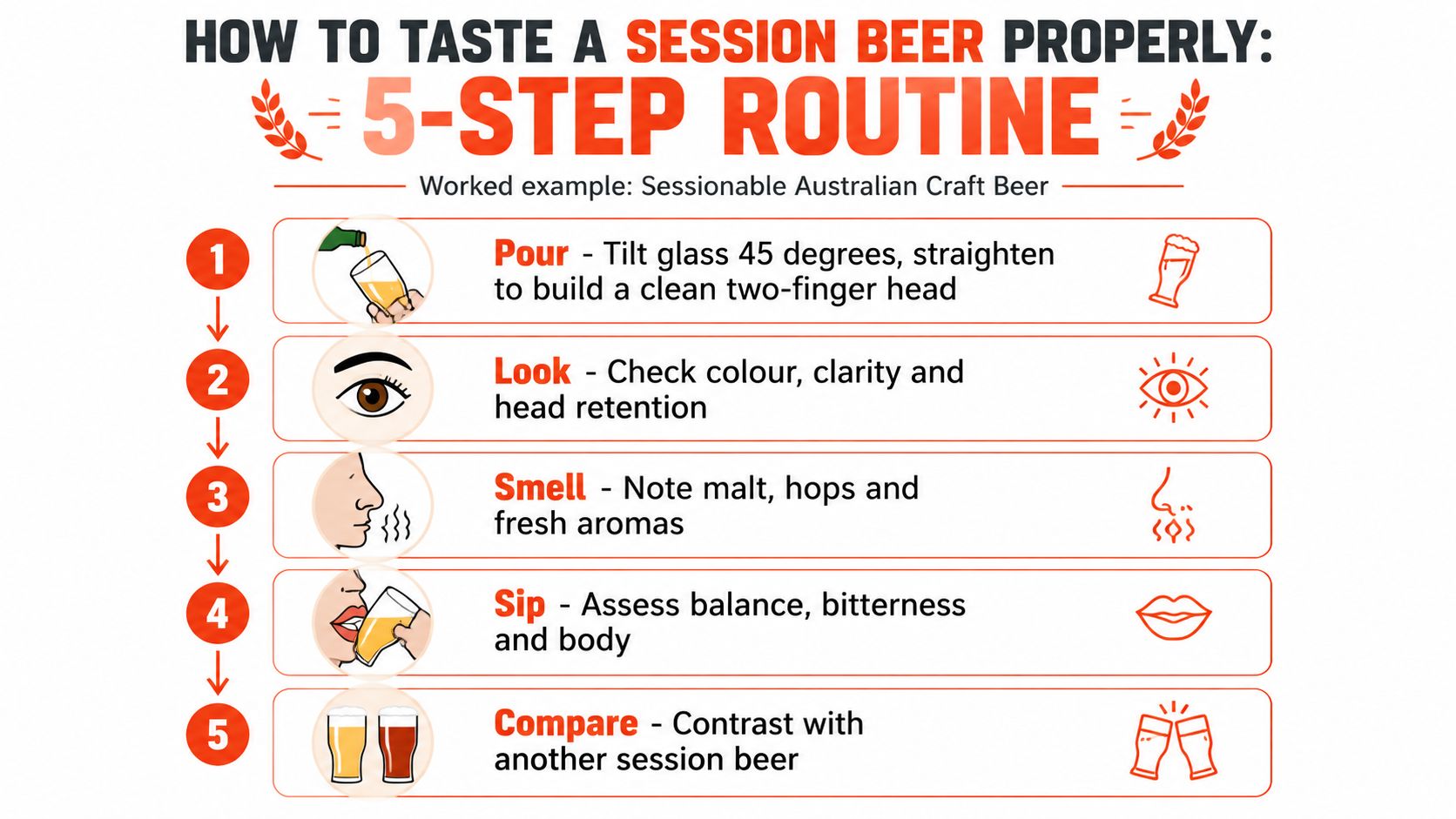
Tilt the glass at roughly 45 degrees, pour down the side, then straighten it near the end to build a clean two-finger head. A sessionable Australian craft beer might be pale gold, straw, amber or hazy yellow depending on its malt, yeast and hop choices. The head should look lively rather than collapsed, and the beer should show the level of clarity the style promises.
Look at the bubbles as well. Fine, active carbonation can make a lager feel crisp. A softer stream may suit a pale ale or amber beer. Cloudiness isn't automatically a flaw, especially in a hazy pale or wheat beer, but unexpected haze can sometimes signal that the beer hasn't travelled or stored well.
Smell and sip
Give the glass a gentle swirl and take a short sniff before drinking. Separate malt character from hop character. Bread, grain, biscuit and light caramel belong to the malt side. Citrus, pine, tropical fruit and floral notes usually come from hops, though yeast can add fruit and spice too.
Take a small first sip and let it move across your palate. Notice bitterness, sweetness, carbonation and body before swallowing. Then take a fuller sip. The first mouthful can be exciting, but the second reveals whether the beer has enough structure to carry its flavour.
The most useful test is what I call the second-sip and fourth-mouthful check. Does the beer still feel balanced after the novelty fades? Does bitterness keep building? Does the finish turn watery, harsh or cloying? A session beer should invite another sip rather than demand a break.
For readers who enjoy comparing tasting methods across drinks, these beginner whiskey tasting techniques offer useful ideas about slowing down, smelling first and separating aroma from mouthfeel. The same discipline works well with beer, even though beer relies more heavily on carbonation and freshness.
Compare without overcomplicating it
Put two beers side by side. Write down only five observations:
- Aroma: Which beer smells fresher or more expressive?
- Body: Which one feels fuller without becoming heavy?
- Bitterness: Is it clean, gentle, lingering or sharp?
- Finish: Does it dry out, fade quickly or leave sweetness?
- Repeat appeal: Which glass would you happily refill?
You can keep those notes in your phone, or use these beer tasting notes as a simple reference. The aim isn't to sound like a competition judge. It's to learn which balance suits you when the beer has to perform beyond the first taste.
Food Pairings That Make Session Beer Sing
Session beer works best at the table because its lighter structure leaves room for food. The pairing should either cut through richness, lift fresh flavours or soften heat. A beer that tastes pleasant on its own may still be the wrong match if its bitterness clashes with the meal.
Start with the barbecue
A crisp lager or pilsner is a safe partner for snags, burgers and chicken from the barbie. Clean malt supports the browned meat, while lively carbonation clears sausage fat from the palate. Moderate bitterness prevents tomato sauce sweetness from making the beer taste heavy.
A pale ale brings more citrus and hop aroma to the same plate. That can work with grilled chicken, but a very bitter pale ale may fight a heavily spiced sausage. For a mixed barbecue, choose the beer with the cleaner finish and let the food provide the richness.
Match hops with fried food and seafood
A citrus-forward pale ale suits fish and chips because hop bitterness lifts the fried coating while citrus echoes a squeeze of lemon. Keep the bitterness moderate. Too much bitterness can exaggerate oily or salty flavours instead of refreshing the palate.
For prawns, oysters and grilled barra, a dry-hopped pilsner or light saison-style ale can be a better choice. Their carbonation and dry finish respect briny seafood, while restrained hop aroma adds interest without covering delicate texture.
Use fruit and malt to handle stronger flavours
Thai food and curry call for a different balance. A fruit-forward session IPA or witbier can soften chilli heat through gentle sweetness, while tropical hop notes or citrusy spice connect with coconut, lemongrass and herbs. Extremely dry, bitter beer can make chilli feel sharper, so choose refreshment over aggression.
Mature cheddar and creamy brie prefer a maltier beer. An amber session ale or English-style session ale brings caramel, toast and biscuit notes that echo crackers and toasted nuts. The beer should still finish cleanly, otherwise the cheese and malt become a heavy combination.
| Session Beer Style | Classic Aussie Food Match | Why It Works |
|---|---|---|
| Crisp lager or pilsner | Snags, burgers and barbecue chicken | Carbonation cuts fat, while clean malt handles sauce and browned meat |
| Citrus pale ale | Fish and chips | Moderate bitterness lifts fried texture and works with lemon |
| Dry-hopped pilsner | Prawns, oysters and grilled barra | A dry finish refreshes the palate without overpowering seafood |
| Session IPA or witbier | Thai food and curry | Fruit and gentle sweetness soften heat and complement aromatic ingredients |
| Amber or English-style session ale | Cheddar, brie and toasted crackers | Malt richness echoes nuts and toast while the finish prevents heaviness |
The best match isn't always the most intense beer. It's the one that lets the next bite and the next sip make sense together.
Serving and Storing Session Beer the Right Way
A good session beer can lose its charm if you serve it too cold, pour it into a dirty glass or leave hop-forward cans baking in the ute. Treat the beer gently and the flavour will arrive closer to what the brewer intended.
Set the temperature by style
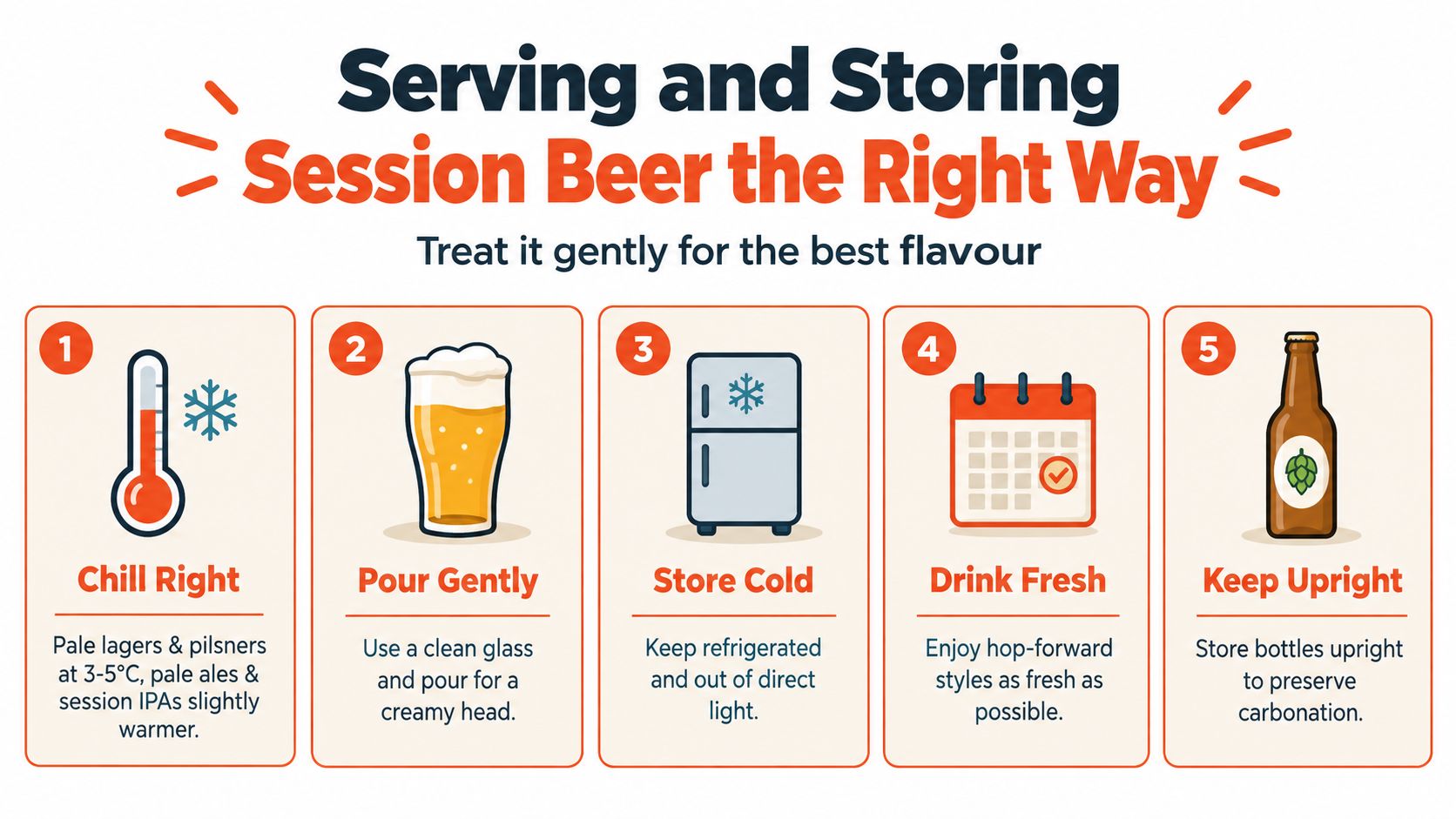
Pale lagers and pilsners are at their most refreshing around 3 to 5°C. Hop-forward pale ales and session IPAs benefit from a little more warmth, around 6 to 8°C, so citrus, tropical and pine aromas can rise without the bitterness feeling needlessly sharp. Wheat beers and light sours generally show fruit and spice more clearly around 5 to 7°C.
Don't pull every beer from the fridge and pour it immediately. If a pale ale tastes muted, give it a few minutes in the glass. If a lager feels soft and sweet, it may need a firmer chill.
Pick the glass that suits the beer
A tall pilsner glass shows colour and carbonation. A standard shaker pint is practical for maltier amber ales. A tulip or snifter concentrates hop aroma in a pale ale, though avoid wrapping your hand around the bowl and warming the beer too quickly.
The glass must be clean. Residual detergent, grease or old foam can flatten the head and distort aroma. A quick rinse isn't enough if the glass has been sitting beside the barbecue. Use a properly clean, cool glass and pour with enough energy to create a stable head.
Protect freshness at home
Keep cans and bottles upright in a cool, dark place, away from sunlight and temperature swings. Fridge space is ideal for beer you'll drink soon, especially hop-forward styles that rely on fresh aroma. Check the best-before date, rotate older stock forward and don't treat session beer as a cellaring project.
For an outdoor gathering, plan the cooling before the first guest arrives. This practical guide to keeping drinks cold without ice offers useful ideas for managing temperature when fridge space is tight. Once poured, drink the beer rather than letting it sit warm in the Queensland air. Carbonation fades, aroma shifts and the finish becomes less lively.
Buying Session Beer Locally or Direct to Your Door
A Gold Coast taproom and an online brewery shop solve different problems. Choose the taproom when discovery and freshness matter most. Choose direct-to-consumer ordering when you already know what you want or need access to a wider range.
At a local brewery or bottle shop, you can ask questions that a product page may not answer. Is the beer pale and dry, or soft and hazy? When was it packaged? Does the brewer recommend it with seafood, barbecue or spicy food? A tasting paddle can help you compare a pilsner, pale ale and session IPA in the same sitting before committing to a mixed pack.
Local buying also reduces the time between brewery and glass. You can take home a mixed six-pack, growler or cans the same day, depending on the venue. The downside is range. A small shop may not carry the specific table beer or regional pale ale you had in mind.
When online ordering makes more sense
Direct-to-consumer ordering suits a planned weekend, a regional brewery you can't visit or a mixed case built around several styles. You can compare tasting notes, check availability and order from the brewery rather than relying on whatever has reached the local shelf.
The trade-offs are freight, summer transit warmth and waiting two to five days for delivery. Check that the brewery publishes packaging or best-before information, and avoid ordering hop-heavy beer if the dispatch process is unclear. A carton can be good value for a gathering, but only if the beer will be stored properly once it arrives.
| Factor | Local Brewery / Bottle Shop | Direct to Consumer Online |
|---|---|---|
| Discovery | Taste before buying and ask direct questions | Read product descriptions and build a planned selection |
| Freshness | Shorter local supply chain can help | Depends on dispatch, freight and storage in transit |
| Range | Limited to the venue's current stock | Access to regional and brewery-only releases |
| Convenience | Same-day pickup | Delivered to your door |
| Best use | Comparing styles and buying fresh beer for tonight | Ordering mixed packs or hard-to-find session beers |
For a broader look at buying beer online in Australia, this online bottle shop guide covers the practical details. Whichever route you choose, buy for the occasion rather than chasing a label because somebody called it the best session beer.
Your Session Beer Checklist Before You Buy
At the bottle shop, taproom or online checkout, the decision can be simple. Run through the label, the occasion and the freshness information in that order. You're not searching for a universal winner. You're choosing the beer most likely to keep tasting good after the first pour.
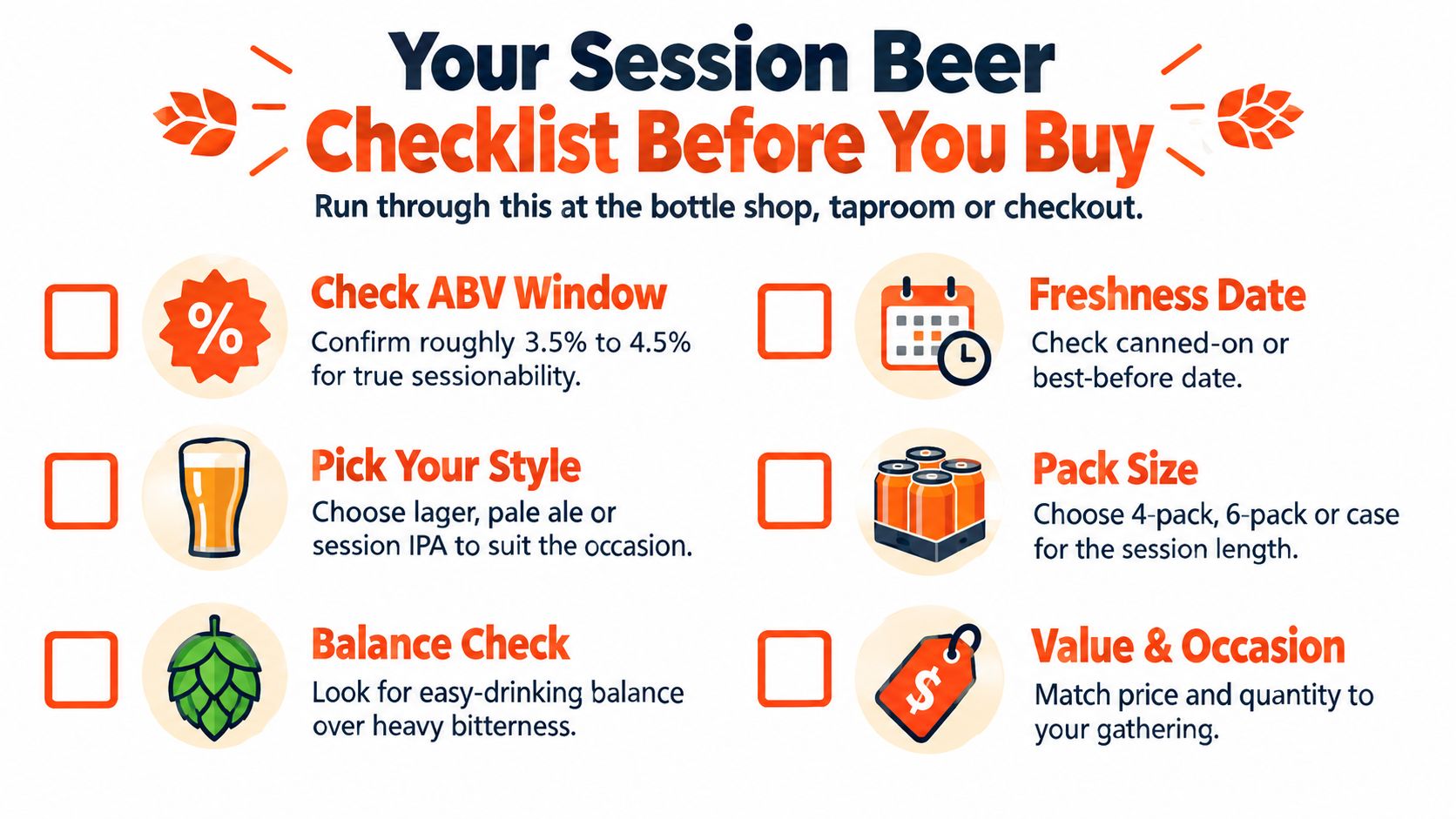
Six checks for a smarter purchase
- Check the ABV window. Look for roughly 3.5% to 4.5% ABV if you want a classic session profile. A beer outside that range can still drink easily, but it deserves closer attention to body, sweetness and bitterness.
- Pick the style for the moment. Lager suits heat and barbecue food. Pale ale brings more hop aroma. Session IPA works when you want a stronger hop impression without moving into a heavy beer. Table beer and wheat beer can be excellent with lunch and shared plates.
- Read the balance clues. “Crisp”, “dry” and “clean” usually point towards refreshment. “Juicy”, “tropical” and “citrus” suggest hop-led flavour. “Biscuit”, “bread” and “caramel” indicate more malt presence. If IBU is listed, use it as a guide rather than a promise.
- Check freshness before excitement takes over. Look for a canned-on date or best-before date, especially with hop-forward pale ales and session IPAs. Freshness won't fix a poorly balanced beer, but stale aroma can hide what the brewer intended.
- Match quantity to the gathering. Choose a four-pack, six-pack or case based on the people, food and storage you have. A mixed pack often gives you more useful information than buying a large quantity of one unfamiliar style.
- Choose local pickup or delivery deliberately. Buy locally when you want to taste, ask questions or drink the beer soon. Order direct when you need a specific brewery, broader range or planned mixed case, and check how the seller handles dispatch.
Once the beer is home, repeat the tasting routine. Pour it properly, smell before sipping and judge the second and fourth mouthfuls rather than falling for the first burst of aroma. Your palate will tell you more than hype, medals or a clever can design.
Alcohol marketing needs care as well. ABAC applies to controlled marketing communications including brand advertising, digital and social media, packaging, competitions, point-of-sale material and retailer advertising, as explained by ABAC's code overview. In Queensland, alcohol advertising must not encourage rapid or excessive consumption, imply drinking leads to success, appeal strongly to minors or connect alcohol with dangerous activities such as driving, boating, machinery operation or swimming, according to the Queensland Government advertising guidance. Placement rules also require reliable evidence that at least 80% of the audience are adults, and the updated code covers no- and very-low-alcohol beverages, as reported by B&T's ABAC coverage.
Carbon 6 Brewing Pty Ltd offers independently brewed beer from Stapylton on the northern Gold Coast, including sessionable options suited to warm Queensland afternoons and mixed-pack discovery. Visit Carbon 6 Brewing Pty Ltd to explore the current range and choose a fresh local beer for your next barbecue, seafood lunch or long afternoon with mates.