8 Craft Beer Ideas for Gold Coast Drinkers in 2026
Oct 29, 2026
The carton is already on the bench. It's a warm Saturday on the northern Gold Coast, the sliding door is open, and nobody can agree on the first beer. One mate wants something pale. Another wants hops. Someone else is still loyal to a stout they drank in winter. That pause is familiar, and it's where the best beer moments either start or stall.
A useful craft beer idea gives the group a job to do. You taste on purpose, you match the beer to what is on the plate, and you stop while the conversation is still good. I would rather see four small pours and a clear favourite than a half-finished carton of beers nobody asked for twice.
This list is for drinkers who want to learn their palate, for hosts planning a relaxed night, and for small brewers who need loyalty rather than a one-off novelty. There are eight ideas. Each one says how to run it, what to watch, and where it fits, from a Burleigh arvo through to a Stapylton brewery run and a quiet tasting at home. Every idea sits in a Queensland setting, and every idea has a trade-off, either for the person pouring or for the brewer trying to keep the beer fresh and the freight worth paying. Pick one. The rest can wait.
1. Guided Tasting Flights
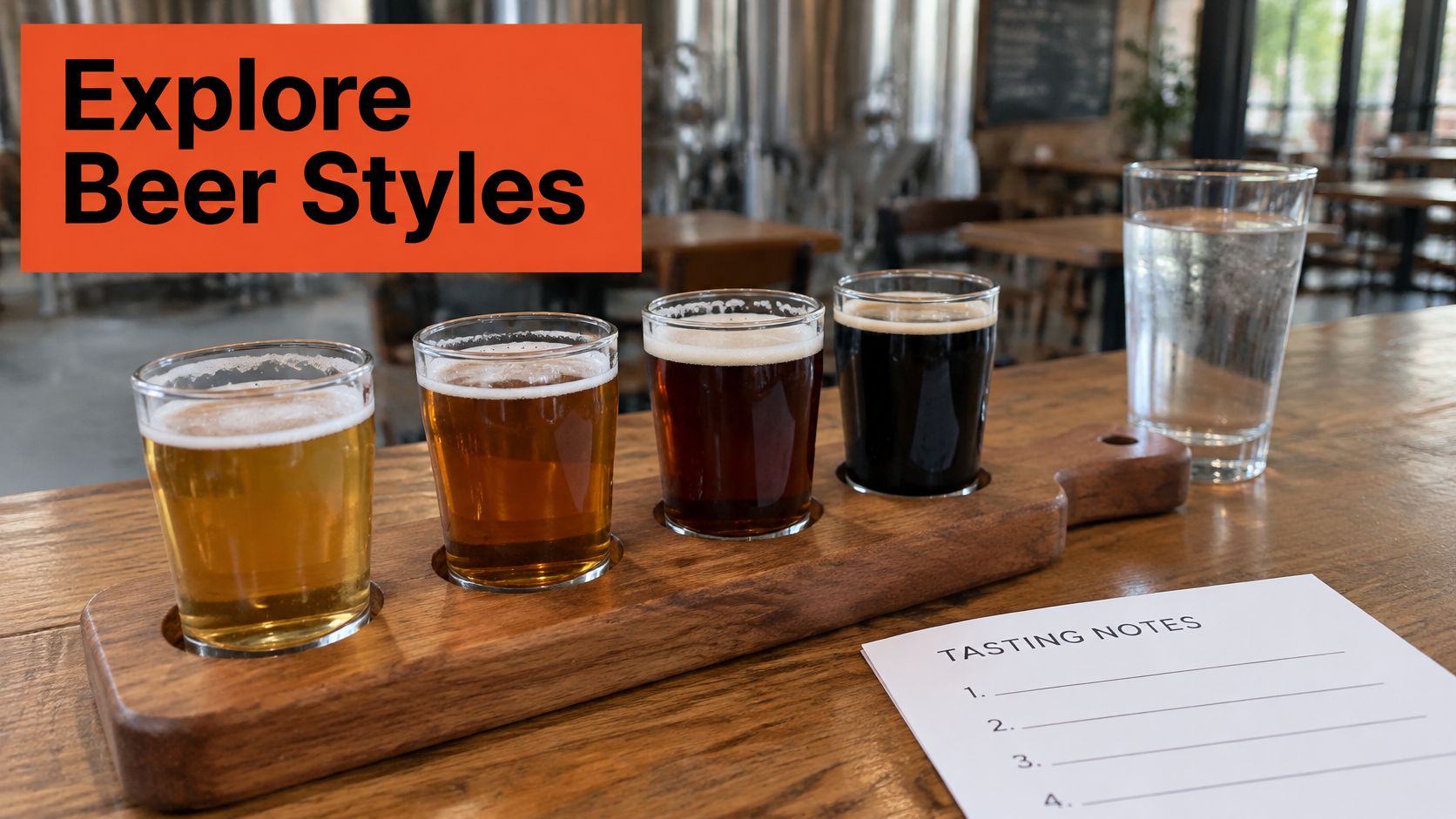
A flight is a set of small pours, about 100 mL to 150 mL, so people can compare styles before they commit to a carton. It suits the explorer, and it suits the lighter drinker who won't gamble on a full slab. IBISWorld's beer manufacturing report records craft beer's share of Australian beer revenue rising from 16.7% in 2019-20 to 21.0% in 2024-25, with brewery numbers moving from 723 to 1,004. Lighter craft drinkers are less adventurous than heavier ones. Extra brands don't remove the fear of a bad buy. A flight does.
Run the pours from easy to bold
Go from lightest to darkest, or from lower bitterness to higher. A hazy first and a stout second will flatten the pale ale in the middle. At home, split the flight from a mixed carton. A Mixed 16-Pack is sixteen 440 mL cans across several styles, with another can substituted if one beer is out of stock, so a few people can share opens instead of facing sixteen full serves.
- Reset the palate: Water and plain crackers. Hold the salty chips until the notes are done.
- Write it down: A numbered sheet for aroma, flavour and mouthfeel stops the loudest mate picking the winner.
- Keep it small: Short pours, then stop while people can still taste the last glass.
Small pours feel fussy if someone only wants a cold beer, and you will open cans you don't finish that day. That's still cheaper than a bad slab. A simple page of beer tasting notes keeps the backyard honest without turning it into a classroom.
2. Matching Beer Intensity to Food Intensity
Balance is the whole pairing. Light beer with a light plate. Bold beer with a rich one. Get that wrong and the meal tastes dull, or the beer tastes like an argument.
Say you're grilling prawns with lime and chilli at Burleigh. A crisp pilsner cuts the salt and the oil. A heavy stout sits on the seafood and nobody finishes either. Flip the plate to a slow beef brisket and the pilsner disappears. A stout or porter has enough roast to meet the meat.
Match the weight of the beer to the weight of the plate, then stop. A third clever pairing rarely tastes as good as the first two.
Three matches that hold up
- Salt and fried food: A pale lager or pilsner with fish tacos, chips, or those prawns.
- Spice and oil: A hoppy pale ale or IPA with Thai or Mexican food. Bitterness scrubs the chilli.
- Grill and smoke: A stout or porter with brisket or smoked pork ribs.
Look for one shared note, such as roasted malt with caramelised onion, or citrus hops with lime. A splash of beer in a batter is fine, then drink a cleaner beer with the meal so the flavour doesn't loop. Serve it at a temperature that suits the food, not whatever the fridge happens to be doing. This guide to craft beer food pairing goes further without the fluff.
Guests will still want their usual. Let them have one familiar can, then run the matched beer with the main plate. You waste less, and the cook gets a fair hearing.
3. Cheese and Craft Beer Pairing
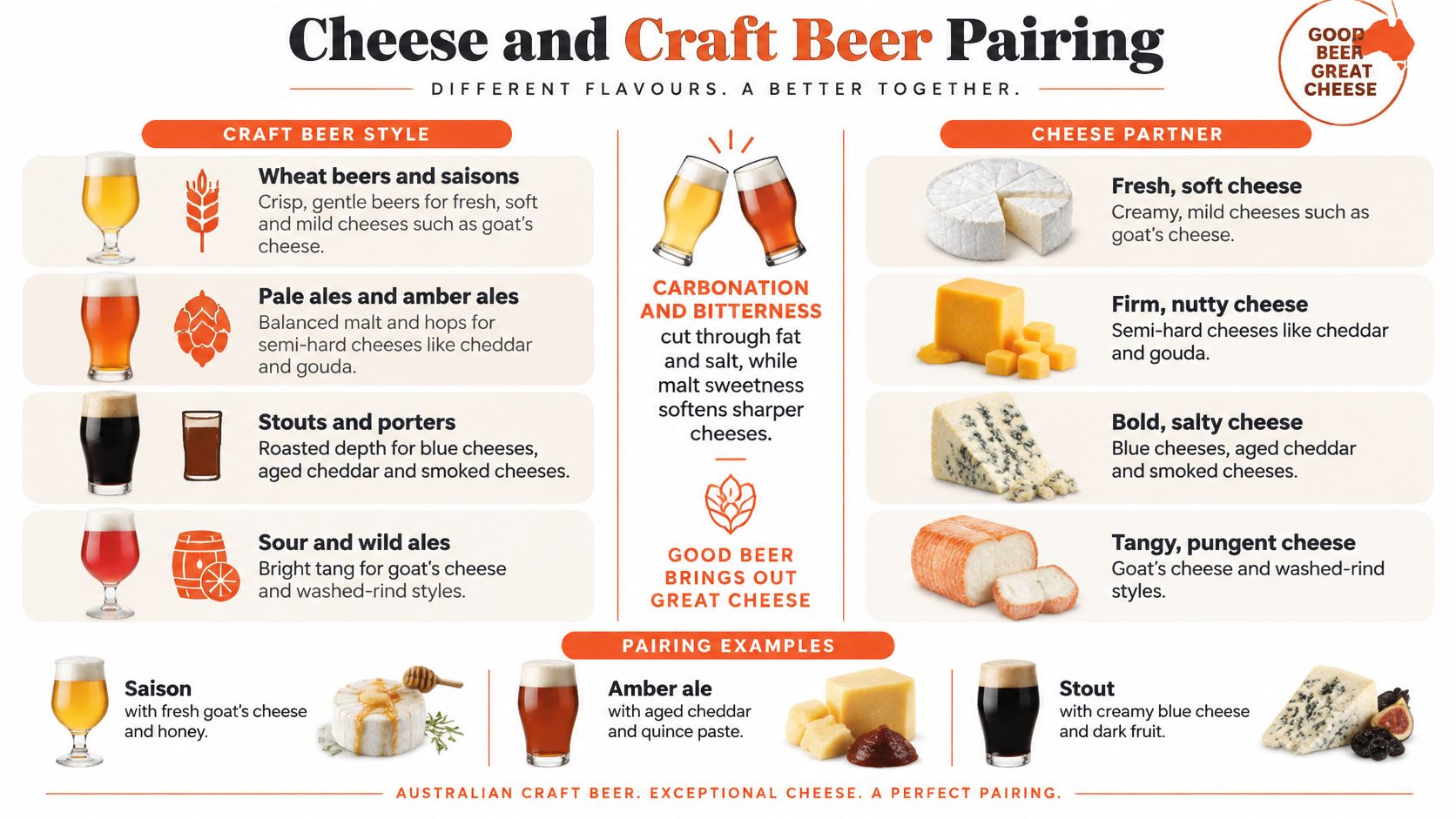
Cheese and beer share a fermented backbone, which is why the match feels easy even when the styles are new. Carbonation and bitterness lift fat and salt. Malt sweetness takes the edge off a sharp cheese. That's the practical deal, not a dinner-party performance.
Put the cheese out 20 to 25 minutes before you pour. Straight from the fridge it tastes like cold butter and the beer has nothing to meet. On a humid Gold Coast night, don't leave a soft cheese out for an hour. It slumps, and the pairing falls over with it.
- Fresh and bright: A saison with goat's cheese and a little honey.
- Nutty and aged: An amber ale with cheddar and quince paste.
- Salty and deep: A stout with creamy blue and a piece of dark fruit.
Keep it to two or three beers and three or four cheeses. Pear, walnuts and crusty bread give you a bridge when a match misses. A Queensland cheese next to an independent local beer gives the table a story people repeat, which matters more than an imported wheel nobody can place.
Practical rule: If the cheese is richer than the beer, the beer loses. Step the beer up, or cut a smaller piece of cheese.
A cheese night helps a brewer move slower beers that don't sell in the sun, but the board has to be priced so the beer is still the point. For the drinker, you'll eat more than you planned. Pour smaller.
4. Beer and Chocolate or Dessert Pairing
Dark chocolate, coffee sweets and caramel sit next to roasted, malty beer because the flavours already overlap. Cocoa, coffee and vanilla show up in plenty of stouts and porters, so the match feels obvious rather than clever. A fruit beer or a sour can take a lighter dessert, a berry tart or a sorbet, if the sour isn't harshly acidic.
Try it as a Saturday pudding at home. A small glass of milk stout with a square of chocolate brownie. A coffee porter with a spoon of tiramisu. A raspberry sour against lemon tart or a slice of pavlova, so the fruit in the glass echoes the fruit on the plate. Sweet needs a sweet-leaning beer. A dry, bitter IPA next to a sticky fondant tastes thin and harsh.
Keep the portions honest
This is a gift and a special-occasion idea, not a reason to line up full schooners after dinner. A small glass, about 100 to 150 mL, and a small plate. One dark chocolate square beside a porter is enough to show how roast malt and cocoa share a flavour. If you want a lighter bite between sips, choosing low-sugar chocolate wafers gives you a crisp option that won't coat the palate the way a dense brownie does.
Sugar plus alcohol in the same hour lands faster than people expect. I would run this as the last small course, not as round two of a big session. Hosts who treat dessert beer as "just a sweet finish" are the ones refilling glasses nobody needed.
5. Pairing Craft Beer with Queensland and Australian Produce
Queensland food gives you a pairing you can't fake with a generic pub menu. Macadamias, reef prawns, mango and native herbs already taste of the coast. The beer should meet that, not shout over it.
By September 2018 the Queensland Government Craft Beer Strategy put the state at nearly 90 independent craft breweries, from Port Douglas down to Burleigh Heads. A northern Gold Coast drinker can build a plate from local food and a local brewery without pretending the only serious beer comes from a capital city.
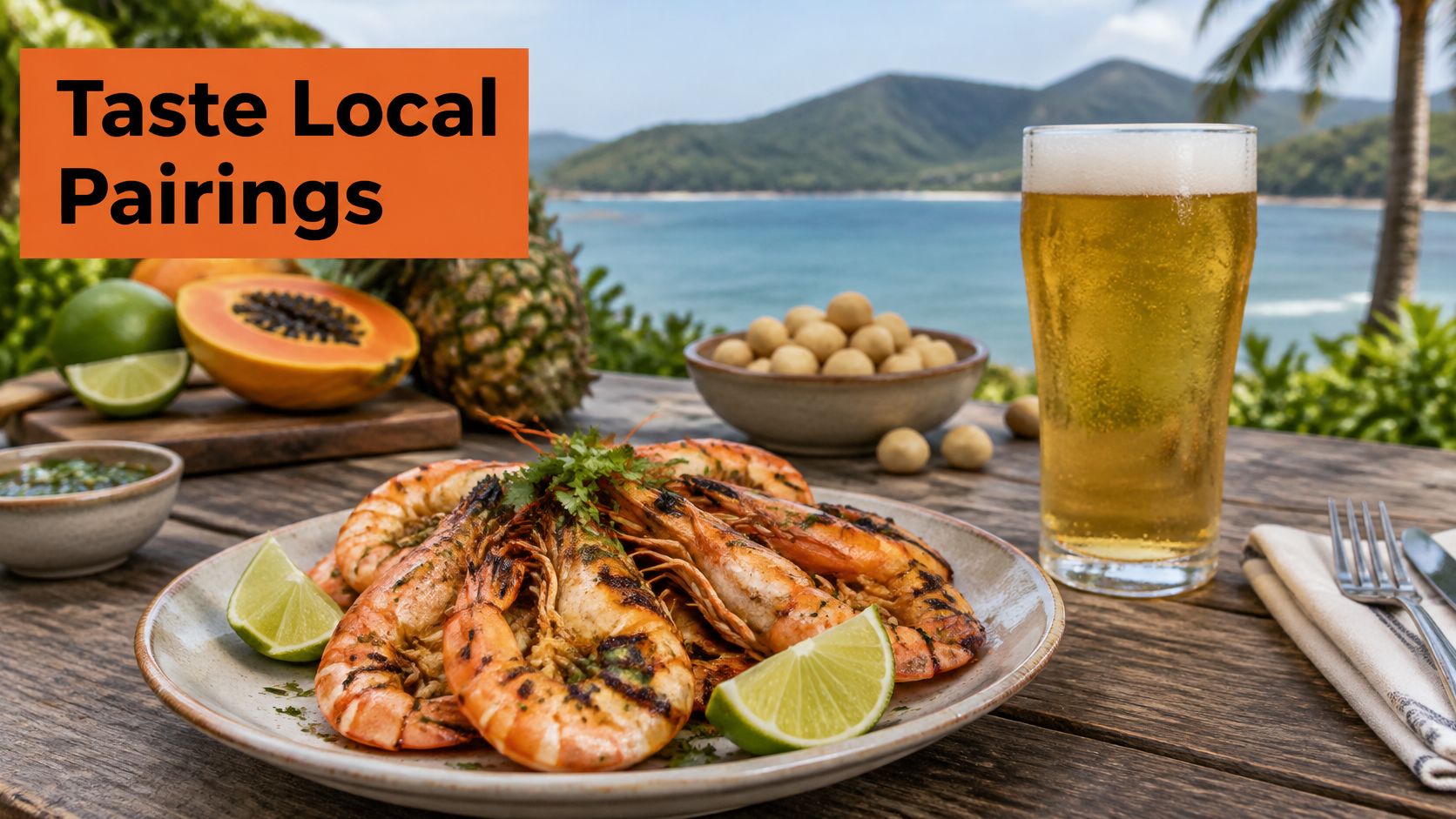
Start with one ingredient. Grilled Queensland prawns and lemon myrtle salt want a cold pilsner. A mango salad with toasted macadamias wants a wheat beer, or a small pour of something juicier. Peach & Mango - Oat Cream IPA is brewed in Stapylton with peach, mango, lactose and rolled oats, at 7.2% ABV, in 440 mL cans. It can sit with that salad. The strength is the trade-off. One small glass in the shade, not a long session in the sun. A brown ale with macadamia and honey closes the same produce story after dark.
What not to post or pour beside
If you run a brewery, the photo matters as much as the plate. ABAC's guidance notes prohibit alcohol marketing that shows consumption before or during activities needing alertness or coordination, including driving, boating and swimming. A tinny, a pool or a surf check with a beer in hand is a compliance problem. Put the meal on a table at home, and put the producer's name on the card.
6. Serving Temperature and Glassware Matching
Temperature and the glass change the beer before anyone argues about hops. A lager served cold on a hot day tastes crisp. The same lager, warm, tastes sweet and flat. A stout poured icy tastes mute. Give it 5 to 10 minutes on the bench and the roast wakes up.
Glass, head and a clean rinse
- Tulip: A hazy IPA. The bowl holds aroma and the lip holds the head.
- Snifter: A barrel-aged stout at cellar temperature. You want the nose, not a big cold volume.
- Pint glass: A crisp lager you're going to drink in the heat.
Pour with the glass at about 45 degrees, then straighten it so you build a short head. Detergent film kills that foam. Rinse with hot water and let the glass drain. If the cans are waiting for a later arvo, this note on beer temperature and storage covers the fridge and the bench without a lecture.
A warm beer isn't automatically a better beer. It's only better when the style has flavour that cold was hiding.
Proper glassware breaks, and guests will still want a tumbler by the barbecue. Keep two decent glasses for the beer you're trying to show. Let the lager live in the pint. For the brewer, a filthy glass in a photo undoes a good batch faster than an average recipe does.
7. Vertical and Vintage Tasting of Cellared Beers
A vertical tasting is the same beer across years, youngest first. You're listening for what time did, not hunting a winner. Strong ales, barrel-aged stouts and some Belgian-style beers can grow deeper. A pale ale usually can't. It just gets tired.
Say you have three vintages of a barrel-aged imperial stout, or one strong Belgian-style ale tasted fresh and again after two years. Pour small. Taste the youngest, then the older bottles, and write one change each time. Less hop aroma, more dried fruit, a softer roast, a sherry note. Start with the oldest and the young beer tastes simple. You learn nothing.
- Temperature: Cool and dark, around 12 to 15 °C. A Gold Coast garage in January isn't a cellar.
- Labels: Brew date and bottling date on the bottle, not on a box you'll throw out.
- Order: Youngest first, oldest last. Store upright or on the side.
Hop-forward IPA belongs in the fridge, then in a glass, not in a library. Cellaring that is how you buy regret. Provenance still helps people trust an older bottle. The Independent Brewers Association FutureBrew roadmap reports that 80% of craft beer drinkers recognise and understand the value of the Independent Seal. Show the mark, and still show the date. A seal without a date is only a story.
Stock in a cellar is cash you can't spend, and one hot month can ruin the experiment. Cellar a few strong bottles. Don't build a library you can't cool.
8. Home Tasting Night Using a Mixed Pack or Carton
This is the idea that turns a delivery into a night, which is what a lot of online beer orders are. Food Standards Australia New Zealand research on online shopping and labelling found that 14.0% of respondents used online platforms to order alcohol, alongside delivery evidence that beer and wine made up 81% of recent online alcohol purchases, with 63% of users ordering between 5 pm and 9 pm. People are shopping after work for a weekend catch-up, not building a museum.
Plan four beers, not twelve. A pilsner, a pale ale, an IPA and a stout, plus a cheese board, fills a northern Gold Coast lounge. A summer set can swap in a wheat beer, a sour and a porter. Open in that order. One person hosts the notes so the group doesn't talk over the first sip.
Set the limit before the doorbell
The ABAC guidance notes identify excessive consumption as more than 10 standard drinks a week or more than 4 standard drinks on any one day. Build the night inside that day limit. Water on the table, food before the second beer, and a non-alcoholic option that isn't an afterthought. Run it on a weekend afternoon or early evening so people can get home safely. Don't turn it into a dare, a timed finish, or a joke about who's still standing.
A mixed carton makes the freight worth paying, and it also tempts a bigger basket than the room needs. Buy for the people who are coming. Leftover strong beers can wait for the next planned tasting, not a sleepy top-up at midnight.
How the 8 craft beer ideas compare on serving size, best use and setting
| Item | Typical Serving Size | Best For | Typical Setting |
|---|---|---|---|
| Guided Tasting Flights | 4–6 pours of 100–150 mL each | Comparing beer styles | Taproom or home tasting |
| Matching Beer Intensity to Food Intensity | No fixed size; served alongside a matched dish | Balancing beer and meal flavours | Home or restaurant |
| Cheese and Craft Beer Pairing | No fixed size; tasting portions of beer and cheese | Entertaining and exploring flavour matches | Home, taproom or cellar-door event |
| Beer and Chocolate or Dessert Pairing | 100–150 mL of beer with a small dessert | Dessert pairings and gifting | Meal finish or special occasion |
| Pairing Craft Beer with Queensland and Australian Produce | No fixed size; served alongside local produce | Showcasing regional ingredients | Local food event or brewery |
| Serving Temperature and Glassware Matching | No fixed size; varies by beer style | Enhancing aroma and flavour | Taproom or home |
| Vertical and Vintage Tasting of Cellared Beers | 60–100 mL pours | Comparing vintages and ageing | Premium tasting event |
| Home Tasting Night Using a Mixed Pack or Carton | 330 mL or 375 mL bottles or cans; 4–6 styles | Social tasting and discovering new styles | Home gathering |
Turning These Ideas Into Your Next Round
Pick one idea and run it small. A flight for four, or a cheese board with two beers, teaches you more than a themed party you haven't tested. Write down what guests ask for. If they ask which beer was the pale one, your order of service worked. If they ask whether anyone can drive, you poured too much.
For a drinker, the win is a clearer favourite and less money stuck in cans you only tolerate. For a host, the win is a night that feels generous and still ends cleanly. For a small brewer, a seasonal pairing or a home tasting kit is a loyalty tool, not a fireworks show. Track which beer people mention the next week, and which can comes back warm because the freight sat on a porch.
Independent brewing in Queensland carries more weight in jobs than in market share. Evidence from the Independent Brewers Association to the Queensland Parliament estimated that in 2023-24 the industry contributed $588 million to the Queensland community and supported 6,715 jobs, while nationally independent craft breweries employed 51% of the brewing workforce with less than 8% of beer market share. You won't win on a big brewer's price. You can win on taste, freshness and a place people recognise.
Online ordering is already part of that habit. A 2025 national survey of 2,037 adults found that 39% of people who had consumed alcohol in the previous year had bought alcohol online, with 396 Queensland respondents in the sample, and that more than one-third of those who had alcohol delivered got it within two hours. Speed is a real benchmark. It's also why age checks, purchase limits and plain delivery rules belong in the journey, especially where online buying runs higher among high-risk groups. A mixed carton should come with a limit, not a push to finish it.
If you promote any of this, treat the post as alcohol marketing. The ABAC Responsible Alcohol Marketing Code covers websites, social media, influencers, packaging and direct-to-consumer messages, and a breach can mean the asset has to change or come down. Flavour, provenance and a meal at home are safe ground. Intoxication, challenges and risky settings aren't.
Carbon 6 Brewing Pty Ltd brews in Stapylton on the northern Gold Coast, with direct sales and local wholesale if you want an independent option close to home. Keep the next round tied to what your crowd drank, and drop the ideas that didn't land.
Carbon 6 Brewing Pty Ltd brews independent craft beer in Stapylton and sells it direct to drinkers as well as through local wholesale, including mixed cans that suit a planned tasting at home. If one of these craft beer ideas is the round you're going to run, start with a format that fits the people in the room rather than a carton you'll forget in the fridge. Visit Carbon 6 Brewing Pty Ltd and pick the beers for that next afternoon.