

Craft Beer Pack Australia: Your Complete Buying Guide
Oct 10, 2026
You've opened the fridge, found a few unrelated cans, and realised none of them quite suits the meal, the weather or the people coming over. One drinker wants something crisp, another wants hops, and someone else would rather not commit to a full carton of one unfamiliar style. That's where a well-built craft beer pack in Australia earns its place.
The appeal isn't just buying local. It's the cold pour, the freshness, the anticipation of opening something different, and the quiet satisfaction of putting money behind an independent Queensland business instead of a faceless multinational. The right pack gives you variety without turning the fridge into a guessing game.
Why Craft Beer Packs Are the New Aussie Standard
A good craft beer pack changes the mood before the first sip. You pull a cold can from the fridge, read the label, and know there's a reason it's there. Maybe it's a familiar pale ale for an easy afternoon. Maybe it's an IPA saved for a barbecue. Maybe it's the beer nobody in the household has tried yet, which becomes the one everyone talks about.
That sense of discovery matters. The modern Australian craft drinker generally isn't chasing the cheapest liquid available. They're paying for flavour, freshness and a more considered drinking experience. A mixed pack turns the purchase into a small tasting journey, while a single-style carton gives loyal drinkers the confidence of repetition.

The emotional logic behind the purchase
People often explain their choice with practical language, such as “I wanted a carton” or “the delivery worked out better that way”. Underneath, the drivers are more personal:
- Freshness: Beer tastes better when the buyer trusts how it has been handled and when it was packaged.
- Flavour discovery: A varied pack lets curious drinkers explore without buying several separate cartons.
- Belonging: Sharing independent beer creates a stronger connection to place, maker and occasion.
- Support for local business: Buying from a Queensland brewer feels more tangible than choosing another national brand from a supermarket shelf.
Queensland has a genuine independent brewing network rather than a handful of isolated taprooms. The Queensland Government reported that, by September 2018, the state had nearly 90 independent craft breweries, employing an estimated 1,700 people and contributing approximately $62 million annually to the state economy. Employment linked to craft brewing grew at 9.7% annually between 2013 and 2018, compared with 2.1% for Queensland beer manufacturing overall. Those figures come from the Queensland Craft Brewing Strategy.
Practical insight: “Buy local” works best when it explains what the customer actually receives, fresher beer, a more distinctive flavour choice and a direct connection to an independent producer.
A craft pack also solves a social problem. You don't need to predict one universal preference for the whole household. You can offer a familiar beer, a more adventurous option and something that pairs with food, all in the same order. That's why the strongest packs feel curated rather than random.
The Mechanics of Beer Packaging in Australia
Packaging determines more than shelf appearance. It affects freight weight, breakage risk, storage, temperature exposure and the condition of the beer when it reaches the customer.
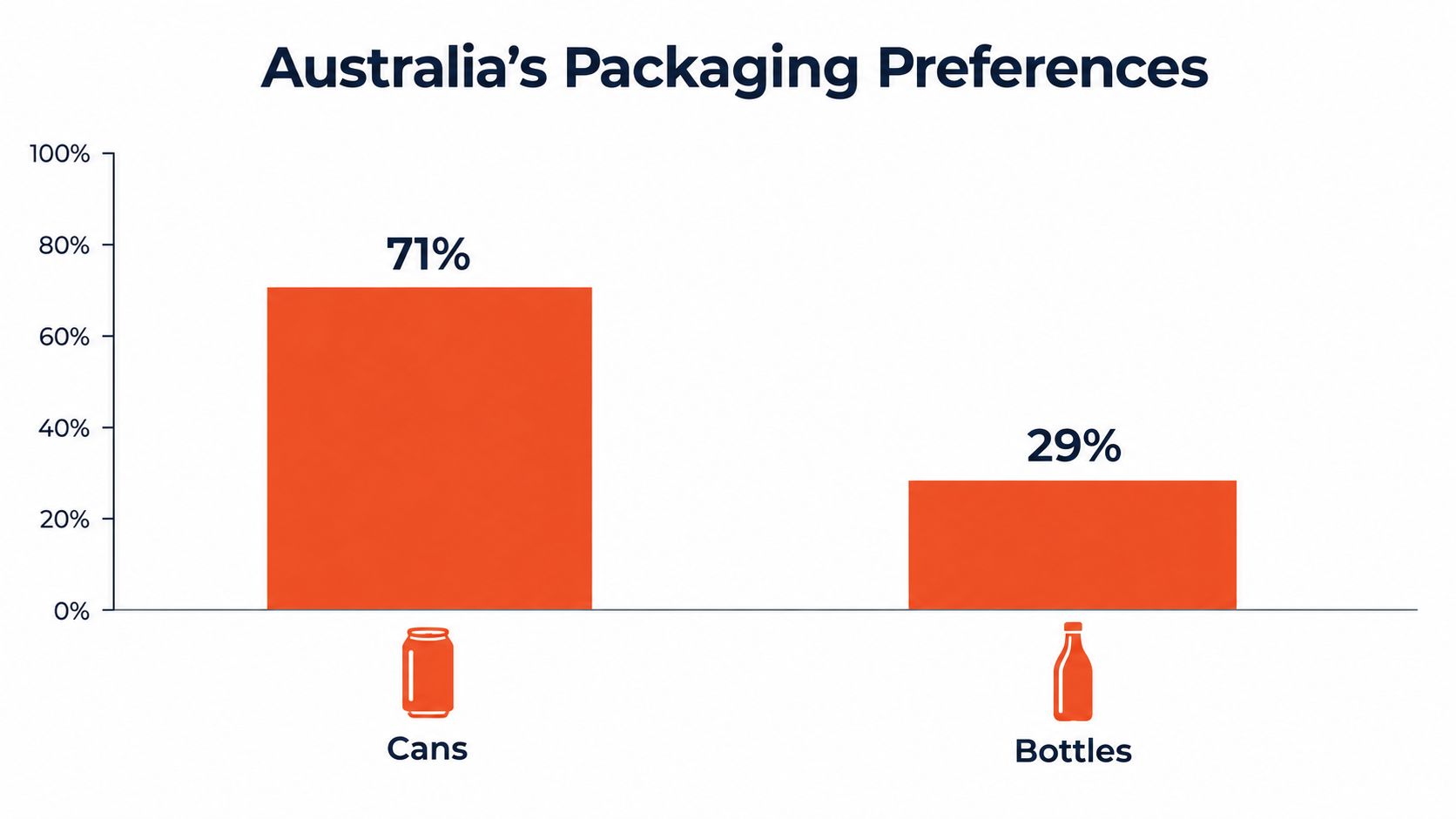
The Australian Craft Beer Survey collected responses from more than 23,000 Australian craft-beer drinkers in 2019. Cans were the preferred vessel for 38% of respondents, an increase of 8 percentage points from the previous year, while bottles were preferred by 27%. The same survey found that 75% regularly bought four- or six-packs, while 40% bought single beers and a similar proportion purchased cases. Online purchasing was also expanding, with 30% buying beer online at least every six months or more often, compared with 22% in 2018. The results are reported in the 2019 Australian Craft Beer Survey.
Why cans suit Australian delivery
Cans usually make sense for a Queensland brewery shipping beer to homes because they're lighter, stack efficiently and don't introduce the same breakage exposure as glass. They also protect beer from light, which helps preserve flavour when the pack spends time moving through warehouses, vans and regional freight networks.
That doesn't mean a can is automatically superior in every situation. Bottles can support a premium presentation and may suit certain serving rituals, but their extra mass and fragility create a harder logistics problem for direct-to-consumer cartons. The secondary packaging has to do serious work either way.
For multipacks, the outer carton needs to resist compression while keeping cans from rubbing, crushing or moving freely. Breweries also need to think about pallet handling, carton sealing and the final customer opening the box without damaging the product. Materials used for bundled beverage presentation, including shrink hood film products, can be relevant when a pack needs stable grouping during handling, though the finished design still needs to balance protection, recyclability and ease of separation.
Designing for recovery, not just appearance
Australian government data recorded approximately 0.58 million tonnes of glass packaging recovered in 2017–18, representing a 46% glass-recovery rate. Nearly all states and territories operate container-deposit schemes, so a Queensland pack needs to consider the return pathway as well as kerbside disposal. The figures and recycling context are detailed in the Australian glass packaging recycling infrastructure assessment.
A responsible carton should make it obvious which parts are cardboard, metal or glass. “Recyclable” describes a material's capability. It doesn't guarantee that every item will be recovered, because the result depends on the customer using the relevant return or recycling channel.
For a deeper look at pack formats and practical selection criteria, see Carbon 6's guide to best craft beer boxes. The useful test is operational: track damage claims, freight cost per saleable litre and packaging weight by format. That tells a brewer more than a glossy packaging concept ever will.
How to Choose the Right Pack for Your Palate
The best pack isn't necessarily the one with the most styles. It's the one that matches how you drink, who you're buying for and how much uncertainty you're comfortable with.
A curious explorer wants range. They might enjoy comparing bitterness, malt character, body and aroma across several beers. A loyalist already knows the style they'll reach for after work and would rather have a full carton of that beer than a mixed selection. Both are sensible buyers. The mistake is treating them as the same customer.
Start with the occasion
Before choosing a pack, identify the job the beer needs to do.
- Weeknight drinking: Choose approachable flavour and a beer you won't resent opening when you want something uncomplicated.
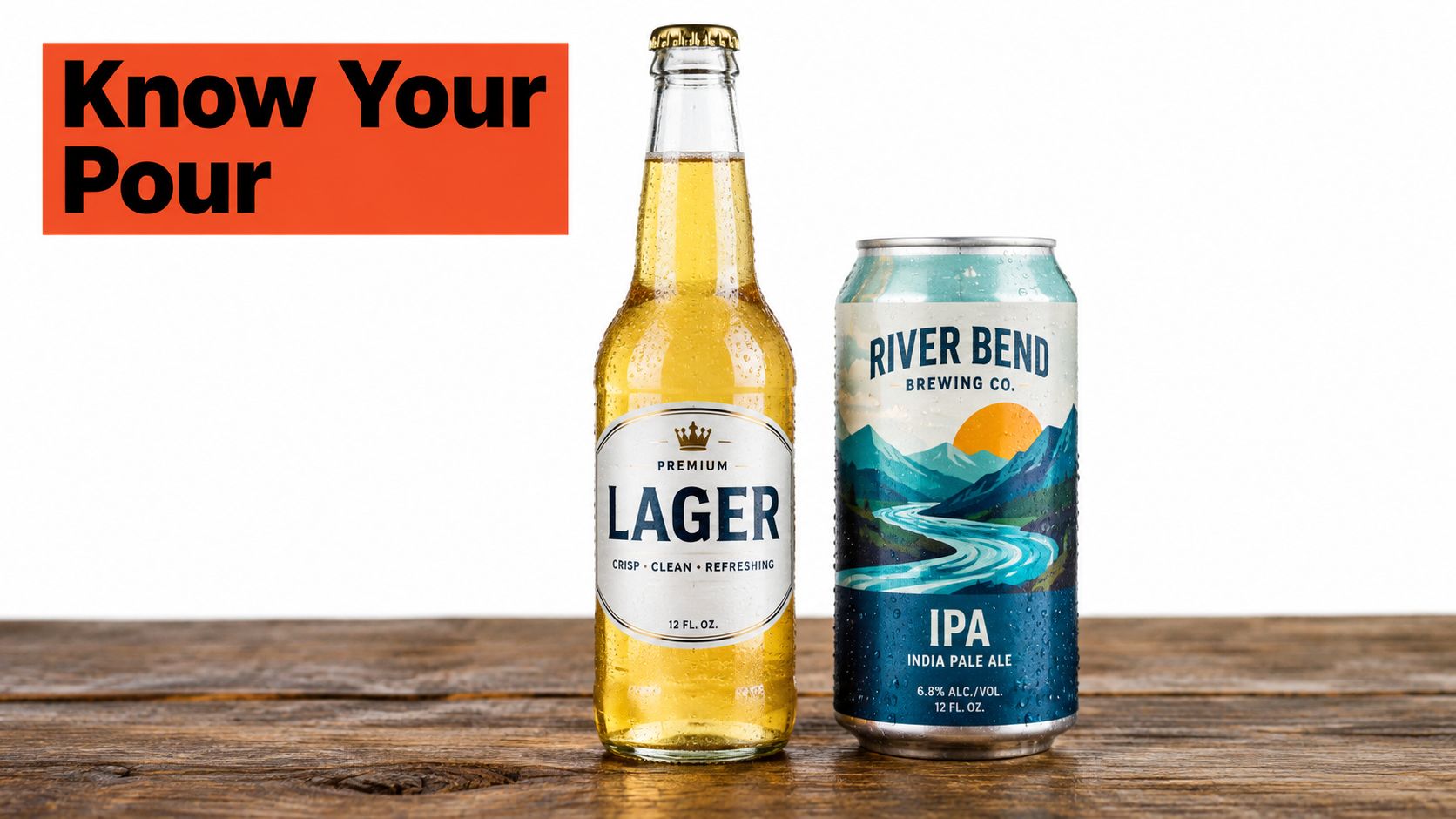
- Meals: Consider bitterness, roast, acidity and carbonation alongside the food. A heavily hopped beer may work beautifully with rich or spicy dishes, while a cleaner lager can be more flexible.
- Social sharing: Variety matters because guests rarely arrive with identical preferences.
- Discovery: Choose a curated mix that gives unfamiliar beers a sensible place beside more dependable options.
Low- and no-alcohol beers deserve their own consideration. They aren't automatically interchangeable with standard craft beer. Body, sweetness, bitterness and carbonation can differ, so a pack should label those differences clearly rather than treating alcohol strength as the only variable.
Mixed pack or single-style carton
Choose a mixed pack when you're buying for several people, trying a brewery for the first time or want to explore without committing to one flavour profile. Choose a single-style carton when you already know the beer you'll reorder and consistency matters more than novelty.
A useful mixed pack has an anchor. That might be a reliable pale ale, lager or red IPA that feels familiar, supported by smaller quantities of seasonal or more distinctive beers. This structure lowers trial risk while keeping the box interesting. A pack made entirely from challenging styles can look exciting online and become a fridge full of unfinished cans.
Taste should drive the next purchase. The Australian Independent Brewers Association reported that craft and independent beer's share increased from 19% in 2019 to 27% in 2020, a historical comparison that supports the value of differentiated independent positioning, but it shouldn't be treated as current market share without newer validation. The IBA FutureBrew roadmap also identifies taste as the primary repurchase driver across light, medium and heavy craft-beer drinkers.
A practical tasting method
Don't judge the whole pack from the first can. Serve each beer properly, note what you enjoyed and record what you'd buy again. Pay attention to:
- Aroma: Does the beer smell fresh, expressive and appropriate for its style?
- Texture: Is the body too lean, too sweet or comfortably balanced?
- Finish: Does bitterness, roast or acidity linger in a pleasant way?
- Use case: Would you choose it with food, for a quiet drink or when friends visit?
Carbon 6 Brewing Pty Ltd offers a Mixed 16-Pack containing sixteen 440 mL cans, with a hand-picked selection that includes Cardinal Red IPA. It's structured for drinkers who want to sample a range rather than begin with a full single-style carton. The brewery's approach to mixed beer packs in Australia reflects the broader principle: discovery works better when the pack gives the customer a dependable starting point.
Direct-to-Consumer Versus Traditional Retail
A bottle shop wins on immediacy. You can walk in, scan a shelf, place the pack in the boot and have a beer cold within minutes. The weakness is that the shelf usually can't explain when the beer was packaged, how it was selected or which release suits your drinking preferences.
A brewery website offers more context and often more range, including limited releases that never reach broad retail distribution. The trade-off is patience. You need to wait for delivery, manage the freight economics and make sure someone can receive the order.
| Consideration | Brewery direct to consumer | Traditional retail |
|---|---|---|
| Freshness information | The brewer can provide packaging and release context | Information varies by retailer and stock rotation |
| Selection | Often includes mixed packs and brewery-only releases | Immediate access to the retailer's current range |
| Convenience | Delivered to your door, subject to freight and delivery windows | Immediate purchase and no home-delivery wait |
| Curation | Product pages can explain flavour, serving and pack purpose | You make the selection from shelf labels and staff advice |
| Community connection | Money goes directly to the independent producer | The retailer remains part of the local purchasing network |
| Price visibility | Product and freight appear together at checkout | Shelf price is immediate, but travel and time still have value |
What DTC actually adds
Direct ordering gives the brewery a clearer relationship with the person drinking the beer. That can mean better release communication, more accurate product education and a simpler way to reorder a beer you liked. It also lets a buyer build a pack around the household rather than accepting whatever combination happens to be on a retail shelf.
Retail still has a strong role. Local bottle shops provide advice, immediate availability and a physical place to compare products. For many buyers, the best approach is mixed: use retail for urgent occasions and brewery websites for planned orders, special releases and curated packs.
Digital tools can support that bridge. For example, retail QR case studies show how QR experiences can connect physical packaging with additional product information and customer journeys. Used properly, a code can help a shopper understand the beer without crowding the carton with copy.
A subscription can also suit customers who enjoy regular discovery, provided the frequency and beer selection remain clear. It shouldn't become an excuse to send unwanted stock. Carbon 6's information on a craft beer subscription in Australia is most useful when read through that lens: recurring convenience only works when the customer still feels in control.
Understanding the Real Cost of Delivery
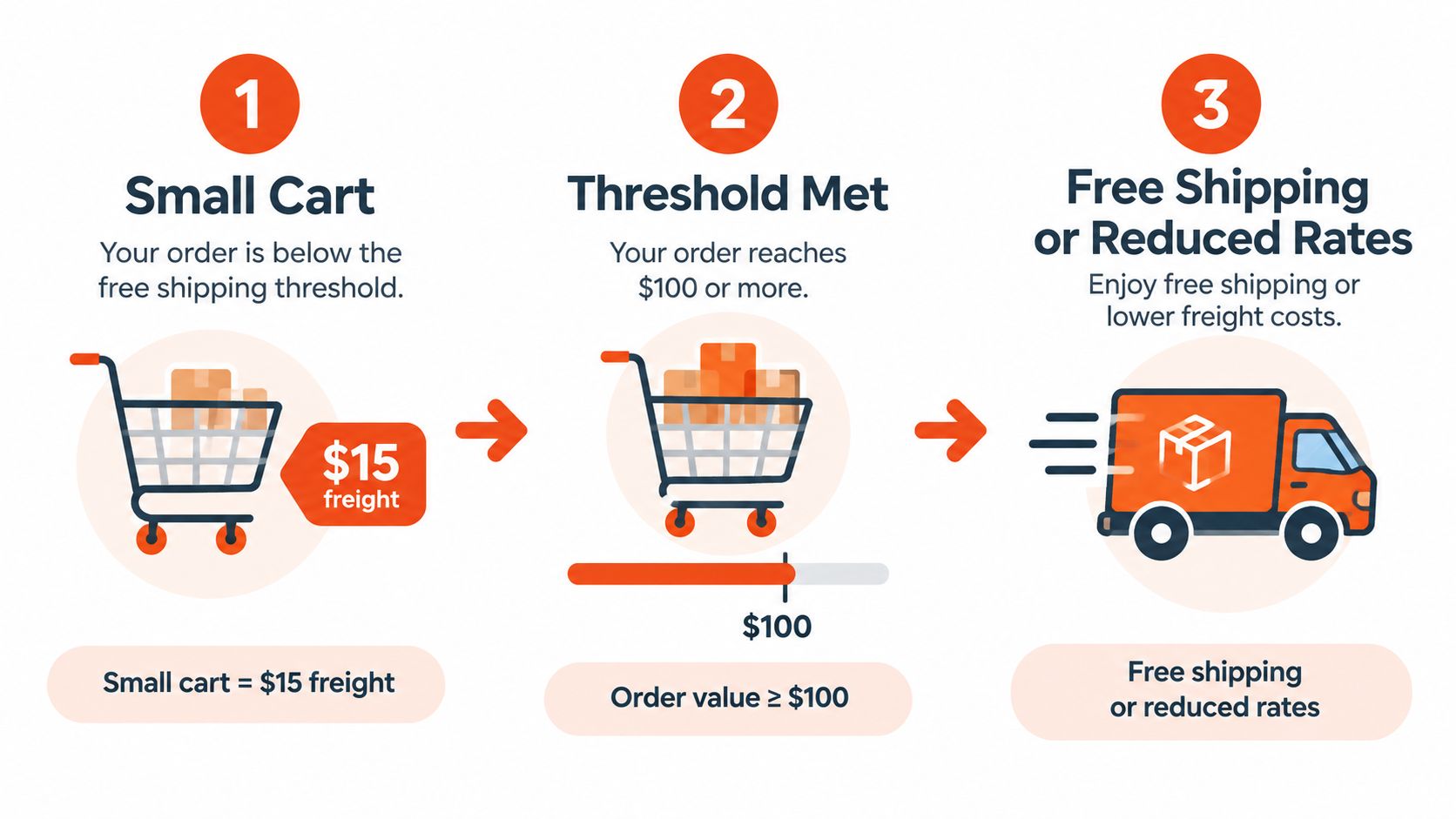
“Free shipping” is rarely free. The freight cost still exists somewhere in the transaction, whether the brewer builds it into the product price, absorbs part of it or sets a minimum order threshold.
A better calculation is the landed cost per usable can:
Product price + freight + packaging cost + expected damage allowance, divided by saleable cans received.
The buyer may not see every component, but the brewery has to manage all of them. A small order can carry a disproportionate freight burden. A larger mixed pack can spread that cost across more cans while giving the customer more variety than several separate single-style purchases.
The basket-size question
Australian online-liquor data shows that bottle-shop website sales grew 16.2% year on year, online shoppers increased 14.1%, and the average online liquor basket was 2.4 times larger than an in-store basket. These figures are reported by NIQ in its Australian omnichannel liquor analysis.
The figures support a familiar Queensland buying pattern. Customers often wait until an order feels large enough to justify delivery, particularly when freight to regional areas adds uncertainty. That doesn't mean every buyer should purchase more beer than they need. It means the pack should solve a real consumption problem rather than merely chase a shipping threshold.
Consider two scenarios:
- One curated pack: You pay for one delivery and receive several flavour options in a single carton.
- Several narrow orders: You repeat the freight charge, receive more packaging and may end up with styles that suit only one person.
A mixed pack can therefore offer value through reduced decision risk, not just through the shelf price. If one style doesn't suit you, the remaining beers still have a clear role. A well-designed carton is insurance against an expensive experiment.
Packaging, damage and sustainability
Cans generally reduce breakage exposure, but they still need partitions or moulded inserts to prevent crushing and seam damage. Cartons should be tested under compression and vibration, especially when beer travels beyond the Brisbane and Gold Coast corridor.
Glass has a premium feel and can protect certain presentation choices, but it adds mass and breakage exposure. Cans usually provide better cube efficiency and lower transport risk, though a can's sustainability story still depends on collection and processing. An Australian pilot produced cans averaging 83% recycled content in 2025, compared with an Australian average of 68% cited for 2022–23. That comparison appears in the NIQ-linked market context above, but it doesn't prove that every can has the same footprint.
Freight rule: Compare delivery cost and damage claims against usable beer received, not against the word “free” on a checkout banner.
Before ordering, check the delivery zone, expected timing, damage procedure and refrigeration plan. If a box arrives warm, move it into a cool place and refrigerate it before serving. If a can is damaged or a carton is compromised, photograph the condition and contact the seller promptly. Clear responsibility after the sale is part of a credible DTC experience.
Compliance, Legalities, and Responsible Enjoyment
Selling a craft beer pack online doesn't sit outside alcohol advertising rules. ABAC applies to packaging, websites, email, influencer content, competitions, sponsorships, user-generated content, search marketing and social media, including Facebook. The ABAC Responsible Alcohol Marketing Code requires marketers to meet both content and placement standards.
Digital campaigns need age controls where the platform provides them. ABAC guidance says that where suitable controls aren't available, the audience should reasonably be expected to comprise at least 80% adults, based on reliable and current Australian audience-composition or follower data. Facebook campaigns should use available age restrictions, and the advertiser should document how the placement meets the requirement. The relevant ABAC digital marketing guidance also treats social content as regulated alcohol communication, not casual publishing.
Responsible marketing and responsible drinking
A brewery's controlled website and social pages should include a responsible-drinking message and identify an appropriate resource such as DrinkWise. The ABAC best-practice guidance for responsible digital alcohol marketing covers paid ads, brand websites, social channels, email, video, QR codes and relationship marketing.
The same discipline applies to promotional copy. Don't target minors, imply that alcohol guarantees social or sexual success, encourage rapid or excessive consumption, or blur the commercial nature of an influencer arrangement. An age gate is useful, but it doesn't replace compliant creative, responsible placement or careful fulfilment.
Consumers have a role too. Order only when you're legally entitled to purchase alcohol, receive deliveries responsibly and drink within your own limits. Anyone working in alcohol service should understand their obligations, and people seeking RSA education can review resources such as getting your RSA in NSW, while remembering that state requirements can differ.
The practical standard is straightforward: a quality pack should arrive safely, describe itself accurately and be marketed to adults with responsible-drinking information attached.
Carbon 6 Brewing Pty Ltd produces curated craft beer packs from Stapylton on the northern Gold Coast, including a Mixed 16-Pack of 440 mL cans for drinkers who want flavour discovery without committing to one style. Visit Carbon 6 Brewing Pty Ltd to choose a pack that suits your palate, household and delivery needs.